
Buying a car may sound financially demanding and overwhelming which is exactly why it is so necessary to budget and plan in an organized way so that the purchase feels secure instead of stressful. A car can bring freedom and comfort but if the purchase is not planned properly, this big expense can also become a source of financial stress. When buying a car, it is important to look beyond the price tag and consider the big financial picture as well. With careful planning and clear goals, saving for a car can become empowering and can build confidence instead of something that drains you both mentally and financially. This article will help you explore ways to budget for a car saving plan, allowing you to plan for the big purchase in a way that it feels manageable and doable.

1. Set a Clear Car Goal
Nothing’s more important in your journey of budgeting than to set a clear goal that is specific, time-specific, attainable, and most importantly, realistic. When you define your goal, you build a strong foundation for your financial journey and make the target easier to achieve. When you save randomly without knowing the exact amount that you need, your savings become meaningless and can ultimately lead nowhere.
On the other hand, if you research properly on what car suits your lifestyle the best, daily travel needs, and financial condition, you can set a clear goal for yourself. With a specific goal in mind, saving money can become more focused and easier to achieve, making it necessary to set a clear car goal.
2. Understand the Full Cost of Ownership

It is important to understand that paying only the purchase price is just one part of the financial responsibilities of owning a car. Many people make a common mistake which is forgetting the ongoing expenses after you purchase your car, such as fuel, car maintenance costs, insurance premiums, registration fees, or unexpected repairs.
If not planned carefully when it comes to these car expenses, they can significantly impact your budget, making it necessary to consider them as well. By calculating these costs beforehand, you can decide whether a specific car truly suits your lifestyle and financial condition the best. If the answer is yes, go for the purchase, however, if the answer comes out to be a no, it’s best to consider other car options that suit you better.
3. Decide Between New and Used
Another important factor to consider when buying a car is to decide whether you want to buy a new car or a used one. This apparently simple decision can play a major role in shaping your savings plan and overall budget, making it an important one. A new car often offers modern features, low maintenance costs, and warranties, however, they come with high costs and faster depreciation.
On the other hand, a used car is usually more affordable and may reduce the amount of money you need to save, however, it may require more frequent maintenance over time. A smarter approach would be to compare the costs, benefits, and long-term value of both the options and suit the one that works the best for you.
4. Create a Dedicated Savings Plan
Creating a dedicated savings plan for a car purchase can make the journey easier and more doable. Once you know the estimated amount you need to save for the purchase, the best option is to divide the big target into small and more manageable chunks so that the big figure doesn’t seem overwhelming or intimidating.
You can create weekly or monthly targets and open a separate savings account where you can give your savings a quiet space to grow without any drama or distraction. You can also automate your savings, so that whenever your paycheck hits your account, a specific amount moves to your savings account, allowing you to save money before you spend it on your essentials or non-essentials. This ‘pay yourself first’ strategy works the best when saving because it allows you to prioritize your saving instead of setting aside the leftover money.
5. Track Your Income and Expenses
Another important step when creating your budget for saving for a car is to track your income and expenses. Tracking your income includes money from your full-time job, allowances, bonuses, or even gift money that you may receive occasionally. On the other hand, your expenses may include essential and non-essential expenses. The main catch of tracking your income and expenses is to identify any unhealthy spending pattern and make modifications to make room for the savings.
Whether it’s takeouts or shopping for clothes you don’t really need, tracking can help you identify your leaks and make adjustments so that the same money that you’re spending on these non-essentials can be redirected towards something much more meaningful such as saving for a car.
6. Cut Unnecessary Expenses
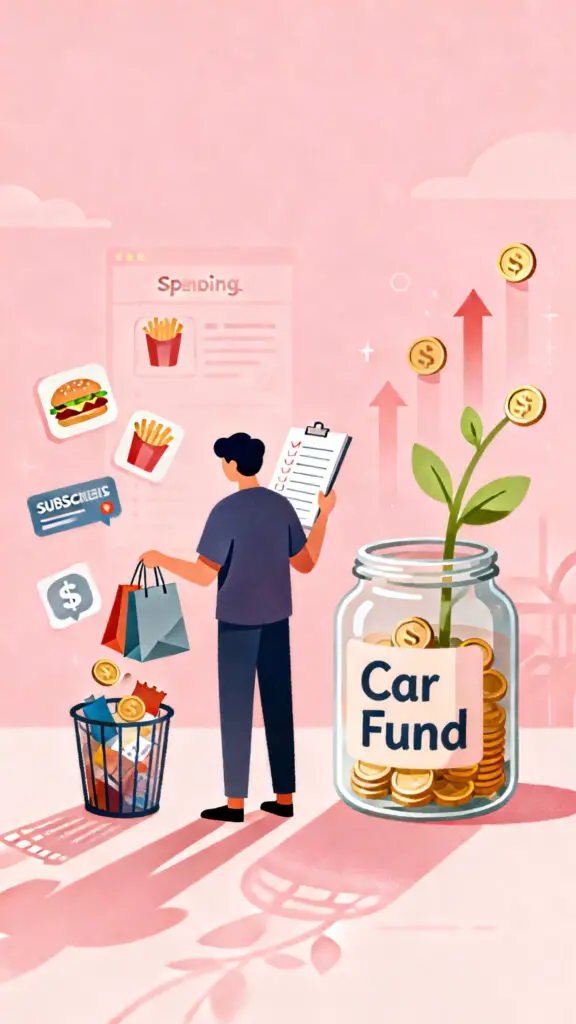
One of the fastest ways to build savings is to cut unnecessary expenses and focus on your target. This step does not mean giving up entirely on everything you find enjoyable, it is more about finding the right balance so that your unnecessary expenses don’t slow down your progress of saving for a car. You can consider limiting impulse shopping, identity and modify emotional triggers for spending, avoid frequent dining out, and cancel subscriptions you barely use.
These small but meaningful changes can bring a drastic change to your savings and over time, these savings can significantly contribute to your big goal, making each sacrifice worth it.
7. Increase Your Income if Possible
When you’re planning a big purchase, a considerable option is to increase your income and make room for saving. Whether it’s freelancing, combining passion with income through painting, baking, or selling homemade crafts, tutoring, babysitting, or pet sitting, the options are limitless in today’s world.
These temporary sources of income can significantly contribute to your savings, allowing you to reach your target faster. Moreover, when you actively look for ways to earn more instead of relying only on cutting expenses, your financial progress becomes faster and more empowering.
8. Avoid High Interest Loans
When planning to buy a car, it can be tempting to rely on loans to make the purchase faster, especially when you feel excited or pressured to own a vehicle quickly. However, high interest loans can quietly turn a manageable purchase into a long term financial burden that affects your monthly budget for years.
The extra amount paid in interest often makes the car much more expensive than its original price. A wiser approach is to compare different financing options carefully, understand the total repayment amount, and avoid rushing into agreements without reading the terms properly. Taking your time can save you from future stress.
9. Build an Emergency Fund First
Before using all your savings to buy a car, it is important to make sure you have an emergency fund that can protect you during unexpected situations. Life is unpredictable and sudden expenses such as medical bills, home repairs, or temporary job loss can happen without warning.
If you spend all your savings on a car, you may be forced to rely on credit cards or loans during emergencies, which can create financial pressure. When you know you are financially secure, buying a car feels responsible and well planned instead of risky.
10. Plan for a Down Payment
If you are considering financing your car, planning for a strong down payment is a smart financial move that can reduce long term stress. A larger down payment lowers the total loan amount, which means smaller monthly installments and less interest paid over time. Instead of stretching your budget too thin after purchase, you create breathing room in your finances and make car ownership feel comfortable rather than overwhelming.
11. Compare Insurance Options
Car insurance is not just a one time expense but a regular financial commitment that continues as long as you own the vehicle. Because of this, it is important to compare different insurance providers and understand what each policy offers before making a decision.
Some plans may look affordable at first but provide limited coverage, while others may offer better protection at a reasonable price. Reading the details carefully and asking questions can help you avoid future surprises. Choosing the right insurance ensures that your car and your finances remain protected, giving you confidence every time you drive.
Conclusion
Budgeting for a car is more than just collecting money for a big purchase because it teaches discipline, planning, and responsibility. When you set cleara goals, understand the full cost of ownership, manage your spending, and prepare for unexpected situations, the process becomes organized and empowering. Instead of feeling overwhelmed by the price of a car, you begin to see it as a goal that can be achieved step by step. With patience, smart decisions, and consistent effort, saving for a car becomes a journey that strengthens your financial confidence and allows you to enjoy your purchase without regret or stress.

Leave a Reply