
Getting started with investing feels like a major step toward financial independence. Many beginners jump in with the goal of growing their wealth as quickly as possible. They focus solely on returns, trending stocks, or popular strategies.
While that enthusiasm is helpful, it also leads to overlooking one of the most important parts of a strong financial foundation. Investing without preparation can expose you to unnecessary risks, especially when unexpected expenses arise.
A financial safety net plays a key role in keeping your plans steady during uncertain moments. It ensures that short-term disruptions do not interfere with long-term growth. This allows you to stay consistent and make better financial decisions over time.
What a Financial Safety Net Really Means
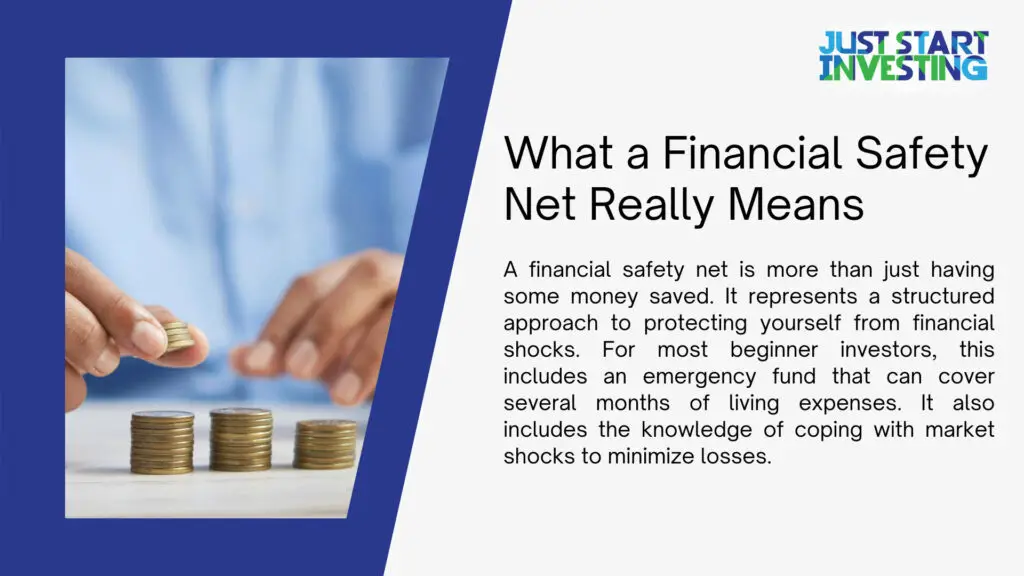
A financial safety net is more than just having some money saved. It represents a structured approach to protecting yourself from financial shocks. For most beginner investors, this includes an emergency fund that can cover several months of living expenses. It also includes the knowledge of coping with market shocks to minimize losses.
For instance, a Bloomberg article explains that strong demand for corporate bonds has pushed credit spreads to unusually low levels. This shift is driven largely by fear of missing out (FOMO) and excess cash in the market.
This means that investors are being paid very little extra return for taking on default risk. While economic optimism has supported this rally, analysts warn that the cushion protecting investors from losses has become very thin.
This idea aligns with broader investment thinking, where balancing risk and security plays a central role. Beginner-friendly strategies often suggest combining lower-risk assets with higher-risk investments to maintain stability while still aiming for growth.
A well-built safety net works in a similar way. It acts as the low-risk foundation of your financial life, allowing your higher-risk investments to perform without constant interruption.
Preventing Capital Wipeout While Managing Real-Life Needs
One of the biggest risks beginner investors face is being forced to liquidate their investments during a financial emergency. Markets move in cycles, and withdrawing funds during a downturn can lock in losses that might have otherwise recovered over time. A financial safety net helps you avoid turning a temporary setback into a permanent one.
Real-life financial pressure can influence this thinking, especially when multiple responsibilities overlap. Consider medical expenses, which are not easy to anticipate or prepare for.
For instance, suppose you are trying to save money with careful family planning by using a contraceptive like a Depo Provera. While you wanted to save money, things can turn for the worse, as highlighted by the Depo-Provera lawsuit.
According to TorHoerman Law, many victims using Depo Provera for an extended time have complained about tumors. They have filed a lawsuit seeking compensation for medical expenses and lost wages.
Similarly, there are many situations that could call for sudden financial needs. Without a safety net, the investor would have to withdraw the funds from the market. And without any capital, there’s no possibility of making money, regardless of how good an investor you are.
Why is selling investments during emergencies considered risky?
Selling investments during emergencies can force you to exit positions at unfavorable prices, especially during market downturns. This means you may lock in losses instead of allowing time for recovery. It can also disrupt long-term compounding, which significantly reduces potential wealth growth over time compared to staying invested.
The Link Between Stability and Better Investing Decisions
Investing requires patience and emotional control, as psychology plays a significant role. Market fluctuations can test your confidence, especially when you are just starting out. Without a financial cushion, every downturn may feel like a threat to your overall financial well-being.
Recent research shows that emotions play a significant role in how people invest. Around 1 in 8 Americans surveyed cite that FOMO influences their investment decisions. The respondents were most fearful about cryptocurrency and most excited about golf. Moreover, around 18% of respondents reported making a wrong decision due to panic.
This shows that fear, excitement, and anxiety can shape decisions more than logic, particularly when markets become volatile. A strong safety net reduces this emotional pressure and lets you think clearly.
When your basic financial needs are already secured, short-term market fluctuations are less likely to trigger emotional decisions. This stability makes it easier to remain consistent and keep your attention on long-term financial goals.
Can a financial safety net improve investment performance indirectly?
Yes, a safety net can improve investment outcomes indirectly by reducing emotional decision-making. When investors are not worried about immediate expenses, they are less likely to panic during market volatility. This helps them stay invested longer, avoid frequent trading mistakes, and benefit more from long-term market growth.
Why Investors Today Are Focusing More on Resilience
Global uncertainty, technological disruption, and economic shifts have made resilience a key priority. Many investors now look for strategies that can withstand changing conditions rather than relying on optimistic growth assumptions.
Large-scale investor surveys show that people are increasingly focused on protecting cash flows and managing risks alongside pursuing innovation.
For beginner investors, this idea translates directly into personal finance. A safety net is your first layer of resilience. It ensures that your financial life can handle disruptions without forcing you to abandon your investment strategy.
This is becoming increasingly common in markets marked by extreme greed and fear, resulting in early withdrawals. Early withdrawals can disrupt compounding, which is one of the most powerful drivers of long-term wealth.
Reuters suggests that investors chasing opportunities in certain markets are operating with very little margin for error. This can leave them exposed if conditions change suddenly. A safety net prevents you from switching from FOMO to the Fear of Wipepot (FOWO).
How do global economic changes influence personal investment strategies?
Global economic shifts such as inflation changes, interest rate movements, and geopolitical uncertainty can affect asset performance across markets. These factors often lead investors to prioritize stability alongside growth. As a result, individuals tend to diversify more and maintain stronger cash reserves to adapt to changing conditions without financial stress.
A financial safety net is one of the most important tools for any beginner investor. It protects your investments, supports better decision-making, and keeps your long-term plans on track. Unexpected expenses and life events are unavoidable, but they do not have to derail your progress.
Building this foundation takes time and discipline, but it creates stability and confidence. With a strong safety net in place, you can focus on growing your investments with clarity and consistency.


Just Start Investing is a personal finance website that makes investing easy. Learn the simple strategies to start investing today, as well as ways to optimize your credit cards, banking, and budget. Just Start Investing has been featured on Business Insider, Forbes, and US News & World Report, among other major publications for its easy-to-follow writing.
