
Saving money can be difficult especially when you’re living from paycheck to paycheck, figuring out ways to make money last till the end of the month. But the truth is that you don’t need to save thousands of dollars in one go, you just have to follow a realistic plan, stay consistent, and gradually build savings in smaller and manageable ways. The biweekly savings challenge is one of the easiest and most practical challenges that helps you save through small steps without having you feel overwhelmed and frustrated by the process. Whether you’re saving up for an emergency fund, a vacation, or simply trying to build a better financial life, this article will help you explore the dynamics of a biweekly savings challenge that can help you save money every two weeks in a way that feels doable and fits your lifestyle as well.

Step 1: Understand What a Bi-Weekly Savings Challenge Is
A biweekly savings plan is a structured plan that helps you set aside a specific amount every two weeks. Instead of saving randomly or waiting until the end of each month, this challenge makes saving more consistent and manageable.
Moreover, this method is quite helpful for those who receive their paychecks biweekly, helping them align their savings with their income and lifestyle. Over time, these small biweekly amounts can grow into something big and meaningful, giving you the motivation to move on with the challenge.
Step 2: Set a Clear Goal
Before you get into the complexities of the challenge, it is crucial to know what you’re saving for. Whether it’s a big future purchase, an emergency fund, or something as simple as building a stable financial life, having a clear goal can give your progress meaning and direction, making it easier for you to stick with it through every thick and thin.
You need to be specific and realistic with your goal, know it on a deeper level, and calculate how long it will approximately take you to save what you’re aiming for. Asking yourself these questions can help you achieve your target more effectively, leaving no room for unrealistic timelines and expectations.
Step 3: Break Your Goal into Manageable Parts
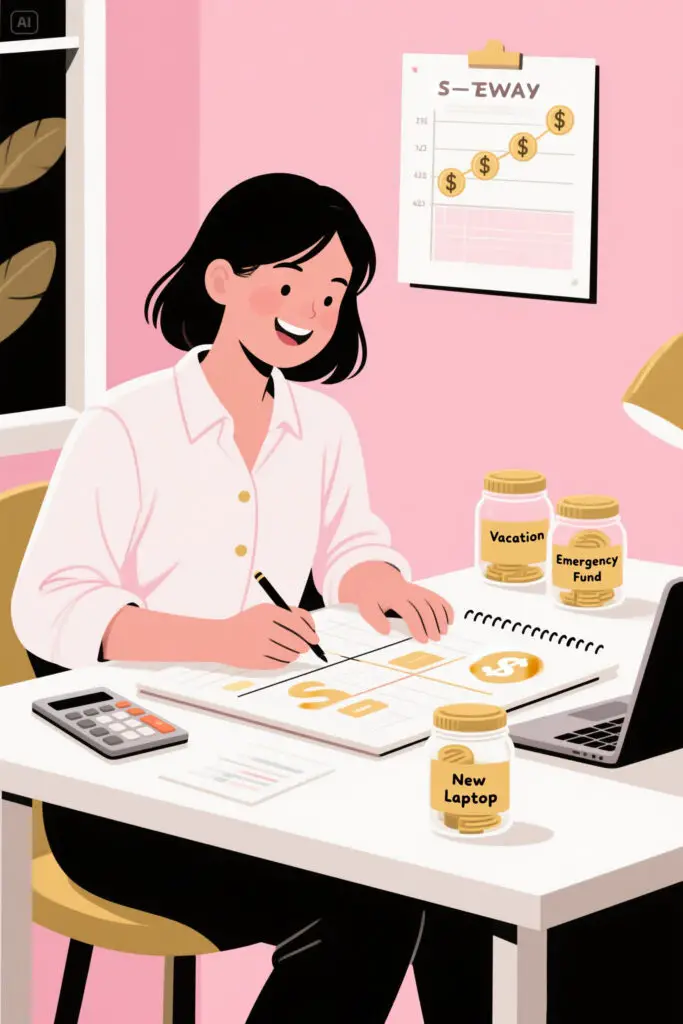
Once you know your total savings goal, the big figure may intimidate or overwhelm you and that’s exactly where the biweekly thing comes in. Divide your goal by the number of biweekly periods you plan to save for, for example, if you want to save $1,000 in one year, that will be about $38 every two weeks.
Seeing a smaller number can make the process feel a bit easy and doable as compared to the big, frightening figure. It is crucial to remember that progress and consistency matters more than perfection, and each time you choose to show up every two weeks, that’s worth appreciating because it shows your willingness and discipline.
Step 4: Automate Your Savings
To make the process easier and convenient to carry out, you can consider the possibility of automating the saving process. Set up an automatic transfer from your checking account to your savings account every two weeks, ideally on payday. This way you don’t have to rely on willpower and can save without having to think about it.
Automation turns saving into a routine habit rather than something you have to intentionally make effort for, which is the real secret to building long-term financial stability.
Step 5: Cut Down on Small, Repetitive Expenses
Sometimes finding extra money to save means looking closely at your spending habits and figuring out unhealthy spending patterns. Whether it’s those daily coffee runs, extra subscriptions, or frequent takeouts, these small and seemingly harmless expenses can put your entire budget off track.
Cutting back on just a few of these unhealthy spending patterns can save you a lot for your biweekly goals, helping you save more effectively and helping you make room in your budget for what truly matters. This method is less about cutting out everything you enjoy and more about being mindful where your hard earned money goes, prioritizing goals over those temporary doses of happiness.
Step 6: Use the Envelope or Digital Jar Method
If you like something more visible to keep track of the progress, consider the envelope or digital jar method. You can label each envelope or jar with the goal, for example, travel, emergency fund, or new gadget.
This method can make the saving process easier as you can see it, both physically or digitally, building motivation and reminding you why you started in the first place.
Step 7: Reward Yourself Along the Way
Saving money doesn’t mean you have to restrict yourself from all enjoyment and it’s perfectly okay to reward yourself after hitting certain milestones in your biweekly savings journey. These rewards don’t have to be expensive or luxurious, they could be something as small as treating yourself to your favorite snack, watching your comfort movie, or spending time doing something you love.
The idea is to keep your motivation alive and associate positive feelings with your saving progress and when you acknowledge your effort and dedication, saving starts to feel less like a burden and more like a lifestyle choice you genuinely enjoy maintaining.
Step 8: Involve a Friend or Family Member
Everything becomes easier and more fun when you’re not doing it alone, which is exactly why it is a considerable option to involve a friend or a family member. If you have a friend, sibling, or even a parent who’s also looking to improve their finances, invite them to join your biweekly savings challenge.
You can share your progress, encourage each other, and even hold friendly competitions to see who stays the most consistent. This shared accountability helps you stay on track, and it also makes the whole experience less stressful and more meaningful. Sometimes, just knowing someone else is saving alongside you can keep you committed on days when you feel tempted to skip a round.
Step 9: Track Your Progress Regularly

Tracking your progress is one of the most satisfying parts of this challenge because it allows you to see how your efforts are paying off over time. You can use a notebook, spreadsheet, or even a simple note on your phone to record how much you’ve saved every two weeks.
Watching those numbers slowly increase gives a sense of pride and reassurance that your consistency is working. It also helps you stay organized and aware of your financial growth, keeping your motivation strong and reminding you that slow progress is still progress.
Step 10: Challenge Yourself to Save a Little More Each Cycle
Once you get comfortable with your saving routine and feel more confident about your budget, try increasing your savings amount slightly after every few cycles. You don’t have to jump too high, even adding $5 or $10 extra every two weeks can make a big difference in the long run.
This small step not only accelerates your savings but also helps you test your limits and improve your money management skills. Gradually challenging yourself ensures that you’re always growing, without making the process feel forced or stressful. Over time, you’ll be surprised at how much more you can save just by gently pushing yourself a little further each time.
Step 11: Keep Your Savings Out of Easy Reach
To make sure you don’t end up spending what you’ve worked hard to save, it’s best to keep your savings in a place that’s not too easily accessible. You can open a separate savings account without a debit card or use a savings app that doesn’t allow instant withdrawals.
Creating this small barrier between your spending money and your savings helps reduce the temptation to dip into your funds for impulsive purchases. When you make your savings slightly harder to reach, you naturally give them the time and space to grow, allowing your money to work for you quietly in the background.
Step 12: Reflect and Reassess Your Progress
Every few months, take some time to sit down and reflect on your biweekly savings journey. Ask yourself if you’re happy with the pace, whether your goals have changed, or if there’s something you can adjust to make the process easier. Maybe you can afford to save a little more, or perhaps you need to take a short break and reorganize your budget.
Reflection keeps your plan realistic and aligned with your current lifestyle instead of forcing you into a pattern that no longer works. This step helps you see how far you’ve come and reminds you that saving isn’t a one-time challenge, it’s an ongoing habit that keeps improving with time.
Conclusion
The biweekly savings challenge is proof that you don’t need big jumps to achieve financial stability, just small, steady steps taken consistently. By saving every two weeks, even a modest amount, you build not just a financial cushion but also a mindset of discipline and self-control. It teaches you that saving doesn’t have to feel like a struggle or sacrifice, it’s simply about being intentional with your money and creating a plan that fits your reality. Over time, the effort you put in every two weeks will compound into something meaningful, giving you peace of mind, confidence, and the satisfaction of knowing you’re in control of your financial future.
