• Skip to primary navigation
  • Skip to main content

Just Start Investing

We Make Investing Easy

  • Investing
    • Learn About Investing:
    • Investment Accounts
    • Online Brokerage Accounts
    • Investment Vehicles
    • Start Investing:
    • How to Invest in Index Funds
    • Start Investing with Betterment
    • Start Investing with Charles Schwab
  • Banking
    • Best Bank Accounts
    • Types of Bank Accounts:
    • Checking Accounts
    • Savings Accounts
    • CDs and Money Market Accounts
    • Online Banks vs Brick-and-Mortar
  • Credit Cards
    • Best Credit Cards:
    • Best Cash Back Credit Cards
    • Best No Annual Fee Credit Cards of 2021
    • Best Premium Credit Cards of 2021
    • Credit Card Tool: Find the Best Credit Card for Me
    • Learn About Credit Cards:
    • Types of Credit Cards
  • Blog
    • Investing
      • What is Crypto?
        • Crypto
      • What are stocks?
        • Stocks
      • What is a Real Estate Investment?
        • Real Estate Investments
      • What is an IPO?
        • IPO
    • Banking
    • Credit Cards
    • Budget
    • Finances
  • Earn with Crypto
  • Budget
    • How to Build a Budget
    • 24 Tips to Save More Money
  • Resources
  • About
    • Contact
    • Press
    • Learn More
    • Disclaimers
  • Show Search
Hide Search

General Personal Finance Blog

100 Powerful Financial Freedom Quotes For Women

October 2, 2025 By Ana Rose

Financial freedom is not just about money, it’s about building confidence, boosting self-esteem, and having the ability to live life on your own terms and conditions. For women, the journey towards financial freedom may be more difficult due to differences in gender pay gaps, limited opportunities, and balancing family responsibilities with personal goals. However, with determination and the right mindset, women all across the globe continue to rise above and work towards financial security and freedom, proving themselves resilient, courageous, and strong. This article will help you explore 100 financial quotes for women, inspiring you through powerful words and reminders.

100 Powerful financial freedom quotes for women Graphic

100 Powerful Financial Freedom Quotes

1. “Financial independence is about choosing your life’s direction without waiting for someone else’s permission.”

2. “Every dollar you save is not just money, it’s a step closer to freedom.”

3. “When a woman controls her money, she controls her future.”

4. “A budget is telling your money where to go instead of wondering where it went.” — Dave Ramsey

5. “Money is not the goal, freedom is. Money is just the tool to get there.”

6. “Financial freedom for women means never having to stay where you don’t belong.”

Illustration of a confident woman standing tall on a pastel pink background, holding a briefcase with a rising financial growth chart behind her, glowing highlights symbolizing strength and empowerment.

7. “Budgeting is not a restriction, it’s a roadmap to the life you truly want.”

8. “When women learn to invest in themselves, they open doors to endless possibilities.”

9. “Debt may feel heavy, but discipline will set you free.”

10. “Financial independence allows you to walk away from what doesn’t serve you.”

11. “An investment in knowledge pays the best interest.” — Benjamin Franklin

12. “A financially strong woman is unstoppable.”
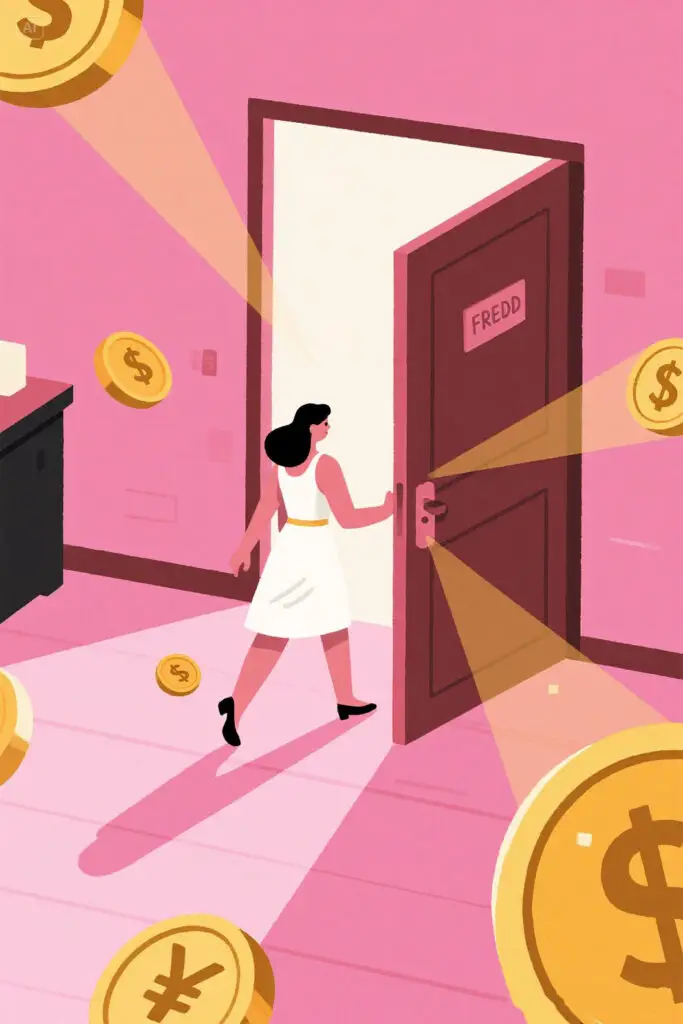
Illustration of a woman walking away from a closed door with floating money and freedom icons, pastel pink background with glowing highlights on her path, symbolizing courage and independence.

13. “You don’t need to have it all to start, you just need to start.”

14. “Money can’t buy happiness, but it can buy choices, and choices bring peace.”

15. “Do not save what is left after spending, but spend what is left after saving.” — Warren Buffett 

16.  “Wealth isn’t about how much you earn; it’s about how wisely you manage what you have.”

17. “Financial freedom is the art of saying yes to your dreams and no to your fears.”

18. “Your bank balance doesn’t define you, but it can empower you.”

19. “Smart women don’t wait for luck; they plan for freedom.”

20. “It’s not your salary that makes you rich, it’s your spending habits.” — Charles A. Jaffe

21. “A budget is not about cutting back, it’s about creating space for what matters.”

22. “Financial independence means your voice is never silenced by dependence.”

23. “Women who invest in their future change the future for everyone around them.”

24. “You can’t build wealth overnight, but you can build it over time.”

25. “Financial discipline is the bridge between dreams and reality.”

26. “Don’t just earn money, make it work for you.”

27. “Freedom is having your needs covered and your dreams within reach.”

28. “Financial literacy is the strongest form of empowerment a woman can have.”

29. “Your budget reflects your values; let it reflect freedom, not fear.”

30. “Investing is not just for the wealthy, it’s how you become wealthy.”

31. “A strong woman knows that financial security is self-care.”

32. “Debt does not define you; your decisions do.”

33. “True freedom begins when you stop living paycheck to paycheck.”

34. “Financial freedom is available to those who learn about it and work for it.” — Robert Kiyosaki

35. “A woman with a plan is stronger than circumstances.”

36. “Financial independence is not about being rich, it’s about being in control.”

37. “Money is a tool. Use it to build your future, not your worries.” — Unknown

38. “Earning is power; saving is security; investing is freedom.”

39. “True wealth is the ability to live your life as you wish.” — Henry David Thoreau

40. “Financial confidence shines brighter than diamonds.”

41. “A wealthy mindset comes before a wealthy life.”

42. “Be the woman who writes her own checks and her own story.”

43. “Money doesn’t change who you are; it amplifies your choices.”

44. “A woman who masters money masters her destiny.”

45. “Your worth is not in your wallet, but your wallet should reflect your worth.”

46. ““The goal of financial freedom is not to have more stuff, but to have more choices.” — Suze Orman

47. “You don’t have to know everything about money, you just have to keep learning.”

48. “A budget is a love letter to your future self.”

49. “Do not go where the path may lead, go instead where there is no path and leave a trail, even in your finances.” — Ralph Waldo Emerson

50. “The journey to financial freedom is long, but every step counts.”

51. “Being broke is temporary, financial discipline is forever.”
52. “Independence is when your choices are not controlled by your circumstances.”

53. “A wealthy woman is not one who spends a lot, but one who saves and grows her money.”

54. “Money doesn’t bring happiness, but it gives you the freedom to create it.”

55. “A woman’s financial independence is her shield and her sword.”

56. “True wealth is when your money works harder than you do.”

57. “Financial empowerment means living life on your own terms.”

58. “You don’t have to be born rich to build wealth.”

59. “Financial independence is the ability to live from the income of your own personal resources.” — Jim Rohn

60. “The goal isn’t more money. The goal is living life on your own terms.” — Chris Brogan

61. “Money is not the end, it’s the means to a free and fulfilled life.”
62. “Financial security is not selfish, it’s smart.”
63. “Wealth is not about flaunting; it’s about sustaining.”
64. “Freedom means having the courage to leave situations that don’t serve you, money makes that possible.”
65. “Wealth is not about having a lot of money; it’s about having a lot of options.” — Chris Rock
66. “Financial freedom is a form of self-love.”
67. “Financial peace isn’t the acquisition of stuff. It’s learning to live on less than you make, so you can give money back and have money to invest.” — Dave Ramsey
68. “Dream big, save consistently, invest wisely.”
69. “Money is a terrible master but an excellent servant.” — P. T. Barnum
70. “Wealth doesn’t come from what you earn but from what you keep.”
71. “Every woman deserves the freedom that comes with financial confidence.”
72. “Investing in yourself is the first step to financial success.”
73. “The best thing money can buy is financial freedom.” — Rob Berger
74. “Freedom comes from building habits, not waiting for windfalls.”
75. “A disciplined woman is a wealthy woman.”

76. “Financial independence means your dreams don’t need approval.”
77. “Money is a tool, don’t let it control you, learn to control it.”
78. “The more you learn about money, the more empowered you become.”
79. “Whatever your income, always live below your means.” — Thomas J. Stanley
80. “Wealth is built on patience and discipline, not luck.”
81. “Every smart financial choice builds a stronger tomorrow.”
82. “A secure woman doesn’t ask for freedom, she already owns it.”
83. “Live like no one else now so later you can live like no one else.” — Dave Ramsey
84. “Financial freedom doesn’t just change your life, it changes generations.”
85. “You don’t need millions to be free, you need control over what you have.”
86. “A wise woman invests in her future before she invests in luxuries.”
87. “The lack of money is the root of all evil.” — Mark Twain
88. “Every woman deserves a savings account with her own name on it.”
89. “A woman’s best protection is the little money of her own.” — Clare Boothe Luce
90. “Financial independence allows you to choose love, not dependency.”
91. “Budgeting is not about limits, it’s about freedom.”
92. “Financial independence is paramount. My mom always says that when a woman is financially independent, she has the ability to live life on her own terms.” — Priyanka Chopra Jonas
93. “Every sacrifice you make today plants freedom for tomorrow.”
94. “Your financial journey is personal, don’t compare, just keep moving.”
95. “A wealthy woman invests in both assets and herself.”
96. “Money management is a life skill every woman deserves.”
97. “Financial freedom means your time belongs to you.”
98. “A woman with financial independence is in a powerful position to make a difference in the world.” — Melinda Gates
99. “When women win with money, families and communities win too.”

100. “Every woman has the power to build wealth, no matter where she starts.”

Conclusion

At the end of the day, financial freedom isn’t just about dollars, cents, or numbers written in a bank statement, it’s about the peace of mind that comes when you know you’re in control of your life. For women especially, building financial independence means so much more than paying bills or saving for the future, it’s about creating choices, gaining confidence, and refusing to let circumstances or dependence hold you back from the life you deserve. Each of these quotes is a gentle reminder that freedom doesn’t happen overnight, but grows slowly through courage, patience, and small, consistent actions. Whether you’re learning to budget, paying off debt, saving for your dreams, or simply trying to believe in yourself again, know that every step matters. You don’t have to be perfect, you just have to keep moving forward.

The Most Effective Bi Weekly Savings Challenge 3000

October 1, 2025 By Ana Rose

Saving money is easier said than done when you’re dealing with pending bills, unexpected expenses, and family responsibilities that put your entire budget off track. However, the secret to building savings is in creating a plan that’s realistic, practical, and most importantly, manageable. Unlike strict monthly plans or too frequent weekly saving plans, biweekly plans work best for saving, and even better for those who get paid every two weeks, offering a plan that aligns with their pay schedule. This article will help you explore the dynamics of a biweekly savings plan, helping you save $3,000 in a year without feeling like you’re depriving yourself.

The Most Effective Bi Weekly Savings Challenge 3000 Graphic

Understanding How the Bi-Weekly Savings Challenge Works

The biweekly savings plan is a structured plan designed to help you gradually build savings without having to feel overwhelmed and deprived. Unlike those irregular attempts at saving, this challenge uses the consistency of your pay cycle to your advantage. 

This challenge involves setting aside small amounts more frequently rather than having to save a large amount each month, making this plan more manageable and less stressful. Over time, these small and regular contributions can add up to a significant sum, in this case, $3,000, without requiring big sacrifices.

Break Down the $3,000 Goal

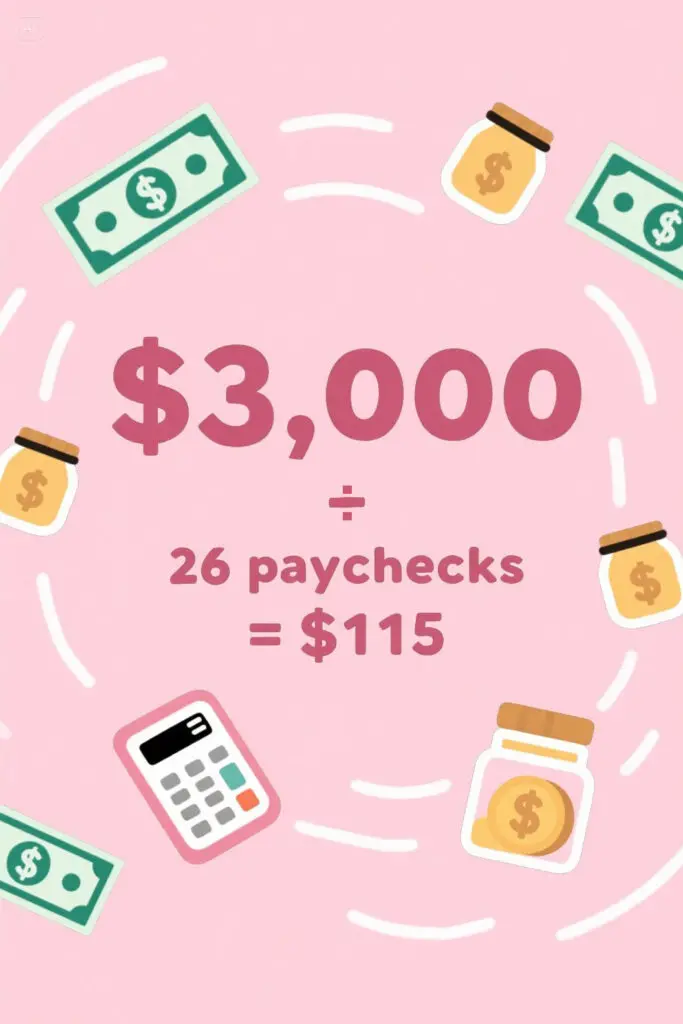
Illustration on a pastel pink background showing “$3,000 ÷ 26 paychecks = $115” with icons of dollar bills, a calculator, and small savings jars, representing how to break a big savings goal into smaller, manageable amounts.

Big financial targets can feel intimidating, but breaking them into smaller and more manageable chunks can make the challenge easier to follow. To save $3,000 in one year, you need to divide this number by 26 pay periods in a bi-weekly cycle, which comes out to about $115 per paycheck. 

When you look at the smaller figure of $115, the challenge may seem easier instead of focusing on the intimidating $3,000 figure. For example, if you know you need $115 from each paycheck, you can adjust your spending on non-essentials, such as coffee runs, dining out, or entertainment to cover it.

Start Small and Increase Gradually

For many people, even $115 may seem like a huge amount, especially if you’re struggling with other financial responsibilities. Instead of sticking to a strict order of setting aside $115 every two weeks, you can begin with a smaller amount, such as $50 or $75, and increase the amount as your budget allows. For example, in the first three months, you might consistently save $75 per paycheck, and once you’ve built momentum and adjusted your spending habits, you can raise it to $100 or $115.

This approach works the best for people who are new to disciplined saving, as it builds confidence and reduces the risk of burnout. 

Automate Your Savings

One of the most effective ways to succeed with the biweekly savings challenge is to automate the biweekly transfers. You can set up an automatic transfer from your checking account to your dedicated savings account. This method flips the script and allows you to prioritize saving. 

What makes this strategy more considerable is that it takes away the stress of deliberately transferring money, helping you rely less on willpower and more on consistency. When the transfer happens automatically, saving becomes as routine as paying a bill, and you don’t have to constantly remind yourself to set money aside. It also removes the temptation to spend that amount on something else, since the money is gone before you can even touch it.

Use a Separate Savings Account

One of the most common reasons people fail to stick to a savings plan is that their money is too easily accessible. When savings sit in the same account as daily spending funds, it becomes tempting to use them for non-essentials, especially when expenses feel tight. 

To avoid this, it’s best to use a separate savings account that is available to you but not easily accessible for you to use whenever the urge to spend arises. A better option would be to use a high-yield savings account where your money can earn interest while it just sits there, growing in peace without any drama or distraction. 

Pair the Challenge with a Spending Audit

Saving money doesn’t always mean earning more, it often means making better use of what you already have. Pairing your bi-weekly challenge with a spending audit is a smart way to free up the funds you need. You can start by reviewing your past two or three months of expenses to identify areas where money is slipping away unnoticed which might include unused subscriptions, frequent dining out, online impulse purchases, or daily coffee runs.

Once you’ve identified these leaks, you can try to manage or eliminate them and redirect that money into your savings challenge. A spending audit not only helps you stay on track but also builds awareness about your financial habits, ensuring your money works for you instead of against you.

Use Cash Envelope Tricks

For those who struggle with overspending, the cash envelope can be a powerful strategy for the biweekly challenge. This strategy is all about allocating a fixed amount of cash to spending categories like rent, food, groceries, or transportation, and keeping that cash in separate envelopes with the category’s name written on them. 

The catch of the cash envelope trick is to avoid overspending on a certain category and staying within the spending limit. What makes this trick more appealing is that it creates natural savings opportunities. For instance, if you have leftover cash in an envelope at the end of the two weeks, you can deposit it directly into your savings account as an extra contribution to your $3,000 goal.

Create Mini-Milestones

Saving $3,000 can feel like an intimidating commitment, and without motivation, it’s easy to quit midway through the challenge, which is why it is necessary to have mini-milestones. Breaking the challenge into smaller checkpoints makes it more manageable and rewarding. For example, aim to save $750 every three months or $1,500 by mid-year, and each time you reach one of these milestones, take a moment to acknowledge your success. 

You can even create visual markers, such as filling in a progress chart or thermometer-style tracker as you save. Small celebrations at each milestone, like a budget-friendly family outing or a favorite home-cooked meal, make the journey feel less like a grind and more like an accomplishment. These mini victories remind you that even though the ultimate goal is $3,000, every step forward is a win worth celebrating.

Add Side Hustle Earnings

Sometimes, cutting expenses isn’t enough to hit your savings target comfortably, that’s why supplementing your income with side hustle earnings can make all the difference. Whether it’s freelancing, tutoring, babysitting, selling handmade crafts, or even decluttering and selling unused items online, every extra dollar adds up. For example, earning an additional $50 from a freelance gig and putting it into your bi-weekly savings means you’ll reach your $3,000 goal faster. 

The best part is that side hustle income often feels like “extra” money, so setting it aside doesn’t affect your regular budget. Instead of spending it impulsively, dedicate those earnings entirely to the challenge, and over time, these small contributions can amount to hundreds of dollars. 

Make it a Family Challenge

Saving money doesn’t have to be a solo effort, instead try turning the challenge into a family activity so that it becomes fun and easier to follow. If you have a spouse, partner, or kids who are old enough to understand the concept, get them involved and turn the savings challenge into a collaborative challenge. 

Together, you can brainstorm small ways to cut costs, like cooking meals at home, choosing free entertainment, or reducing utility bills. Each family member can contribute in their own way, whether it’s skipping an unnecessary purchase or suggesting cost-saving ideas. You can also set family rewards for reaching milestones, like a special picnic or a game night. 

Track Progress Visually

Savings tracker illustration on a pastel pink background with a thermometer-style chart filling up with money icons, stars, and confetti, symbolizing motivation and progress toward the $3,000 biweekly savings challenge.

Humans are naturally motivated by progress they can see, which is why tracking your savings visually can be a powerful tool in this challenge. Create a simple savings tracker chart, thermometer graphic, or even use a jar where you deposit cash every two weeks. 

Each time you add money, update your tracker so you can physically see how close you are to your $3,000 goal. This visual reminder keeps you accountable and motivated, especially on weeks when saving feels tough. By turning your progress into something visible and interactive, you transform the challenge from a financial task into a rewarding, motivational journey.

Reward Yourself Smartly

One of the best ways to stick with long-term goals is to reward yourself along the way, but the trick is to do it wisely. When you hit milestones in your $3,000 challenge, take a moment to celebrate your progress without undoing your hard work.

You can treat yourself to a cozy at-home spa day, cook your favorite meal, or plan a budget-friendly family activity. These small rewards give you something to look forward to and make the journey feel lighter. By rewarding yourself wisely, you build positive habits and keep your eyes on the bigger goal and when you reach the end, the best reward of all will be the $3,000 you’ve saved.

Conclusion

The bi-weekly savings challenge is one of the easiest and most practical ways to build a solid financial cushion without feeling stressed. It works because it fits into your pay schedule, breaks a big goal into smaller, manageable steps, and keeps you moving forward with simple strategies like automation, spending audits, and visual trackers. Along the way, little milestones and small rewards make the process exciting, while support from family or a little extra income can help you reach your goal even quicker. The best part is that this challenge doesn’t require extreme sacrifices, it’s all about steady, consistent action. By the end of the year, you won’t just have $3,000 in savings, you’ll also have stronger money habits that prepare you for bigger financial goals in the future. 

The Perfect Bi-weekly Savings Challenge

September 30, 2025 By Ana Rose

Saving money can often become overwhelming especially when you’re dealing with bills, unexpected expenses, and those little urges to spend on things and activities you enjoy. Many people struggle with monthly savings plans because they become too strict to follow, whereas weekly challenges may feel too frequent to manage, and that’s exactly where biweekly challenges come in. For a flexible, realistic, and perfectly in sync with how many people receive their paycheck, you can consider the option of saving biweekly instead of monthly or weekly. This article will help you explore the dynamics of biweekly savings challenges, ensuring that savings doesn’t feel like a burden but rather a habit that grows naturally over time. 

The Perfect Bi-weekly Savings Challenge Graphic

What is the Bi-Weekly Savings Challenge?

The biweekly savings challenge is a simple yet powerful strategy to help your savings grow. Instead of saving every week or waiting for the month to end, this strategy strikes the perfect balance between comfort and consistency. This means you get to set aside money 26 times in a year, making the challenge feel more manageable while allowing your savings to grow steadily. 

This challenge usually involves setting aside small amounts consistently, for instance, you might start with $20 in the first two weeks, $40 in the next, and so on and by the end of the challenge you may get to see your small savings adding up to a surprisingly large amount. 

Why Choose Bi-Weekly Over Weekly or Monthly Plans?

Many people may find it hard to set aside money weekly because life can get busy and weekly challenges may require you to remember setting money aside, almost like a chore. On the other hand, monthly challenges at times, may feel too distant which can make it easy to lose track of the progress or difficult to maintain motivation and consistency to go on with the challenge. 

However, the biweekly challenge sits perfectly in the middle as it’s frequent enough to maintain consistency and spaced out enough to feel less overwhelmed by the whole process, making it a considerable option if you’re looking to save money in an effective manner. 

How the Classic Bi-Weekly Method Works

The classic biweekly saving method is simple and straightforward which involves beginning with a small amount and gradually increasing it as you move on with the challenge. For example, you can start with $20 in the first 2 weeks of the challenge, $30 in the next, $40 in the next, and so on. 

This method helps in keeping the challenge as simple and easy as it can be by letting you start small and pace up the process as you become conditioned to setting an amount aside every two weeks. The beauty of this method is in its simplicity as it requires little thought, and yet by the end of 26 deposits, you’ll have built a savings fund that feels like it happened naturally, without harsh sacrifices.

The Reverse Bi-Weekly Savings Challenge

Illustration of a savings jar filling with cash, with larger bills going in first and smaller ones later, symbolizing the reverse biweekly savings challenge, on a pastel pink background.

Another way to approach this method is through the reverse biweekly savings challenge which involves starting with the highest amount in the beginning of the challenge and gradually moving toward the smallest amount. For example, you may begin to save $100 in the first 2 weeks, $90 in the next, and so on. 

What makes this method considerable is that it takes away the stress of sticking to the method by allowing yourself to complete the hardest part first, making it convenient to complete the easy bits of the challenge later on. 

Flexible Bi-Weekly Pick-and-Save Method

For those who prefer an easy, flexible, and convenient approach, consider going with the flexible biweekly savings challenge. Instead of following a strict and organized order, create a chart with different amounts written on it from $10- $100, and every two weeks, choose the amount that suits you the best at the moment. 

Whether you had an unexpected car repair and can only set aside $15, or you received some extra cash and can comfortably put away $70, this method gives you control and freedom while still ensuring you stay on track overall. By the end of the year, you’ll still hit your savings target, but without the stress of sticking to a strict pattern.

Setting Clear Financial Goals Before Starting

Before you start with the challenge, it’s important to pause and reflect on what your financial goals and targets are. Having a clear goal can help you add a personalized touch to the savings challenge, making it easy for you to stick with the process and turn it into a meaningful journey. 

Whether you’re planning for a big purchase, have a trip planned out, or simply want to build an emergency fund in case of unexpected expenses, having something to work for can make the challenge feel less of a chore and more of something that excites or protects you in the future. 

Automating Your Bi-Weekly Transfers

One of the easiest ways to guarantee success with this challenge is to remove the temptation to spend your hard earned money. By automating your biweekly transfers you can easily watch  your savings grow without having to rely on willpower or memory every two weeks.

Set up an automatic transfer from your checking account to a separate savings account the same day your paycheck arrives. The key is to let your savings grow in a separate yet easily accessible savings account that provides a quiet space for your money to grow without any drama or distractions.

Using Visual Trackers to Stay Motivated

Pastel pink chart with colorful progress bars and checkmarks, showing a savings tracker with boxes being filled in, representing motivation in the biweekly savings challenge.

The concept of saving money can feel a little abstract when there’s nothing to track the progress. Whether it’s a colorful savings chart you fill in every two weeks, a jar where you drop cash envelopes, or even a digital app that shows your progress like a progress bar, having something you can see makes the journey feel much more real. 

Each time you color in a box or tick off a milestone, you can feel a sense of motivation and pride kicking in. Visual cues turn your savings journey into something interactive and fun, helping you stay focused when motivation naturally starts to fade.

Fun Variations to Keep Things Exciting

Sometimes saving money can feel repetitive, and when that happens, it’s easy to lose interest. To make the biweekly savings challenge more enjoyable, try adding fun variations, for example, roll a dice every two weeks and save the number you land on times ten, or create a “savings jar challenge” where each family member picks an amount to save from a jar of slips. 

You could even tie the savings to small personal achievements, like saving an extra $10 every time you cook at home instead of ordering takeout. These little twists keep the process lighthearted and prevent it from feeling boring, making saving money something you actually look forward to.

How to Recover from Missed Savings Weeks

Life isn’t perfect, and sometimes you may miss a savings week because of an unexpected bill or expense. Instead of feeling guilty or giving up, remember that the challenge is about progress, not perfection. 

You can catch up by spreading the missed amount over the next couple of deposits, or if that feels too tight, simply add a little extra whenever you can. The important thing is to keep going, even if it’s not flawless. Missing one or two weeks won’t ruin your success, it’s your commitment to coming back that truly makes the difference.

Making it a Family or Couple Activity

Saving doesn’t have to be a solo thing, it can be even more fun when you share it with your family or partner. If you’re doing this as a family, you can encourage kids to participate with small contributions or have weekly check-ins where everyone shares how the challenge is going. 

Couples can also use it as a way to strengthen teamwork and work toward shared goals, like saving for a trip or a new home. By involving loved ones, the challenge becomes more than just about money, it becomes a bonding activity that teaches responsibility, teamwork, and patience.

Celebrating Milestones Along the Way

Saving money is a long journey, and celebrating the little wins makes it easier to keep going. For every $200 or $500 you save, allow yourself to enjoy a no-cost or low-cost reward, like a movie night at home, a long walk in the park, or cooking your favorite meal. 

These small celebrations give you something to look forward to and remind you how far you’ve come. Instead of only waiting for the final amount, marking milestones helps you stay positive and motivated all the way through the challenge.

What to Do with the Money Once Saved 

By the end of the challenge, you’ll likely have a nice sum saved up, and this is where planning matters most. Instead of letting it sit without purpose, or worse, spending it all in one go, decide beforehand what you want to do with it. 

Maybe you’ll use it to build an emergency fund, pay down debt, or put it toward a big goal like a vacation or new furniture. Having a plan for the money ensures your effort pays off in a way that really benefits your life and financial health.

Conclusion

The biweekly savings challenge is more than just a strategy, it’s a mindset shift that helps you build consistency and discipline while making saving money feel easier and more natural. Unlike weekly or monthly challenges, it strikes a perfect balance that fits comfortably into most people’s lives, giving you enough structure to stay on track without feeling overwhelmed. Each step, each deposit, no matter how small, brings you closer to financial security and peace of mind and when you finally reach the end of the challenge, you’ll not only have a healthy savings fund but also stronger habits that can carry you into a future filled with financial confidence.

52 Week Easiest Money Saving Challenge

September 29, 2025 By Ana Rose

Saving money often feels overwhelming, especially if you think it requires big sacrifices or holding back on fun or activities you enjoy doing. Building savings doesn’t have to be difficult, it’s about consistency and small steps that add up over time. The 52-weeks savings challenge is one of the simplest yet effective challenges that helps you grow your savings gradually, taking off the pressure and allowing you to focus on the progress rather than being perfect. This article will help you explore the 52-week challenge, offering strategies, tips, and motivation to stick to the challenge through every ups and downs. 

52 Week Easiest Money Saving Challenge  Graphic

What is the 52-Week Money Saving Challenge?

At its core, the 52-week challenge is a simple yet highly effective challenge in which you have to save a specific amount each week for at least a 52 week duration. The classic method of this challenge involves starting with the lowest amount for the first week which is $1, $2 for week 2, $3 for week 3, and so on to $52 in week 52. 

At the end of the challenge, you’ll have saved a total of $1378 without having it feel like a burden. What makes this challenge appealing is the fact that it starts with you collecting small amounts in the beginning, helping you build motivation to go on with the process. 

Why the 52-Week Challenge Works

The beauty of the 52-week challenge lies in its simplicity and psychological appeal because many people think saving comes with its own challenges and sacrifices, but this challenge offers an easy approach where it starts so small that it’s almost effortless and unnoticeable.

When you save $1 in the first week, the rest of the journey becomes doable or easy to follow. By the time you’ve reached putting away $40-$50 each week, you’ve already built a pattern to promote healthy saving habits. Another reason it works is the sense of accomplishment you feel along the way where every week is a small win that motivates you to keep going

How to Get Started

Starting with the 52-week challenge doesn’t require anything complicated, you just need a plan and a safe and quiet space for your savings to grow without any drama or distraction. Firstly, you need to decide whether you want your savings to grow in the form of cash or transfer the money to a separate savings account. If you prefer to go with online banking, a smart way to approach this would be to automate transfers so the process becomes easier and it also takes away the stress of having to rely on your own willpower to move the money. 

You can then pick the version of the challenge you want to follow, whether classic, reverse, or flexible, the key is to stick to the challenge and commit to saving an amount each week. 

The Classic Version

A savings jar labeled “52-Week Challenge” filled with dollar bills and coins, surrounded by neatly stacked money. The jar shows numbers from 1 to 52, symbolizing steady weekly savings. The scene is set against a pastel pink background with soft highlights.

For a simple and straightforward option, you can go with the classic 52 week challenge which involves setting aside $1 in week 1, $2 in week 2, $3 in week 3, and so on to $52 in week 52. At the end of the year, you’ll have saved an amount of $1378 without having it feel like a demanding task. 

The early weeks are easy and build your pace for the rest of the challenge, while the later weeks feel like a natural step up because you’ve adjusted along the way. This method is especially great for beginners who might feel intimidated by saving large amounts. The structure is simple, predictable, and doesn’t require much thought, making it one of the easiest ways to build savings with discipline and confidence.

The Reverse 52-Week Challenge

The reverse 52-week challenge flips the script of the classic method and involves beginning with the largest amount and gradually moving to the smaller ones. You begin by saving $52 in week 1, $51 in week 2, $50 in week 3, and so on to $1 to week 52. This approach works the best for people who become motivated at the beginning of the challenge and when the process loses its spark, it’s easier to keep up with it as the amount to be saved gradually lowers. 

While it might feel more challenging at the start, by the time you’re saving smaller amounts, it feels like a breeze, making it a smart alternative for many.

The Flexible Pick-and-Choose Method

For those who fear away from the concept of sticking to a strict schedule and prefer a flexible approach, this method may suit you best. Instead of moving in a structured and organized way, you can create a chart with all amounts, from $1-$52, written on it. Each week, you get to decide what you can realistically set aside. For instance, if money feels tight, maybe you choose $7 that week, but if you have extra cash, you might set aside $40 and by the end of the year, you’ll still have $1,378 saved, but without feeling restricted. This method offers you freedom and convenience while still holding you accountable for the choices you make. 

Automating Your Weekly Savings

One of the easiest ways to make the 52-week challenge foolproof is through automating your weekly savings. Instead of relying on willpower to remember each week, you can set up automatic transfers from your checking account to your savings account on a weekly basis.

Many banks or financial apps allow you to schedule recurring transfers, which means once it’s set up, the savings happen without you having to think about it. This method removes the temptation of skipping a week or spending the money elsewhere and also gives you consistency, which is the key to building habits. Over the year, these small, effortless, and automatic amounts add up to something significant, and because it requires little effort, it’s one of the most reliable ways to succeed with this challenge.

Adding a Fun Twist

A playful piggy bank surrounded by dice, numbered slips of paper, and small pieces of confetti, representing a gamified approach to saving money. The pastel pink background with bright highlights adds a cheerful, fun vibe.

Saving money doesn’t always have to feel serious or boring, in fact, adding a little creativity to the 52-week challenge can make it much easier to stick with and far more enjoyable along the way. You could gamify the process by rolling dice to decide your weekly savings amount, drawing slips of paper from a jar with numbers written on them, or even linking your savings to personal milestones, such as saving an extra $5 every time you hit the gym or cook a meal at home instead of eating out. 

By making the challenge interactive and fun, you’re more likely to look forward to each week instead of seeing it as another financial task.

Using the Challenge for a Specific Goal

While the 52-week challenge works perfectly just to grow a general savings cushion, it often feels more motivating if you tie it to a specific purpose that excites you. Whether it’s saving for a vacation you’ve always dreamed of, building a holiday fund so the end-of-year expenses don’t feel overwhelming, or working toward a big milestone like a wedding or a new gadget you’ve had your eye on, when you connect your savings to something meaningful, each weekly contribution feels less like money leaving your hands and more like an investment into a future moment of joy or security. 

Tracking Your Progress Visually

One of the most powerful ways to stay motivated through the 52-week challenge is by tracking your progress in a way you can actually see, because watching your savings grow week by week gives you a real sense of accomplishment. 

You can create a printable chart where you color in each week’s savings box, use a jar where you drop in slips of paper labeled with the amounts saved, or simply update a savings app that shows your growing balance in real time. These little visual cues act as reminders that even small amounts add up and that you’re moving forward, even if some weeks feel slow or difficult. 

How to Handle Setbacks

No savings journey is perfect, and that’s absolutely okay because life happens and sometimes you may miss a week or find yourself dipping into the money you’ve already saved. The key is not to let one setback discourage you or make you quit the challenge altogether. 

If you miss a week, you can always double up the next time or adjust the amounts slightly to catch up. Remember that this challenge is meant to help you build better habits, not to make you feel guilty or pressured. 

Making the Challenge a Family Activity

Turning the 52-week challenge into a family activity can not only make saving more fun but also teach children valuable lessons about money from an early age. You could create a savings jar that everyone contributes to each week, letting kids drop in coins or small bills while explaining the importance of working together toward a shared goal. 

Families can set fun targets like a weekend getaway, a new board game, or even a home project, making the process something everyone looks forward to rather than just a financial task for the adults. This shared experience not only builds savings but also strengthens bonds, because every family member feels included in the journey. 

Conclusion

The 52-week money saving challenge is proof that big financial changes don’t always come from massive sacrifices, they can come from small, consistent actions taken one week at a time. Whether you choose the classic version, reverse order, or a flexible approach, what matters most is that you commit to showing up each week and keeping your goals in sight. By making the process fun, tying it to something meaningful, and even involving your family, you transform saving from a chore into something you actually enjoy. At the end of the 52 weeks, you’ll not only have built up a meaningful cushion of savings but also developed habits and confidence that will serve you far beyond the challenge itself.

17 Best Savings Strategy Biweekly Ideas

September 28, 2025 By Ana Rose

Saving money can seem difficult when you look at it in terms of big annual goals, but when you break it down in small and more manageable chunks, it becomes much easier to stick with it. That’s exactly why you need a biweekly savings challenge which allows you to save consistently in smaller amounts every two weeks instead of waiting until the end of the month or struggling with one large deposit. This method aligns perfectly well with anyone who gets paid every other week, but even if you don’t, the habit of saving biweekly can help you build momentum and stay committed and consistent with the process. This article will help you explore the 17 best strategies for biweekly savings challenge, helping you develop healthy financial habits that can serve you in the long run. 

17 Best Savings Strategy Biweekly Ideas Graphic

1. Automate Your Biweekly Transfers

One of the easiest and most effective strategies to save is to automate your biweekly transfers so it can take away the stress of deliberately transferring money and makes the savings process easier to carry out. 

Even if it’s as little as $20 or $50, these small amounts can add up quickly over time, helping you save through an effortless yet effective strategy. The key is to set up a separate yet easily accessible savings account that allows your money to grow in peace. 

2. Try the Biweekly 52-Week Challenge

For a simple yet effective strategy to save, go for the biweekly 52-week challenge. Instead of saving weekly, commit to save every two weeks by starting small and staying consistent and committed with the process. 

For example, you might begin with just $10 in your first pay period and add an extra $10 every following two weeks. By the end of the year, you’ll have saved a substantial amount without it feeling overwhelming

3. Split Large Bills into Biweekly Payments

Instead of stressing over big monthly payments, a smart move would be to divide those monthly deposits into small and manageable chunks by splitting the cost into two smaller payments from each paycheck. For instance, if your monthly rent is $800, you can set aside $400 from your first paycheck and $400 from the second one. 

This method can help reduce the pressure of one big deposit and keeps the budget more balanced and manageable. 

4. Round Up and Save the Difference

Illustration of a person at a grocery store checkout rounding up their purchase, with extra coins and small bills being placed into a jar labeled “Round-Up Savings,” on a pastel pink background with highlight accents.

Every time you make a purchase, try to round up your spending to the nearest $5 or $10. For instance, if you spend $43 on groceries, you can round it up to $45 or $50 and save $2 or $7 respectively. 

While it may not feel like much at the moment, over time these tiny amounts can add up quickly over time, helping you save effectively.  

5. Biweekly “No-Spend” Weekend Savings

Aim to pick one weekend every two weeks where you commit to not spend on non-essential spending categories or those extra expenses. This can include no takeouts, no shoppings, no coffee runs, or no subscriptions, helping you make the most of what you already have at home. 

This no spend challenge can help you build creativity and helps you learn that contentment and fulfillment doesn’t always have to come with a price tag. Over time, these small biweekly no spend resets can help you figure out your unhealthy spending patterns, teaching you to enjoy life without spending constantly. 

6. Use the 50/30/20 Rule Biweekly

The 50/30/20 rule isn’t just for monthly budgets, you can break it down biweekly for better control over your money. With each paycheck, allocate 50% toward essentials like rent, bills, and groceries, 30% toward wants like dining out or hobbies, and 20% toward savings or debt repayment. 

Applying this method biweekly makes it easier to track your spending in smaller chunks and keeps you from feeling overwhelmed. It’s a simple yet powerful way to make sure your needs are covered, you enjoy some wants, and you stay consistent with savings every two weeks.

7. Create a Biweekly Emergency Fund Goal

Building an emergency fund may feel less intimidating when you break it down into smaller biweekly targets. Instead of stressing over saving $1,000 or three months of expenses all at once, you can commit to adding a set amount from each paycheck. For example, $40 every two weeks adds up to over $1,000 in a year without feeling like a huge burden. 

By treating your emergency fund like a non-negotiable expense, you slowly build a safety net that will protect you from unexpected bills, job loss, or sudden repairs.

8. Envelope Method Every Two Weeks

To add structure and discipline to your spendings, consider using the envelope method with a biweekly routine. Each payday, put cash into envelopes labeled as food, groceries, gas, rent, or utilities. When the envelope gets empty, that’s your signal to stop spending on that category, helping you prevent overspending. 

9. Biweekly Side Hustle Savings

If you have a side hustle or earn extra income occasionally, make a habit of saving it every two weeks. Whether it’s tutoring, petsitting, babysitting, selling unused items, or putting your freelancing skills to work through freelancing platforms like Fiverr, Upwork, or Freelancer.com, saving these side hustle incomes can help you save effectively over time. 

10. Set a Biweekly Savings Percentage

Instead of saving a fixed amount each paycheck, try a different and flexible approach of committing to save a fixed percentage of your income biweekly. For example, you can commit to saving 15% of your paycheck, no matter how much you earn that week. 

Over time, this percentage-based approach can help you create consistency with the saving process, allowing room for your money to grow. 

11. The Biweekly Reverse Savings Challenge

Instead of slowly building up your savings by starting small and increasing over time, the reverse savings challenge encourages you to flip the process around, putting away a larger amount at the very beginning while your motivation is fresh and your excitement about the challenge is still high. You can gradually lower the amount every two weeks so that it feels easier and lighter as you move forward. 

This approach is great because it gives you that satisfying sense of progress right away and when you see a decent balance in your savings early on, it can feel real and motivating, helping you stay consistent with the process.

12. Match a Small Expense Every Two Weeks

Digital illustration of a person buying coffee while dropping the same amount of money into a smiling piggy bank, symbolizing matching expenses with savings, on a pastel pink background with highlights.

This strategy is simple but surprisingly powerful which involves picking one small expense from your spending every two weeks, whether it’s a coffee date with a friend, a new book, or a dinner out, and match that amount by moving the same number into your savings. What makes this method so motivating is that you don’t have to cut out the things you enjoy.

13. Save Raises or Bonuses Biweekly

When you get a raise or a bonus, the natural urge is to celebrate by upgrading your lifestyle, whether it’s eating out more often, buying new clothes, or planning a trip, but one of the smartest moves you can make is to set that extra money aside biweekly as savings.

This doesn’t mean you can’t enjoy a little of it for something fun, but even saving half of your raise or bonus ensures that you’re steadily building wealth without feeling deprived. Over time, this strategy makes a huge difference, because those extra dollars are quietly growing into a larger amount.

14. Biweekly “Spare Change Sweep”

This one feels like cleaning out your wallet, but for your bank account. At the end of every two weeks, take a quick look at what’s left, maybe it’s $7 in your account or $12 from your grocery budget and move it straight into savings. 

It may seem small but those little amounts add up quickly, plus it gives you a nice feeling of closure before the next paycheck arrives.

15. Try a 1% Savings Increase Biweekly

If saving feels hard, this gentle method can help you ease into it. Start by saving just 1% of your paycheck, something small enough that you hardly notice and then, every few pay periods, bump it up by another 1%. 

For example, if you earn $2,000, that first 1% is only $20 every two weeks. Over time, those tiny increases don’t feel like a sacrifice, but they steadily build a big savings habit. 

16. Debt Repayment as a Savings Strategy

It may not feel like “saving” when you’re paying down debt, but every extra payment is money you’re saving on interest later. By sending a little extra toward your loans or credit card bills every two weeks, you’re freeing up your future paycheck from going to interest. 

17. Celebrate Biweekly Milestones

Saving can sometimes feel slow and a little boring, so don’t forget to celebrate your wins along the way. Whether it’s your first $100, sticking to your budget, or paying off a small debt, it’s important to give yourself a moment to acknowledge it. 

You don’t have to spend money to celebrate, you could treat yourself to a cozy self-care night, write down your progress in a journal, or just share the win with someone you trust. 

Conclusion

At the end of the day, saving money isn’t about making huge sacrifices or cutting out every joy in your life, it’s about building small, consistent habits that make your future a little more secure with every paycheck. Whether you’re automating transfers, trying fun challenges, or simply sweeping your spare change into savings, each little choice is proof that you’re taking control of your financial story. And while the numbers in your account will grow over time, what matters just as much is the confidence and peace of mind you gain along the way.

  • « Go to Previous Page
  • Go to page 1
  • Interim pages omitted …
  • Go to page 25
  • Go to page 26
  • Go to page 27
  • Go to page 28
  • Go to page 29
  • Interim pages omitted …
  • Go to page 73
  • Go to Next Page »

The Latest Blog Posts:

  • 14 Profitable Things To Sell On eBay June 20, 2026
  • Mason Jar Crafts To Make And Sell June 19, 2026
  • 12 Best Jobs for Retired Teachers  June 18, 2026

As Featured In:

Just Start Investing Press Strip 2020 B&W

Follow Us:

  • Facebook
  • Twitter
  • Pinterest

Copyright © 2026 · Just Start Investing LLC

  • Contact Us
  • Blog
  • Privacy Policy / Disclaimers