
Living on one income can feel scary, especially in a world where prices keep rising and financial pressure seems constant. Many families worry that relying on one paycheck means struggle, stress, and always feeling behind. But the truth is, living on one income does not automatically mean living poorly. In fact, many families who choose or are forced into a single-income lifestyle often build stronger money habits, deeper family connections, and long-term stability. Being poor is not just about how much money you earn, it is about living without control, without savings, and without peace of mind. When you learn how to manage one income intentionally, you stop surviving and start building a secure life. This article will help you explore 12 hacks that are not about extreme frugality or denying yourself happiness, they are about mindset shifts and realistic habits that help families live comfortably and confidently.
1. Treat One Income Like a Fixed Resource, Not a Limitation
Living on one income often feels stressful because it is easy to see it as something “not enough,” but the real breakthrough comes when you stop thinking of it as a limitation and start treating it like a fixed resource that needs careful management, just like your time or energy. Accepting the number you have shifts your focus from chasing what you do not have to working with what is already available, which makes every decision calmer and more intentional.
Families who succeed on one income are not magically earning more, they are simply aligning their spending with reality, prioritizing needs over wants without resentment, and designing a lifestyle that fits their resources instead of forcing their resources to support an unrealistic way of life.
2. Build a Bare-Bones Budget Before a Perfect Budget
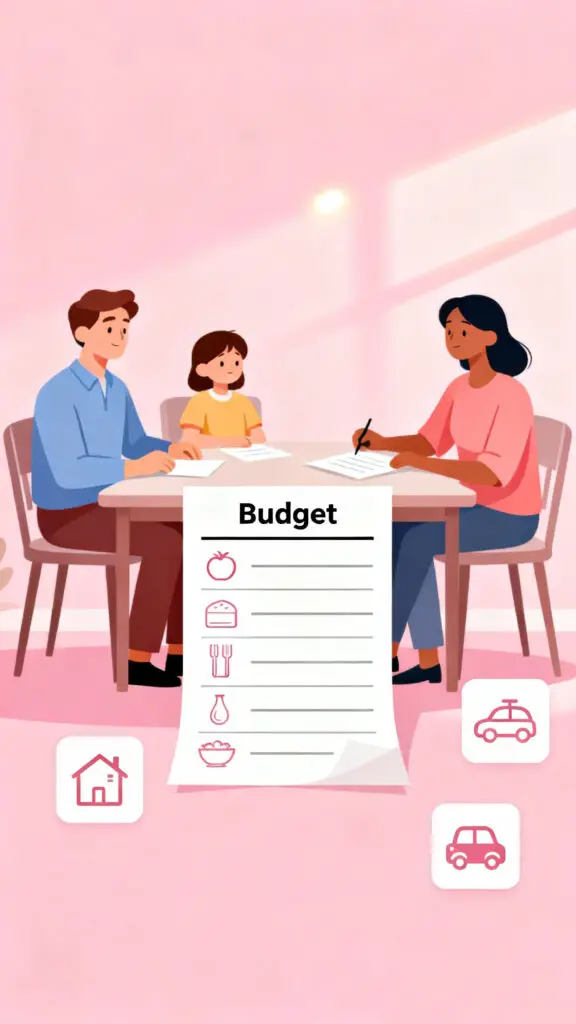
Many people struggle with budgeting because they aim for perfection, which makes the process overwhelming and discouraging, but on one income, starting with a bare-bones budget is far more effective. This means focusing only on essentials such as housing, food, utilities, transportation, basic insurance, and minimum debt payments, so that you know exactly how much it truly costs to keep your household running.
Once the essentials are covered, everything else becomes optional and adjustable, creating clarity and peace instead of stress and panic. A bare-bones budget is not limiting or depressing, it is empowering because it shows that stability is achievable, helps you prioritize spending, and makes saving and planning feel practical instead of impossible.
3. Design Your Lifestyle Around One Income, Not Social Pressure
One of the hardest challenges for families living on one income is resisting comparison, because social media, relatives, and friends often make life look effortless or luxurious, which can create unnecessary pressure to spend beyond your means.
The solution is to intentionally design a lifestyle that fits your income instead of trying to imitate someone else. Choose a home that is comfortable and affordable, a car that meets your family’s needs rather than impressing others, and activities that bring joy rather than stress.
When your lifestyle aligns with your actual income, money stops feeling tight, daily decisions feel lighter, and contentment replaces constant frustration. True peace comes not from appearances or keeping up with others, but from living a life that is in harmony with your resources, priorities, and long-term goals.
4. Make Saving Automatic, Even If the Amount Is Small
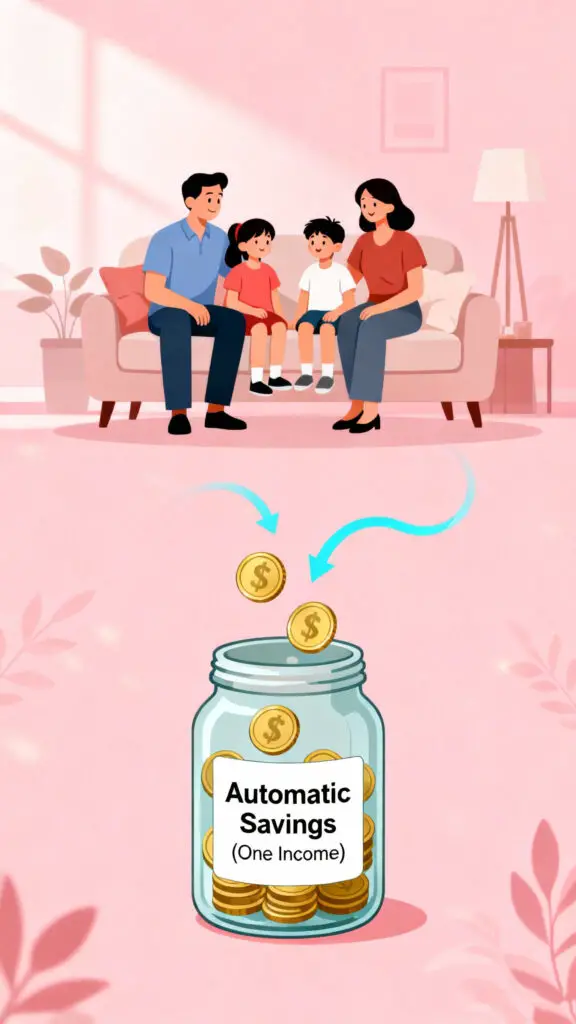
Many families living on one income believe that saving money is unrealistic or something to do later, but in reality, it is the habit of saving small amounts consistently that creates protection and prevents financial struggle over time. Even setting aside a small percentage of income builds a quiet buffer between your family and unexpected expenses, which reduces fear and uncertainty.
Automation plays a powerful role because when savings happen automatically, you no longer depend on motivation or self-control.
5. Eliminate High-Interest Debt as Fast as Possible
High-interest debt is one of the main reasons people feel trapped financially, even when their income should be enough, and on one income, this pressure becomes even heavier because debt removes flexibility and creates constant stress.
Focusing on paying off credit cards and high-interest loans as quickly as possible does not require extreme sacrifice, but it does require clear focus and consistency. Each debt you eliminate frees up money and mental space, allowing your income to stretch further.
6. Learn to Cook Simply and Consistently at Home
Food is one of the easiest places for money to quietly disappear, especially when convenience becomes a habit, and for families living on one income, cooking at home is not a restriction but a powerful tool for stability. This does not mean preparing complicated meals or following strict plans, but choosing simple, repeatable dishes that fit your routine.
Cooking at home keeps grocery spending predictable, reduces daily stress, and often improves health without extra effort.
7. Separate Needs, Comforts, and Luxuries Clearly
Living on one income becomes far more manageable when you clearly understand the difference between needs, comforts, and luxuries, because not everything that feels important is truly essential. Needs are non-negotiable and keep life functioning, comforts add ease and enjoyment, and luxuries are optional and occasional.
Financial stress often comes from confusing these categories, which causes money to disappear faster than expected.
8. Build an Emergency Fund Before Lifestyle Upgrades
When families start feeling slightly comfortable, it is tempting to upgrade phones, furniture, or vacations, but on one income, this can quietly increase risk if there is no safety net in place. Building an emergency fund first protects your family from sudden income loss, medical expenses, or unexpected repairs, preventing panic and debt.
Having backup money creates confidence and emotional security, allowing you to make decisions calmly rather than out of fear. Once emergencies are covered, lifestyle upgrades feel more enjoyable and less stressful because they are built on stability, not financial vulnerability.
9. Teach Everyone in the Household the Why
Living on one income becomes much easier when everyone in the household understands why certain choices are being made and why some things are prioritized while others are delayed, because clarity removes confusion and teamwork replaces frustration.
This includes partners and children, since silence around money often creates misunderstanding, resentment, or unrealistic expectations. When families talk openly about goals, savings, and limits in a calm and honest way, everyone feels included rather than restricted. Children who grow up understanding money boundaries learn patience, responsibility, and gratitude, which helps them make better choices as adults.
10. Reduce Fixed Monthly Expenses Aggressively
Fixed monthly expenses are especially risky on one income because they demand payment regardless of how life changes, which means housing, car payments, subscriptions, insurance, and long-term contracts deserve serious attention. When too much income is locked into fixed costs, even small emergencies can cause stress and panic. Reducing these expenses creates breathing room every single month, not just once.
This may involve downsizing to a more affordable home, choosing a reliable older vehicle instead of a newer one, canceling unused subscriptions, or negotiating insurance and service bills.
11. Value Time, Peace, and Stability Over More Money
Many people believe earning more money will solve their problems, but often it comes at the cost of health, family time, and emotional peace, which slowly drains happiness and connection. Living on one income teaches a powerful lesson that stability is often more valuable than constant hustle and exhaustion.
When expenses are controlled, systems are simple, and expectations are realistic, one income can support a calm and fulfilling life. You gain time to be present with your family, energy to care for yourself, and mental space free from constant financial worry.
12. Redefine What Never Being Poor Truly Means
Never being poor does not mean living a rich or luxurious life, but reaching a point where money no longer creates constant worry, fear, or instability, because you have control over your spending, savings set aside, and the ability to handle unexpected expenses without panic.
On one income, financial security is not built by chasing more money, but by managing what you already earn with intention, patience, and discipline. When you align your lifestyle with your income, avoid unnecessary debt, and create small financial buffers, security becomes a habit rather than a miracle, allowing one income to feel stable, reliable, and enough.
Conclusion
Living on one income does not mean living with fear, lack, or constant stress, it simply means creating a life where money serves your family rather than controlling it. By treating your income as a resource, focusing on essentials, designing your lifestyle intentionally, and making clear, thoughtful choices, you gain control, clarity, and stability. Financial security becomes a natural part of life rather than a distant dream, allowing your family to thrive emotionally, mentally, and practically. One income becomes enough not because you earn more, but because your habits, priorities, and mindset make every dollar count, and peace becomes the true measure of wealth.

Leave a Reply