• Skip to primary navigation
  • Skip to main content

Just Start Investing

We Make Investing Easy

  • Investing
    • Learn About Investing:
    • Investment Accounts
    • Online Brokerage Accounts
    • Investment Vehicles
    • Start Investing:
    • How to Invest in Index Funds
    • Start Investing with Betterment
    • Start Investing with Charles Schwab
  • Banking
    • Best Bank Accounts
    • Types of Bank Accounts:
    • Checking Accounts
    • Savings Accounts
    • CDs and Money Market Accounts
    • Online Banks vs Brick-and-Mortar
  • Credit Cards
    • Best Credit Cards:
    • Best Cash Back Credit Cards
    • Best No Annual Fee Credit Cards of 2021
    • Best Premium Credit Cards of 2021
    • Credit Card Tool: Find the Best Credit Card for Me
    • Learn About Credit Cards:
    • Types of Credit Cards
  • Blog
    • Investing
      • What is Crypto?
        • Crypto
      • What are stocks?
        • Stocks
      • What is a Real Estate Investment?
        • Real Estate Investments
      • What is an IPO?
        • IPO
    • Banking
    • Credit Cards
    • Budget
    • Finances
  • Earn with Crypto
  • Budget
    • How to Build a Budget
    • 24 Tips to Save More Money
  • Resources
  • About
    • Contact
    • Press
    • Learn More
    • Disclaimers
  • Show Search
Hide Search

Business Ideas

How To Write A Business Plan

April 16, 2026 By Ana Rose

Writing a business plan can feel confusing at first, especially when you have many ideas in your mind and you are not sure how to organize them in a way that makes sense, but once you understand the basic structure, it becomes much easier to turn your thoughts into a clear plan that you can actually follow. A business plan is simply a written guide that explains what your business is, what you want to achieve, and how you plan to do it step by step. This article will help you explore ways to write a business plan,  allowing you to take your time and write each part carefully so you can see your business more clearly and make better decisions as you move forward.

How To Write A Business Plan

1. Business Idea

A minimalist vector illustration of a person brainstorming their business idea in a notebook, with a small plant-and-coin icon above their head.

Your business idea is the starting point of your entire plan, and this is where you explain what your business will be about in a simple and clear way so that anyone reading it can understand what you are trying to do. You should describe what product or service you want to offer and why you chose this idea in the first place, including what inspired you or what problem you noticed that made you think this business could work. 

When you explain your idea properly, it becomes easier to stay focused and avoid confusion later on when you start working on other parts of your plan.

2. Business Goals

In this section, you can explain what you want to achieve with your business, both in the short term and in the long term so that you have a clear direction instead of just working without a purpose. You can talk about how much you want to earn, how many customers you hope to reach, or how you want your business to grow over time. 

When your goals are written down in a simple and understandable way, you can check your progress and see if you are moving in the right direction or if you need to make changes along the way.

3. Target Customers

Understanding your target customers means knowing exactly who you are trying to sell your product or service to, and this helps you make better decisions about everything in your business. You should describe their age, lifestyle, needs, and what kind of problems they are facing that your business can help solve. 

When you clearly know who your customers are, you can speak in a way that connects with them and offer something that feels useful to them, instead of trying to please everyone and ending up attracting no one.

4. Market Research

Market research is about learning more about your industry and understanding what is already happening in the market so that you are not making decisions blindly. You can look at other businesses that are offering similar products or services and see what they are doing well and where they are lacking. 

This helps you find your own place in the market and gives you ideas on how you can do things differently or better. When you take time to research properly, you feel more confident because your decisions are based on real information.

5. Products or Services

This section explains in detail what you are going to sell and how it will benefit your customers in their daily lives. You should describe your product or service in a way that shows why it is useful and why someone would choose it instead of other options available.

You can also explain how your product is made or how your service works, so the reader understands it clearly. When you describe your offering properly, it becomes easier for others to see its value and for you to stay focused on delivering something meaningful.

6. Unique Selling Point

Your unique selling point is what makes your business different from others, and this is very important because it gives people a reason to choose you instead of your competitors. You should explain what makes your product or service special, whether it is better quality, lower price, better customer service, or something creative that others are not offering. 

When you clearly understand what makes you different, you can highlight it in everything you do, and this helps your business stand out in a crowded market where many options are available.

7. Business Name and Branding

Choosing a business name and creating your branding is an important step because it shapes how people see your business from the very beginning. You should pick a name that is easy to remember and that connects with what your business offers, while your branding includes things like colors, logo, and overall style. 

When your name and branding match your business idea and target customers, it becomes easier for people to recognize and trust you, and this helps you build a strong image over time without confusing your audience.

8. Marketing Plan

Your marketing plan explains how you will tell people about your business and attract customers in a simple and practical way. You can include ideas like using social media, telling friends and family, creating simple content, or offering discounts to get attention in the beginning. 

When you plan your marketing properly, you are not just waiting for customers to find you, but you are actively reaching out and showing them what you offer. This helps your business grow faster because more people become aware of what you are doing.

9. Sales Strategy

A sales strategy is about how you will actually turn interested people into paying customers, and this step is just as important as marketing because attention alone is not enough. You should explain how you will communicate with customers, how you will present your product, and how you will encourage them to make a purchase. 

When you think about your sales approach in advance, you feel more prepared and confident when dealing with customers, and this can improve your chances of making consistent sales instead of relying on luck.

10. Operations Plan

The operations plan explains how your business will run on a daily basis, including how you will create your product or deliver your service and how you will manage your time and resources. You can think about where you will work, what tools you need, and how you will handle orders or customer requests. 

When your daily operations are planned in a simple and organized way, you can avoid confusion and save time, which allows you to focus more on growing your business instead of constantly fixing problems.

11. Budget and Costs

A digital illustration of a budget planning setup, featuring a laptop with a bar chart, a calculator, and gold coins to represent financial tracking.

In this section, you explain how much money you need to start and run your business, including all the small and big expenses that may come up. You should list things like materials, tools, marketing costs, and any other spending you expect. 

When you understand your costs clearly, you can plan your pricing better and avoid running into financial problems later. This also helps you stay careful with your money and make smarter choices about where to spend and where to save.

12. Pricing Plan

Your pricing plan explains how much you will charge for your product or service and why you chose that price. You should think about your costs, your target customers, and what similar businesses are charging so that your price feels reasonable and fair. When your pricing is planned properly, you can make a profit while still offering value to your customers. 

This balance is important because if your price is too high or too low, it can affect how people see your business and whether they decide to buy from you.

13. Growth Plan

A growth plan is where you think about how your business can expand in the future once it starts running smoothly. You can include ideas like adding new products, reaching more customers, or improving your services over time. When you have a plan for growth, you are not just thinking about today, but you are also preparing for what comes next. 

This helps you stay motivated and gives you something to work towards, even when progress feels slow in the beginning.

14. Review and Adjust

The final step is to review your business plan regularly and make changes when needed, because no plan stays perfect forever once you start working in real life. You should check what is working well and what is not, and then adjust your approach based on your experience. 

When you stay flexible and open to change, your business becomes stronger because you are learning and improving along the way instead of staying stuck with the same ideas.

Conclusion

Writing a business plan may seem like a long process, but when you break it down into simple parts and focus on one section at a time, it becomes much easier to handle and much more useful in real life. A good business plan does not need to be perfect or complicated, because what matters most is that it helps you understand your own ideas and gives you a clear path to follow. When you take your time, stay honest, and keep things simple, your business plan can become a strong foundation that supports your journey as you build and grow your business step by step.


Small Business Plan Checklist

April 15, 2026 By Ana Rose

Starting a small business can feel exciting and overwhelming at the same time, because there are many small details that can easily get missed if you do not have a clear plan in front of you. A checklist can help you stay organized and focused, so you can move step by step without feeling lost or confused. When you break everything into simple parts, the process can start to feel more manageable, and you can make better decisions along the way. This article will help you explore the perfect small business plan checklist that can guide you through the basics, so you can build your business with more confidence and fewer mistakes.

Small Business Plan Checklist

1. Defining Your Business Idea

A minimalist vector illustration of a person at a desk with a glowing lightbulb, representing the birth of a clear business idea.

Before anything else, you can take time to clearly define what your business is about, because this can shape every decision you make later on. You can think about what you want to sell, who you want to serve, and what makes your idea different from others. 

It does not need to be perfect in the beginning, but it should be clear enough that you can explain it easily. When your idea feels simple and focused, you can move forward with more confidence, and it can also become easier to explain your business to others.

2. Identifying Your Target Audience

You can understand your business better when you know exactly who your customers are, because not everyone will be interested in what you offer. You can think about their age, interests, habits, and what problems they are trying to solve. 

This can help you create products or services that feel more useful and appealing to them. When you know your audience, you can also make better choices in marketing and pricing, and your efforts can feel more effective instead of guessing what people might want.

3. Researching Your Market

Before you invest your time and money, you can study your market to see what already exists and where your idea can fit in. You can look at similar businesses and notice what they are doing well and where they may be lacking. This can give you ideas on how you can improve or offer something slightly different.

Market research does not need to be complicated, because even simple observations can help you understand trends, demand, and customer behavior, which can make your business decisions more informed.

4. Choosing a Business Name

Your business name can create the first impression, so you can choose something that feels simple, easy to remember, and related to what you offer. You do not need a very fancy name, because sometimes the simplest names can be the most effective. You can also check if the name is already being used, so you can avoid confusion later on. 

A good name can help people recognize your business more easily, and it can also make your brand feel more complete and professional from the beginning.

5. Planning Your Products or Services

You can clearly decide what you will offer, because this can help you stay focused and avoid trying to do too many things at once. You can list your main products or services and think about how they can help your customers. It can also be helpful to start with a small range, so you can manage everything more easily in the beginning. 

As your business grows, you can always expand, but starting simple can help you maintain quality and avoid unnecessary stress.

6. Setting Your Pricing Strategy

Pricing can feel tricky, but you can keep it simple by considering your costs, your time, and what your customers may be willing to pay. You do not need to set the perfect price right away, because you can adjust it later based on your experience. 

It can help to look at similar businesses and see how they price their products, but you can also think about the value you are offering. A fair price can help you attract customers while still making sure your effort feels worthwhile.

7. Creating a Basic Budget

You can plan your finances by creating a simple budget, because this can help you understand how much money you need to start and run your business. You can list your expected costs, such as materials, tools, or marketing, and compare them with your available funds. 

A basic budget does not need to be detailed, but it can give you a clear idea of your financial situation and help you stay in control.

8. Handling Legal Requirements

Depending on where you live, you may need to take care of certain legal steps before starting your business, and you can check what applies to you. This can include registering your business, getting permits, or understanding basic tax rules. It may feel confusing at first, but you can take it one step at a time and seek simple guidance if needed. 

Taking care of these details early can help you avoid problems later, and it can make your business feel more secure and official.

9. Setting Up Your Workspace

A stylish digital illustration of an organized and sunlit home workspace designed for a small business owner.

You can create a workspace that suits your business, whether it is a small corner at home or a separate area where you can focus on your work. It does not need to be perfect, but it should be comfortable and organized enough for you to work efficiently. A good workspace can help you stay productive, and it can also make your routine feel more structured. 

When your environment feels right, it can become easier to stay consistent and manage your tasks.

10. Building Your Brand Identity

Your brand is how people see and remember your business, so you can think about your colors, style, and the overall feeling you want to create. You do not need a complex design, because even simple and consistent visuals can make a strong impression. 

You can also decide how you want to communicate with your customers, whether it feels friendly, professional, or casual. A clear brand identity can help your business feel more recognizable and can make it easier to connect with your audience.

11. Creating a Marketing Plan

You can plan how you will tell people about your business, because even a great idea needs visibility to grow. You can choose a few simple platforms, such as social media or word of mouth, and focus on them instead of trying everything at once. 

You can share useful content, updates, or offers that can attract attention and build trust. A simple marketing plan can help you stay consistent, and it can make your efforts feel more organized instead of random.

12. Preparing for Sales and Orders

You can think about how you will handle orders, payments, and delivery, because this can affect your customer experience. You can decide how customers will place orders, how you will receive payments, and how you will deliver your products or services. 

Keeping this process simple can make things easier for both you and your customers. When everything is clear and smooth, people can feel more comfortable buying from you, and this can help build trust in your business.

13. Tracking Your Progress

Once your business starts, you can keep track of your sales, expenses, and customer feedback, because this can help you understand how things are going. You do not need complicated tools, because even simple notes can give you useful insights. 

Tracking your progress can help you see what is working and what needs improvement, and you can make better decisions based on real information. 

14. Planning for Growth

As your business develops, you can start thinking about how you want to grow, because having a direction can help you stay focused. You can consider adding new products, reaching more customers, or improving your services over time. Growth does not need to happen quickly, because you can take small steps that feel manageable. 

When you plan ahead, you can be better prepared for new opportunities, and you can build your business in a way that feels comfortable and realistic.

Conclusion

A small business plan checklist can help you turn your ideas into action in a way that feels much more manageable, because instead of trying to figure everything out at once, you can follow a clear path that breaks each step into something simple and easier to handle over time. You can move forward at your own pace without feeling rushed or pressured, and you can adjust your plan whenever you learn something new about your business, your customers, or the way things are working in real life. When you stay organized and keep your focus on one step at a time, the process can start to feel less confusing and more structured, and you can slowly build something that feels meaningful and personal to you. With patience, effort, and a willingness to keep learning along the way, your small business can grow into something that not only supports you financially but also reflects your ideas, your goals, and the kind of work you truly enjoy doing every day.

Work From Home Websites To Find Remote Job

April 12, 2026 By Ana Rose

Finding a job from home can feel confusing at first, especially when there are so many websites and options online, but once you understand where to look and how each platform works, the process can start to feel much easier and more natural over time. Many people today are choosing remote work because it can save travel time, give more comfort, and allow a better balance between personal life and work. You can explore different websites based on your skills, whether you enjoy writing, designing, teaching, or helping customers, and with patience and consistency, you can slowly build something that works for you.

Work From Home Websites To Find Remote Job

1. Upwork

A clean vector illustration of a successful freelancer profile on a laptop, highlighting ratings and professional skills.

Upwork can be a good place to begin if you want to try freelancing because it allows you to create a profile where you can show your skills and apply for jobs that match what you can do. You can find work in writing, graphic design, data entry, and even simple tasks that do not need much experience at the start. 

It can take some time to get your first job, but once you complete a few projects and get good reviews, you can start getting more offers. You can also choose your own rates, which can help you grow your income step by step.

2. Fiverr

Fiverr can work a little differently because instead of applying for jobs, you can create your own service listings and wait for clients to come to you. You can offer simple services like logo design, writing short articles, editing videos, or even voice recordings if you feel comfortable doing that. 

At the beginning, you may need to price your services lower so people can notice you, but over time, you can increase your rates as your experience grows. You can also build a strong profile with reviews, which can help you attract better clients without needing to search for jobs every day.

3. Freelancer

Freelancer can feel similar to Upwork, but it has its own style where you can bid on projects and compete with other freelancers for the same job, which means you need to stay active and keep applying if you want to get noticed over time. You can find many different types of work on the platform, including small one-time tasks as well as longer projects that can last for weeks or even months, so you can choose what fits your schedule and comfort level. 

At the beginning, it can feel competitive because many people may be applying for the same job, but you can slowly improve your chances by writing clear and simple proposals, keeping your profile honest, and showing your skills in a way that clients can easily understand, and as you complete more work, you can build trust and start getting repeat clients.

4. PeoplePerHour

PeoplePerHour can be useful if you want to work with clients from different parts of the world, especially in areas like writing, marketing, and design. You can post your services or apply for projects, which gives you two ways to find work depending on what you prefer. 

The platform can also help you build a reputation based on your work quality and client feedback, which can make it easier to get hired again. You can start with small jobs and slowly move toward better-paying work as you gain more confidence and experience.

5. Toptal

Toptal can be a more advanced platform where skilled professionals can find high-paying remote jobs, especially in fields like software development, finance, and design. The application process can be strict, which means not everyone gets accepted, but if you already have strong skills, it can be worth trying. 

Once you are in, you can get access to serious clients who are willing to pay more for quality work. You can also enjoy more stable projects, which can feel different from smaller freelance gigs that come and go quickly.

6. FlexJobs

FlexJobs can be helpful if you want to avoid scams because every job listed on the site is checked before being posted, which can give you more peace of mind. You can find remote jobs, part-time roles, and flexible work options in many industries, including customer service, writing, and teaching. 

There is a small fee to use the site, but many people feel it is worth it because it can save time and reduce the stress of searching through fake listings. 

7. Remote.co

Remote.co can focus only on remote jobs, which can make your search much easier because you do not have to filter out office-based roles. You can find jobs in customer support, marketing, writing, and other fields that can be done from home. 

The website can also share helpful tips and advice about remote work, which can guide you if you are just starting out. You can explore different companies and apply to roles that match your comfort level, and over time, you can find something that fits your routine.

8. We Work Remotely

We Work Remotely can be one of the largest job boards for remote work, and it can list jobs from well-known companies as well as smaller businesses. You can find jobs in programming, design, customer support, and more, and many of these roles can offer full-time work from home. 

The website is simple to use, and you can apply directly through job listings. If you check it often and apply regularly, you can increase your chances of finding a job that matches your skills and your schedule.

9. Indeed

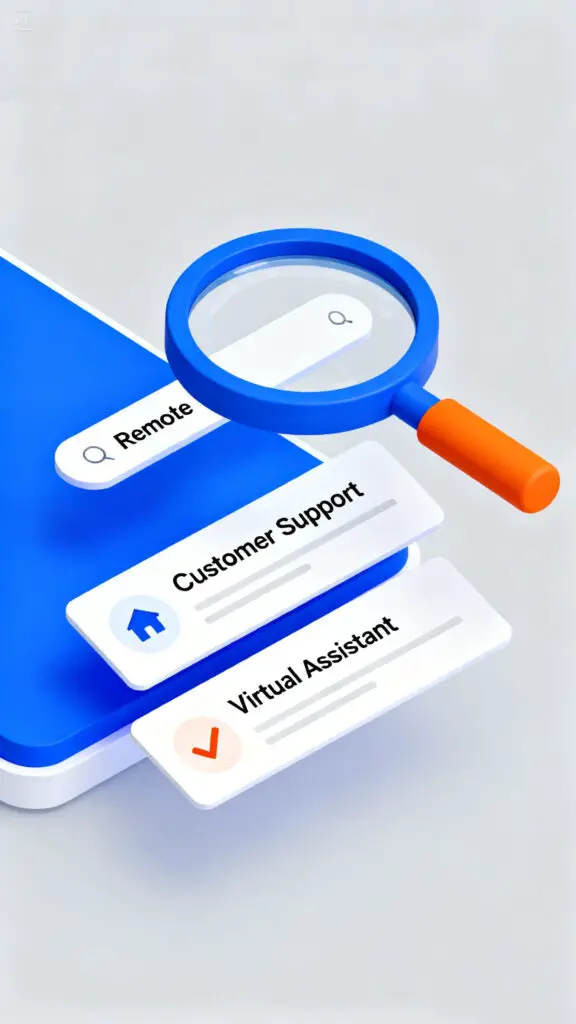
A stylish digital illustration of a search engine interface showing various remote job listings and a search for work-from-home roles.

Indeed can be a popular job search website where you can also find many remote opportunities by simply typing “remote” in the search bar. You can explore jobs in different industries, from entry-level positions to more experienced roles. 

The platform can allow you to upload your resume and apply quickly, which can save time when you are applying to multiple jobs. You can also set alerts so new remote jobs can come to you, which can make your job search feel less stressful and more organized.

10. LinkedIn

LinkedIn can be more than just a job search website because it can also help you build a professional profile and connect with people in your field. You can search for remote jobs and apply directly, but you can also share your work, post updates, and grow your network.

This can help you get noticed by recruiters who may reach out to you with job opportunities. If you stay active and keep your profile updated, you can slowly build trust and open doors that you may not find on other platforms.

11. Guru

Guru can be another freelancing platform where you can find remote work in writing, design, programming, and administrative support. You can create a profile and apply for jobs, and the platform can allow you to manage your work and payments in one place. It can feel simple to use, which can be helpful if you are new to freelancing. 

You can start with smaller jobs and slowly build your reputation, and as you gain experience, you can apply for better projects that can pay more.

12. TaskRabbit

TaskRabbit can be slightly different because it focuses more on tasks, but in some cases, you can find remote or online work like virtual assistance or administrative help. You can set your own rates and choose the type of work you want to do, which can give you more control. 

While many tasks are physical, the platform can still offer opportunities that can be done from home depending on your skills. 

13. Rev

Rev can be a good option if you are comfortable with listening and typing because it offers work in transcription, captions, and subtitles. You can work from home and choose your own hours, which can be helpful if you want something flexible. 

The pay can depend on how fast and accurate you are, so you can improve over time and earn more as you gain experience. 

14. Amazon Mechanical Turk

Amazon Mechanical Turk can offer small online tasks that you can complete from home, such as surveys, data entry, or short research tasks. The pay for each task can be low, but you can complete many tasks in a short time, which can add up slowly. 

It may not replace a full-time income, but it can be useful for beginners who want to explore online work and gain some experience. You can work whenever you want, which can make it flexible and easy to fit into your daily routine.

Conclusion

Working from home can open many doors if you are willing to explore different websites and stay patient while building your experience, because most people do not succeed instantly but improve slowly over time. You can try different platforms, see what feels comfortable, and focus on the type of work that matches your skills and interests. Some websites can bring quick small jobs, while others can lead to long-term work, and by using a mix of both, you can create a better income path. 

Online Jobs For Teens

April 11, 2026 By Ana Rose

Finding ways to earn money as a teen can feel exciting, especially when you realize how many opportunities exist online that you can explore from home. You do not need a big investment or years of experience to get started, because many online jobs can be simple, flexible, and beginner friendly. With some effort, patience, and consistency, you can slowly build your own small income stream while also learning useful skills. These jobs can also help you understand responsibility and time management in a practical way. If you are willing to try different things and stay committed, you can find something that suits your interests and schedule.

Online Jobs For Teens

1. Freelance Writing

Freelance writing can be a great option if you enjoy putting your thoughts into words and feel comfortable expressing ideas in a simple and natural way, because you can start with small tasks like blog posts, short articles, or product descriptions while slowly improving your skills. Many clients are already looking for basic writing help, so you do not need to be perfect in the beginning, and you can learn as you continue working and gaining experience. 

You can also find beginner-friendly opportunities on platforms like Fiverr or Upwork, where you can apply for simple projects, and if you stay consistent and deliver your work on time, you can build trust and increase your earnings step by step.

2. Social Media Management

A trendy vector illustration of a teen managing social media accounts using a laptop and smartphone with engagement icons floating nearby.

If you already spend time scrolling through social media, you can turn that habit into something useful by managing accounts for small businesses or creators. Many people need help posting content, replying to messages, or keeping their page active, and this is something you can learn quickly. You can offer to handle Instagram, Facebook, or TikTok accounts, depending on what you already understand. At the start, you can even work with small pages for a low price to gain experience and as you learn what works and what does not, you can improve your skills and increase your rates over time.

3. Online Tutoring

If you are good at a subject like math, English, or science, you can help other students who may be struggling and need extra support. Online tutoring can be done through video calls, and you can teach younger students in a simple and friendly way. You do not need to be a professional teacher, because explaining things in an easy way can already make a big difference. 

You can promote your services through social media or local groups, and slowly build a small student base. This job can also help you revise your own studies while earning money at the same time.

4. Selling Digital Products

Creating digital products can be a smart way to earn money because you can make something once and sell it multiple times without extra effort. You can design planners, study notes, templates, or even simple artwork, depending on your skills. Platforms like Etsy or Gumroad can help you reach buyers easily. You do not need advanced tools, because even basic designs can sell if they are useful. 

It may take time to get your first sale, but if you keep uploading and improving your designs, you can slowly build a passive income stream that continues to grow.

5. YouTube Content Creation

Starting a YouTube channel can feel slow at first, but it can become a strong income source if you stay consistent and keep improving your content. You can create videos about anything you enjoy, such as studying tips, daily routines, gaming, or simple tutorials. You do not need expensive equipment, because a phone and basic editing can be enough to begin. As your channel grows, you can earn through ads, sponsorships, and affiliate links. The key is to stay patient and keep uploading regularly, because growth can take time but can become rewarding later.

6. Graphic Design

A professional digital illustration of a graphic design workspace showing a logo being created on a computer screen.

If you enjoy designing things like posters, logos, or social media posts, you can offer graphic design services online even as a beginner. You can use simple tools like Canva, which makes designing easy without needing professional skills. Many small businesses and students need designs for their pages or projects, and you can help them at affordable prices. 

You can build a small portfolio by creating sample designs and sharing them online. As you gain more experience and confidence, you can take on better projects and charge higher rates for your work.

7. Affiliate Marketing

Affiliate marketing can be a simple way to earn money by promoting products that you like or find useful. You can share links through social media, blogs, or videos, and when someone buys through your link, you can earn a small commission. You do not need to create your own product, which makes it easier to start. The main focus should be on sharing honest opinions and helpful information, because people are more likely to trust you that way. With time and effort, your links can start bringing in income regularly.

8. Data Entry Jobs

Data entry jobs can be suitable if you prefer simple and repetitive tasks that do not require much creativity. These jobs usually involve typing information, updating records, or organizing data for companies. You can find beginner-friendly tasks online, and you can complete them at your own pace. 

While the pay may not be very high at the start, it can still help you earn some money while learning discipline and focus. If you stay consistent and take on more tasks, you can slowly increase your earnings over time.

9. Selling Handmade Items Online

If you enjoy making crafts like jewelry, candles, or small decorations, you can sell them online and turn your hobby into income. You can use platforms like Instagram or Etsy to showcase your products and reach buyers. Good pictures and simple descriptions can help attract attention. You can start small with a few items and expand as you get more orders. This process can take time, but if your products are unique and well made, people can appreciate the effort and support your work.

10. Blogging

Blogging can be a long-term way to earn money if you enjoy writing and sharing ideas. You can create a blog about topics like student life, budgeting, or hobbies, and post helpful content regularly. Over time, your blog can attract visitors, and you can earn through ads, sponsored posts, or affiliate links. It may take months to see results, but if you stay patient and keep posting useful content, your blog can grow. This can also help you improve your writing and communication skills in a natural way.

11. Virtual Assistant Work

As a virtual assistant, you can help people with small online tasks like replying to emails, scheduling posts, or organizing files. Many business owners look for help with these simple tasks, and you can learn them quickly. You do not need advanced skills, but you should be organized and reliable. You can start by offering your services at a lower price and gradually increase it as you gain experience. This role can also help you understand how online businesses work, which can be useful in the future.

12. Online Surveys and Microtasks

Online surveys and small tasks can be an easy way to earn a little money in your free time. These tasks usually involve answering questions, testing apps, or giving feedback on products. While the pay may not be very high, it can still be useful for small expenses. You can sign up on trusted platforms and complete tasks whenever you have time. It is important to be careful and avoid scams, so always choose reliable websites. This option can be good if you want something simple without much effort.

13. Selling Stock Photos

If you enjoy taking pictures, you can upload your photos to stock websites where people can buy them for use in projects or content. You do not need a professional camera, because even phone photos can work if they are clear and useful. Popular categories include nature, daily life, and simple backgrounds. Once your photos are uploaded, they can keep selling over time without extra work. This can be a slow start, but if you keep adding more photos, your chances of earning can increase.

14. Gaming and Streaming

If you enjoy playing games, you can share your gameplay through streaming platforms or videos and build an audience over time. Many people like watching gaming content for entertainment or learning new tricks. You can stream on platforms like Twitch or upload videos on YouTube. At the start, you may not earn much, but if you stay consistent and engage with viewers, your channel can grow. You can later earn through donations, ads, and sponsorships, which can turn your hobby into something more meaningful.

Conclusion

Online jobs can open many doors for teens who want to start earning early and learn useful skills at the same time. You do not need to try everything at once, because starting with one option and improving slowly can make the process easier and less stressful. Some ideas may take time to show results, but consistency and effort can make a big difference. If you stay patient and keep learning, you can build something valuable over time. The most important thing is to start, because even small steps can lead to bigger opportunities in the future.

Side Hustle Ideas For Stay At Home Moms 

April 10, 2026 By Ana Rose

Staying at home to take care of children and family is full of love and responsibility but stay-at-home moms often think of earning an income from the comfort and warmth of their home. In today’s world, making money is not limited to stepping outside or working a 9–5 job that may feel frustrating and demanding, earning an income through side hustles is a reality half of the world is living and the opportunities grow with every passing day. With time, patience, creativity, and most importantly skills, you can turn your idle time into something productive that can help you earn money without having to step out of your comfort. As a beginner, you do not need to rush or overwhelm yourself, all you need to do is explore your options, stay consistent, and trust the process. This article will help you explore some beneficial side hustle ideas for stay-at-home moms, allow you to become financially secure and independent, that too while taking care of your home and family. 

Side Hustle Ideas For Stay At Home Moms 

1. Freelance Writing

For one of the most popular and reliable ways to earn money online and from the comfort of your home, you can consider the option of working as a freelance writer. Whether it’s blogs, new letters, product descriptions, or short articles, working as a freelance writer can be a great way to earn money through a flexible way. 

You can begin by creating a profile on freelancing platforms such as Fiverr, Upwork, or Freelancer.com and reach potential clients that may need your services. What makes freelance writing a considerable option for stay-at-home moms looking to earn an income is that they can choose the workload and the working hours, making it easier for them to manage their household responsibilities and children alongside. 

2. Home-Based Baking Business

A cozy vector illustration of a home kitchen filled with fresh baked cupcakes and cookies ready for delivery.

If you enjoy spending time in the kitchen and baking goods for your family, turning this delightful hobby into a side hustle might be the perfect pick for you. You can start by offering cupcakes, cakes, and cookies to your friends, neighbors, and people in your area. Many people prefer homemade baked goods because they feel fresh and personal as compared to store-brought items. 

You don’t need a large investment in the beginning, just basic ingredients, simple packaging, and good taste can do the job for you. As your work improves and many people start trusting your business, your orders can increase and you can expand your business, making it the perfect business option for many. 

3. Online Tutoring

For one of the best ways to earn money from the warmth of your home, you can consider putting your knowledge and insight to work and offer your services as an online tutor. Whether it’s English, Maths, or any other particular subject, you can offer support to high school and college students and earn money through the process. 

All you need is a stable internet connection, a laptop, and knowledge, and you’re all set to teach students from your home. You don’t need to be a professional to take on this role, all you need is clarity and patience when you’re clearing concepts. You can opt for Google Meet, Zoom, or Microsoft Teams to offer your services and help someone improve their understanding of a specific subject. 

4. Selling Handmade Crafts

If you’re someone who loves to experiment with their hands and creativity, selling handmade crafts may be the perfect pick for you. Whether it’s handmade candles, jewellery, or home decor, people often love handmade items because of the story they carry and uniqueness they bring along. As a beginner you can start with basic items and gradually improve based on what people request and demand. 

You can begin through social media platforms or advertise your products through local marketplaces and reach potential customers. As you continue to sell more products and expand your side hustle, you can create something meaningful and profitable that not only helps you earn an income, it can also be a testament of your creativity, hardwork, and imagination. 

5. Virtual Assistant Work

As a stay at home mom, you can consider the option of working as a virtual assistant who works with small businesses or influencers and helps them with basic virtual tasks like managing schedules, handling data, or handling their social media presence for them. Many businesses and influencers look for someone reliable who can work remotely and in an efficient way. 

If you know your way around social media apps and can handle online presence in a professional way, working as a virtual assistant may suit you the best. All you need to fit into this role is a stable internet connection, a laptop, and the ability to offer the services your clients are expecting from you. As a beginner you can begin with basic computer knowledge and good communication skills and as you continue to gain experience, this side hustle can allow you to boost your income as well. 

6. Reselling Clothes or Products

Reselling clothes or products is probably one of the most low effort ways to make money because this side hustle is all about buying products and selling them for a profit. You can start by selling unused clothes, accessories, or items from your own home and then slowly expand by purchasing products at lower prices from a thrift store and then reselling them for a margin. 

This idea is less about effort and more about strategy, allowing you to make money in a way that it doesn’t feel frustrating or overwhelming. 

7. YouTube Channel or Content Creation

Starting a YouTube channel can be a good option if you enjoy sharing your daily life, tips, or skills with others. You can create content about topics that intrigue you the most, whether it’s cooking, cleaning, parenting, or anything that interests you. 

Starting a YouTube channel may need consistency and hard work because the growth may be slow but once people start watching your content, you can easily make money through ads, brand deals, and collaborations, making it a considerable option that slowly but surely benefits you. 

8. Affiliate Marketing

Affiliate marketing can be a suitable option for stay-at-home moms who enjoy recommending products and sharing their honest opinions with others, as this side hustle allows you to earn a commission whenever someone purchases a product through your unique link. 

You do not need to create your own product or handle deliveries, which makes it a convenient option for beginners who want to start something simple yet effective. You can promote products through social media, blogs, or even messaging platforms by sharing useful recommendations and experiences in a natural and relatable way. 

9. Home Daycare Services

Home daycare services can be a practical and comfortable way to earn income while staying at home, especially if you are already taking care of your own children and are familiar with managing their daily routines. Many working parents prefer a safe and home-like environment for their children instead of large daycare centers, which creates an opportunity for you to offer your services.
You can start by taking care of one or two additional children and gradually increase based on your comfort level and capacity. This side hustle requires patience, responsibility, and a caring attitude, but it can become a reliable income source while also creating a friendly and social environment for your own children at home.

10. Selling Digital Products

A modern digital illustration showing a laptop screen with aesthetic digital planners and printables for sale.

Selling digital products can be a great option for those who enjoy creating and designing things that can be used repeatedly without needing physical effort every time. You can create planners, printable worksheets, budget trackers, or simple guides that help people stay organized or solve everyday problems.
Once your product is created, you can sell it multiple times without worrying about inventory or shipping, which makes it a long-term and low-maintenance income source. You can promote your digital products through social media or online platforms and gradually build a small business that continues to generate income even when you are not actively working on it every day.

11. Social Media Management

Social media management is a growing field that can be a good fit for stay-at-home moms who are already familiar with platforms like Instagram or Facebook and understand how people interact online. Many small businesses and individuals struggle to stay active on their accounts and often look for someone who can manage their online presence in a consistent and engaging way. Your role may include posting content, replying to messages, and keeping the page active and organized, which can be done from the comfort of your home. 

Conclusion

Being a stay-at-home mom does not mean that you have to limit yourself when it comes to earning and building something of your own, as there are many opportunities that allow you to grow while staying close to your family. Each side hustle comes with its own pace and learning process, which means you do not have to rush or compare your journey with others. What matters the most is choosing something that fits naturally into your routine and allows you to stay consistent without feeling overwhelmed. With time, patience, and effort, even a small beginning can turn into something meaningful that not only supports you financially but also gives you a sense of confidence, independence, and personal growth.

  • « Go to Previous Page
  • Go to page 1
  • Interim pages omitted …
  • Go to page 5
  • Go to page 6
  • Go to page 7
  • Go to page 8
  • Go to page 9
  • Interim pages omitted …
  • Go to page 18
  • Go to Next Page »

The Latest Blog Posts:

  • 14 Profitable Things To Sell On eBay June 20, 2026
  • Mason Jar Crafts To Make And Sell June 19, 2026
  • 12 Best Jobs for Retired Teachers  June 18, 2026

As Featured In:

Just Start Investing Press Strip 2020 B&W

Follow Us:

  • Facebook
  • Twitter
  • Pinterest

Copyright © 2026 · Just Start Investing LLC

  • Contact Us
  • Blog
  • Privacy Policy / Disclaimers