• Skip to primary navigation
  • Skip to main content

Just Start Investing

We Make Investing Easy

  • Investing
    • Learn About Investing:
    • Investment Accounts
    • Online Brokerage Accounts
    • Investment Vehicles
    • Start Investing:
    • How to Invest in Index Funds
    • Start Investing with Betterment
    • Start Investing with Charles Schwab
  • Banking
    • Best Bank Accounts
    • Types of Bank Accounts:
    • Checking Accounts
    • Savings Accounts
    • CDs and Money Market Accounts
    • Online Banks vs Brick-and-Mortar
  • Credit Cards
    • Best Credit Cards:
    • Best Cash Back Credit Cards
    • Best No Annual Fee Credit Cards of 2021
    • Best Premium Credit Cards of 2021
    • Credit Card Tool: Find the Best Credit Card for Me
    • Learn About Credit Cards:
    • Types of Credit Cards
  • Blog
    • Investing
      • What is Crypto?
        • Crypto
      • What are stocks?
        • Stocks
      • What is a Real Estate Investment?
        • Real Estate Investments
      • What is an IPO?
        • IPO
    • Banking
    • Credit Cards
    • Budget
    • Finances
  • Earn with Crypto
  • Budget
    • How to Build a Budget
    • 24 Tips to Save More Money
  • Resources
  • About
    • Contact
    • Press
    • Learn More
    • Disclaimers
  • Show Search
Hide Search

General Personal Finance Blog

15 Most Effective Saving Money Hacks

January 11, 2026 By Ana Rose

Saving money often feels impossible when expenses keep rising and income stays the same, which is why many people give up before they even begin, but the truth is that saving does not require extreme sacrifices or perfect discipline, it simply requires small, smart changes that slowly add up over time. The most effective money saving hacks are not about cutting joy out of your life, but about becoming more aware of your habits and making better choices with the money you already have. When saving becomes part of your routine instead of a struggle, it feels more natural, less stressful, and far more sustainable in the long run. This article will help you explore 15 most effective money saving hacks, guiding you towards a secure and stable financial future. 
15 Most Effective Saving Money Hacks

1. Pay Yourself First

Illustration showing a person saving money first by transferring income into savings using a mobile app on a pastel pink background.

Paying yourself first means setting aside money for savings as soon as you receive your income instead of waiting to see what is left at the end of the month, which usually results in nothing being saved at all. When savings come first, even in small amounts, you train your mind to treat saving as a priority rather than something optional or extra. 

This habit removes the pressure of deciding later and helps you build consistency over time, because the money is already saved before daily spending begins. Slowly, this approach creates a sense of security and control, making saving feel natural instead of stressful or restrictive.

2. Track Every Expense

Tracking every expense helps you clearly understand how your money is being used, because many people underestimate how much they spend on small daily purchases that quietly drain their income. When you write down or record each expense, you begin to notice patterns, habits, and unnecessary spending that you may have ignored before. 

This awareness alone often leads to better choices without forcing yourself to cut everything at once. Over time, tracking helps you stay mindful, reduces careless spending, and makes saving easier because you are no longer guessing where your money is going.

3. Create a Simple Monthly Budget

A simple monthly budget gives your money structure and direction, helping you decide in advance how much you can spend and how much you should save without feeling overwhelmed by complicated rules. When your budget is clear and realistic, it reduces stress and prevents overspending because you already know your limits. 

Budgeting is not about restriction but about clarity, and when you know where your money is meant to go, you feel more confident making daily spending decisions. This clarity makes saving money more consistent and sustainable in the long run.

4. Cancel Unused Subscriptions

Unused subscriptions are one of the easiest ways money slips out of your budget without you noticing, because small monthly charges often feel insignificant on their own. Over time, these forgotten subscriptions can add up to a large amount of wasted money that could have been saved instead. Reviewing and canceling subscriptions you no longer need instantly frees up extra cash without affecting your lifestyle. 

Redirecting that money toward savings helps you build momentum, and seeing immediate results can motivate you to continue improving your financial habits.

5. Use the 24 Hour Rule for Purchases

The 24 hour rule helps control impulse spending by encouraging you to pause before making non essential purchases, giving your emotions time to settle before money is spent. Many purchases feel urgent in the moment but lose their appeal after some time has passed. 

Waiting even one day often leads to better decisions and fewer regrets. This habit protects your savings by reducing unnecessary spending and helps you become more intentional with your money, making saving easier without feeling deprived or restricted.

6. Cook More Meals at Home

Illustration showing a person saving money first by transferring income into savings using a mobile app on a pastel pink background.

Cooking meals at home more often can significantly reduce your monthly expenses, because eating out frequently adds up faster than most people realize. Home cooked meals allow you to plan portions, reduce food waste, and control costs while still enjoying satisfying meals. 

Over time, this habit saves a noticeable amount of money that can be redirected toward savings without feeling like a sacrifice. Even small changes, such as preparing a few extra meals each week, can create meaningful financial improvement.

7. Shop with a List

Shopping with a list helps you stay focused and avoid impulse purchases that increase spending without adding real value. When you know exactly what you need before entering a store, you are less likely to be influenced by discounts or unnecessary items. 

This simple habit keeps spending under control and helps you stick to your budget more easily. Over time, shopping with a list builds discipline and consistency, allowing you to save money without constantly relying on willpower.

8. Automate Your Savings

Automating your savings removes the effort and decision making from the process, ensuring money is saved regularly without depending on motivation. When savings happen automatically, you are less likely to skip or delay them. 

This consistency helps savings grow steadily over time, even if the amounts are small. Automation also reduces stress because you no longer have to think about transferring money manually, making saving a natural and effortless part of your routine.

9. Buy Generic or Store Brands

Choosing generic or store brand products instead of name brands can lead to significant savings without sacrificing quality. Many store brands offer the same ingredients and performance at a lower price, allowing you to stretch your money further.

Making this switch regularly helps reduce grocery and household expenses, freeing up extra cash for savings. These small changes may seem minor, but when practiced consistently, they contribute to noticeable long term financial benefits.

10.Reduce Energy and Utility Usage

Being mindful of energy and utility usage can lower monthly bills without requiring major lifestyle changes. Simple habits like turning off lights, unplugging unused devices, and using water efficiently can create noticeable savings over time. 

These reduced costs free up money that can be added to savings while also promoting responsible resource use. Small daily actions, when repeated consistently, can lead to meaningful financial and environmental benefits.

11. Set Clear Savings Goals

Clear savings goals give your efforts direction and purpose, making it easier to stay motivated when saving feels challenging. When you know exactly what you are saving for, whether it is emergencies, travel, or financial security, saving feels meaningful rather than frustrating. Goals help you measure progress and celebrate milestones, which reinforces positive habits. This clarity keeps you focused and encourages long term consistency.

12. Avoid Lifestyle Inflation

Lifestyle inflation happens when spending increases as income increases, preventing savings from growing. Avoiding this habit allows you to save more without changing your standard of living. By maintaining your current lifestyle and saving extra income, you build financial stability and security faster. This approach helps you benefit fully from income growth instead of letting expenses rise unnecessarily.

13. Use Cash for Problem Spending Areas

Using cash for categories where you tend to overspend creates natural limits and awareness. When the cash runs out, spending stops, making it easier to stay within your budget. This method reduces reliance on credit cards and encourages mindful spending. Over time, using cash helps build discipline and protects your savings from unnecessary expenses.

14. Plan for Irregular Expenses

Irregular expenses like repairs, gifts, or medical costs often disrupt budgets because they are not planned for. Setting aside money in advance helps you handle these expenses without stress or debt. Planning ahead protects your savings and keeps your finances stable. This habit reduces financial surprises and helps maintain consistency in your saving routine.

15. Review Your Finances Regularly 

Regularly reviewing your finances helps you stay aware of progress, adjust plans, and catch problems early. This habit keeps saving intentional and ensures your budget continues to fit your lifestyle. When you check in often, you stay connected to your goals and remain motivated. Consistent reviews help turn saving into a long term habit rather than a temporary effort.

Conclusion

Saving money is not about cutting all enjoyment from your life or following strict rules that feel impossible to maintain, but about building awareness, making small thoughtful changes, and staying consistent even when progress feels slow. When you focus on simple habits like planning ahead, tracking spending, and being intentional with everyday choices, saving gradually becomes part of your routine rather than a constant struggle. These money saving hacks work best when they are applied patiently and realistically, because long term financial stability is built through repeated small actions, not sudden perfection. Over time, these habits help reduce stress, prevent unnecessary debt, and create a sense of security that allows you to handle unexpected expenses with more confidence. By committing to these practical strategies and giving yourself grace along the way, you can create healthier money habits, protect your future, and build a stronger financial foundation that supports both your needs and your peace of mind.

These Apps Will Help You To Get Out Of Debt

January 10, 2026 By Ana Rose

Getting out of debt can feel overwhelming, especially when bills, payments, and daily expenses are constantly pulling at your income. The good news is that you no longer have to manage everything on your own because with the right apps, you can track spending, organize payments, stay motivated, and make smarter financial decisions without feeling stressed or confused. Some apps act like personal money assistants, helping you stay focused, consistent, and in control. Whether you are dealing with credit card debt, loans, or simply trying to stop living paycheck to paycheck, the right tools can make the journey easier and more manageable. This article will help you explore 12 helpful apps that will help you get out of debt, making it easy for you to stay clear of debt and avoid any new debts that can keep you in the unending loop of borrowing and struggling to make ends meet. 

These Apps will Help you to Get Out Of Debt

1. Mint

Mint is a helpful app for anyone who feels confused or stressed about where their money actually goes every month, because it brings all your bank accounts, credit cards, bills, and loans into one simple dashboard that shows your full financial picture without forcing you to do complicated calculations or manual tracking. This makes it easier to finally understand how much debt you really have and how your daily spending habits affect it. 

When you can clearly see patterns like frequent small purchases, forgotten subscriptions, or rising credit card balances, you naturally start making better choices without feeling restricted or guilty, and this awareness alone helps you redirect extra money toward paying off debt while staying consistent and avoiding the cycle of spending blindly and borrowing again.

2. YNAB (You Need A Budget)

YNAB is built around the idea that your money should work for you instead of disappearing without explanation, and it helps you assign a purpose to every dollar you earn so that debt payments become part of your plan rather than something you hope to deal with later when there is extra money left, which rarely happens. 

By encouraging intentional spending and flexible budgeting instead of strict rules, YNAB helps you adjust to real life expenses without feeling like you failed, and over time this mindset shift reduces financial stress, prevents new debt from forming, and creates a sense of control that makes paying off existing debt feel achievable rather than overwhelming.

3. Debt Payoff Planner

Illustration of a person using a debt payoff planner app to track progress and stay motivated on a pastel pink background.

Debt Payoff Planner is designed specifically for people who want a clear and motivating path out of debt, because it allows you to list all your debts in one place and choose a payoff method that suits your personality, whether you prefer quick emotional wins or long term interest savings. 

Seeing visual progress as balances slowly decrease helps you stay committed during difficult months when money feels tight, and instead of feeling stuck in an endless cycle of payments, you begin to see realistic timelines and achievable milestones that remind you your efforts are working and that debt freedom is not a distant dream but a result of consistency and intentional planning and action.

4. EveryDollar

EveryDollar makes budgeting feel less intimidating by keeping things simple and focused on planning ahead rather than reacting to mistakes after they happen, which is especially helpful when debt already feels heavy and stressful. By creating a clear plan for your income at the beginning of each month, you can intentionally set aside money for debt payments before it gets spent elsewhere. 

This proactive approach reduces the chances of overspending while also helping you feel more confident about your financial decisions, because you know exactly where your money is going and why instead of constantly wondering why there is never enough left at the end of the month.

5. PocketGuard

PocketGuard is ideal for people who struggle with overspending without realizing it, because it shows you how much money you actually have available to spend after covering bills, savings, and debt payments, which helps prevent those small but frequent purchases that slowly keep you stuck in debt. 

When you know your safe spending limit, you are less likely to rely on credit cards or borrow money to cover everyday expenses, and this sense of clarity makes it easier to stick to your plan while still enjoying life responsibly, because you are making informed choices rather than reacting emotionally to money stress or temporary desires.

6. Credit Karma

Credit Karma helps you understand how your debt affects your financial future by showing your credit score and explaining the factors that influence it in simple language that does not feel overwhelming or judgmental. 

As you pay down balances and improve your habits, seeing positive changes in your score can be very motivating, because it reminds you that your efforts are making a real difference, and this motivation often encourages people to stay consistent, avoid unnecessary borrowing, and make smarter financial decisions that support long term stability instead of short term relief.

7. Goodbudget

Goodbudget uses a digital envelope system that helps you divide your money into categories like groceries, bills, and debt payments, which creates natural spending boundaries without making you feel restricted or punished. 

When each category has a clear limit, you become more mindful about your choices and less likely to overspend, and this structure helps ensure debt payments are prioritized consistently, allowing you to slowly regain control of your finances while building discipline and awareness that prevents future debt from forming again.

8. Tally

Tally is especially useful for managing credit card debt because it helps organize multiple cards and focuses on reducing interest costs, which can quietly keep people trapped in debt even when they are making regular payments. 

By guiding smarter payment strategies and helping you understand which balances need attention first, Tally removes confusion and guesswork, allowing you to focus on progress instead of feeling overwhelmed by numbers, and this clarity often leads to faster payoff timelines and reduced financial stress over time.

9. Prism

Prism is extremely helpful for people who feel overwhelmed by juggling multiple bills, loan payments, and due dates every month, because it brings everything into one organized place and gently reminds you before payments are due, which helps you avoid late fees and penalties that silently increase your debt without adding any real value to your life. 

When you no longer have to rely on memory or constant checking, your stress levels naturally decrease, and staying consistent with payments becomes much easier and less exhausting, which allows you to think ahead instead of reacting at the last minute, and this sense of control often frees up extra money that would otherwise be wasted on fees and mistakes, making it easier to put that money toward actually reducing your debt.

10. Rocket Money

Illustration showing subscription cancellation through a budgeting app to free money for paying off debt, set on a pastel pink background.

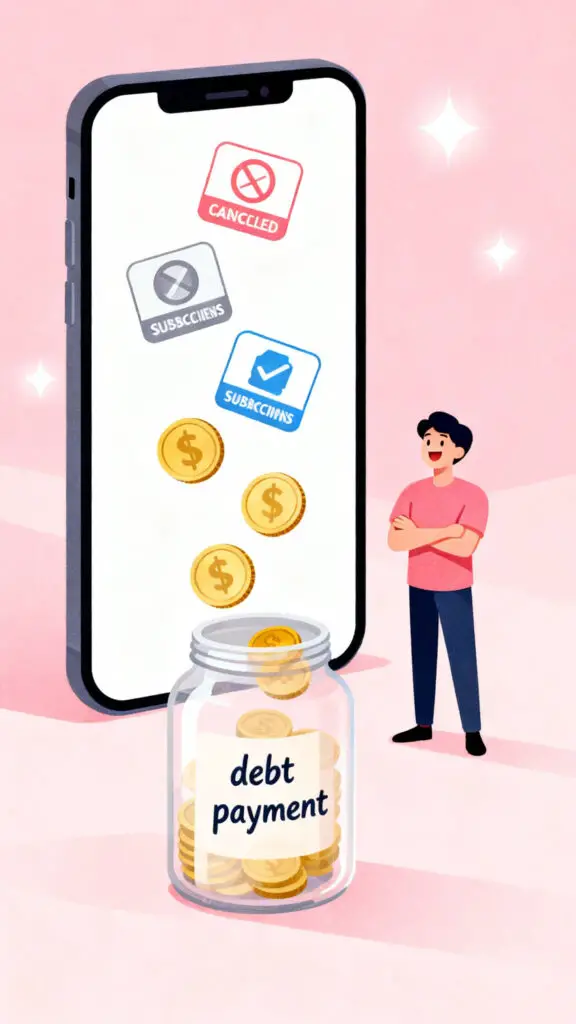
Rocket Money helps you become aware of how much money is slowly leaking out of your budget through subscriptions and recurring charges that you may have signed up for once and forgotten about, which can quietly keep you stuck in debt without you even realizing why progress feels so slow. By clearly showing these expenses and making it easier to cancel what you no longer need, the app can help you reclaim money that can be redirected toward debt payments. While these amounts may seem small at first, over time they add up and create breathing room in your finances, helping you feel more stable, more confident, and less dependent on credit cards or borrowing when unexpected expenses come up.

11. Simple Budget

Simple Budget is ideal for people who feel intimidated or discouraged by complicated budgeting apps, because it focuses on clarity and ease rather than overwhelming features that are difficult to keep up with during stressful financial periods. By allowing you to plan your spending in a straightforward way and track where your money goes without confusion, the app encourages consistency, which is one of the most important parts of getting out of debt. 

12. Zeta 

Zeta is designed for couples who want to manage money together without tension or confusion, making it easier to track shared expenses, plan debt repayment, and work toward common financial goals in a transparent and supportive way. When both partners can see where the money is going and agree on priorities, debt stops feeling like a personal burden carried by one person and becomes a shared responsibility that is handled as a team. 

Conclusion

Getting out of debt is rarely about finding a sudden solution or making one perfect decision, but instead it is about building awareness and using the right tools that make the process feel less overwhelming and more manageable over time. These apps are designed to support you through real life situations by helping you stay organized, avoid costly mistakes, track your progress, and make better choices without pressure or guilt. When you stay informed and remain patient with yourself, debt stops feeling like a permanent trap and starts feeling like a temporary phase that you can work through step by step, eventually allowing you to regain control and reduce financial stress.

How To Pay Off Debt Even When You Are Broke

January 7, 2026 By Ana Rose

Carrying debt when you’re broke can feel burdening, especially when you have to deal with pending bills and other expenses that keep you in the unending loop of earning and spending. Paying off debt is not about having extra money or waiting for extra income to take any action, it’s about building a plan, strategizing, and staying consistent throughout the process. Even small and intentional steps can reduce stress, stop debt from growing, and help you slowly pay it off through consistent and intended actions. This article will help you explore ways to pay off debt even when you’re broke, leading you towards financial independence and a secure and stable financial future. 

How To Pay Off Debt Even When You Are Broke

Stop Adding New Debt

When paying off a debt, an important step is to stop adding new debt to the already financially demanding situation. Stopping new debt doesn’t mean your life has to become miserable, it just means that you need to become more intentional and mindful with where your money goes. 

It’s important to realize that using credit cards, buy now pay later options, and emotional spending can make your budget fall apart more than anything, making it important to consider the option of pausing these spending habits. Instead, try spending through debit cards or cash, allowing you to move forward and leaving behind the unending loophole of falling into debt. 

Get Clear About What You Owe

The next step is to get clear about what you owe, including balances, minimum payments, and interest rates. Seeing the numbers can become intimidating and overwhelming at first, but it’s important to look at the positive side of this step that it brings along clarity and awareness, giving you a number to begin with.

Instead of wondering and living in fear, this step makes it easy by turning your problem into a written form. This step also helps you make informed decisions instead of relying on guesswork, making it a considerable step when working with paying off debt. 

Focus on Minimum Payments First

When money is extremely limited, the first priority is not to pay off debts, it’s to focus on stability and security. If you’re living paycheck to paycheck, your debt repayments can begin with minimum payments first that can help you avoid late fees, penalties, and additional stress. 

A smarter approach would be to direct any extra money towards something much more meaningful like savings or paying off debt while continuing minimum payments on the rest. This small yet thoughtful effort can help you see results over time, reminding you that those seemingly small but intentional efforts can serve you in the long run too. 

Pick One Debt to Pay Off First

Illustration showing a person focusing on paying off one debt at a time to stay motivated while managing debt on a tight budget, on a pastel pink background.

Trying to pay off all your debts at once can feel exhausting and intimidating which is exactly why it is important to choose one debt at a time and focus on paying it off. It can either be the one with the smallest balance or the one with the highest interest. 

Focusing on one debt can help you become more motivated and consistent, allowing you to build progress around one debt at a time. Small wins matter because even when you’re broke they remind you that simple but intentional actions can lead to meaningful results over time. 

Cut Small Expenses Without Stress

Paying off debt doesn’t mean restricting your wants and making the whole process feel like a punishment, it’s more about looking for small but meaningful steps that allow you to manage all your expenses with balance. However, you can look for small and manageable cuts in your spendings, such as impulse shopping, frequent takeouts, or unused subscriptions. 

These changes may not seem significant, but over time, you may come to realize how much much you allow yourself to save simply by being more intentional and mindful towards the money you work so hard for.  The key is to realize that you don’t need to cut every non-essential expense off, you just need to be smart and make decisions that benefit your financial life. 

Use Extra or Unexpected Money Wisely

Another helpful way to pay off debt is to use extra or unexpected money wisely, instead of spending it on unnecessary expenses. Extra money such as tax refunds, gifts, side income, or bonuses can be a great way of paying off debt, if spent intentionally and smartly. 

It can be tempting to spend emotionally, buy new clothes, or go out for fancy dinners, but the truth is that these temporary sources of happiness are some of the biggest financial leaks that keep you stuck in the unending loop of financial dependence. Instead of spending your money on these expenses, a smarter approach would be to direct your money towards paying off debt. 

Ask for Lower Interest or Payment Help

Many people do not realize that creditors are often willing to work with you. All you have to do is call them and ask for lower interest rates, waived fees, or flexible payment plans. 

This does not mean you have failed, it simply means that you are taking responsibility. Even a small reduction in interest can save money and make payments more manageable. It is important to remember that asking for help is not a sign of weakness, it shows that you can make smarter financial choices and handle them with responsibility. 

Increase Income in Simple, Realistic Ways

Relying on a single income when trying to pay off debt can become difficult, especially when your current income isn’t enough and you have to live paycheck to paycheck. A smarter move would be to consider any side hustle such as pet sitting, babysitting, freelancing through freelancing platforms such as Fiverr, Upwork, or freelancer.com, or combining passion with income through baking, cooking, painting, or selling handmade crafts. 

The goal is not to burden yourself but to earn extra cash that can help you pay off your debt fast, allowing you to increase your income and slowly become debt free. 

Build a Small Emergency Cushion

Illustration representing the importance of building a small emergency fund to avoid falling back into debt, on a pastel pink background.

Trying to pay off debt without any savings can be risky because even a small unexpected expense can push you back into borrowing again. A medical bill, car repair, or sudden household expense can undo months of effort if you have no backup money and that is why building a small emergency cushion is important, even if it feels slow. 

You do not need a large amount, even saving $100 to $300 can make a big difference. This small buffer gives you peace of mind and protects you from falling back into debt, helping you stay consistent with your repayment plan.

Track Progress to Stay Motivated

When you are broke, debt payoff can feel slow and discouraging, especially if you do not see visible results right away. Tracking your progress helps you stay motivated during tough months. You can write down your balances, use a simple notebook, or track changes monthly on your phone. 

Watching the numbers slowly go down reminds you that your efforts matter, even if progress feels small. This habit helps turn patience into motivation and keeps you focused on your long-term goal instead of short-term struggles. Seeing progress makes it easier to keep going when things feel hard.

Be Patient and Forgiving With Yourself

Paying off debt is not a straight path, especially when you are living paycheck to paycheck. There may be months when you cannot pay extra or when unexpected expenses slow you down. This does not mean you have failed. Being patient and forgiving with yourself helps you stay consistent instead of giving up. 

Debt often builds over years, so it is unrealistic to expect it to disappear overnight. What matters most is continuing to show up and making intentional choices whenever you can. Progress is made through consistency, not perfection, and every small effort counts.

Redefine What Financial Success Looks Like

While paying off debt, financial success may not look glamorous or exciting, but it is deeply meaningful. Success during this phase means being mindful with money, avoiding unnecessary spending, and choosing long-term stability over short-term comfort. It may mean saying no to certain things now so you can say yes to peace later. 

Living simply while working toward debt freedom is not failure, it is strength and discipline. Redefining success helps you stay proud of your journey, even when life feels restricted, and reminds you that you are building a more secure future step by step.

Conclusion

Paying off debt when you are broke is challenging, but it is absolutely possible with the right mindset and consistent effort. You do not need extra money to start, you need intention, patience, and a clear plan. By stopping new debt, managing expenses wisely, focusing on one step at a time, and staying kind to yourself, you can slowly break free from the cycle of financial stress. Every small action adds up over time, even when progress feels slow. Remember, debt freedom is not achieved overnight, but through steady and thoughtful decisions that lead you toward stability, independence, and peace of mind.

12 Hacks to Live on One Income and Never Be Poor

January 6, 2026 By Ana Rose

Living on one income can feel scary, especially in a world where prices keep rising and financial pressure seems constant. Many families worry that relying on one paycheck means struggle, stress, and always feeling behind. But the truth is, living on one income does not automatically mean living poorly. In fact, many families who choose or are forced into a single-income lifestyle often build stronger money habits, deeper family connections, and long-term stability. Being poor is not just about how much money you earn, it is about living without control, without savings, and without peace of mind. When you learn how to manage one income intentionally, you stop surviving and start building a secure life. This article will help you explore 12  hacks that are not about extreme frugality or denying yourself happiness, they are about mindset shifts and realistic habits that help families live comfortably and confidently.

12 Hacks To Live On One Income And Never Be Poor

1. Treat One Income Like a Fixed Resource, Not a Limitation

Living on one income often feels stressful because it is easy to see it as something “not enough,” but the real breakthrough comes when you stop thinking of it as a limitation and start treating it like a fixed resource that needs careful management, just like your time or energy. Accepting the number you have shifts your focus from chasing what you do not have to working with what is already available, which makes every decision calmer and more intentional. 

Families who succeed on one income are not magically earning more, they are simply aligning their spending with reality, prioritizing needs over wants without resentment, and designing a lifestyle that fits their resources instead of forcing their resources to support an unrealistic way of life. 

2. Build a Bare-Bones Budget Before a Perfect Budget

Illustration showing a family calmly creating a simple bare-bones budget to manage one income with clarity and peace, on a pastel pink background.

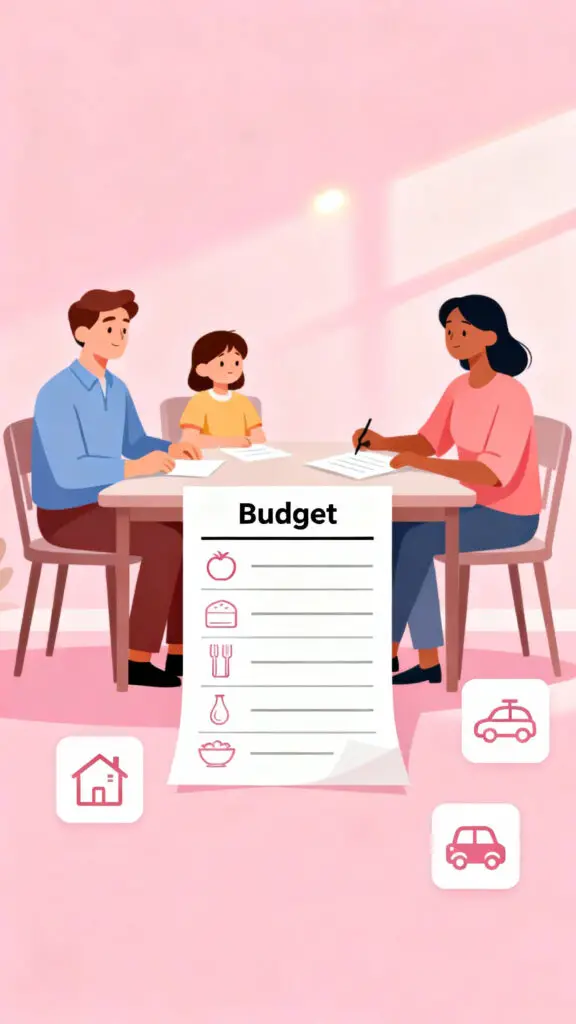
Many people struggle with budgeting because they aim for perfection, which makes the process overwhelming and discouraging, but on one income, starting with a bare-bones budget is far more effective. This means focusing only on essentials such as housing, food, utilities, transportation, basic insurance, and minimum debt payments, so that you know exactly how much it truly costs to keep your household running. 

Once the essentials are covered, everything else becomes optional and adjustable, creating clarity and peace instead of stress and panic. A bare-bones budget is not limiting or depressing, it is empowering because it shows that stability is achievable, helps you prioritize spending, and makes saving and planning feel practical instead of impossible. 

3. Design Your Lifestyle Around One Income, Not Social Pressure

One of the hardest challenges for families living on one income is resisting comparison, because social media, relatives, and friends often make life look effortless or luxurious, which can create unnecessary pressure to spend beyond your means. 

The solution is to intentionally design a lifestyle that fits your income instead of trying to imitate someone else. Choose a home that is comfortable and affordable, a car that meets your family’s needs rather than impressing others, and activities that bring joy rather than stress. 

When your lifestyle aligns with your actual income, money stops feeling tight, daily decisions feel lighter, and contentment replaces constant frustration. True peace comes not from appearances or keeping up with others, but from living a life that is in harmony with your resources, priorities, and long-term goals.

4. Make Saving Automatic, Even If the Amount Is Small

Illustration representing automatic savings habits that help families build financial security on one income, on a pastel pink background.

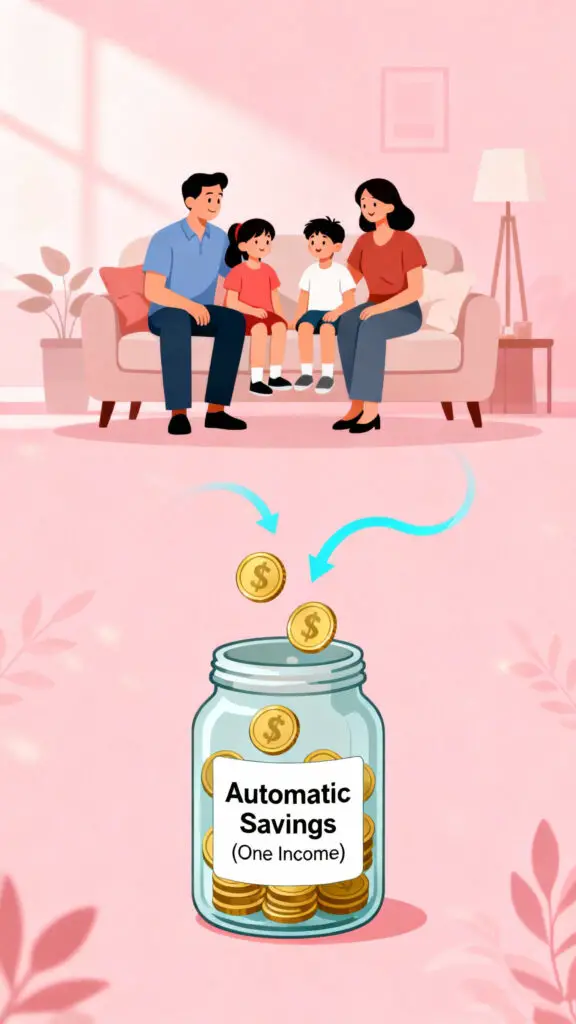
Many families living on one income believe that saving money is unrealistic or something to do later, but in reality, it is the habit of saving small amounts consistently that creates protection and prevents financial struggle over time. Even setting aside a small percentage of income builds a quiet buffer between your family and unexpected expenses, which reduces fear and uncertainty. 

Automation plays a powerful role because when savings happen automatically, you no longer depend on motivation or self-control. 

5. Eliminate High-Interest Debt as Fast as Possible

High-interest debt is one of the main reasons people feel trapped financially, even when their income should be enough, and on one income, this pressure becomes even heavier because debt removes flexibility and creates constant stress. 

Focusing on paying off credit cards and high-interest loans as quickly as possible does not require extreme sacrifice, but it does require clear focus and consistency. Each debt you eliminate frees up money and mental space, allowing your income to stretch further. 

6. Learn to Cook Simply and Consistently at Home

Food is one of the easiest places for money to quietly disappear, especially when convenience becomes a habit, and for families living on one income, cooking at home is not a restriction but a powerful tool for stability. This does not mean preparing complicated meals or following strict plans, but choosing simple, repeatable dishes that fit your routine. 

Cooking at home keeps grocery spending predictable, reduces daily stress, and often improves health without extra effort. 

7. Separate Needs, Comforts, and Luxuries Clearly

Living on one income becomes far more manageable when you clearly understand the difference between needs, comforts, and luxuries, because not everything that feels important is truly essential. Needs are non-negotiable and keep life functioning, comforts add ease and enjoyment, and luxuries are optional and occasional. 

Financial stress often comes from confusing these categories, which causes money to disappear faster than expected. 

8. Build an Emergency Fund Before Lifestyle Upgrades

When families start feeling slightly comfortable, it is tempting to upgrade phones, furniture, or vacations, but on one income, this can quietly increase risk if there is no safety net in place. Building an emergency fund first protects your family from sudden income loss, medical expenses, or unexpected repairs, preventing panic and debt.

Having backup money creates confidence and emotional security, allowing you to make decisions calmly rather than out of fear. Once emergencies are covered, lifestyle upgrades feel more enjoyable and less stressful because they are built on stability, not financial vulnerability.

9. Teach Everyone in the Household the Why

Living on one income becomes much easier when everyone in the household understands why certain choices are being made and why some things are prioritized while others are delayed, because clarity removes confusion and teamwork replaces frustration. 

This includes partners and children, since silence around money often creates misunderstanding, resentment, or unrealistic expectations. When families talk openly about goals, savings, and limits in a calm and honest way, everyone feels included rather than restricted. Children who grow up understanding money boundaries learn patience, responsibility, and gratitude, which helps them make better choices as adults. 

10. Reduce Fixed Monthly Expenses Aggressively

Fixed monthly expenses are especially risky on one income because they demand payment regardless of how life changes, which means housing, car payments, subscriptions, insurance, and long-term contracts deserve serious attention. When too much income is locked into fixed costs, even small emergencies can cause stress and panic. Reducing these expenses creates breathing room every single month, not just once. 

This may involve downsizing to a more affordable home, choosing a reliable older vehicle instead of a newer one, canceling unused subscriptions, or negotiating insurance and service bills. 

11. Value Time, Peace, and Stability Over More Money

Many people believe earning more money will solve their problems, but often it comes at the cost of health, family time, and emotional peace, which slowly drains happiness and connection. Living on one income teaches a powerful lesson that stability is often more valuable than constant hustle and exhaustion. 

When expenses are controlled, systems are simple, and expectations are realistic, one income can support a calm and fulfilling life. You gain time to be present with your family, energy to care for yourself, and mental space free from constant financial worry. 

12. Redefine What Never Being Poor Truly Means

Never being poor does not mean living a rich or luxurious life, but reaching a point where money no longer creates constant worry, fear, or instability, because you have control over your spending, savings set aside, and the ability to handle unexpected expenses without panic. 

On one income, financial security is not built by chasing more money, but by managing what you already earn with intention, patience, and discipline. When you align your lifestyle with your income, avoid unnecessary debt, and create small financial buffers, security becomes a habit rather than a miracle, allowing one income to feel stable, reliable, and enough.

Conclusion

Living on one income does not mean living with fear, lack, or constant stress, it simply means creating a life where money serves your family rather than controlling it. By treating your income as a resource, focusing on essentials, designing your lifestyle intentionally, and making clear, thoughtful choices, you gain control, clarity, and stability. Financial security becomes a natural part of life rather than a distant dream, allowing your family to thrive emotionally, mentally, and practically. One income becomes enough not because you earn more, but because your habits, priorities, and mindset make every dollar count, and peace becomes the true measure of wealth.

How to Live Cheaply: 37 Cheap Living Tips for Families

January 5, 2026 By Ana Rose

Living cheap does not have to mean living poorly and cutting off on all the fun and things you enjoy, it’s more about being intentional with how you spend and save. In today’s economy with rising grocery prices, school expenses, and housing costs, it’s only fair to consider the possibility of adapting a lifestyle that promotes smarter decision making when it comes to the money you work so hard for. The good news is that small but intentional efforts can create meaningful results over time, allowing you to take a step closer to financial freedom and stability. This article will help you explore 37 cheap living tips for families while still allowing them to spend on things and activities they find pleasure in. 

How to Live Cheaply: 37 Cheap Living Tips for Families

1. Create a Simple Family Budget

A simple family budget helps you understand how much money comes in and where it goes each month, so you can plan bills, groceries, and savings without stress, and when everyone knows the limits, it becomes easier to avoid overspending and make better choices together.

2. Track Every Expense for One Month

Tracking every expense for one month opens your eyes to small spending habits that usually go unnoticed, like snacks or online orders, and once you see the full picture, you can gently cut unnecessary costs without feeling restricted or overwhelmed by sudden changes.

3. Meal Plan Weekly

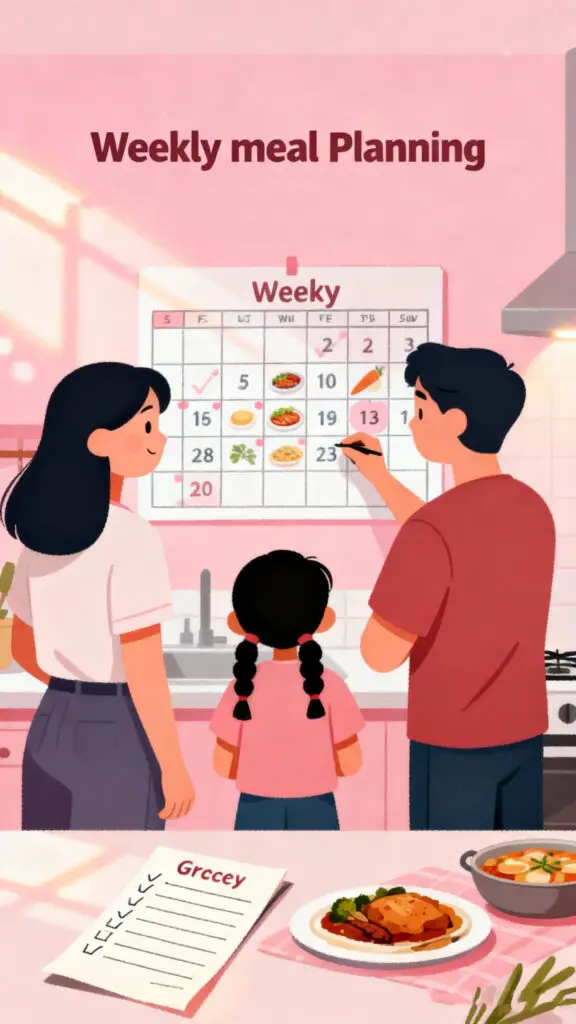
Illustration showing a family planning weekly meals together to save money and reduce food waste, on a pastel pink background.

Weekly meal planning saves money by helping you buy only what your family needs, reduce food waste, and avoid last-minute takeout, while also making daily cooking easier and less stressful because you already know what meals are coming next.

4. Cook at Home More Often

Cooking at home costs much less than eating outside and gives you control over portions and ingredients, and even simple meals prepared at home regularly can save families a large amount of money while also creating more shared family time.

5. Buy Generic and Store Brands

Generic and store-brand products are often just as good as famous brands but cost less, and choosing them for everyday items like flour, oil, soap, and cleaning supplies can quietly lower your monthly expenses without changing your lifestyle or comfort.

6. Shop With a Grocery List

Shopping with a grocery list helps you stay focused and avoid impulse purchases, and when you stick to what you planned, you spend less money, waste less food, and leave the store feeling more confident instead of confused or guilty.

7. Use Cashback and Reward Apps

Cashback and reward apps give you small amounts of money back on purchases you already make, and although the savings feel slow, they add up over time and can help pay for groceries, fuel, or household needs without extra effort.

8. Buy in Bulk for Essentials

Buying essential items in bulk saves money per unit and reduces frequent shopping trips, especially for families, and when you focus on items used daily, bulk buying becomes a smart habit instead of unnecessary spending.

9. Reduce Food Waste

Reducing food waste means using leftovers, storing food properly, and checking the fridge before shopping, and when families stop throwing away food, they also stop throwing away money that could be used for savings or important needs.

10. Cut Back on Eating Out

Eating out feels convenient but quickly becomes expensive for families, and by limiting restaurant visits and choosing special occasions instead, you save money while making those outings feel more meaningful and enjoyable for everyone.

11. Cancel Unused Subscriptions

Unused subscriptions quietly drain money every month, and when you cancel services you rarely use, you free up extra cash without affecting daily comfort, which makes this one of the easiest ways to start living more cheaply.

12. Lower Utility Bills

Lowering utility bills starts with small habits like turning off lights, using fans wisely, and unplugging unused devices, and when the whole family participates, monthly savings grow while children also learn responsibility and awareness.

13. Wash Clothes in Cold Water

Washing clothes in cold water reduces electricity use and protects fabric quality, and this simple change does not affect cleanliness but quietly lowers energy bills while helping clothes last longer, saving replacement costs in the future.

14. Line Dry Clothes When Possible

Line drying clothes saves electricity and reduces wear from dryers, and even drying a few loads naturally each week can lower utility bills while keeping clothes in better condition for a longer time.

15. Buy Secondhand Clothing

Secondhand clothing is especially helpful for families with growing children, because kids outgrow clothes quickly, and buying gently used items allows parents to save money while still providing comfortable and presentable outfits.

16. Accept Hand-Me-Downs

Accepting hand-me-downs from friends or relatives reduces clothing expenses and avoids unnecessary shopping, and when items are still in good condition, they serve the same purpose without adding pressure to the family budget.

17. Shop End-of-Season Sales

Shopping during end-of-season sales allows families to buy clothes, shoes, and essentials at much lower prices, and planning ahead helps avoid last-minute purchases that usually cost more and strain the budget.

18. Limit Impulse Purchases

Impulse purchases often happen due to emotions or boredom, and by waiting a day before buying non-essential items, families avoid regret spending and keep their money for things that truly matter.

19. Use Cash for Discretionary Spending

Using cash for optional spending like snacks or small treats makes money feel more real, and when the cash runs out, spending naturally stops, helping families stay within limits without complicated rules.

20. Teach Kids About Money Early

Teaching children about saving, spending, and patience helps them grow into financially responsible adults, and when kids understand money basics, they also support family goals instead of adding pressure through unnecessary demands.

21. Choose Free Family Entertainment

Illustration representing a family enjoying free entertainment and quality time together without spending money, on a pastel pink background.

Free family entertainment like parks, libraries, and home movie nights provides joy without cost, and these simple activities often create stronger bonds and happier memories than expensive outings.

22. Reduce Screen-Based Paid Entertainment

Reducing paid screen entertainment saves money and encourages healthier habits, and families often discover that children become more creative and engaged when screens are limited and alternatives are offered.

23. DIY Home Maintenance

Doing basic home maintenance yourself saves labor costs and builds useful skills, and many small repairs can be learned easily, helping families avoid expensive service calls for minor issues.

24. Compare Insurance Rates Annually

Comparing insurance rates each year helps families avoid overpaying, and even small reductions in premiums create noticeable yearly savings without changing coverage quality or daily routines.

25. Drive Less When Possible

Driving less by combining errands or walking short distances saves fuel money and reduces car wear, and over time, this habit lowers transportation costs while also benefiting health and the environment.

26. Maintain Your Car Regularly

Regular car maintenance prevents major breakdowns and expensive repairs, and when families take care of their vehicles, they extend their lifespan and avoid sudden financial emergencies.

27. Avoid Lifestyle Inflation

Avoiding lifestyle inflation means not increasing spending just because income increases, and keeping expenses stable allows families to save more, reduce stress, and enjoy financial progress without pressure.

28. Buy Fewer but Better Items

Buying fewer but better-quality items reduces frequent replacements, and although quality costs more upfront, it saves money long-term while reducing clutter and waste inside the home.

29. Plan Affordable Vacations

Affordable vacations like road trips or staycations provide rest and family bonding without heavy spending, and these simpler trips often feel more relaxed and memorable than expensive travel plans.

30. Set Savings Goals

Clear savings goals give purpose to saving money, and when families know what they are working toward, they stay motivated and consistent even when progress feels slow.

31. Build an Emergency Fund

An emergency fund protects families from sudden expenses like medical bills or repairs, and even small monthly contributions slowly build security and peace of mind.

32. Avoid High-Interest Debt

High-interest debt takes away future income through interest payments, and avoiding or paying it down helps families breathe easier and use their money for growth instead of survival.

33. Negotiate Bills When Possible

Negotiating bills with service providers can lower monthly expenses, and many companies offer discounts simply because you asked, making this a powerful but often ignored money-saving habit.

34. Use the Library More

Libraries offer free books, movies, learning programs, and quiet spaces, helping families save money on entertainment and education while encouraging reading and curiosity in children.

35. Plan Purchases Around Sales

Planning purchases around sales prevents rushed buying and full-price spending, and when families wait patiently, they save money without sacrificing quality or necessities.

36. Grow Some of Your Own Food

Growing even a small amount of food at home reduces grocery costs and teaches children patience and responsibility, while also providing fresh, healthy options for family meals.

37. Focus on Gratitude Over Spending

Focusing on gratitude helps families appreciate what they already have, reducing the urge to spend for happiness, and this mindset supports long-term contentment and financial peace.

Conclusion

Living cheaply as a family is not about cutting joy or living with constant restrictions, but about making thoughtful choices that protect your peace and your future. When families spend with intention, reduce waste, and build healthy money habits together, financial pressure slowly decreases. These small daily decisions create stability, confidence, and freedom, allowing families to focus more on love, time, and meaningful moments rather than money worries.

  • « Go to Previous Page
  • Go to page 1
  • Interim pages omitted …
  • Go to page 13
  • Go to page 14
  • Go to page 15
  • Go to page 16
  • Go to page 17
  • Interim pages omitted …
  • Go to page 73
  • Go to Next Page »

The Latest Blog Posts:

  • 14 Profitable Things To Sell On eBay June 20, 2026
  • Mason Jar Crafts To Make And Sell June 19, 2026
  • 12 Best Jobs for Retired Teachers  June 18, 2026

As Featured In:

Just Start Investing Press Strip 2020 B&W

Follow Us:

  • Facebook
  • Twitter
  • Pinterest

Copyright © 2026 · Just Start Investing LLC

  • Contact Us
  • Blog
  • Privacy Policy / Disclaimers