• Skip to primary navigation
  • Skip to main content

Just Start Investing

We Make Investing Easy

  • Investing
    • Learn About Investing:
    • Investment Accounts
    • Online Brokerage Accounts
    • Investment Vehicles
    • Start Investing:
    • How to Invest in Index Funds
    • Start Investing with Betterment
    • Start Investing with Charles Schwab
  • Banking
    • Best Bank Accounts
    • Types of Bank Accounts:
    • Checking Accounts
    • Savings Accounts
    • CDs and Money Market Accounts
    • Online Banks vs Brick-and-Mortar
  • Credit Cards
    • Best Credit Cards:
    • Best Cash Back Credit Cards
    • Best No Annual Fee Credit Cards of 2021
    • Best Premium Credit Cards of 2021
    • Credit Card Tool: Find the Best Credit Card for Me
    • Learn About Credit Cards:
    • Types of Credit Cards
  • Blog
    • Investing
      • What is Crypto?
        • Crypto
      • What are stocks?
        • Stocks
      • What is a Real Estate Investment?
        • Real Estate Investments
      • What is an IPO?
        • IPO
    • Banking
    • Credit Cards
    • Budget
    • Finances
  • Earn with Crypto
  • Budget
    • How to Build a Budget
    • 24 Tips to Save More Money
  • Resources
  • About
    • Contact
    • Press
    • Learn More
    • Disclaimers
  • Show Search
Hide Search

General Personal Finance Blog

23 Lesser-Known Ways to Save Money Fast

November 12, 2025 By Ana Rose

Saving money can often feel like a big challenge especially when your paycheck seems to disappear as soon as it arrives but the good news is that you don’t need to make huge sacrifices or live without comfort to start saving fast. In most cases, it’s the small and unnoticed habits like tiny expenses or extra subscriptions that quietly eat away at your money. By making a few simple changes and being a little more mindful, you can save much more than you think. These 23 lesser-known tricks aren’t complicated or extreme, they’re easy and practical steps that fit right into your daily life and help you see results quickly.

ways to save money

1. Unsubscribe From Marketing Emails

Illustration of a woman smiling while unsubscribing from marketing emails on her laptop, with sale icons and envelopes disappearing around her on a pastel pink background, symbolizing breaking free from shopping temptations.

Those promotional emails with words like “flash sale” or “limited-time offer” might seem harmless, but they’re quietly designed to make you spend more than you plan to. Every time you see one, it can spark that little urge to buy something you don’t really need. The best way to stop the temptation is to unsubscribe from these mailing lists. 

2. Use the “24-Hour Rule” Before Buying

Illustration of a man pausing before buying something online, with a shopping cart on his phone and a large 24-hour clock behind him on a pastel pink background, symbolizing mindful spending and avoiding impulse purchases.

We’ve all made impulse buys that felt exciting in the moment but later ended up collecting dust. To avoid that, try the simple 24-hour rule which includes whenever you feel tempted to buy something, wait one full day before deciding. That short pause gives your the mind time to think clearly and helps you see whether it’s something you truly need or just want in the moment.

3. Switch to a Lower-Cost Phone Plan

Many people pay for data, minutes, or extra features they never actually use. It’s worth checking your phone plan to see if there’s a cheaper option that fits your real needs. Carriers often have budget or family plans that can easily cut your monthly bill without changing much about your service. 

4. Make Coffee at Home

That quick coffee stop on your way to work might feel like a little treat, but over time, it adds up more than you think. Making coffee at home is simple, affordable, and can still feel just as comforting, especially when you use your favorite mug or experiment with syrups and creamers you love. 

5. Use Cashback and Reward Apps

If you’re going to spend money anyway, it feels great to earn a little bit of it back. Cashback and reward apps give you a small percentage of your purchase back when you shop for everyday things like groceries, clothing, or even household items, meaning you save money without changing your habits too much. 

6. Cancel Free Trials Before They Renew

We’ve all signed up for free trials thinking we’ll cancel them later and then completely forgot about them until we see the unexpected charge appear on our bank statement. A simple trick to prevent this is to set a reminder on your phone the very day you start the trial, so you can cancel before it renews and avoid charging you for something you weren’t planning to keep. 

7. Shop During Off-Seasons

Buying things like clothes, home decor, or sports gear during the off-season can save you a huge amount of money without giving up on quality, because stores try to clear old stock to make space for new seasonal items and often drop their prices much lower than usual. For example, you can grab winter coats in spring, school supplies after the school rush slows down, or summer swimwear in fall for half the price. 

8. Use a Water Bottle Instead of Buying Drinks

Buying bottled drinks or sodas every day might seem like a small expense, but it slowly adds up over time without you even noticing. A simple way to fix this is by carrying your own reusable water bottle wherever you go. It’s not only cheaper but also much better for the environment since it cuts down on plastic waste. 

9. Split Streaming Accounts With Family

Many streaming platforms let you create several profiles under one account, which means you don’t need to pay for multiple subscriptions to watch your favorite shows. Instead, you can share one account with trusted family members or close friends and split the cost. It’s a simple and fair way to save money without missing out on the movies or series you love. 

10. Try a “Pantry Challenge” Week

Before your next grocery trip, take a week to cook only with what’s already in your fridge or pantry. This can help you become creative with what you already have, making the most of your current resources, helping you reduce food waste, and giving your wallet a break. 

11. Turn Off Lights and Devices When Not in Use

It’s easy to forget a light or charger on when you leave the room, but those little moments quietly raise your electricity bill over time, so it really helps to make a habit of switching everything off when it’s not needed, using natural light during the day, and even trying energy-saving bulbs that last longer and use less power. Small choices like these don’t take much effort yet end up saving both money and energy month after month.

12. Pay Bills on Time to Avoid Late Fees

Even though late fees seem small, they can pile up surprisingly fast, so setting phone reminders or turning on automatic payments makes sure your bills are always paid before the deadline, saving you from extra charges, protecting your credit score, and keeping your finances running smoothly without any last-minute stress.

13. Borrow or Rent Instead of Buying

Before spending on something you’ll only use once or twice, it’s always smarter to see if you can borrow it from a friend, neighbor, or even rent it online. Not only does it save money, this hack also reduces clutter and creates a nice sense of connection, reminding you that you don’t always have to own everything to enjoy it.

14. Repurpose Old Items Before Replacing Them

You don’t always have to buy something new when your old stuff starts to wear out. With a little creativity, you can give things a second life like using old glass jars to store snacks or turning worn-out t-shirts into cleaning cloths. It’s a fun and easy way to save money while making good use of what you already have. 

15. Carpool or Use Public Transport

Driving alone can be one of the biggest expenses which is why it is considered smart to carpool or use public transport. You can carpool with coworkers, neighbors, or friends and make the ride less boring than they have to be. 

16. Compare Prices Before Every Purchase

Prices can vary a lot from one store to another, so taking just a few extra minutes to check online or visit another shop before buying something, whether it’s groceries, clothes, or electronics, can end up saving you more than you’d expect.

17. Cook Once, Eat Twice

Cooking in larger portions is one of those simple habits that save both time and money because when you double your recipe, you can easily pack leftovers for lunch the next day or freeze them for busy evenings. This can help you avoid expensive takeout, reduce food waste, and keeps you stocked with homemade meals that are both comforting and cost-effective.

18. Sell Things You Don’t Use Anymore

Everyone has a few things lying around that no longer get used, maybe clothes that don’t fit, gadgets collecting dust, or old furniture, and instead of letting them take up space, selling them online or at a local thrift market is a wonderful way to declutter your home while putting a bit of extra cash back in your pocket.

19. Use a Savings Jar for Spare Change

It may sound a little old-fashioned, but having a small jar where you drop your loose coins or small bills can quietly turn into something meaningful over time, especially when you do it consistently, and it’s even more fun if you turn it into a small family challenge, watching the jar fill up together as a reminder that saving doesn’t always have to be complicated or serious to make a difference.

20. Skip Extended Warranties

When stores offer extended warranties on electronics or home appliances, it often sounds like extra protection, but in reality, most of those warranties go unused and end up being money you didn’t need to spend because the products already come with built-in coverage, so by politely declining those add-ons, you can keep a good amount of cash in your pocket without really missing out on anything important.

21. Negotiate Rates on Bills and Services

It might surprise you how often companies like internet providers, insurance firms, or cable services are willing to lower your monthly rate or offer special discounts if you just take a few minutes to call and ask. Don’t hesitate to reach out and check if there’s a better plan available because one simple conversation can save you a good amount every year without changing much about your current service.

22. DIY Small Home Repairs

You don’t always need to call in a professional for every small home issue, because with all the easy tutorials online these days, you can learn to fix simple things like a leaky tap, a loose shelf, or a paint touch-up yourself, which not only saves you money but also gives you that feeling of pride knowing you managed to take care of your space with your own hands.

23. Track Your Spending Daily 

One of the simplest but most powerful ways to save money faster is to write down what you spend each day or use a budgeting app to see where your money actually goes. Once you start noticing your habits, it becomes much easier to make changes and feel in control of your finances without needing to cut out everything you enjoy.

Conclusion

Saving money doesn’t always have to mean giving up on the things you love, sometimes, it’s just about being a little more mindful and intentional with how you spend. These small, often overlooked habits can quietly make a huge difference over time, helping you build better control over your finances without feeling restricted or overwhelmed. When you start making tiny changes like cooking at home, tracking your spending, or comparing prices, you begin to see how every little decision adds up to something much bigger. The best part is that saving becomes less about sacrifice and more about peace of mind, freedom, and knowing that you’re building a future that feels secure and balanced.


37 Simple Hacks to Save Half Your Income — No One Talks About This!

November 10, 2025 By Ana Rose

Saving half of your income may sound like a distant dream that only financial experts or people with six figure salaries can achieve but the truth is that it’s less about how much you earn and more about intentions and what strategies you use. By using small hacks and tricks, you can create room for savings, making it easy for you to save half of your income without having to hold back on things you enjoy. This article will help you explore 37 simple hack to save half of your paycheck, bringing you one step closer to financial freedom without having you feel deprived or restricted. 

37 Simple Hacks to Save Half Your Income — No One Talks About This!

1. Automate Your Savings

Illustration of a woman happily automating her savings as coins flow from her checking to savings account on her laptop, with a pastel pink background symbolizing easy and consistent money management.

A helpful trick is to automate the transfers from your checking account to your savings account, so that way, you don’t have to intentionally put effort into transferring the money, relying less on willingness and more on consistency. 

Over time, those small deductions from your checking account can add up to something meaningful, making it easy for you to save in an effortless and low maintenance way. 

2. Use the 50/30/20 Rule With a Twist

In most cases, the 50/30/20 rule includes saving 20% of your budget but since we’re looking to save almost half of our income, you can flip the script by saving 40-50% of your income for saving and using the rest of the amount for your needs or wants. 

3. Track Every Dollar for One Month

Spend at least one month tracking your expenses, whether big or small. Keeping a check on your spending habits can help you stay aware of what you choose to spend on, allowing you to make conscious decisions regarding your spending habits. 

4. Cancel Unused Subscriptions

Illustration of a woman cancelling unused digital subscriptions on her phone surrounded by floating app icons, on a pastel pink background representing mindful budgeting and expense control.

It’s easy to subscribe to services and not use them later on. Whether it’s streaming services, fitness, or apps, it is important to review your bank statements regularly and cancel anything you don’t use anymore. 

5. Use Cash for Non-Essentials

Using cash can help you feel more mindful about your hard-earned money because this way, you can see money physically leaving your hands, allowing you to become more intentional with what you spend on. 

6. Cook in Batches

For another helpful trick, you can make large portions of meals like curries, soups, or pastas, and then store them for later. Not only does this prevent ordering food whenever you feel hungry, it also cuts down on food waste, making this trick a considerable option. 

7. Limit Food Delivery

Food deliveries and tips can impact your budget in a far worse way than you might ever realize. Instead of depending on deliveries, a better approach is to cook at home or pick up food yourself, which is not only cheaper but also a healthier option. 

8. Buy Generic for Everyday Items

Generic or store-brand products often have the same ingredients as name brands. Switch for items like cleaning supplies, medications, or pantry staples, and you’ll notice your bill drop without sacrificing quality.

9. Shop with a List

It’s easy to fall for impulse purchases when you don’t have a list to stick to, which is exactly why it is important to make a list each time you go shopping. It can help you stay focused on what truly matters instead of falling for those tempting promotions. 

10. Try a “No-Spend” Weekend

Pick one week each month and try to avoid anything that isn’t an absolute necessity. Whether it’s takeout, those coffee runs, or a shopping spree, aim to not spend on any non-essential expenses for the whole week. 

11. Lower Your Utility Bills

Simple habits like turning off unused lights, switching to LED bulbs, or adjusting your thermostat can make a big difference to your monthly bills, making it a considerable option if you want to save half of your income. 

12. Re-Negotiate Your Bills

Many companies can provide you with a better plan or better rate if you simply ask them. You can call your internet service providers, insurance or phone providers, inquire about discount or loyalty offers, and save a few dollars.

13. Use Cash-Back Apps and Cards

Earn money back on purchases you already make using cash-back apps or reward cards. It’s effortless saving but just make sure to pay off your card balance each month.

14. Meal Plan Around Sales

Instead of shopping for whatever sounds good, a helpful trick is to plan your meals according to what’s on sale. This can help you keep grocery costs to the lowest while making the most of what you buy from the sale. 

15. Unfollow Temptation Accounts

It’s easy to be tempted by promotional emails or those social media accounts that urge us to buy. A simple yet highly effective way to deal with these accounts is to unfollow these pages and reduce our exposure to influencers or ads promoting these products, making you less likely to give in to impulse purchases. 

16. Wait 24 Hours Before Big Purchases

Whenever the urge to buy something hits you, it is important to  pause and reflect on your decision for at least 24 hours. In most cases, the urge to buy fades away, however, if it persists, you can go on and buy it. This 2 hour gap can help you reflect on your decision, allowing you to critically analyse the need of what you want to buy and if it’s worth the money you work so hard for. 

17. Buy Used When Possible

Buying used items, whether it’s furniture, electronics, or clothes can help you save a significant amount without compromising on quality. Many secondhand items are in excellent condition, making it a smart and pocket-friendly choice.

18. Sell What You Don’t Use

Go through your closets, drawers, or storage and sell things you no longer use like old gadgets, clothes, or decor. This not only declutters your space but also puts extra cash in your pocket for your savings goals.

19. Review Your Insurance

Many people stick with the same insurance plans for years without realizing they could get a better deal. Reviewing your policy every year can help you find cheaper options or bundle deals that offer the same coverage for less.

20. Cancel Unused Gym Memberships

If you hardly ever visit the gym, it’s better to cancel your membership and switch to home workouts or free YouTube fitness channels. This way, you stay active without paying monthly fees that silently eat into your budget.

21. Use a Budgeting App

Budgeting apps can make money management simple by tracking expenses, sending reminders, and showing where your money goes. They give you a clear picture of your spending habits, helping you stay accountable to your savings goals.

22. Start a Side Hustle

A side hustle doesn’t have to be complicated, it could be freelancing, tutoring, or selling homemade crafts. The extra income can accelerate your savings progress, helping you reach your goals faster without cutting too deep into your lifestyle.

23. Save Every Windfall

Whenever you receive unexpected money like a bonus, gift, or tax refund, set it aside instead of spending it right away. Treating this as “extra savings” can quickly grow your financial cushion.

24. Buy in Bulk Wisely

Buying in bulk can save you money on everyday items, but it’s important to focus only on things you actually use often. This prevents overspending and ensures you’re saving, not wasting.

25. Cut Down on Coffee Runs

Those daily coffee runs might seem harmless, but they add up over time. Making coffee at home can help you save a surprising amount each month without giving up your morning ritual.

26. DIY Your Beauty and Self-Care

Instead of spending big on salon visits or spa treatments, try DIY beauty routines at home using simple, natural ingredients. You’ll still feel pampered while keeping your budget under control.

27. Avoid the “Sale Trap”

Sales can be tricky as they make you feel like you’re saving when you’re actually spending more. Before buying, ask yourself if you would still want the item if it wasn’t on sale, if not, skip it.

28. Use Public Transport or Carpool

Driving alone can be costly with fuel, parking, and maintenance expenses. Using public transport or carpooling with coworkers can save you hundreds each month while being kinder to the environment.

29. Track “Small Leaks”

Small expenses like snacks, apps, or quick online buys can quietly drain your budget. Tracking these leaks helps you identify unnecessary habits and redirect that money toward savings.

30. Use a Separate Account for Savings

Keeping your savings in a separate account makes it less tempting to dip into them. This creates a psychological barrier that helps you treat savings as untouchable, long-term money.

31. Reassess Subscriptions Quarterly

Every few months, review your subscriptions to make sure you’re only paying for what you actually use. This habit prevents unnoticed renewals from quietly adding up over time.

32. Embrace Minimalism

Minimalism isn’t about deprivation, it’s about valuing quality over quantity. When you focus on buying fewer, better things, you naturally spend less and save more without feeling restricted.

33. DIY Simple Repairs

Learning a few basic home or clothing repair skills can save you hundreds each year. Whether it’s fixing a leaky faucet or sewing a button, these small tasks help you avoid unnecessary service costs.

34. Borrow Instead of Buy

Before purchasing something you’ll rarely use like tools or books, see if you can borrow it from a friend or neighbor. It’s an easy way to save money and build community connections.

35. Save Change and Small Bills

Put aside your spare change or small bills in a jar each day. Over time, these small amounts can grow into a surprising sum that adds to your savings without much effort.

36. Set Specific Savings Goals

Having clear goals, like “saving for an emergency fund” or “buying a new car,” gives your savings purpose. When you know what you’re saving for, it’s easier to stay motivated and consistent.

37. Reward Yourself (Smartly)

Saving doesn’t mean you can’t treat yourself. Reward yourself occasionally in budget-friendly ways like a cozy night out or a small treat to stay motivated without undoing your progress.

Conclusion

Saving half of your income might sound challenging at first, but with the right mindset and a few intentional habits, it’s completely doable. The key isn’t to deprive yourself, but to spend more mindfully, making every dollar work toward your future rather than slipping away unnoticed. Start small, stay consistent, and over time, these little hacks will add up to something powerful like financial peace, freedom, and the confidence that you’re in control of your money.

How to Make $10K/Month in 2025 (No Guesswork – 18 Proven Methods!)

November 9, 2025 By Ana Rose

Making $10K in a month may sound like a distant dream that only financial experts and business owners can achieve, but in reality, with a clear plan and right strategy, it can become possible for you too. The truth is that you don’t need fancy degrees or big investments to save, you just need a bit of consistency, patience, and hard work, and you’re all set to go. Whether you want to quit your typical 9-5 job, build a side hustle that works for you, or simply increase your financial stability, there are many methods that can help you make $10K in one month. This article will help you explore 18 helpful methods to build wealth in 2025, helping you build financial security and stability in the long run. 

How to Make $10K/Month in 2025 (No Guesswork – 18 Proven Methods!)

1. Start a Freelance Service Business

For a simple and straightforward method to earn money in today’s day and age, consider starting a freelance service business. You can explore your area of expertise, whether it’s writing, graphic designing, social media management, or video editing. 

You can reach potential clients through freelancing platforms such as Fiverr, Upwork, or freelancer.com, all without huge investments. 

2. Build a Digital Product (Ebooks, Templates, or Courses)

Illustration of a woman creating digital products like ebooks and templates on her laptop, with floating icons around her on a pastel pink background symbolizing passive income and creativity.

Creating and selling digital products is one of the easiest and smartest ways to build passive income because you only have to put in the effort once, but you can keep earning from it again and again. You can turn your knowledge or creativity into something valuable like ebooks, Notion templates, online courses, or digital planners that people actually want and need. Once your product is ready and available online, it can keep selling automatically with little to no extra work, allowing you to earn money even while you sleep or focus on other projects.

3. Start a YouTube Channel

Illustration of a content creator filming for her YouTube channel with recording gear and social media icons around her on a pastel pink background, symbolizing creative growth and digital success.

What better way to earn money in today’s digitally oriented world than to take advantage of social media platforms? Although a youtube channel may take time to build and grow, what matters the most is that this platform has become a serious income stream over the past few years. Once your channel and audience grows, you can earn through ads, affiliate links or sponsorships. 

4. Launch a Subscription-Based Newsletter

If you write and love sharing your ideas, put your skills to work and create a paid newsletter through platforms like Substack or ConvertKit. People are willing to pay for valuable insights, updates, or niche expertise, and as far as $10K are concerned, a loyal audience can easily help you get there through subscriptions. 

5. Offer Consulting or Coaching Services

If you have skills in a particular area, whether it’s fitness, cooking, career growth,or marketing, offering consulting or coaching services can be a great option. All you need to do is share your knowledge with other people through physical classes or if you prefer a digital approach, consider using Zoom, Microsoft Teams or Google Meet.

If you’re a beginner, a better approach would be one-on-one sessions but if you’re skilled, you can expand to group coaching as well. 

6. Build a Personal Brand on Social Media

In 2025, personal branding matters more than ever because people want to connect with real and relatable personalities instead of just polished content. Whether you’re on TikTok, Instagram, or LinkedIn, building an honest brand helps you attract sponsorships, collaborations, and even your own product opportunities. When you stay consistent, show your real side, and keep your audience’s trust, your followers naturally turn into loyal customers who believe in what you create.

7. Start an Affiliate Marketing Business

Another helpful method to build wealth is by starting an affiliate marketing business which is all about promoting other people’s products and earning a commission. You can do this through blogs, YouTube, or social media platforms like Instagram.
Once your audience trusts your word, the income through affiliate marketing can become steady with minimal effort over time. 

8. Build an Online Store (E-commerce or Dropshipping)

In today’s digitally oriented world where online stores are common and can help you earn a lot of money, e-commerce and dropshipping are a great option for building wealth. All you need to do is set up an online store on Etsy or Shopify and start selling your physical or digital products.
For a beginner-friendly option, you can go with dropshipping which is all about shipping the item from the store to the customer without having to handle the inventory, making it a low maintenance and low effort job. 

9. Start a Print-on-Demand Business

For an in-demand option, you can consider starting a print-on-demand business which is all about designing customized t-shirts, mugs, tote bags, or hoodies without having to manage stock. You can upload your design to sites like Redbubble or Printify, and each time someone buys your design, you get your share of the profit. 

10. Invest in Real Estate (Even with Little Money)

For one of the most effective ways to build wealth, you can consider investing in real estate. You don’t have to start big, just invest in fractional real estate platforms or REITs (Real Estate Investment Trusts) that pay monthly dividends and build wealth gradually.

11. Create an Online Course or Workshop

If you have a skill that people are eager to learn, whether it’s marketing, writing, graphic design, or something as specific as resume building, turning that knowledge into an online course can become a steady and rewarding income source. With platforms like Teachable, Skillshare, and Thinkific, you can easily record lessons, upload materials, and start enrolling students from all over the world. 

12. Offer a Done-for-You Service

If you’re someone who enjoys getting hands-on and delivering complete results, offering a done-for-you service can be your fast track to earning big. Businesses are constantly looking for people who can take over time-consuming tasks like social media management, video editing, website design, or branding and they’re willing to pay premium rates for it. By offering a full solution instead of just a consultation, you not only save them time but also build long-term client relationships that can bring you consistent high-paying work and help you reach your $10K/month goal faster.

13. Start a Blog and Monetize It

Blogging might sound old-school, but in 2025, it’s still one of the most reliable ways to earn money online, especially if you focus on niche topics and SEO. By creating helpful, high-quality posts that solve people’s problems, you can build consistent traffic and later monetize through ads, affiliate marketing, and sponsored collaborations. The beauty of blogging is that it compounds over time, as your traffic grows, your income grows too, and it becomes a long-term digital asset that keeps paying you even when you’re not actively writing.

14. Sell Digital Art or Photography Online

If creativity is your strength, your artwork or photography can become a steady income source with the right strategy. Platforms like Etsy, Shutterstock, and Adobe Stock make it easy to upload your creations and earn every time someone downloads or purchases them. The more high-quality pieces you share, the more your portfolio grows and starts generating consistent sales, turning your passion for art or photography into a dependable stream of passive income over time.

15. Offer Social Media Management

In today’s world, every business knows it needs a strong social media presence, but not everyone has the time, creativity, or consistency to maintain it. If you understand content creation, engagement strategies, and algorithms, offering social media management can be both fulfilling and financially rewarding. You can charge anywhere from $1,000 to $3,000 per client each month, and with just a few steady clients, you can easily cross the $10K/month mark while building strong, long-term business relationships.

16. Flip Items for Profit (Reselling)

Reselling is one of the simplest and fastest ways to make money without needing any special skills. The idea is simple, buy undervalued or secondhand items from thrift stores, garage sales, or online marketplaces and sell them for a profit. Once you learn what sells best, like collectibles, furniture, or tech gadgets, you can scale your flipping game and turn it into a full-fledged business. With consistency and a good eye for deals, this side hustle can quickly grow into a major income stream.

17. Build a Membership Community

If you have expertise or insights that people value like fitness, business, or creative skills, building a membership community can create stable recurring income. You can offer members exclusive content, live Q&A sessions, templates, or group discussions in exchange for a small monthly fee. 

18. Combine Multiple Income Streams

One of the smartest ways to hit and maintain a $10K/month income is by combining different income sources instead of relying on just one. For example, you can freelance as a writer, create an online course, and sell digital templates, all at the same time. This approach keeps your income stable, gives you more flexibility, and allows you to keep earning even if one stream slows down. 

Conclusion

Reaching $10K a month in 2025 isn’t just a dream, it’s a goal that’s entirely possible when you mix consistency and strategy. The digital world has opened countless doors, and whether you’re teaching a skill, managing clients, or selling your own creations, there’s space for everyone willing to put in steady effort. The real secret is to start small, stay consistent, and build one step at a time. With every new client, course sale, or digital product, your income grows and your confidence strengthens. If you stay focused and combine multiple streams of income, that $10K/month milestone will stop being a distant target and start becoming your new normal.

The Easiest Finance Planning Tricks That Actually Work

November 7, 2025 By Ana Rose

Money management can feel intimidating and overwhelming, especially when you’re struggling with bills, unexpected expenses, and the temptations to spend on things you like. But the truth is that you don’t need a complex plan that is too hard to understand, you just need consistent habits that make managing money simple, easy, and most importantly, stress-free. Whether you’re just starting as a beginner, living paycheck to paycheck, or trying to grow your savings, finance planning tricks can help you in ways you may not realize. This article will help you explore some helpful finance planning tricks, allowing you to build financial stability and security over time. 

The Easiest Finance Planning Tricks That Actually Work Graphic

Follow the 60-20-20 Rule

For a helpful trick, consider the 60-20-20 rule that perfectly divides our monthly income into three meaningful categories. According to this rule, 60% of your paycheck is assigned to your needs or these basic expenses including rent, utilities, groceries, or transportation, 20% of your paycheck is assigned to your personal spending or things you find fun, including takeouts, subscriptions, or shopping for clothes, lastly, 20% of the budget is set aside for savings, investments, or debt repayments, if there are any. 

What makes this rule a considerable option is the fact that it strikes the right balance between discipline and comfort, allowing you to prioritize your needs and savings, while still making room for things you enjoy, making it easy for you to stay motivated and consistent with the challenge. 

Automate Your Savings

Illustration of a woman smiling as she watches money transfer automatically between bank accounts on her laptop, representing the concept of automating savings, on a pastel pink background with glowing highlights.

Another helpful trick for easy financial planning is to automate your savings. When you rely on willpower or the intention to manually move savings from your checking account to the savings account, it often becomes difficult, and at times, you may even forget to do it. This is exactly why it is essential to set up the automation so that whenever your paycheck hits your checking account, you don’t have to manually transfer the amount.
Even a small amount, for example, $50 or $75 can add up quickly over time, helping you build savings with every chunk you set aside. This trick is effortless and highly effective, allowing you to rely less on willpower and more on consistency, making it a smart one for financial planning, 

Track Every Expense for One Month

It’s easy to lose track of your hard-earned money when you don’t know your weak areas or things you’re most likely to spend on. Whether it’s those daily coffee runs, late night snacks, or random subscriptions you subscribe to but barely use, these seemingly harmless expenses may seem small but if you add them up, they usually end up eating away a huge chunk of your budget, making it crucial to track them. 

For one full month, write down or track every single expense using a notebook or a budgeting app, and once you see where your money goes, you can take intentional decisions to control and modify your habits. 

Start an Emergency Fund

Life isn’t always sunshine and rainbows, at times, it can take an unexpected turn which further leads to unexpected expenses. Whether it’s job loss, a sudden medical emergency, or car repair, it’s crucial to deal with every unexpected expense with confidence and responsibility.  

For another helpful trick, start an emergency fund for one month’s worth of expenses or even just $100 and over time, try to build it up to cover 3–6 months of expenses. The catch is to keep this emergency fund in a separate account that is easily accessible yet not that accessible for you to dip into whenever the temptation to spend arises. Having a safety net not only helps you in unforeseen circumstances, it also provides you with a peace of mind and a sense of calm, knowing there’s a safety cushion in case things don’t go as planned. 

Pay Yourself First

When payday arrives, most people pay their bills first and then set aside the leftover money for savings, which is often nothing. A more thoughtful and smart approach is to pay yourself first whenever your paycheck hits your account.

This step might seem simple but beyond the act of saving, it’s more about the shift in mindset that tells you to prioritize savings and give it as much importance as you do to your needs and wants. 

Use Cash or Debit for Everyday Spending

If you find yourself overspending with your credit card, switch to cash or debit card for daily purposes. This way you can see the money leaving your hands and your bank account, pushing you to be more intentional and thoughtful with the money you work so hard for. 

You can also try the envelope method which involves creating categories and assigning a specific amount to each category. Once you run out of cash for a specific category, that’s your cue to stop spending on that area. 

Create Mini Savings Goals

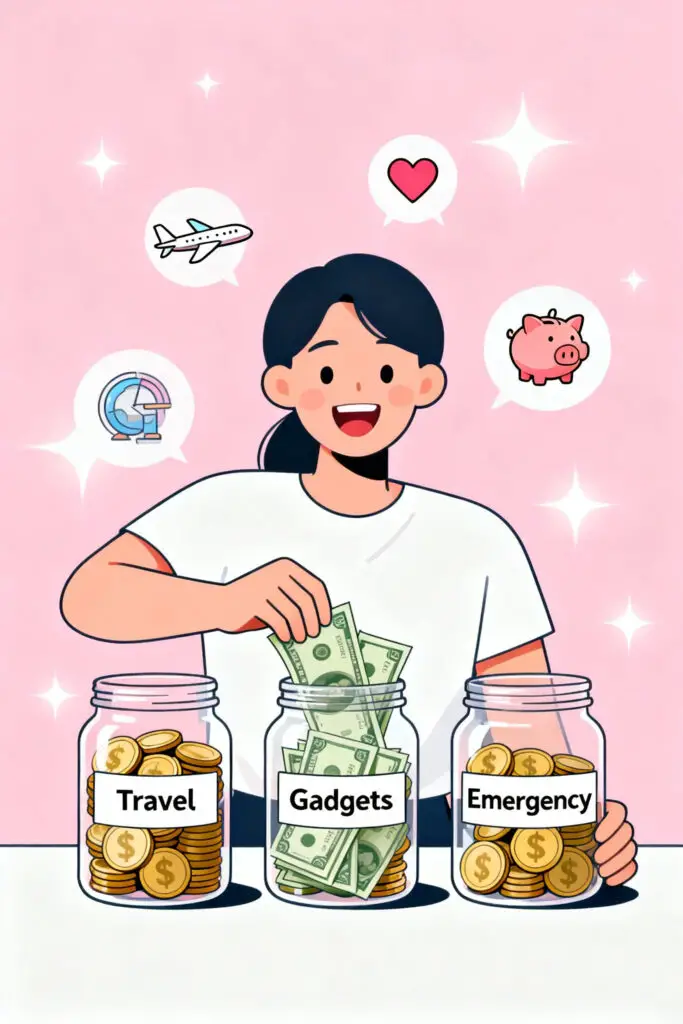
Illustration of jars labeled “Travel,” “Gadgets,” and “Emergency” being filled with coins by a smiling person, symbolizing mini savings goals, on a pastel pink background with light highlights and soft pastel style.

Saving money can sometimes feel like a big, never-ending challenge, especially when your goals are too large or vague. Instead of saying, “I want to save more money,” break your goal down into smaller, realistic targets that are easier to achieve and track. For example, you could decide to save $20 every week or $100 every month for something specific like a short trip, a new gadget, or even a small emergency cushion. 

These mini goals give you quick wins and a sense of achievement that keeps you motivated to continue saving. When you see your small efforts turning into results, it becomes easier to stay committed, and over time, these smaller savings start to add up to something truly meaningful.

Review Subscriptions and Hidden Costs

In today’s world, it’s so easy to sign up for subscriptions and completely forget about them, whether it’s those streaming services, fitness apps, premium memberships, or even old online accounts that quietly renew every month. These hidden costs may seem small individually, but together they can eat up a big part of your monthly budget without you even realizing it. 

Take a few minutes to go through your bank statement or app store subscriptions and cancel anything you don’t use often or really need. This simple step can help you save more than you think, freeing up money that can go straight into your savings or toward something that actually adds value to your life.

Follow the 24-Hour Rule for Purchases

We’ve all made impulse purchases, whether it’s something that catches your eye online or in a store, and before you know it, it’s in your cart. To stop this habit, try following the 24-hour rule which is all about waiting for a full day before making the purchase whenever you want to buy something that isn’t absolutely necessary. 

This pause can give you time to think about whether you truly need the item or if it’s just a momentary desire. This small habit can save you from wasting money on things that only bring short-term satisfaction and helps you focus your spending on what really matters to you. Over time, you’ll notice you’re spending less on impulse and saving more without feeling deprived.

Set a Weekly Budget, Not Just Monthly

Monthly budgets sound great in theory, but in real life, spending doesn’t always follow a neat, predictable pattern. Some weeks, you might have more social plans or bills, while others are quieter and that’s exactly why setting a weekly budget can make managing your money easier and more realistic. 

Start by dividing your monthly income into four parts and use each portion for one week’s expenses. This way, you’ll have a clearer idea of how much you can afford to spend each week, and if you overspend one week, you’ll know to slow down the next. Weekly budgeting keeps you more aware and in control, helping you catch bad spending habits before they get out of hand. 

Learn to Say “No” Financially

Sometimes, the hardest part of managing money isn’t budgeting, it’s saying no. There will always be sales, friends making plans, or things you feel like buying “just because.” but learning to say no, even when it’s tempting, is one of the most powerful habits you can build for financial success. 

Remind yourself that every time you say no to something unnecessary today, you’re saying yes to a bigger, more important goal in the future like paying off debt, building your savings, or taking that dream trip. It’s not about denying yourself everything you enjoy, but about choosing wisely and spending on what truly matters. 

Review and Adjust Regularly 

Your financial plan isn’t something you set once and forget, whether it’s your income increasing, bills going up, or your priorities shifting, your plan should adjust along with them. Set aside some time every few months to look at where your money is going, how much you’re saving, and whether your current strategy is working for you. 

If you notice that you’re constantly overspending in one area or not saving as much as you’d like, make small, realistic changes instead of drastic ones. Reviewing your finances regularly helps you stay on track and ensures your plan fits your current lifestyle, not your past one. 

Conclusion

At the end of the day, financial planning doesn’t have to be complicated or stressful, it’s really about finding simple habits that fit into your life and sticking with them. You don’t need to have a huge income or be perfect with numbers to manage your money well, you just need small, consistent steps that build up over time. By following these easy tricks, like automating your savings, setting mini goals, tracking your expenses, and learning to say no when needed, you can slowly create a system that supports your goals instead of holding you back. The earlier you start applying these small habits, the faster you’ll notice a positive change, not just in your finances but in your overall sense of stability and confidence.

Bi Weekly Savings Challenge

October 24, 2025 By Ana Rose

Saving money can be difficult especially when you’re living from paycheck to paycheck, figuring out ways to make money last till the end of the month. But the truth is that you don’t need to save thousands of dollars in one go, you just have to follow a realistic plan, stay consistent, and gradually build savings in smaller and manageable ways. The biweekly savings challenge is one of the easiest and most practical challenges that helps you save through small steps without having you feel overwhelmed and frustrated by the process. Whether you’re saving up for an emergency fund, a vacation, or simply trying to build a better financial life, this article will help you explore the dynamics of a biweekly savings challenge that can help you save money every two weeks in a way that feels doable and fits your lifestyle as well. 

Bi Weekly Savings Challenge Graphic

Step 1: Understand What a Bi-Weekly Savings Challenge Is

A biweekly savings plan is a structured plan that helps you set aside a specific amount every two weeks. Instead of saving randomly or waiting until the end of each month, this challenge makes saving more consistent and manageable. 

Moreover, this method is quite helpful for those who receive their paychecks biweekly, helping them align their savings with their income and lifestyle. Over time, these small biweekly amounts can grow into something big and meaningful, giving you the motivation to move on with the challenge. 

Step 2: Set a Clear Goal

Before you get into the complexities of the challenge, it is crucial to know what you’re saving for. Whether it’s a big future purchase, an emergency fund, or something as simple as building a stable financial life, having a clear goal can give your progress meaning and direction, making it easier for you to stick with it through every thick and thin. 

You need to be specific and realistic with your goal, know it on a deeper level, and calculate how long it will approximately take you to save what you’re aiming for. Asking yourself these questions can help you achieve your target more effectively, leaving no room for unrealistic timelines and expectations. 

Step 3: Break Your Goal into Manageable Parts

Illustration of a woman organizing her savings goal into smaller parts using labeled jars and a notepad on a pastel pink background, representing manageable biweekly saving steps.

Once you know your total savings goal, the big figure may intimidate or overwhelm you and that’s exactly where the biweekly thing comes in. Divide your goal by the number of biweekly periods you plan to save for, for example, if you want to save $1,000 in one year, that will be about $38 every two weeks. 

Seeing a smaller number can make the process feel a bit easy and doable as compared to the big, frightening figure. It is crucial to remember that progress and consistency matters more than perfection, and each time you choose to show up every two weeks, that’s worth appreciating because it shows your willingness and discipline. 

Step 4: Automate Your Savings

To make the process easier and convenient to carry out, you can consider the possibility of automating the saving process. Set up an automatic transfer from your checking account to your savings account every two weeks, ideally on payday. This way you don’t have to rely on willpower and can save without having to think about it. 

Automation turns saving into a routine habit rather than something you have to intentionally make effort for, which is the real secret to building long-term financial stability. 

Step 5: Cut Down on Small, Repetitive Expenses

Sometimes finding extra money to save means looking closely at your spending habits and figuring out unhealthy spending patterns. Whether it’s those daily coffee runs, extra subscriptions, or frequent takeouts, these small and seemingly harmless expenses can put your entire budget off track. 

Cutting back on just a few of these unhealthy spending patterns can save you a lot for your biweekly goals, helping you save more effectively and helping you make room in your budget for what truly matters. This method is less about cutting out everything you enjoy and more about being mindful where your hard earned money goes, prioritizing goals over those temporary doses of happiness. 

Step 6: Use the Envelope or Digital Jar Method

If you like something more visible to keep track of the progress, consider the envelope or digital jar method. You can label each envelope or jar with the goal, for example, travel, emergency fund, or new gadget. 

This method can make the saving process easier as you can see it, both physically or digitally, building motivation and reminding you why you started in the first place. 

Step 7: Reward Yourself Along the Way

Saving money doesn’t mean you have to restrict yourself from all enjoyment and it’s perfectly okay to reward yourself after hitting certain milestones in your biweekly savings journey. These rewards don’t have to be expensive or luxurious, they could be something as small as treating yourself to your favorite snack, watching your comfort movie, or spending time doing something you love. 

The idea is to keep your motivation alive and associate positive feelings with your saving progress and when you acknowledge your effort and dedication, saving starts to feel less like a burden and more like a lifestyle choice you genuinely enjoy maintaining.

Step 8: Involve a Friend or Family Member

Everything becomes easier and more fun when you’re not doing it alone, which is exactly why it is a considerable option to involve a friend or a family member. If you have a friend, sibling, or even a parent who’s also looking to improve their finances, invite them to join your biweekly savings challenge. 

You can share your progress, encourage each other, and even hold friendly competitions to see who stays the most consistent. This shared accountability helps you stay on track, and it also makes the whole experience less stressful and more meaningful. Sometimes, just knowing someone else is saving alongside you can keep you committed on days when you feel tempted to skip a round.

Step 9: Track Your Progress Regularly

Illustration of a woman happily updating her savings tracker on a pastel pink background, representing tracking biweekly savings progress with calm and motivation.

Tracking your progress is one of the most satisfying parts of this challenge because it allows you to see how your efforts are paying off over time. You can use a notebook, spreadsheet, or even a simple note on your phone to record how much you’ve saved every two weeks.

Watching those numbers slowly increase gives a sense of pride and reassurance that your consistency is working. It also helps you stay organized and aware of your financial growth, keeping your motivation strong and reminding you that slow progress is still progress.

Step 10: Challenge Yourself to Save a Little More Each Cycle

Once you get comfortable with your saving routine and feel more confident about your budget, try increasing your savings amount slightly after every few cycles. You don’t have to jump too high, even adding $5 or $10 extra every two weeks can make a big difference in the long run. 

This small step not only accelerates your savings but also helps you test your limits and improve your money management skills. Gradually challenging yourself ensures that you’re always growing, without making the process feel forced or stressful. Over time, you’ll be surprised at how much more you can save just by gently pushing yourself a little further each time.

Step 11: Keep Your Savings Out of Easy Reach

To make sure you don’t end up spending what you’ve worked hard to save, it’s best to keep your savings in a place that’s not too easily accessible. You can open a separate savings account without a debit card or use a savings app that doesn’t allow instant withdrawals.

Creating this small barrier between your spending money and your savings helps reduce the temptation to dip into your funds for impulsive purchases. When you make your savings slightly harder to reach, you naturally give them the time and space to grow, allowing your money to work for you quietly in the background.

Step 12: Reflect and Reassess Your Progress 

Every few months, take some time to sit down and reflect on your biweekly savings journey. Ask yourself if you’re happy with the pace, whether your goals have changed, or if there’s something you can adjust to make the process easier. Maybe you can afford to save a little more, or perhaps you need to take a short break and reorganize your budget. 

Reflection keeps your plan realistic and aligned with your current lifestyle instead of forcing you into a pattern that no longer works. This step helps you see how far you’ve come and reminds you that saving isn’t a one-time challenge, it’s an ongoing habit that keeps improving with time.

Conclusion

The biweekly savings challenge is proof that you don’t need big jumps to achieve financial stability, just small, steady steps taken consistently. By saving every two weeks, even a modest amount, you build not just a financial cushion but also a mindset of discipline and self-control. It teaches you that saving doesn’t have to feel like a struggle or sacrifice, it’s simply about being intentional with your money and creating a plan that fits your reality. Over time, the effort you put in every two weeks will compound into something meaningful, giving you peace of mind, confidence, and the satisfaction of knowing you’re in control of your financial future.


  • « Go to Previous Page
  • Go to page 1
  • Interim pages omitted …
  • Go to page 21
  • Go to page 22
  • Go to page 23
  • Go to page 24
  • Go to page 25
  • Interim pages omitted …
  • Go to page 73
  • Go to Next Page »

The Latest Blog Posts:

  • 14 Profitable Things To Sell On eBay June 20, 2026
  • Mason Jar Crafts To Make And Sell June 19, 2026
  • 12 Best Jobs for Retired Teachers  June 18, 2026

As Featured In:

Just Start Investing Press Strip 2020 B&W

Follow Us:

  • Facebook
  • Twitter
  • Pinterest

Copyright © 2026 · Just Start Investing LLC

  • Contact Us
  • Blog
  • Privacy Policy / Disclaimers