• Skip to primary navigation
  • Skip to main content

Just Start Investing

We Make Investing Easy

  • Investing
    • Learn About Investing:
    • Investment Accounts
    • Online Brokerage Accounts
    • Investment Vehicles
    • Start Investing:
    • How to Invest in Index Funds
    • Start Investing with Betterment
    • Start Investing with Charles Schwab
  • Banking
    • Best Bank Accounts
    • Types of Bank Accounts:
    • Checking Accounts
    • Savings Accounts
    • CDs and Money Market Accounts
    • Online Banks vs Brick-and-Mortar
  • Credit Cards
    • Best Credit Cards:
    • Best Cash Back Credit Cards
    • Best No Annual Fee Credit Cards of 2021
    • Best Premium Credit Cards of 2021
    • Credit Card Tool: Find the Best Credit Card for Me
    • Learn About Credit Cards:
    • Types of Credit Cards
  • Blog
    • Investing
      • What is Crypto?
        • Crypto
      • What are stocks?
        • Stocks
      • What is a Real Estate Investment?
        • Real Estate Investments
      • What is an IPO?
        • IPO
    • Banking
    • Credit Cards
    • Budget
    • Finances
  • Earn with Crypto
  • Budget
    • How to Build a Budget
    • 24 Tips to Save More Money
  • Resources
  • About
    • Contact
    • Press
    • Learn More
    • Disclaimers
  • Show Search
Hide Search

General Personal Finance Blog

80 Meaningful Financial Stability Quotes

January 31, 2026 By Ana Rose

Financial stability is not just about working for big figures in your bank account, it’s about managing your money wisely, building healthy financial habits, and creating stability for the future as well. Financial stability isn’t built overnight, it requires patience, discipline, and consistency to build something that can offer long-term comfort rather than temporary satisfaction. Financial quotes from writers or financial experts can serve as motivation and insight, guiding you towards financial stability and security that can last long term as well. This article will help you explore 80 financial stability quotes that can help you understand the dynamics of financial stability and bring a strong financial foundation that can serve you in the years to come. 

80 Meaningful Financial Stability Quotes

80 Financial Stability Quotes

1. “Do not save what is left after spending, but spend what is left after saving.” — Warren Buffett

2. “Financial peace is not the acquisition of stuff, it is learning to live on less than you make.” — Dave Ramsey

3“A budget is telling your money where to go instead of wondering where it went.” — John C. Maxwell

4. “The habit of saving is itself an education, fostering every virtue.” — T.T. Munger

5. “It’s not your salary that makes you rich, it’s your spending habits.” — Charles A. Jaffe

6. “Beware of little expenses; a small leak will sink a great ship.” — Benjamin Franklin

7. “Never spend your money before you have earned it.” — Thomas Jefferson

8. “The goal isn’t more money, the goal is living life on your terms.” — Chris Brogan

9. “Financial freedom is available to those who learn about it and work for it.” — Robert Kiyosaki

10. “Too many people spend money they haven’t earned to buy things they don’t want.” — Will Rogers

11. “An investment in knowledge pays the best interest over time.” — Benjamin Franklin

12. “Wealth consists not in having great possessions, but in having few wants.” — Epictetus

13. “Do not tell me where your priorities are, show me where you spend your money.” — James W. Frick

14. Saving must become a priority, not just a thought.” — Unknown

15. “The art is not in making money, but in keeping it.” — Proverb

Illustration representing financial stability built through consistent saving habits on a pastel pink background.

16. “Financial stability requires discipline long before it delivers comfort.” — Unknown

17. “Rich people stay rich by living like they’re broke, while broke people live like they’re rich.” — Unknown

18. “The quickest way to double your money is to fold it in half and put it in your pocket.” — Will Rogers

19. “Financial fitness is not a pipe dream or a state of mind, it’s a reality if you are willing to pursue it.” — Will Robinson

20. “Money grows on the tree of persistence.” — Japanese Proverb

21. “It’s not about how much money you make, but how much you keep.” — Robert Kiyosaki

22. “A simple fact that is hard to learn is that the time to save money is when you have some.” — Joe Moore

23. “Formal education will make you a living, self-education will make you a fortune.” — Jim Rohn

24. “Financial stability is built quietly while everyone else is spending loudly.” — Unknown

25. “The individual investor should act consistently as an investor, not a speculator.” — Benjamin Graham

26. “Never depend on a single income, make investment to create a second source.” — Warren Buffett

27. “Saving today protects your tomorrow.” — Unknown

28. “Money is a terrible master but an excellent servant.” — P.T. Barnum

29. “The foundation of financial freedom is built on self-control.” — Unknown

30. “If you buy things you do not need, soon you will have to sell things you need.” — Warren Buffett

31. “Financial security comes from planning, not luck.” — Unknown

32. “You must gain control over your money or the lack of it will forever control you.” — Dave Ramsey

33. “The best way to build wealth is slowly, consistently, and patiently.” — Unknown

34. “Happiness is not in the mere possession of money, it lies in the joy of achievement.” — Franklin D. Roosevelt

35. “Small savings today lead to big stability tomorrow.” — Unknown

36. “Do not go where the path may lead, go instead where there is no path and leave a trail.” — Ralph Waldo Emerson

37. “Financial independence is about having choices.” — Unknown

38. “It takes as much energy to wish as it does to plan.” — Eleanor Roosevelt

39. “Money looks better in the bank than on your feet.” — Sophia Amoruso

40. “Stability comes from preparation, not prediction.” — Unknown

41. “The stock market is designed to transfer money from the active to the patient.” — Warren Buffett

Illustration showing positive money habits and financial discipline on a pastel pink background.

42. “Good money habits formed early can last a lifetime.” — Unknown

43. “Do not save what is left after spending, but spend what is left after saving.” — Warren Buffett

44. “Wealth is the ability to fully experience life.” — Henry David Thoreau

45. “Money management is more about behavior than math.” — Unknown

46. “Financial growth requires patience, discipline, and time.” — Unknown

47. “The secret to wealth is simple living and high thinking.” — Unknown

48. “Being rich is having money, being wealthy is having time.” — Margaret Bonnano

49. “A penny saved is a penny earned, but a habit saved is a future secured.” — Unknown

50. “Stability is not built overnight, it is built daily.” — Unknown

51. “You can be young without money, but you can’t be old without it.” — Tennessee Williams

52. “Financial success is the result of preparation meeting opportunity.” — Unknown

53. “The more your money works for you, the less you have to work for money.” — Unknown

54. “Living within your means is the first step toward freedom.” — Unknown

55. “Saving is a mindset before it is an action.” — Unknown

56. “The best financial plan is one you can stick to.” — Unknown

57. “Wealth flows from habits, not hopes.” — Unknown

58. “Stability comes when income, spending, and saving are in balance.” — Unknown

59. “Financial success is built on boring, consistent decisions.” — Unknown

60. “Money discipline today prevents money stress tomorrow.” — Unknown

61. “A strong financial future begins with a single smart decision.” — Unknown

62. “Money should not be about accumulating endless wealth, but about creating a sense of safety and stability that allows you to live without constant financial stress.” — Unknown

63. “The choices you make with money today affect your future comfort, so the discipline you show now can bring freedom and peace for your future self.” — Unknown

64. “Small, consistent savings over time often provide more security than big, flashy spending that brings only short-term satisfaction.” — Unknown

65. “Respecting your money means understanding its value, making thoughtful choices, and building confidence in your ability to manage your finances responsibly.” — Unknown

66. “You don’t have to be perfect with money; consistent, small steps toward saving and planning can build long-term security over time.” — Unknown

67. “Money saved gives you flexibility, options, and peace of mind, helping you handle emergencies and make decisions without fear or stress.” — Unknown

68. “Financial stability comes from preparation, not luck, and from knowing that you can face life’s challenges with a plan in place.” — Unknown

69. “Wisdom with money is about knowing when to spend, when to wait, and when to save, so your money serves you rather than controlling you.” — Unknown

70. “Saving is not just about money; it is an act of self-respect that shows you value your future and are willing to plan for it.” — Unknown

71. “True wealth grows slowly and quietly, built by careful planning, patience, and consistent saving rather than instant gains or risky shortcuts.” — Unknown

72. “Money grows when handled with care and patience, and small, consistent efforts compound over time into meaningful financial strength.” — Unknown

73. “Financial security is created by careful planning and preparation, not by hoping that things will work out on their own.” — Unknown

74. “Every small decision to save adds up over time, building a stronger foundation for your financial future and helping you feel more prepared.” — Unknown

75. “Financial peace comes from controlling your money, knowing where it goes, and creating stability rather than chasing endless accumulation.” — Unknown

76. “Discipline with money creates freedom, because the more intentional you are with your finances, the more options and independence you gain.” — Unknown

77. “The habit of saving builds confidence, patience, and control, showing that consistent effort over time leads to meaningful financial results.” — Unknown

78. “Long-term stability requires short-term sacrifice and careful planning, because steady, consistent effort always produces better results than quick wins.” — Unknown

79. “When money is managed wisely, it becomes a tool for achieving your goals rather than a source of stress or limitation in life.” — Unknown

80. “Financial stability is not about how much you earn, but how wisely you manage it.” — Unknown

Conclusion

Financial stability is built through constant efforts and consistent healthy habits that gradually but surely do the job for you. These quotes can serve as a reminder that financial stability doesn’t just happen out of luck or instant gains, it requires patience, discipline, and most importantly, consistency. By learning from the wisdom and experience of those who have lived, made mistakes, and achieved success, financial stability can become more of an achievable reality and less of a distant dream. 

19 Savings Tracker Ideas

January 30, 2026 By Ana Rose

Saving money becomes easier and more enjoyable when you can clearly see your progress through a tracker, because it helps you understand your habits and stay focused on your goals without feeling overwhelmed. Savings trackers keep you motivated, organized, and aware of where your money is going, which reduces stress and confusion around saving. Instead of guessing or worrying about your finances, a tracker gives you control and awareness by showing your progress step by step. Whether you prefer writing things down in a notebook or using visual methods, savings trackers turn saving into a simple daily habit that feels achievable. This article will help you explore 19 savings tracker ideas, helping you stay consistent even when you are saving small amounts, making the process feel manageable, rewarding, and easier to follow in everyday life.

19 Savings Tracker Ideas

1. Monthly Savings Tracker

A monthly savings tracker helps you clearly plan how much money you want to save every month and track your progress in a simple way. You can write your savings goal at the beginning of the month and record every amount you save throughout the weeks. This tracker helps you stay organized and avoid unnecessary spending because you can clearly see your progress, making saving feel more controlled.

2. Weekly Savings Tracker

A weekly savings tracker is a great option for people who prefer saving small amounts regularly instead of large sums at once. By tracking how much you save each week, you build consistency and discipline without feeling pressure. This method makes saving easier because weekly goals feel achievable and motivating. Over time, seeing weekly progress helps you understand your habits better and encourages you to stay committed to saving.

3. 52-Week Savings Tracker

Illustration of a woman tracking her 52-week savings challenge on a pastel pink background.

A 52-week savings tracker is a simple and effective way to build savings gradually over one year. This tracker usually starts with small amounts and slowly increases each week, making it beginner friendly. It helps you stay motivated because every completed week feels like an achievement. By the end of the year, you are often surprised by how much you have saved through small and consistent efforts.

4. No-Spend Challenge Tracker

A no-spend challenge tracker helps you track days or weeks when you avoid unnecessary spending. You mark each successful day on your tracker, which keeps you motivated and aware of your spending habits. This tracker encourages mindful spending and helps reduce impulse purchases. Over time, it teaches self-control and helps you save money naturally without feeling restricted or overwhelmed by strict financial rules.

5. Sinking Funds Tracker

A sinking funds tracker helps you save money for specific future expenses such as travel, gifts, or emergencies. Each goal has its own section where you record savings separately. This method prevents financial stress because money is already set aside for planned expenses. It helps you stay organized, feel prepared, and avoid using your main savings when unexpected or seasonal costs appear.

6. Emergency Fund Tracker

An emergency fund tracker helps you build savings for unexpected situations like medical bills or sudden repairs. You set a target amount and track your progress step by step. This tracker gives peace of mind because you know you are preparing for the unknown. Watching your emergency fund grow builds confidence and reduces financial stress, making you feel more secure and in control of your money.

7. Visual Jar Savings Tracker

Illustration of a woman tracking her 52-week savings challenge on a pastel pink background.

A visual jar savings tracker uses drawings or real jars to show your savings progress in a clear and motivating way. Each jar represents a savings goal, and you fill or color it as you save money. This method makes saving feel fun and rewarding because you can actually see your progress grow. It works especially well for visual learners and helps maintain consistency without making saving feel stressful.

8. Coloring Savings Tracker

A coloring savings tracker allows you to color sections of a chart every time you save money. Each colored section represents a specific amount saved, turning saving into a calming and creative activity. This tracker reduces stress and makes the process enjoyable. It is especially helpful for people who enjoy creative tasks and want to stay motivated while building healthy saving habits gradually.

9. Envelope Savings Tracker

An envelope savings tracker helps you divide your money into different categories using labeled envelopes. Each envelope represents a savings goal, and you track how much money is added over time. This method helps control spending because money is clearly assigned. It works well for people who prefer cash-based systems and want a simple, organized way to manage and grow their savings.

10. Goal-Based Savings Tracker

A goal-based savings tracker focuses on saving for a specific purpose such as a vacation, gadget, or emergency fund. You write your goal clearly and track progress toward that amount. This tracker keeps you motivated because you always know what you are working toward. It gives meaning to every saved amount and makes saving feel purposeful rather than boring or confusing.

11. Debt-Free Savings Tracker

A debt-free savings tracker helps you manage savings while paying off debt at the same time. You track how much debt you reduce and how much you save together. This method keeps you motivated by showing progress on both sides. It helps balance responsibility and encouragement, reminding you that financial improvement happens step by step through consistent effort.

12. Daily Savings Tracker

A daily savings tracker encourages you to save small amounts every day and record them consistently. Even saving very little each day helps build discipline and awareness. This tracker turns saving into a daily habit and makes money management part of your routine. Over time, small daily savings grow into meaningful amounts without feeling overwhelming or stressful.

13. Habit-Based Savings Tracker

A habit-based savings tracker focuses on building consistency rather than tracking large amounts of money. You mark days when you save or avoid unnecessary spending. This tracker helps develop strong financial habits and self-control. Over time, saving becomes automatic and easier, helping you stay disciplined and confident with your money decisions.

14. Family Savings Tracker

A family savings tracker helps all family members work together toward a shared financial goal. Each person’s contribution is recorded, making everyone feel involved and responsible. This tracker is especially helpful for teaching children the value of saving in a simple way. Saving as a family builds teamwork, encourages healthy money habits, and makes reaching financial goals feel more meaningful and rewarding for everyone involved.

15. Vacation Savings Tracker

A vacation savings tracker helps you plan and save for trips without feeling stressed about expenses. You track money saved for travel costs such as tickets, hotels, and activities. This tracker keeps you motivated by reminding you of your upcoming vacation. Saving little by little makes travel more enjoyable because you can relax knowing your expenses are already planned and covered.

16. Rainy Day Savings Tracker

A rainy day savings tracker helps you save money for small and unexpected expenses that may arise at any time. This tracker focuses on flexibility and preparedness rather than large goals and watching this fund grow can help you feel more secure and confident. It also prevents panic during sudden situations, allowing you to handle minor financial challenges calmly and responsibly.

17. Paycheck Savings Tracker

A paycheck savings tracker helps you save a portion of your income every time you receive a paycheck. You record savings immediately after getting paid, which reduces the chance of overspending. This method builds consistency and discipline over time and it also helps you treat savings as a priority, rather than saving the leftover money.

18. Digital App Savings Tracker

A digital app savings tracker allows you to track your savings using mobile apps or spreadsheets. It provides quick updates and easy organization, helping you see progress clearly. This tracker is ideal for people who prefer technology and convenience. Having everything in one place makes tracking simple and encourages regular saving without extra effort.

19. Seasonal Savings Tracker 

A seasonal savings tracker helps you save more during high-income months and prepare for slower periods. This tracker is useful for people with irregular income or seasonal work as it helps balance finances throughout the year and reduces stress during low-earning months. The main catch of this saving tracker is that planning ahead ensures stability and better control over your savings.

Conclusion

Savings trackers make managing money simpler, clearer, and less stressful by helping you see your progress in an organized and motivating way. They turn saving into a daily habit rather than a heavy burden and help you stay consistent even when you are saving small amounts. With so many tracker options available, everyone can easily find a method that fits their lifestyle, routine, and personal preferences. Whether you prefer visual, written, or digital tracking, using a savings tracker builds discipline, awareness, and confidence with money. Over time, these small and steady efforts improve spending habits, strengthen saving discipline, and create better control over finances, leading to long-term financial stability and security without feeling pressured or overwhelmed by the process.

Money Saving Methods For Kids 

January 27, 2026 By Ana Rose

Learning money saving habits at a young age can help your kids develop healthy ways to manage money and build a strong mindset when it comes to money, allowing  this simple step to serve them in the long run as well. When children understand the value of money in their childhood, they tend to become more responsible and confident when it comes to finances. Saving money doesn’t have to be boring or difficult for kids, it can be through  practical and fun ways that make it easy for them to save, making the whole progress feel less of a task and more of something they can learn from. This article will help you explore some fun money saving methods for kids, allowing them to take control of their finances and learn a healthy money habit that will serve them in the years to come. 

Most Effective Money Saving Methods For Kids

Use a Piggy Bank

Illustration of a child using a piggy bank to learn simple money saving habits on a pastel pink background.

For one of the most easy and effective ways to save money for kids, consider using a piggy bank. Encourage your children to put coins and notes into the piggy bank, allowing them to experience the satisfying feeling of ownership. 

What’s even better than a piggy bank is a clear piggy bank which allows your children to see their progress, motivating them to save more instead of spending quickly. A clear piggy bank can serve as a visual reminder of their consistency and effort, allowing them to add to their savings instead of giving up midway the challenge. This saving method can also teach them patience, as your children learn to wait and collect money until they reach their goal. 

Set a Savings Goal

Setting a savings goal gives a clear purpose and meaning to your kid’s savings journey, which is exactly why it is important to have a savings goal. Whether it’s a toy, a new book, or something as simple as an outing, having a savings goal can make your kids more motivated to achieve the target and stick to the savings journey. 

Having a specific goal can help your kids realize that saving money is not only about keeping money, it can also be about planning for something meaningful. This healthy habit can also teach your children how to work steadily towards something and how consistent efforts can lead to meaningful results over time. 

Save Part of Allowance

Another considerable option for children to save money is to save a small portion of their allowance regularly. You can encourage them to set aside a portion of their allowance with consistency and see the money adding up over time. 

This simple yet thoughtful habit can allow your kids to learn responsibility and money management, allowing them to prioritize mindful saving over the temporary satisfaction of spending. This step may seem simple but it perfectly teaches your kids the power of consistency, allowing them to stay mindful of their financial habits in the future as well. 

Earn Money Through Chores

You can also encourage your kids to earn money through simple chores and allow them to understand the value of hard work. Whether it’s cleaning their room, watering plants, or helping with groceries, allow your kids to earn money through these simple tasks and help them learn that money is not just provided, it has to be earned. 

This simple habit can help them develop and understand the strong connection between hard work and reward, helping them build confidence and independence as well. 

Separate Saving and Spending Money

Another important lesson when it comes to helping your kids understand finances and save money effectively is to help them differentiate between saving money and spending money. This step can allow them to stay organized and divide their money into two categories. 

This simple money saving method helps kids learn balance, allowing them to spend guilt-free while still saving for their future. This money saving method also saves you from emotional spending, confusion, and careless spending, making it a considerable option for kids looking to save money. 

Avoid Impulse Buying

Kids often feel excited when they see toys, snacks, or games, and this excitement can make them want to buy things immediately without thinking, which is why learning to avoid impulse buying is an important money habit to develop early. Parents can gently guide children to pause before spending and ask themselves whether the item is something they truly need or just something they want for a short moment. 

Teaching kids to wait for a day or two before buying something helps them understand that not every desire needs to be acted on instantly. With time, children realize that many wants fade away, while their saved money stays and grows. 

Track Savings Visually

Illustration showing kids tracking their savings visually with charts and jars on a pastel pink background.

Tracking savings visually is a great way to make saving money exciting and easy for kids, especially because children understand things better when they can see them clearly. Using tools like savings charts, sticker boards, or even clear jars allows kids to watch their money grow over time, which makes the process feel rewarding instead of boring. 

Every time they save money, they can color a box, add a sticker, or notice the jar filling up, which gives them a sense of achievement. This visual progress helps children stay motivated and reminds them of their goals when they feel tempted to spend. 

Save Gift Money

Gift money that kids receive on birthdays, holidays, or other special occasions often feels exciting, which can make them want to spend it all at once, but this is also a perfect opportunity to teach the value of saving. Parents can encourage children to save at least a portion of their gift money and explain how it can help them reach bigger goals faster. 

Saving gift money teaches kids patience and helps them understand that money does not always need to be spent immediately to feel happy. Over time, kids begin to see how saving part of their gift money allows them to plan better and feel more in control of their choices. 

Learn Needs vs Wants

Understanding the difference between needs and wants is one of the most important money lessons for kids because it helps them make better choices as they grow. Needs are things that are necessary for daily life, such as food, clothes, and school supplies, while wants are items that are nice to have, like toys, treats, or games. 

When kids learn this difference, they become more mindful about where their money goes and feel less pressure to buy everything they like. Parents can explain this concept through simple examples and daily situations, allowing children to think before spending.

Compare Prices Before Buying

Teaching kids to compare prices before buying something helps them understand the value of money and develop smart shopping habits early on. Parents can show children how the same toy, book, or snack may cost different amounts at different stores, allowing them to see how choosing wisely can save money. 

This habit teaches kids patience and encourages them to think instead of rushing into purchases. When children learn to compare prices, they begin to understand that saving money does not mean missing out, but making better decisions. Over time, this skill helps kids become more careful with spending and more confident in managing their money. 

Use Money Games for Learning

Money games are a fun and effective way to teach kids about saving, spending, and planning without making it feel like a lesson. Board games, pretend shops, or simple money apps allow children to learn financial skills while playing, which keeps them engaged and interested. 

Through games, kids learn how choices affect their money and why saving can be helpful. Playing together also gives parents the chance to explain concepts in a relaxed and friendly way. Since kids learn best through experience, money games help them practice decision-making without fear of mistakes. 

Celebrate Saving Milestones

Celebrating saving milestones is important because it helps kids feel proud of their efforts and encourages them to continue saving. When children reach a goal or save a certain amount, parents can acknowledge their hard work with praise, small rewards, or special activities. 

This positive reinforcement helps kids connect saving with happiness and success instead of stress. Celebrations do not need to be expensive, as simple recognition can make a big difference. Over time, kids learn that patience and consistency lead to positive results, which strengthens their confidence. 

Conclusion 

Teaching kids money saving habits at an early age helps them develop responsibility, patience, and confidence that stays with them throughout life. When saving is introduced in a simple, fun, and supportive way, children feel encouraged instead of pressured. These methods help kids understand the value of money and how small choices can make a big difference over time. With guidance from parents and consistent practice, kids learn that saving is not about restriction but about planning and control. These lessons prepare them to handle money wisely in the future, allowing them to grow into adults who feel confident, balanced, and thoughtful about their financial decisions.

Every 2 Weeks Saving Plan

January 26, 2026 By Ana Rose

An every two weeks savings plan is a realistic and practical approach to save money without feeling pressurized or stressed. Instead of saving big amounts at once, a two weeks savings plan can help you save a small and manageable amount of money. By saving every two weeks, the process feels more manageable and realistic, especially when you have bills, daily expenses, and unexpected costs. This method works well for people who get paid bi-weekly or prefer a flexible routine that fits real life. You can start with any amount that feels comfortable and slowly increase it as your confidence grows. Over time, these small savings add up and help you develop better money habits. This article will help you explore the dynamics of a 2 weeks savings plan, allowing saving to become easier, more natural, and less overwhelming.

Every 2 Weeks Saving Plan

1. Start With an Amount You Can Afford

 When starting an every two weeks savings plan, it is important to choose an amount that feels comfortable and does not interfere with your daily expenses or create unnecessary stress in your routine. Even a small amount works well in the beginning, because saving $10, $20, or $30 every two weeks is still meaningful progress toward building a habit. 

The main goal is not to struggle or feel pressured, but to create a routine that feels manageable and realistic. When you save an amount you can truly afford, you are more likely to stay consistent and committed. As time passes and saving begins to feel normal, your confidence naturally grows, making it easier to slowly increase the amount without feeling overwhelmed.

2. Save on the Same Day Every Two Weeks

Choosing a fixed day for saving can make the entire process much easier and more organized, especially when that day matches your income schedule or payday. Saving on the same day every two weeks helps you set aside money before it gets spent on other things, which reduces the chances of skipping or delaying your savings. 

Over time, this routine becomes automatic, and saving starts to feel like a normal part of your financial life rather than a task you have to think about. Treating your savings like an important bill builds discipline and control, while consistency allows your money to grow quietly and steadily in the background.

3. Keep Your Savings Separate

Keeping your savings in a separate account is a simple but powerful step that helps protect your money from accidental spending and impulse purchases. When your savings and spending money are mixed together, it becomes much easier to dip into savings for small and unnecessary expenses without realizing it. 

A separate savings account creates a clear boundary, making it easier to track your progress and stay focused on your goal. Watching your savings balance grow over time builds motivation and confidence, and even small amounts begin to feel valuable and meaningful. 

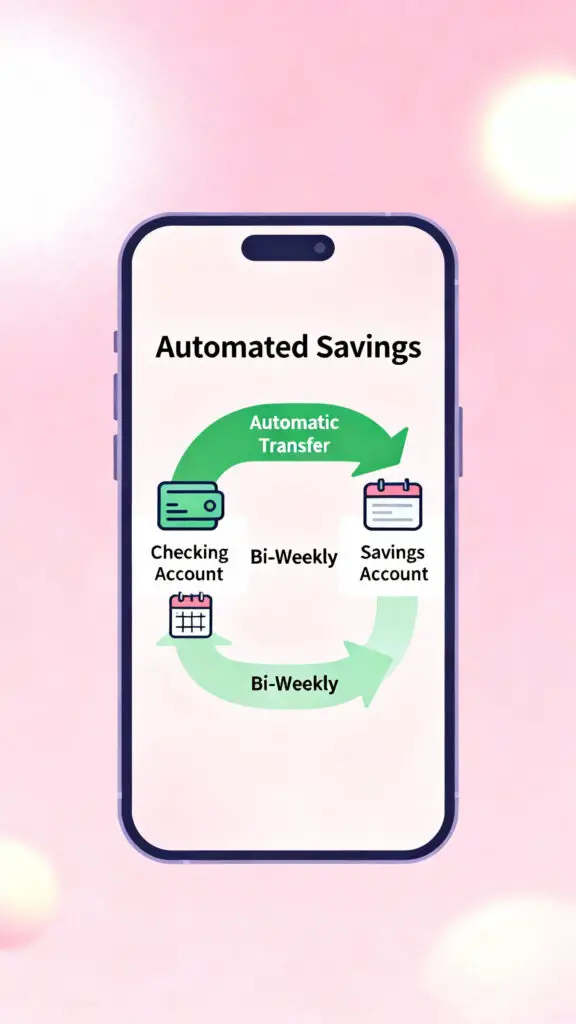
4. Make Saving Automatic

Illustration showing automatic savings transfers helping build a consistent two weeks saving habit on a pastel pink background.

Making your savings automatic can remove much of the effort and stress that often comes with saving money regularly, because it allows you to set aside money without having to remember or make a decision every two weeks. When an automatic transfer is set up, the money moves into your savings account on its own, reducing the temptation to skip saving or spend that money elsewhere. 

This method works especially well for busy schedules, since your savings continue to grow even when life gets hectic. Over time, automatic saving helps build consistency and discipline, turning saving into a natural habit that happens in the background without constant attention or effort.

5. Increase Your Savings Slowly

As you become more comfortable with saving every two weeks, you may reach a point where increasing your savings feels possible and less intimidating than it once did. Instead of making a large jump, increasing your savings slowly by a small amount allows you to adjust without putting pressure on your budget or daily expenses. 

Even a small increase makes a difference over time, and these gradual changes feel more sustainable and realistic. Growing your savings at a steady pace helps you stay motivated while ensuring that saving continues to feel manageable rather than stressful.

6. Plan Around Your Monthly Expenses

Planning your savings around your monthly expenses helps create balance and prevents financial strain, especially when bills, groceries, and other responsibilities already take up a large portion of your income. By understanding where your money goes each month, you can decide how much to save every two weeks without affecting your ability to meet essential needs. 

This approach makes saving feel safer and more controlled, while also reducing the risk of skipping deposits due to poor planning. When saving fits naturally into your budget, consistency becomes easier and stress becomes less common.

7. Use Extra Money to Boost Savings

Extra money can be a helpful way to strengthen your every two weeks savings plan without putting pressure on your regular income or budget. This extra money may come from bonuses, gifts, refunds, or small side earnings, and even saving a portion of it can make a noticeable difference over time. 

Using extra money for savings feels easier because it does not affect your daily expenses, while also helping your savings grow faster. This approach allows you to stay flexible, feel rewarded for unexpected income, and make steady progress toward your goals without feeling restricted.

8. Do Not Quit If You Miss One Deposit

Missing one savings deposit does not mean your plan has failed, because unexpected expenses and difficult weeks are a normal part of real life. What matters most is continuing with your savings plan instead of giving up completely due to one missed step. 

Saving is a long-term process, and progress is built through consistency over time rather than perfection. 

9. Track Your Savings Progress

Illustration representing tracking savings progress and growing confidence through a bi-weekly savings routine on a pastel pink background.

Tracking your savings progress helps you stay motivated and aware of how far you have come, even when the amounts seem small at first. Writing down each deposit or checking your savings balance regularly allows you to see your efforts turning into real results. 

This awareness builds confidence and encourages consistency, making saving feel more rewarding and purposeful. When you can clearly see your progress, it becomes easier to stay focused on your goal and committed to your every two weeks savings plan.

10. Build an Emergency Fund First

An every two weeks savings plan is a great way to start building an emergency fund, which can protect you during unexpected situations like medical bills, repairs, or sudden expenses. Having even a small emergency fund can reduce stress and prevent you from relying on loans or credit during difficult times.

By focusing on this goal first, your savings begin to serve a clear purpose, which makes the habit feel more meaningful and motivating. Over time, this fund provides a sense of security and control, helping you feel more prepared and confident when life does not go as planned.

11. Stay Patient and Consistent

Saving money is a process that takes time, and it is normal if progress feels slow in the beginning. Staying patient helps you avoid frustration, while consistency ensures that your savings continue to grow steadily over time. Small deposits made every two weeks may not seem like much at first, but they add up quietly in the background. 

When you trust the process and remain committed, saving becomes easier and less stressful, allowing good financial habits to form naturally without pressure or burnout.

12. Turn Saving Into a Long-Term Habit

The true value of an every two weeks savings plan lies in the habit it helps you build rather than the amount you save in a short period of time. Once saving becomes part of your routine, it no longer feels forced or difficult. This long-term habit stays with you even after reaching one goal, helping you continue saving for future needs and plans. 

Over time, this mindset creates financial stability and confidence, making saving a natural part of your everyday life.

Conclusion

An every two weeks savings plan shows that saving money does not have to be stressful, confusing, or hard to follow when it is based on small and steady steps. By saving a manageable amount every two weeks, you build a routine that fits into real life without pressure. This method allows you to adjust when expenses change while still moving forward. Over time, these small savings turn into a helpful amount of money and build trust in your ability to manage your finances. The habit you create is often more important than the amount saved, because it teaches patience, control, and better money choices. As saving becomes part of your routine, you start to feel calmer and more prepared for future needs. With time, consistency, and a simple approach, this plan can bring long-term stability, confidence, and peace of mind in your daily life, helping you feel safe, secure, and proud of your progress.

52 Week Money Saving Challenge

January 25, 2026 By Ana Rose

The 52 week money saving challenge is a simple way to start saving without feeling stressed. You save a small amount of money every week instead of trying to save a lot at once, making the process feel easier and more realistic for everyday life. The challenge is great for beginners, students, families, and anyone who wants better control over their money. By the end of the year, you will not only have savings but also stronger habits. This article will help you explore the dynamics of the 52 week money saving challenge, allowing you to learn patience, discipline, and confidence with your finances.

52 Week Money Saving Challenge

1. Start Small Without Pressure

Starting small is the best part of the 52 week money saving challenge because it removes fear and pressure from saving money. When you begin with a small amount, your mind does not feel stressed or worried about losing too much money at once. This makes it easier to stay committed and not quit early. Small savings feel manageable even when expenses are high or income is limited. 

Over time, these small amounts add up and show you that saving does not have to be painful or difficult. Starting small helps you build confidence and trust in yourself while creating a healthy relationship with money.

2. Save a Little Every Week

Saving a little every week makes the challenge feel realistic and balanced with daily life expenses. Instead of waiting for a perfect time to save, you make saving a normal part of your routine. Weekly saving teaches consistency and helps you understand how small efforts grow over time. 

Even during weeks when money feels tight, saving a small amount keeps the habit strong. This approach also prevents guilt because you are not skipping savings entirely. By saving weekly, you slowly train your mind to prioritize future needs while still enjoying your present life.

3. Build a Consistent Saving Habit

The 52 week money saving challenge focuses more on habit building than the amount of money saved. When you save regularly, your brain starts to see saving as something normal and necessary. Consistency helps remove excuses and procrastination, which are common reasons people fail to save. 

Over time, this habit becomes automatic and does not require much effort or motivation. A strong saving habit stays with you even after the challenge ends, helping you make better financial choices in the future. This consistency gives you long-term control over your money and financial goals.

4. Make Saving Feel Easy

Saving feels easier when it is broken into small and simple steps, which is exactly how this challenge works. You do not feel forced to give up everything you enjoy, so there is less frustration and stress. Easy saving encourages patience and reduces the urge to quit halfway through the year. When saving feels natural instead of strict, you stay more committed and relaxed. 

This mindset shift helps you enjoy the journey instead of seeing saving as a punishment. Over time, easy saving builds confidence and proves that financial growth does not have to feel overwhelming.

5. Adjust the Challenge to Your Budget

One important part of the 52 week money saving challenge is flexibility, which allows you to adjust the amounts based on your budget. Everyone’s income and expenses are different, so saving should fit your lifestyle instead of hurting it. Adjusting the challenge helps you stay consistent without feeling guilty or stressed. 

You can increase savings during good weeks and reduce them during tough weeks without quitting. This flexibility teaches realistic money management and helps you understand that progress matters more than perfection when it comes to saving money.

6. Stay Motivated Week by Week

Weekly saving keeps motivation alive because progress feels visible and achievable. Each week feels like a small success, which encourages you to continue. Watching your savings grow slowly builds excitement and pride in your efforts. Motivation becomes stronger when you see results instead of waiting for one big outcome. 

Even when motivation feels low, the habit keeps you going. Staying motivated week by week helps you stay focused on your goal and reminds you that small actions, repeated consistently, lead to meaningful financial results over time.

7. Learn Better Money Control

This challenge helps you gain better control over your money by making you more aware of your spending habits. When you save weekly, you naturally begin to think before spending unnecessarily. You start making smarter decisions and avoiding wasteful purchases. 

Money control is not about restriction but about balance and awareness. Over time, you feel less anxious about money because you know where it is going. Learning money control through this challenge builds confidence and helps you feel more responsible and independent with your finances.

8. Reduce Unnecessary Spending

Saving regularly makes you more mindful of unnecessary spending habits. You begin to question small purchases that do not add real value to your life. This does not mean cutting out all fun, but it helps you choose wisely. Reducing unnecessary spending becomes easier when you have a clear saving goal. Over time, you learn to spend with intention instead of impulse. This awareness helps your savings grow faster while also teaching you the importance of prioritizing needs over wants in a balanced and healthy way.

9. Track Your Progress Clearly

Illustration showing weekly savings progress tracking and growing money over time on a pastel pink background.

Tracking your savings progress plays a very important role in staying motivated throughout the 52 week money saving challenge because it allows you to clearly see how your efforts are paying off over time. When you regularly check how much you have saved, the process feels real and meaningful instead of confusing or uncertain. Keeping a clear record helps you stay organized and reduces the chances of missing weeks or losing track of your savings plan. 

Watching small weekly amounts slowly grow into a larger total builds confidence and encourages consistency. This visual progress makes you feel more connected to your goal and proud of the effort you are putting into saving.

10. Stay Patient Through the Process

Patience is one of the most valuable lessons you learn during the 52 week money saving challenge because saving money takes time and steady effort. Your savings will not grow quickly at first, and that is completely normal in any long-term financial journey. Some weeks may feel harder than others due to unexpected expenses or limited income, but staying patient helps you continue without giving up. 

This challenge teaches you to trust the process and focus on long-term benefits instead of quick results. Over time, patience reduces frustration and builds emotional strength, helping you handle money challenges with a calm and confident mindset.

11. Celebrate Small Saving Wins

Illustration representing celebrating small savings milestones and financial confidence on a pastel pink background.

Celebrating small saving wins helps keep the journey positive and enjoyable throughout the year. Every milestone, no matter how small, reminds you that your effort matters and that progress is being made. These celebrations do not need to involve spending money and can simply be moments of pride or personal rewards. 

Recognizing your progress keeps motivation high and prevents burnout during longer challenges. Small wins make the entire saving process feel lighter and more manageable instead of overwhelming. When you celebrate along the way, saving no longer feels like a burden but becomes a personal achievement you feel proud to continue.

12. End the Year Financially Strong

Completing the 52 week money saving challenge helps you end the year in a much stronger financial position than when you started. You finish with real savings, healthier money habits, and greater confidence in your ability to manage finances. The discipline and consistency you build throughout the challenge make future financial goals feel more achievable and less intimidating. 

Ending the year financially strong brings peace of mind and a sense of control over your money decisions. This challenge shows that regular small efforts can create meaningful change and help you move toward a more secure and confident financial future.

Conclusion

The 52 week money saving challenge is not about doing everything perfectly but about showing up every week and staying committed to your goal. When you save small amounts regularly, you slowly build patience, discipline, and better control over how you use your money. These small actions may not feel powerful at first, but over time they create strong habits that stay with you even after the challenge ends. Saving becomes a normal part of your routine instead of something that feels stressful or forced. With flexibility and consistency, you learn that progress matters more than the amount saved. A positive mindset helps you stay calm during hard weeks and proud during good ones. This challenge changes the way you think about money by teaching you that steady effort leads to real results. Over time, you feel more confident, prepared, and secure, knowing you can manage your money wisely and make better choices for your future.

  • « Go to Previous Page
  • Go to page 1
  • Interim pages omitted …
  • Go to page 10
  • Go to page 11
  • Go to page 12
  • Go to page 13
  • Go to page 14
  • Interim pages omitted …
  • Go to page 73
  • Go to Next Page »

The Latest Blog Posts:

  • 14 Profitable Things To Sell On eBay June 20, 2026
  • Mason Jar Crafts To Make And Sell June 19, 2026
  • 12 Best Jobs for Retired Teachers  June 18, 2026

As Featured In:

Just Start Investing Press Strip 2020 B&W

Follow Us:

  • Facebook
  • Twitter
  • Pinterest

Copyright © 2026 · Just Start Investing LLC

  • Contact Us
  • Blog
  • Privacy Policy / Disclaimers