• Skip to primary navigation
  • Skip to main content

Just Start Investing

We Make Investing Easy

  • Investing
    • Learn About Investing:
    • Investment Accounts
    • Online Brokerage Accounts
    • Investment Vehicles
    • Start Investing:
    • How to Invest in Index Funds
    • Start Investing with Betterment
    • Start Investing with Charles Schwab
  • Banking
    • Best Bank Accounts
    • Types of Bank Accounts:
    • Checking Accounts
    • Savings Accounts
    • CDs and Money Market Accounts
    • Online Banks vs Brick-and-Mortar
  • Credit Cards
    • Best Credit Cards:
    • Best Cash Back Credit Cards
    • Best No Annual Fee Credit Cards of 2021
    • Best Premium Credit Cards of 2021
    • Credit Card Tool: Find the Best Credit Card for Me
    • Learn About Credit Cards:
    • Types of Credit Cards
  • Blog
    • Investing
      • What is Crypto?
        • Crypto
      • What are stocks?
        • Stocks
      • What is a Real Estate Investment?
        • Real Estate Investments
      • What is an IPO?
        • IPO
    • Banking
    • Credit Cards
    • Budget
    • Finances
  • Earn with Crypto
  • Budget
    • How to Build a Budget
    • 24 Tips to Save More Money
  • Resources
  • About
    • Contact
    • Press
    • Learn More
    • Disclaimers
  • Show Search
Hide Search

General Personal Finance Blog

Effective Saving Challenges For Low Income

December 5, 2025 By Ana Rose

Saving money can feel like an almost impossible task especially when you’re living on a low income. You may feel like you can hardly stretch your budget enough to make room for other expenses and saving money may feel like something unrealistic or too big of a plan for the income that’s coming in every month. But the truth is, saving money is not only about big sacrifices or complicated budgets, sometimes, it’s more about those small but consistent efforts that can save you more than you could have imagined. This article will help you explore some fun yet highly effective challenges to save money, ensuring you set something aside while making room for your basic and non-essential expenses. 

Effective Saving Challenges For Low Income

The $1 Daily Savings Challenge

For a challenge that almost feels effortless, consider the $1 daily savings challenge which is all about saving a dollar daily. By the end of the year, you’ll have a total of $365 saved in a low-maintenance and low-effort way. For people thriving on a low income, this challenge builds consistency and confidence because what once felt impossible and difficult suddenly becomes achievable. 

To make the progress visible and easier to track, you can keep a transparent jar or a small box, and if you prefer to save your money digitally, consider opening a separate savings account but just remind yourself to transfer the daily dollar every night before you sleep. This simple yet really helpful way to save can make saving feel more empowering and less demanding, perfect for those struggling to make ends meet. 

The Weekly $5 Challenge

Illustration of a woman saving a five-dollar bill weekly into a pouch, with a calendar beside her, on a pastel pink highlighted background.

For a simple yet practical way to save money, you can consider the weekly $5 challenge which is all about setting aside $5 weekly. What makes this challenge a considerable option is that $5 isn’t an overwhelming figure to set aside and on top of that, it can add up nicely by the end of the year, giving you a total of $260 if you manage to save in a consistent manner. 

Another reason why this challenge is something you can consider is that it is flexible and easy to manage, for example, if one week feels heavy, you can skip the saving amount for that one and save double the next. This way you can continue the challenge without having it feel like a burden and adjust it according to what suits you and your income the best. 

The Round-Up Spare Change Challenge

For those who feel like they never have extra money to save, consider the round-up challenge that allows you to round up your spendings to the nearest dollar and save the difference, for example, if you spend $7.75 on coffee, round it up to $8 and save $0.25. Those tiny cents that you normally ignore can contribute to a bigger cause, making it a low-effort and almost unnoticeable way of saving. 

One way to move on with this challenge is to save the amount manually and if you prefer a digital approach, you can also use a banking app that rounds up your purchases without having the burden of doing it all on your own weigh you down. 

The No-Spend Weekend Challenge

For something that helps you reconsider your spending habits and urges you to direct your money towards something meaningful and helps you reset your spending patterns, consider the no-spend weekend challenge. According to this challenge, you simply pick a weekend each month where you commit to stop spending on all those non-essential expenses, whether it’s takeout, coffee, entertainment, or a shopping spree.

Not only does this habit help you save money, it also helps you realize how those unnecessary expenses quietly eat away your budget, urging you to reconsider what you choose to spend on.  

The Pantry-Only Meal Challenge

Illustration of a person choosing ingredients from a pantry to cook meals using only what they already have, with a pastel pink highlighted background.

Food spendings are one of the biggest budget leaks especially in today’s economy. For something that limits your food expenses and asks you to spend one week making the most of what you already have in your pantry, you can go with the pantry-only meal challenge. Not only does this challenge help you save money by avoiding spending on all those grocery costs, it allows you to think about what you can make at home with what’s available in your pantry, helping you avoid food waste while also allowing you to eat healthy and nutritious meals made at home. You can save between $30 and $80 during a pantry week without even realizing it, making it a great savings challenge for those living on a low income. 

The 30-Day Envelope Challenge

The 30-day envelope challenge is all about labeling 30 envelopes from $1 to $30. During this 30 day challenge, you pick one random envelope each day and fill it with the amount written on it. By the end of thirty days, you’ll have a total of $465 saved without feeling frustrated or overwhelmed. 

Some days bring big amounts and some bring small amounts, making it a flexible challenge, based on what you can afford, for example, if you feel like the budget is tight, you can pick up an envelope with a small amount written on it and save the bigger ones for the days your budget feels light and the target feels doable. 

The Bill-Cut Mini Challenge

For a challenge that helps you reduce your monthly bills just a little at a time, you can consider the bill-cut mini challenge which includes picking one bill whether it’s your phone plan, a streaming service, electricity use, or internet a month and planning on lowering it. 

For example, you can negotiate your internet price or switch to a cheaper phone plan and this way, whatever amount you save can directly go into savings. Not only does this challenge help you save money, it teaches you strategic financial planning and problem-solving skills that can help you in the long run. 

The Cashback Savings Challenge

For a challenge that doesn’t require you to earn more or cut down on your necessities, consider the cashback savings challenge which helps you save simply by making use of the rewards you already earn. Many cashback apps and debit or credit cards offer small amounts of money back on groceries, gas, or everyday purchases, and instead of letting that amount disappear into your spending, you can transfer it directly into your savings. Even if it’s just $1.20 from grocery shopping or $3.50 from an online purchase, these small earnings add up over time. 

The $10 Windfall Challenge

The $10 windfall challenge is a gentle and realistic way to save, especially when your regular income leaves very little room for breathing. This challenge only asks you to save from unexpected money that comes your way, such as refunds, birthday gifts, cashback payouts, someone returning a loan, or any little amount you were not counting on. 

Every time a windfall comes in, you simply set aside $10 from it, and if the amount you receive is larger, you can save a little more depending on what feels manageable. 

The Subscription Detox Challenge

Subscriptions may seem small on their own, but when you add them up, they often take a surprising amount of money from your monthly budget. The subscription detox challenge helps you slow down and review where your money is actually going. This challenge encourages you to look at every subscription you’re paying for, whether it’s streaming services, phone apps, cloud storage, monthly boxes, or even gym memberships, and decide which ones are genuinely adding value to your life. 

By canceling even a single $10 or $15 subscription, you can redirect that money toward your savings every month without affecting your lifestyle. 

The Grocery Cap Challenge

Groceries often take a big chunk of the monthly budget, especially with the rising food prices, which is why the grocery cap challenge can be incredibly helpful. This challenge is all about setting a firm weekly grocery limit that matches your income, whether it’s $40, $50, or $60, and making sure you stay within that boundary. 

It encourages smart meal planning, comparing prices, choosing store brands, and avoiding impulse buys that can quickly push your cart total higher than expected. 

The Monthly $20 Emergency Fund Challenge 

For a savings challenge that feels gentle, doable, and perfect for low-income households, consider the monthly $20 emergency fund challenge. This challenge only asks you to save $20 each month, an amount small enough to fit even into the tightest budgets. 

While it may look like a small number at first, by the end of the year you’ll have saved $240, which is a solid starting point for an emergency cushion. Having even a few hundred dollars set aside can make a huge difference during unexpected situations like a sudden bill, a medical co-pay, or a household repair. 

Conclusion

Saving money on a low income may feel like a never-ending challenge, but with the right approach and the right mindset, it becomes much more manageable than it seems at first. The key is not to aim for big leaps or dramatic sacrifices but to focus on small, consistent actions that add up quietly over time. These challenges are designed to support your real life, not to make things harder. Whether you choose one challenge or combine a few that match your lifestyle, every small amount you manage to save is a step toward more stability, more peace of mind, and a future where money feels a little less stressful.
19 Fun and Effective Challenges to Boost Your Savings

December 4, 2025 By Ana Rose

Saving money can often feel like a drag especially when you don’t know where to start from and how to stay consistent, and this is exactly where the saving challenges come in. Saving challenges can make the process feel lighter, fun, and like an exciting game, making it easy for you to stick with the process through all the ups and downs. These challenges are flexible and designed especially for those who want to save without having the process feel like a restriction or punishment. Whether you’re trying to save an emergency fund, pay off a debt, or simply want the peace that comes along with having an amount saved, these challenges can be your go to for saving money this year. This article will help you explore 19 fun and effective savings challenges that will boost your savings like none other.

19 Fun and Effective Challenges to Boost Your Savings

1. The 52-Week Savings Challenge

For a classic savings challenge consider the 52 week challenge which is all about starting small and gradually increasing the amount as you move on with the challenge. According to this challenge, you save $1 in week 1, $2 in week 2, $3 in week 3, and so on to $52 in week 52. At the end of the 52nd week, you’ll have around $1,300 saved, which proves that small but consistent efforts can lead to meaningful results over time. 

You can also consider reversing the challenge by saving $52 in week 1, $51 in week 2, $50 in week 3, and so on to $1 in week 52. This challenge is less about strict rules and more about finding a way that suits you, your income, and lifestyle the best. 

2. The 100 Envelope Challenge

Illustration of a woman shuffling envelopes labeled 1 to 100 at a desk, with a pastel pink highlighted background.

Another considerable option is the 100 envelope method which is all about labeling envelopes from 1 to 100 and shuffling them, then picking one at a random day each week and saving the amount written on the envelope.

What makes this challenge a fun and exciting option is that it is unpredictable, adding motivation and a sense of excitement to the savings process. 

3. The $5 Bill Challenge

Everytime  you receive a $5 bill, just save it, no questions asked. While this challenge may seem simple and small, it’s easy to overlook how quickly those $5 bills can add up and result in a big sum over time. 

This is a low-effort yet highly effective challenge that proves that consistency is the main key when it comes to savings, regardless of what amount you’re saving up. 

4. The No-Spend Weekend Challenge

For a challenge that helps you reset your saving habits and become more mindful towards your hard-earned money, consider the no spend weekend challenge. A common misconception about this challenge is that it restricts you from spending at all, however in reality, this challenge requires you to become more intentional with your money by holding back on those non-essential expenses while spending on those basic and necessary for survival categories. 

5. The Spare Change Jar Challenge

Illustration of a jar filled with coins as a hand drops spare change inside, set on a pastel pink highlighted background.

For a simple yet classic savings challenge, consider the spare change challenge which is all about dropping those small coins or spare change in a separate jar or box. To many, this challenge may seem like a small and low scale one but in reality, what makes this challenge a considerable option is that you barely notice the money leaving your wallet, making it a low-effort and low-maintenance savings challenge that helps you save up a significant amount without having it feel like a burden. 

6. The Daily Dollar Challenge

For a challenge that is simple and predictable, consider the daily dollar challenge which is all about saving a dollar every day for a year. At the end of the challenge, you can have a total of $365 saved in an almost effortless way. If you want to save a higher amount, you can also consider the possibility of increasing the amount.

7. The Round-Up Your Purchases Challenge

Every time you buy something, make it your habit to round the purchase to the nearest dollar, $5, or $10 and save the rest of the amount. For example, if you spent $7 on coffee, consider setting aside $3 and saving it. 

It’s a painless way to save because you’re only setting aside small and spare amounts but over time, these spare amounts can grow into something big, making every tiny effort worth it. 

8. The Pantry-Only Meal Challenge

For one week each month, aim to cook meals using ingredients available to you in your pantry. This simple challenge can help reduce food waste, prevent unnecessary grocery trips that end up in impulse shopping, and most importantly, this simple challenge allows you to eat nutritious and hygienic meals made at home. 

9. The 30-Day Expense Clean-Up Challenge

For at least 30 days, identify your unhealthy spending patterns or those small leaks that quietly drain your wallet without you knowing. It’s an eye-opening challenge that helps you see what you’re most likely to spend on whether it’s those random midnight snacks, subscriptions you barely use, or those impulse shopping sprees that end up costing you a lot more than you expect. 

At the end of these 30 days, you get to decide what spending choices are not serving you and your wallet anymore, and cut them off or hold back on them for good.

10. The Bi-Weekly Savings Boost Challenge

For those who get paid biweekly, there’s no better option than the biweekly savings boost challenge that perfectly aligns your savings with your payday. The key is to choose a specific amount, either big or small, and move it to your savings account on payday. 

This challenge helps build routine and prevents you from spending money simply because it’s there in your account. 

11. The Weather-Based Savings Challenge

For a quirky and fun challenge, consider the weather based challenge which is all about setting a specific amount aside based on the temperature of the day. For example, if it’s 25°C, you save $2.50 and if it’s 38°C, you save $3.80. 

What makes this method a considerable option is that it adds a fun and unpredictable twist to the at times boring process, making it easy for you to stay committed and consistent. 

12. The Habit Swap Challenge

For a challenge that challenges your logical reasoning and problem solving skills, consider the habits swap challenge. This challenge is all about identifying those small leaks that quietly eat away your budget whether it’s that daily coffee run, those snacks, or transportations costs and replace these expenses with a cheaper alternative that gives your wallet room to breathe. 

13. The Monthly Declutter-and-Sell Challenge

Every month, aim to pick a few items you no longer use, whether it’s clothes, gadgets, electronics, and books and sell these items. Instead of using up the money, try setting it aside and saving it for your challenge. 

Not only does this challenge help you declutter your space, it also provides you with the opportunity of earning through it. 

14. The “Save Every Raise” Challenge

Whenever you receive a raise, bonus, or unexpected income, commit to saving a portion of it before adjusting your lifestyle. This challenge works well because you’re saving money you weren’t depending on, and it helps stop lifestyle inflation while making sure every extra dollar supports your long-term financial goals.

15. The Digit-Ending Savings Challenge

Pick a digit, like 0, 3, or 7 and save every amount in your bank account that ends with that number. For example, if your balance ends in 3, transfer a small amount to make it end in 0. It’s simple, a little quirky, and encourages saving without feeling heavy or complicated.

16. The Social Media Detox Savings Challenge

Choose a number and save that amount every time you avoid scrolling or skip using a social media app. This challenge boosts your savings while also helping you break the habit of endless online browsing, making room for more mindful activities that benefit your mental health and your bank account.

17. The Lucky Number Savings Challenge

Pick a number that feels lucky or meaningful to you like 5, 9, or 11 and save that exact amount daily or weekly. This gives your savings a fun personal twist because the number feels special, and the consistency builds a steady habit that naturally grows your savings over time.

18. The Color-Coded Savings Challenge

Assign a savings amount to different colors of cash or envelopes, for example, every time you see a green bill, save $5. This adds a playful and visual element to the process, making saving feel more like a game while still helping you collect a surprisingly good amount over the year.

19. The Payday Percentage Challenge 

Instead of saving a fixed amount, choose a percentage of your income like 5%, 10%, or more and automatically save it every payday. This method adjusts itself to your earnings, making it easy to stay consistent and helping your savings grow in a steady and sustainable way.

Conclusion

Saving money doesn’t always have to feel stressful or overwhelming, and these 19 challenges prove exactly that. When you turn saving into small, fun, and intentional habits, it becomes so much easier to stay consistent and actually enjoy the process instead of dreading it. Whether you prefer daily habits, weekly routines, or creative challenge-style methods, there’s something here that can fit your lifestyle, personality, and income. The real power of these challenges lies in how they help you build discipline gently, without making you feel restricted or deprived. With time, you’ll notice how these small choices add up and give you the peace, confidence, and freedom that comes with having money saved for your goals and your future. 

100K Savings Goal with Monthly Budget Challenges

December 3, 2025 By Ana Rose

Saving $100,000 may feel like a huge and intimidating goal, but with the right structure and a series of smart monthly challenges, it can become more achievable than it seems. Instead of relying on major lifestyle changes or unrealistic sacrifices, monthly budget challenges break down your journey into small and manageable steps. These challenges not only help you build a routine but also teach you how to make saving a natural part of your life. By the end of the year, you’ll have a stronger sense of financial discipline and clearer priorities that bring you one step closer to your $100K goal. This article will help you explore the dynamics of 100K savings goal with monthly budget challenges, helping you move towards a secure and stable financial future. 

100K Savings Goal with Monthly Budget Challenges

No-Spend January

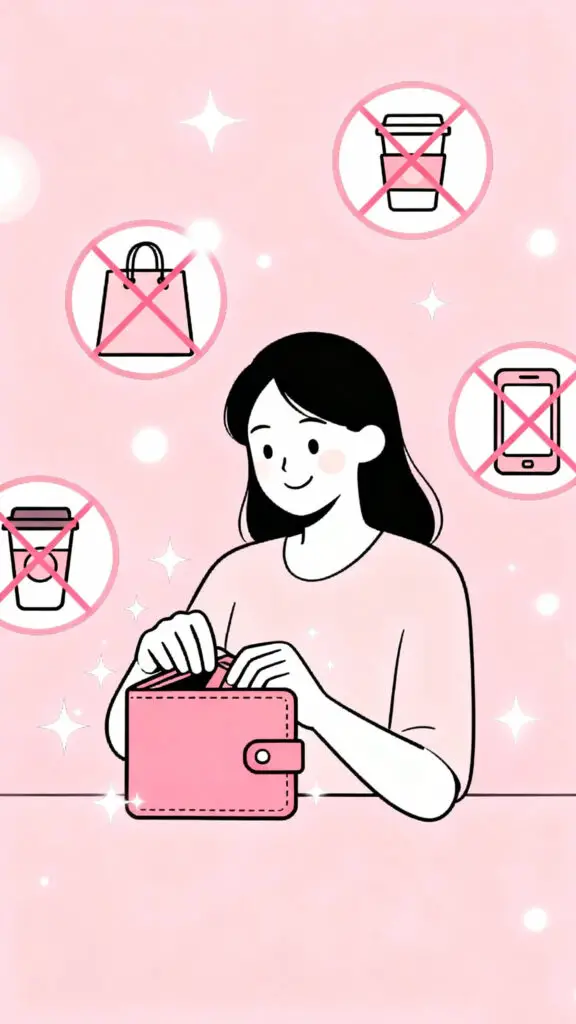
Illustration of a woman closing her wallet while non-essential items are crossed out around her, set on a pastel pink highlighted background.

Starting the year with a no-spend month helps you reset your relationship with money and become more mindful of your daily habits. In January, the goal is to only buy what is absolutely necessary such as things like groceries, bills, and essential transport, while holding back on all non-essential purchases. 

The main catch is not to feel restricted,  instead, it is more about giving you a chance to notice where your money usually disappears without you even realizing it. This challenge teaches you to pause before buying, question whether something is truly needed, and remind yourself of your bigger $100K goal. By the end of the month, you not only save a surprising amount but also gain a sense of control over your spending patterns.

Meal-Prep February

Illustration of meal-prep containers and a weekly food plan on a kitchen counter with a pastel pink highlighted background.

February focuses on food spending, which is often the biggest area where money slips away unnoticed. By planning your meals ahead of time and cooking in batches, you reduce the urge to order takeout or buy random snacks throughout the week. 

Meal-prepping might feel like extra work at first, but it quickly becomes a routine that saves both money and mental energy. You spend less time deciding what to eat, waste fewer ingredients, and avoid last-minute expensive choices. This challenge also encourages healthier eating and helps you see exactly how much of your budget goes into food.

Declutter & Sell March

March is the perfect time to declutter your home and turn unused items into extra savings. Most of us have things lying around such as clothes we no longer wear, gadgets we rarely use, or household items sitting untouched, and selling them can bring in more money than expected. 

This challenge isn’t just about earning cash, it helps you rethink your relationship with material things and recognize how much unnecessary spending came from buying items you didn’t truly need. By clearing your space, you also clear mental clutter, making your environment more peaceful and organized. The money you earn can go directly into your $100K fund, giving you a motivational boost early in the year.

Subscription Audit April

Subscriptions are often those small expenses that quietly add up in the background without us noticing, making April a good time to review everything you’re paying for. Whether it’s streaming services, apps, fitness platforms, or memberships, many subscriptions renew automatically and quietly drain your income. 

This challenge encourages you to list all recurring payments, cancel the ones you don’t use regularly, and downgrade or replace others with cheaper options. The goal is to make sure every subscription aligns with your priorities and adds real value to your life. Even cancelling just two or three unused services can free up money every single month, making it easier to grow your savings in the long run.

Cash-Only May

In May, the focus shifts to becoming more intentional with purchases by using only cash for your daily spending. When you physically hand over money, you become more aware of how much you’re spending compared to swiping a card or clicking online. 

This challenge limits impulse buying because you can only spend what you have with you, not what’s available on your card. It also teaches you to plan your purchases ahead of time and develop discipline throughout the month. Many people find that switching to cash naturally makes them more careful, and the leftover money at the end of each week often becomes a pleasant surprise.

Side-Hustle June

June is dedicated to increasing your income through small side hustles or part-time opportunities that fit your routine. Instead of relying solely on cutting expenses, this challenge encourages you to explore new ways of earning whether it’s freelancing, tutoring, selling handmade items, or offering services like babysitting, editing, photography, or home organizing. 

Even earning a little extra each week can make a big difference when your goal is as large as $100K. 

Minimalist July

July focuses on simplifying your life by practicing minimalism, not strict rules, but a mindset shift. The goal is to reduce clutter, avoid unnecessary purchases, and make choices based on true need rather than habit or impulse. 

Minimalism helps you understand what you genuinely value and cut back on things that drain your money, time, and mental space. Throughout the month, you pay more attention to what you already own, use items more intentionally, and avoid buying duplicates or trend-driven purchases. This challenge helps break overconsumption habits and naturally redirects more money into your savings.

Credit-Card Detox August

August is all about stepping back from credit cards and avoiding debt that can slow your progress. The idea isn’t to fear credit but to prevent dependence on it. For one month, try to avoid using credit cards entirely, relying on debit or cash instead. 

This makes you more aware of your actual financial limits and prevents interest charges from eating into your savings. The challenge also strengthens self-control and helps you understand how often you turn to credit without thinking. By the end of August, many people feel more grounded in their spending and more confident living within their means.

Energy-Saving September

With bills rising everywhere, September focuses on cutting household energy costs. Small adjustments like switching off unused appliances, reducing AC usage, using natural light, or adopting water-saving habits add up over time. 

The goal isn’t to live uncomfortably but to be mindful of waste and find ways to lower utility bills without sacrificing your lifestyle. Tracking your energy consumption for a month also helps you understand where your money goes and which habits are driving up costs. The savings might look small at first, but their long-term impact is significant.

Financial Tracking October

October encourages you to track every expense, no matter how small, to gain a clearer picture of your financial habits. Writing down or digitally logging your spending reveals patterns you may have ignored like frequent small treats, unnecessary subscription renewals, or impulse buys. 

This challenge helps you make smarter decisions, set better limits, and stay accountable to your savings goals. Tracking your finances for a full month creates awareness, and awareness leads to more intentional choices. It’s one of the most eye-opening habits you can build on your path to $100K.

Holiday Budgeting November

The holiday season can cause financial stress, so November focuses on planning ahead. Instead of waiting for December to panic-buy gifts or decorations, you create a budget early and stick to it. This includes listing expected expenses, setting spending limits, finding affordable alternatives, and preparing for any travel or gatherings. 

The challenge teaches you to enjoy the festive season without losing sight of your financial goals. With careful planning, you can celebrate meaningfully while still protecting your savings.

Review & Reset December 

December is all about reflecting on the past year, celebrating your wins, and preparing for the next stage of your savings journey. This challenge encourages you to review what worked, what didn’t, and where you want to improve. 

You evaluate your habits, look at your numbers, and reset any goals that need adjusting. It’s also a chance to appreciate how much progress you’ve made, even if the journey wasn’t perfect. Ending the year with reflection helps you enter the next one with clarity, motivation, and a stronger foundation for reaching your $100K goal.

Conclusion

Reaching a $100K savings goal may seem overwhelming at first, but breaking the journey into monthly challenges makes the process feel far more manageable and realistic. Each month focuses on one specific habit, giving you the chance to build consistency without feeling pressured to change everything at once. Over time, these small adjustments begin to reinforce one another and you become more aware of your spending, more intentional with your choices, and more confident in your ability to handle money wisely. By the end of the year, you not only move closer to your financial target but also develop long-term habits that continue supporting you beyond the challenge. The real success of this plan lies not in perfection, but in showing up month after month with patience, discipline, and a clear sense of purpose.


25 Cent Money Saving Challenge to Save 16K in Just 1 Year

December 2, 2025 By Ana Rose

Saving money doesn’t always have to be about saving big figures, sometimes, it’s the smallest and most consistent of efforts that lead to big and meaningful results over time. The 25 cent money saving challenge is all about a simple and straightforward idea that every small coin matters. This challenge allows you to ease into saving without pressure, without feeling restricted, and without needing a high income, and instead lets you watch your money grow day by day in a way that feels almost effortless. By the end of 12 months, those tiny daily deposits come together to form something as big and rewarding as $16,000, showing you that the real magic lies not in the size of the amount you save, but in the commitment and intention behind it.

How To Use The 25 Cent Money Saving Challenge To Save 16k In Just 1 Year

Understanding How the 25 Cent Challenge Works

Illustration of a hand dropping a quarter into a savings jar with coins gradually rising on a pastel pink highlighted background.

When you begin the 25 cent challenge, the first thing you realize is how powerful small amounts can actually be when they’re handled with consistency and intention, because even a single quarter feels meaningless on its own. Saving it every day slowly teaches you that money grows quietly, when you stop overlooking the tiny amounts that usually slip through your fingers without notice. 

This shift in thinking makes you appreciate the value of little habits, and as the weeks pass, you start seeing those tiny deposits turning into something that feels surprisingly big, which keeps you motivated to continue even when the daily amount still feels small, because you know it’s building into something meaningful.

Setting Your Goal of Saving 16K in One Year

Before starting the challenge, it helps to sit with yourself for a moment and think about what you’re truly saving for, because when you attach real meaning to your goal, every deposit starts feeling personal and intentional instead of feeling like a forced routine. 

Whether you want to build an emergency fund, take a much-needed trip, start your investment journey, or simply prove to yourself that you can stay committed to something for an entire year, having a strong purpose strengthens your motivation and urges you to continue on the days when saving feels a little harder. 

Creating a Simple Daily Saving Routine

Illustration of a woman planning daily 25 cent savings on a calendar, with a pastel pink background and glowing highlights.

It becomes much easier to stay committed when you have a simple plan in place, because the structure keeps you focused while removing the guesswork from your daily saving routine. You can decide whether you want to save 25 cents on the first day and increase it by another 25 cents each day, or whether you want to follow a weekly structure where every week gets slightly bigger than the last, and choose the approach that feels realistic for your lifestyle. 

Over time, this slow and steady increase becomes a natural part of your daily routine, and you can look back and see how these tiny steps added up in a way that feels incredibly rewarding.

Choosing Where to Store Your Savings Safely

Having a separate place for your challenge savings makes a huge difference, because when the money is kept away from your normal spending account, you don’t feel tempted to dip into it for everyday wants and impulses, which protects your progress and helps the challenge move smoothly. 

You can open a new savings account or even use a physical jar if you prefer seeing your progress grow in front of you, and labeling it with something meaningful adds a personal touch that keeps you emotionally connected to your goal. The more intentional the space feels, the more likely you are to stay committed to filling it consistently throughout the year.

Tracking Your Progress Week by Week

There is something surprisingly motivating about watching your savings grow in a visual form, because when you track your daily or weekly deposits on a chart, coloring in each box or marking each milestone, the process becomes exciting and encouraging instead of repetitive or boring. 

A visual tracker gives you a way to celebrate small wins and reminds you how far you’ve already come whenever you feel like slowing down. It keeps the challenge playful and interactive, and every time you update it, you get a little boost of encouragement that helps you continue showing up, one tiny deposit at a time, until the habit becomes second nature and the results start to speak for themselves.

Find Ways to Save Extra Cents

While the foundation of the challenge is built on saving just 25 cents at a time, you’ll notice that once you start paying attention, you naturally begin finding easy places where you can save a little extra without feeling restricted or deprived. 

It could be skipping an unnecessary purchase, choosing homemade coffee, clipping a coupon, or simply becoming more mindful when spending throughout the day. And every time you choose to save those extra coins or small bills instead of spending them, your challenge fund grows faster in a way that feels effortless and satisfying.

Automate Your Savings

If remembering to save every day feels difficult or if you tend to forget when life gets busy, automation can become your best friend because it takes the pressure off your shoulders and ensures that money moves into your savings consistently without requiring daily effort. You can set up weekly transfers that increase gradually, and this simple step keeps your challenge running smoothly even during hectic weeks when you’re distracted by work or personal responsibilities. 

Automation helps eliminate temptation and excuses since the money already moves before you get a chance to spend it, and by the time you check your account, you’ll notice how these automatic deposits slowly turn into a flow of progress.

Involve Family or Friends

Turning the challenge into a shared activity can make it more enjoyable and motivating, because when you involve family members or friends, saving becomes something fun rather than a lonely task you’re doing on your own. 

You can encourage each other, share progress updates, and celebrate small achievements together, which brings a sense of community into your journey and keeps everyone accountable in a positive and supportive way. Having others join you also makes the challenge feel more like a game, and whenever one person starts to lose motivation, the rest naturally lift them up, making the entire experience more meaningful and memorable.

Revisit and Adjust Midway (6-Month Mark)

Halfway through the challenge is a great time to pause and reflect on how far you’ve come, because at this point, you’ve already built strong habits and can clearly see the progress you’ve made. 

Reviewing your financial situation allows you to check whether you’re on track, whether you can comfortably increase your weekly amounts, or whether you need to adjust things slightly to fit your budget better. This midpoint check-in gives you the chance to reconnect with your goal, strengthen your motivation, and make any necessary modifications so that the next six months feel even smoother and more manageable. 

Turn Spare Change into Savings

One of the easiest ways to grow your challenge fund faster is to treat every leftover coin or small bill as a bonus savings opportunity, because once you start noticing them, you realize how often spare change appears in your daily life. 

Whether it’s change from groceries, money found in pockets, or small bills you didn’t plan on spending, adding them to your challenge jar can make your progress grow surprisingly fast. This habit feels natural and effortless, and it helps you build a deeper appreciation for money that usually goes unnoticed, turning something as simple as spare coins into a meaningful part of your savings journey.

Stay Consistent During the Hard Weeks

There will naturally be weeks when saving feels a little heavier, especially when expenses come up or when the challenge loses its initial excitement, but these are the moments when staying steady matters the most. 

Reminding yourself why you started, looking at your progress, and remembering how proud your future self will feel can help you get through the slower phases. These tougher weeks often become the moments that shape your financial mindset the most, because they teach you patience and resilience, helping you stay committed to your larger goal even when motivation feels low.

Celebrate Your $16,000 Milestone

Reaching the final phases of the challenge and seeing $16,000 saved is an incredibly rewarding moment, because you’re not just celebrating the money itself but also the dedication  and daily commitment that carried you through the entire year. 

This amount represents hundreds of small decisions you made and moments when you chose long-term goals over short-term comfort. Take time to appreciate how far you’ve come and think about how you want to use this money in a way that brings value to your life, whether that’s investing, saving for future security, or treating yourself to something meaningful. 

Conclusion

The 25 Cent Money Saving Challenge is a beautiful reminder that big results don’t always require big beginnings, and that real financial progress often grows quietly from small but steady actions. This challenge teaches patience, discipline, and mindfulness in a gentle and approachable way, showing you that the money you once overlooked has the potential to turn into something life-changing when handled with intention. By staying committed, adjusting your habits, and celebrating your progress along the way, you not only save $16,000 but also build a healthier and more confident relationship with money that stays with you long after the year ends.

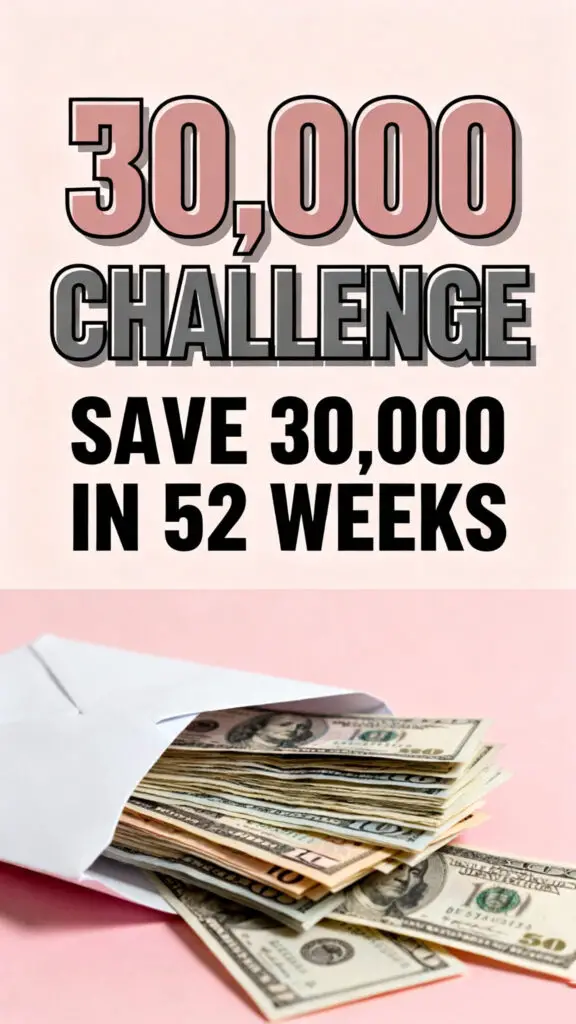
30,000 Money Saving Challenge – Save 30,000 in 52 Weeks

December 1, 2025 By Ana Rose

Saving money can sound like an overwhelming and intimidating task especially when the goal is as big as $30,000 which is why it is necessary to break it down into smaller and more manageable chunks. This idea behind the 52 week challenge is to start small and gradually build your savings over time. Over time, these small yet consistent efforts can turn into a significant amount, making every deposit worth it. Whether your goal is to build an emergency fund, save for a big future purchase, or simply take control of your finances, this challenge can be your to go for saving a big amount. This article will help you explore the dynamics of the 52 weeks challenge, ensuring that it goes smoothly.

30,000 Money Saving Challenge - Save 30,000 in 52 Weeks

Set Your Target and Timeline (Week 1)

Illustration of a woman planning her 52 week savings challenge with a calendar and $30,000 goal bar on a pastel pink background.

Before starting your savings journey, you need to set your goal clearly which in this case is $30,000 in 52 weeks. You can divide your total goal by 52 and get an average of around $577 per week. While this may sound high, you need to convert this big overwhelming goal into small pieces for the challenge to sound less intimidating. 

The key is to commit to the challenge from day one and follow it with consistency. Over time, these consistent efforts will turn into something big and meaningful, making your decision to begin with the challenge and every tiny deposit worth it. 

Create a Dedicated Savings Account (Week 1)

One of the best ways to stay consistent with the savings challenge and make sure that you deposit an amount every week is to create a dedicated savings account separate from your regular money. Having a separate account can prevent you dipping into your savings whenever the urge to spend arises, making it necessary to have one. 

You can label the account with something motivating like, “My Savings Journey” or “My $30K Goal”. This psychological trick helps remind you why you started the journey in the first place, helping you find the challenge motivating and rewarding. 

Start Small and Build Gradually (Weeks 1–4)

Illustration of gradually increasing weekly savings stacks labeled $200 to $500 on a pastel pink background.

The next step is to begin with the challenge and build habits that will help you stay consistent with it, not focusing only on the numbers. You can start small to get comfortable in the initial phases of the challenge, for example, in the first week, you can save around $200, $300 in week 2, $400 in week 3, and $500 in week 4. This way, by the end of the month you’ll have around $1,400 saved, which is a pretty good figure for the initial phases.  

Starting small can help you get used to the challenge and once you see what these deposits add up to, it can strengthen your motivation to keep moving forward. 

Adjust Your Lifestyle and Cut Back (Weeks 5–8)

As you move into the second month of your 12 month challenge, it’s time to go through your spending habits and make modifications to your spending choices. You can consider those seemingly small leaks or those areas of weakness that quietly eat away your income, whether it’s dining out frequently, grabbing coffee every morning, or subscribing to services you barely use. 

For these weeks, try saving between $550-$600 weekly, and your total can reach around $4,000-$5,000. The main catch of this stage is to adjust your lifestyle according to what matters the most to your finances at the moment, which is your savings challenge 

Automate Your Savings (Weeks 9–12)

The next step in your 52 week challenge is to make the process of setting money aside effortless and low maintenance by automating your savings. Choose a specific day for the transfer, ideally, it should be your payday, because this hack takes away the possibility of you dipping into your income when you receive your paycheck, also known as “paying yourself first”.

During these 9-12 weeks, try to save around $600 weekly, and by the end of week 12, you’ll have around $7,000 saved. 

Use Extra Income to Boost Your Progress (Weeks 13–20)

The next step in your 52 week journey is to earn extra income to boost your progress. Relying solely on a single income in today’s economy can be hard, especially when you’re working on a savings challenge as well. You can work as a freelancer and advertise your services through freelancing platforms such as Fiverr, Upwork, or freelancer.com. Moreover, you can offer babysitting or pet sitting services and even consider selling unused items in your home.

During these 13-20 weeks, keep saving $650-$700 each week and by the end of the 20th week, you’ll have around $12,000 to $13,000 saved. 

Stay Motivated and Track Your Growth (Weeks 21–28)

The next important step when you move on with the savings challenge is to remind yourself that it’s completely okay if the challenge loses its spark, what matters the most is that you stay committed and consistent to the goal you started for in the first place. You can create a visual tracker like a chart, a savings thermometer, or even a notebook to record your progress. Seeing your savings can be a great motivation and confidence booster that ensures you move on with the challenge even through the boring and dull phases. 

During these 21-28 weeks, save $700-$750 weekly so that by the end of the 28th week, you can save around a total of $17,000 

Revisit and Readjust Your Budget (Weeks 29–36)

Around this time of the challenge, it’s very likely that your financial circumstances might have taken a shift, whether you paid off a debt, earned a raise, or managed to cut more expenses. Utilize this period to review your budget and adjust your savings target if possible. Even adding an extra $50–$100 per week can make a noticeable difference and you’ll be surprised by how your mindset has evolved in these few weeks. By the end of the 36th week, make sure you have saved a total of $22,000. 

Stay Strong Through the Slower Weeks (Weeks 37–44)

As you move further along in your savings journey, it’s completely normal to experience moments where you feel tired, unmotivated, or even tempted to give up. You can look back at the sacrifices you’ve made and the amount you’ve already saved to reignite your motivation.

By continuing to save around $750–$800 weekly during these weeks, you’ll find yourself getting closer and closer to your $30,000 goal, and that thought alone can push you forward with renewed energy and determination.

Make a Final Push (Weeks 45–50)

At this point, you’re nearing the finish line of your 52-week challenge, and these last few weeks are all about giving that final push of effort and energy. This is a great time to look for small but effective ways to increase your income or reduce expenses, whether that’s selling things you no longer use, skipping a few takeouts, or finding small freelance or side hustle opportunities to earn a little extra. 

You can aim to save $800–$900 weekly during this phase, and every extra deposit will bring you one step closer to completing what once seemed like an impossible goal. 

Reach Your $30,000 Goal (Weeks 51–52)

By the final two weeks of your challenge, you’ll finally reach the most rewarding part that is seeing your hard work, patience, and persistence turn into something meaningful. Hitting your $30,000 goal is more than just a financial win, it reflects your growth and your ability to stay consistent. 

Take a moment to look back at the entire journey, from your first $200 deposit to this incredible achievement, and appreciate every bit of effort you put in. 

Plan What Comes Next 

Now that you’ve completed your savings challenge and have $30,000 in your account, it’s time to decide how to use it wisely and purposefully. You can divide your savings into different categories based on your priorities, for example, setting aside a portion for an emergency fund, investing in something long-term, or saving for a future goal like a home, travel, or education. 

The most important thing is to make sure your money works for you instead of being spent impulsively. 

Conclusion

The 30,000 Money Saving Challenge is much more than just a plan to save a certain amount of money, it’s a full-year journey of discipline and transformation. Throughout these 52 weeks, you can learn that saving isn’t just about perfection or high income, it’s more about those small and consistent efforts that build up over time. By the end of the challenge, you don’t just walk away with $30,000 sitting in your savings account, you also carry with you a sense of control, confidence, and empowerment that changes how you view money altogether. This challenge proves that even the biggest goals can be achieved when you break them down into simple, consistent steps and believe in the power of persistence.

  • « Go to Previous Page
  • Go to page 1
  • Interim pages omitted …
  • Go to page 18
  • Go to page 19
  • Go to page 20
  • Go to page 21
  • Go to page 22
  • Interim pages omitted …
  • Go to page 73
  • Go to Next Page »

The Latest Blog Posts:

  • 14 Profitable Things To Sell On eBay June 20, 2026
  • Mason Jar Crafts To Make And Sell June 19, 2026
  • 12 Best Jobs for Retired Teachers  June 18, 2026

As Featured In:

Just Start Investing Press Strip 2020 B&W

Follow Us:

  • Facebook
  • Twitter
  • Pinterest

Copyright © 2026 · Just Start Investing LLC

  • Contact Us
  • Blog
  • Privacy Policy / Disclaimers