• Skip to primary navigation
  • Skip to main content

Just Start Investing

We Make Investing Easy

  • Investing
    • Learn About Investing:
    • Investment Accounts
    • Online Brokerage Accounts
    • Investment Vehicles
    • Start Investing:
    • How to Invest in Index Funds
    • Start Investing with Betterment
    • Start Investing with Charles Schwab
  • Banking
    • Best Bank Accounts
    • Types of Bank Accounts:
    • Checking Accounts
    • Savings Accounts
    • CDs and Money Market Accounts
    • Online Banks vs Brick-and-Mortar
  • Credit Cards
    • Best Credit Cards:
    • Best Cash Back Credit Cards
    • Best No Annual Fee Credit Cards of 2021
    • Best Premium Credit Cards of 2021
    • Credit Card Tool: Find the Best Credit Card for Me
    • Learn About Credit Cards:
    • Types of Credit Cards
  • Blog
    • Investing
      • What is Crypto?
        • Crypto
      • What are stocks?
        • Stocks
      • What is a Real Estate Investment?
        • Real Estate Investments
      • What is an IPO?
        • IPO
    • Banking
    • Credit Cards
    • Budget
    • Finances
  • Earn with Crypto
  • Budget
    • How to Build a Budget
    • 24 Tips to Save More Money
  • Resources
  • About
    • Contact
    • Press
    • Learn More
    • Disclaimers
  • Show Search
Hide Search

Blog

Save $100K In 3 Years Without A 6 Figure Salary 

December 13, 2025 By Ana Rose

Saving $100K in 3 years may sound like an overwhelming and distant dream that is only possible for those with 6 figure salaries or those with financial knowledge, but the truth is, with a clear plan and consistency, this target can become achievable for anyone. The key is not just about how much you earn, but how much you manage, grow, and prioritize your money. By combining smart budgeting, side income streams, disciplined savings habits, and thoughtful investment choices, you can gradually build substantial wealth. This plan breaks down the journey into practical steps, showing how deliberate actions over time can turn what feels like an impossible goal into an achievable reality.

Save $100k In 3 Years Without A 6 Figure Salary

Set a Clear Target and Timeline

Illustration of a person viewing a $100K savings roadmap with milestones on a pastel pink background.

You can make saving $100,000 in three years feel achievable by setting a clear and specific goal with a fixed timeline, because when both the amount and the deadline are defined, it can turn a distant dream into a concrete plan that feels motivating rather than overwhelming.

This can include breaking the total into two realistic parts, like a monthly target and a weekly checkpoint, and keeping these numbers visible on a chart or app, which can make progress feel tangible and encouraging. Seeing each milestone can add a sense of momentum, helping the journey feel both structured and exciting.

Track Every Dollar You Earn and Spend

You can gain control over money by carefully tracking every dollar that comes in and goes out, because understanding spending habits is the first step toward making intentional financial decisions. 

This can include keeping a simple digital log and a small notebook, and reviewing expenses weekly, which can make patterns clear and highlight opportunities to redirect money toward your goal. Tracking consistently can add awareness to everyday choices, helping small amounts spent here and there accumulate into meaningful savings over time.

Slash Unnecessary Expenses

You can reduce spending without feeling deprived by cutting out costs that don’t add real value to life, because even small recurring expenses can quietly add up and slow progress toward your goal. 

This can include cancelling unused subscriptions and limiting takeout meals, and finding small daily alternatives, which can free up hundreds each month to go straight into savings. Over time, these adjustments can feel natural and empowering rather than restrictive, turning frugality into a habit that steadily supports your $100K plan.

Build a Strict Budget and Stick to It

You can create a budget that aligns with your lifestyle, because having a plan for where money should go each month can make saving both realistic and reassuring. This can include allocating a fixed percentage of income to savings and setting clear spending limits for essentials, and tracking these categories monthly, which can make your financial situation easier to understand and manage.

Following a consistent budget can add structure and stability, helping progress feel measurable and less stressful.

Increase Your Income Strategically

Illustration of a person earning extra income through side hustles on a pastel pink background.

You can boost savings by exploring ways to increase income alongside a regular job, because relying on a single paycheck can make a large goal seem distant and challenging.

This can include taking freelance projects and turning a hobby into a small income source, and gradually adding these streams to your monthly cash flow, which can significantly speed up progress without overwhelming your daily life. Additional income can add flexibility and confidence, making the $100K target feel more within reach.

Automate Your Savings

You can make saving feel effortless and almost automatic by setting up transfers from your checking account to a dedicated savings account, because automation reduces the risk of spending money impulsively and ensures that saving happens consistently without relying on willpower alone. 

This can include scheduling weekly transfers and splitting your funds between a short-term account for emergencies and a long-term account for your $100K goal, and monitoring these balances occasionally to notice the growth over time, which can be surprisingly motivating. Over weeks and months, watching money quietly accumulate in the background can make saving feel natural, stress-free, and even a little exciting, because it becomes a habit that moves forward without constant thought or effort.

Minimize High-Interest Debt

You can free up a significant portion of your income for savings by focusing on reducing high-interest debt, because the interest you pay on credit cards, personal loans, or other high-rate debts can quietly eat into money that could otherwise be growing toward your goal. This can include paying down credit card balances and negotiating lower interest rates with lenders, and creating a structured repayment plan that prioritizes debt with the highest interest first, which can steadily release extra cash each month to direct toward your $100K target. 

Reducing debt can also bring emotional relief and a sense of financial freedom, because it removes the stress of owing large amounts and allows you to focus on building wealth rather than paying interest that works against you.

Leverage Investment Opportunities

You can help your savings grow faster and work for you by exploring accessible investment options, because simply letting money sit in a regular checking or savings account might make the three-year goal feel slow or unreachable. 

This can include putting money into low-cost index funds and opening a high-yield savings account, and balancing risk with stability to ensure your money grows steadily while remaining safe, which can create a sense of excitement as you watch the compounding effect gradually increase your total. Investments can also add motivation, because seeing your money actively work to reach a specific goal can make the journey more engaging and can turn a simple habit of saving into a long-term wealth-building strategy that continues beyond the three-year timeline.

Create Windfalls and Bonuses Plan

You can accelerate your savings and create jumps toward your goal by treating windfalls such as bonuses, tax refunds, or unexpected gifts as intentional contributions rather than spending opportunities, because these occasional boosts can make a noticeable difference in overall progress. 

This can include selling items you no longer need and taking short-term paid projects when possible, and directing all of these extra earnings straight into your savings, which can add both speed and a rewarding sense of accomplishment to your journey. Planning for windfalls this way can also create a mindset of proactive financial control, because it turns unexpected income into an opportunity for growth rather than letting it slip away through unnecessary purchases.

Practice Frugal Lifestyle Habits

You can make frugality a positive and empowering part of your lifestyle, because small, intentional daily habits can add up to substantial savings without making life feel restricted or joyless. This can include making coffee at home and preparing homemade meals instead of eating out, and being mindful of small but frequent purchases like daily snacks or convenience items, which can gradually free up hundreds of dollars each month for your $100K goal. 

Over time, these habits can create a natural sense of financial control and stability, because you can still enjoy life while building a stronger money foundation, and the cumulative effect of small, repeated choices becomes surprisingly powerful in reaching a big target.

Monitor Progress and Adjust

You can stay motivated and on track by regularly reviewing your financial progress and making adjustments as needed, because checking in on milestones allows small challenges to be addressed before they become bigger obstacles. 

This can include reviewing monthly balances and comparing them to planned savings targets, and tweaking your budget or income strategies when shortfalls appear, which can provide a clear picture of what’s working and what might need extra attention. Monitoring progress can also reinforce confidence and motivation, because seeing tangible results, even small ones, reminds you that consistent effort pays off, and it makes the $100K goal feel both achievable and within your control.

Stay Consistent and Patient 

You can rely on consistency and patience as essential tools for building a large savings goal, because growing $100,000 in three years is less about sudden luck and more about steady, repeated effort that compounds over time. 

This can include making regular contributions every week or month and resisting impulses to dip into savings, and focusing on the long-term benefits of each small, consistent action, which can gradually accumulate into substantial progress. Over time, patience and persistence can create a sense of calm and confidence, because seeing progress build steadily reinforces that reaching such an ambitious goal is realistic, and the satisfaction of consistent growth adds both motivation and a sense of financial accomplishment.

Conclusion

You can turn the ambitious goal of saving $100,000 in three years into a realistic and achievable plan by combining careful budgeting, disciplined saving habits, and smart strategies to grow income and money over time, because reaching a big target is more about steady, intentional actions than sudden windfalls or extreme sacrifices. This can include being mindful of daily spending and lifestyle choices, and exploring ways to increase earnings or invest wisely, which together create a system where progress builds naturally and consistently. Over time, consistency, patience, and proactive planning can transform ordinary earnings into extraordinary results, making the journey not only possible but also empowering and satisfying, as each small step adds momentum toward financial independence and long-term security.


17 Helpful Tips To Start Small Business

December 12, 2025 By Ana Rose

Starting a business can feel like an exciting yet intimidating milestone in one’s life especially when you’re turning an idea in your head into something more real and that serves you financially. Most people wait for the right time and big investments to start their journey of running a business but the truth is that small businesses begin with small steps, consistent effort and discipline along the whole journey. Whether you’re planning to sell handmade crafts, start a service, or launch a digital side hustle, having a clear and straightforward plan can make the whole way easier and more doable. This article will help you explore 17helpful small business tips, allowing you to become more confident and build a strong foundation for the business right from the beginning. 

17 Helpful Tips To Start Small Business

1. Start With One Clear Idea

Illustration of a woman at a desk brainstorming with a glowing lightbulb and pastel pink background.

An essential step when it comes to starting your own business is to have a clear and concise idea regarding what your small business will look like. Whether it’s selling goods, offering a service, or providing digital services through freelancing platforms, having a clear idea can make your journey easier than you may realize.

A clear idea can help you figure out your direction, identify your potential customers, and understand what problem you’re trying to solve. When you know exactly what to offer to your customers, the business can feel more organized and in place, making it easy for you in the longer run. 

2. Understand Your Target Audience

Illustration of a business owner studying customer profiles on a screen with pastel pink background.

Once you have a clear idea, the next step is to identify your customers and understand your target audience. This tip is one of the most essential foundations of any business that helps you understand your audience’s needs, preferences, and lifestyle, enabling you to modify your goods or services according to what your audience prefers. 

The key is to pay attention to what people complain about, what they wish existed, and what they are already spending money on. 

3. Start Small Before Going Big

A big mistake most people make when it comes to starting small businesses is that they begin with huge investments and full-scale launch. A better approach is to start small and play it safe. 

This approach allows you to learn from early mistakes, understand your customers better, and make improvements before you expand your business. Over time, as you gain experience and confidence you can handle your business better. 

4. Keep Your Costs Low in the Beginning

In the beginning, you don’t need fancy equipment, a big office, or expensive software, you just need to focus on the essentials and serve your first customers. When your expenses stay low, you have more financial freedom to experiment, grow at your own pace, and avoid unnecessary pressure. 

5. Use What You Already Have

Another helpful and underrated tip is to look at what you have and put your already available resources to work. Instead of buying fancy equipment or new gadgets, try using what’s already available. 

This helpful tip allows you to focus on building your business in the long run rather than restricting your finances and ultimately going through a financial crisis. 

6. Validate Your Idea Before Launch

Before investing your time, money and efforts, a helpful tip is to validate your idea before you launch your business. What’s important is to make sure that your business is in demand and can work in the longer run. 

The idea of validation can be as simple as asking your friends for feedback, sharing samples, running a small pre-order, or posting your idea online and seeing how people respond. 

7. Create a Simple Business Plan

Another helpful trick is to create a business plan that is simple, straightforward, and easy to understand rather than a complicated or complex idea. It can include your overall idea, your target audience, your expected costs, and the goals you’re trying to achieve. 

When you have a written plan, you can track your progress easily, making it easy for yourself to stay on track and stick to the plan you created in the initial phases of starting a business. 

8. Focus on One Product or Service First

Another common mistake people make when starting a business is that they start with big plans and promise on offering multiple services or products. A better approach would be to start small and focus on one product or service and as your business grows, you can consider expanding it to multiple products or services. 

9. Build an Online Presence Early

Even if your business is small, having an online social media presence can have a much greater impact than you may ever realize. You can start with a simple Instagram and Facebook page and create posts, share photos, helpful tips, and some updates about your business. 

Not only does building an online presence help you promote your business, it can help you reach more people in today’s digitally-oriented world. 

10. Learn Basic Marketing Skills

In today’s world, marketing is essential and the good news is that you can get to understand the basics for free. You can understand how to write engaging posts, create meaningful content, use hashtags, and most importantly, share your journey with your audience to show them how far you’ve come. 

Not only does this tip help you promote your business, engaging with your content also helps you create a stronger circle of customers, making learning basic marketing skills a considerable option.

11. Offer Value Before Expecting Sales

People often trust brands that offer genuine care and concern regarding helping their audience, not just promoting their products or selling them. When you start your business, make sure to share helpful informational videos about your products and services, answer common queries, give your audience guidance, and offer small insights related to your business. Not only does this help your business grow, it also helps you create a strong sense of community, making your customers feel like they’re wanted. 

12. Price Your Product Fairly

Pricing your product fairly is one of the most important decisions you will make because it directly affects your profit, your customer’s trust, and the overall growth of your business. A good way to start is by calculating your material cost, the time you put into creating the product or service, and the effort you invest in delivering a good experience. 

Many new business owners underprice themselves out of fear of losing customers, but doing so can harm your business in the long run and leave you feeling tired and unmotivated. 

13. Take Customer Service Seriously

Customer service plays a bigger role than most people realize, especially when you’re just starting out and trying to build a name for yourself. Treating customers with kindness, patience, and genuine care can leave a lasting impression and make them want to return to your business again. 

Simple things like responding quickly, addressing their concerns, handling mistakes politely, and staying professional at all times can make your brand stand out. 

14. Stay Consistent, Not Perfect

Consistency is often more powerful than perfection, especially when building something from the ground up. You don’t need perfect photos, perfect plans, or perfect ideas to succeed, you just need to show up regularly, stay committed to your goals, and put in steady effort each day. 

The small actions you take consistently will slowly build your skills, strengthen your presence, and help your audience trust you. 

15. Keep Learning as You Grow

Running a business means you’ll constantly learn new things along the way, whether it’s understanding your customers better, creating better products, or improving your marketing skills. The more you learn, the more confident and capable you become. 

You can watch simple tutorials, take short courses, read helpful blogs, or learn from other small business owners who share their experiences online. Staying open to learning keeps your mind fresh, your ideas updated, and your approach more flexible. 

16. Don’t Be Scared of Making Mistakes

Mistakes are a natural part of starting anything new, and instead of seeing them as failures, it’s helpful to view them as lessons that guide you toward better decisions. Every small business owner, no matter how successful today, went through moments of confusion, errors, and unexpected challenges. 

What matters is not avoiding mistakes, but allowing yourself to learn and improve from them. When you let go of the fear of messing up, you open the door to creativity, experimentation, and growth. 

17. Celebrate Every Small Win 

In the rush of building a business, people often forget to celebrate the small wins that actually keep them motivated and emotionally grounded. Whether it’s your first sale, your first positive review, your first returning customer, or even your first week of staying consistent, every small achievement deserves appreciation. 

Celebrating these moments reminds you that progress is happening, even if it feels slow. It helps you stay positive, feel proud of yourself, and maintain the excitement that started your journey in the first place. 

Conclusion

Starting a small business is a journey filled with learning, patience, and growth, and while the process may feel overwhelming at times, it becomes much easier when you take things step by step and trust yourself along the way. Every small effort you make, every idea you test, and every challenge you overcome helps you build a stronger foundation for your business and prepares you for bigger milestones in the future. The key is to stay consistent, keep improving, and remind yourself that great things often begin with small and simple beginnings. 

The Ideal Way To Budgeting Finances Fortnightly

December 11, 2025 By Ana Rose

Budgeting your finances fortnightly can be a comforting experience especially when your finances align perfectly well with how you get paid. For many people, getting money every two weeks means money comes in faster as compared to those monthly paychecks and when you build your budgeting plan around the two weeks timeline, you can give your finances a proper structure, making them more manageable and predictable. Instead of working on larger amounts at the end of every month, budgeting every two weeks can help you manage your finances by dividing the large sum into smaller and more manageable portions. This article will help you explore ways to budget your finances fortnightly, ensuring that your finances continue to work for you, not against you. 

The Ideal Way To Budgeting Finances Fortnightly

Understand Your Fortnightly Income Clearly

The very first step when you begin your journey of budgeting fortnightly is to understand the income that’s coming in every two weeks. Instead of depending on guesswork and assuming things, a smarter approach would be to take a moment, calculate your income, and figure out what your take-home pay is. 

This can include your main salary, your allowances, or even those side hustles that you work on occasionally. Once you have a clear starting point, the rest of your journey becomes easier, giving you a direction and kickstart regarding what the journey ahead will look like. Not only does this step help you with awareness, it helps you avoid overestimating and overspending as well, helping you become more mindful and intentional with what you spend on. 

Break Monthly Expenses Into Fortnightly Portions

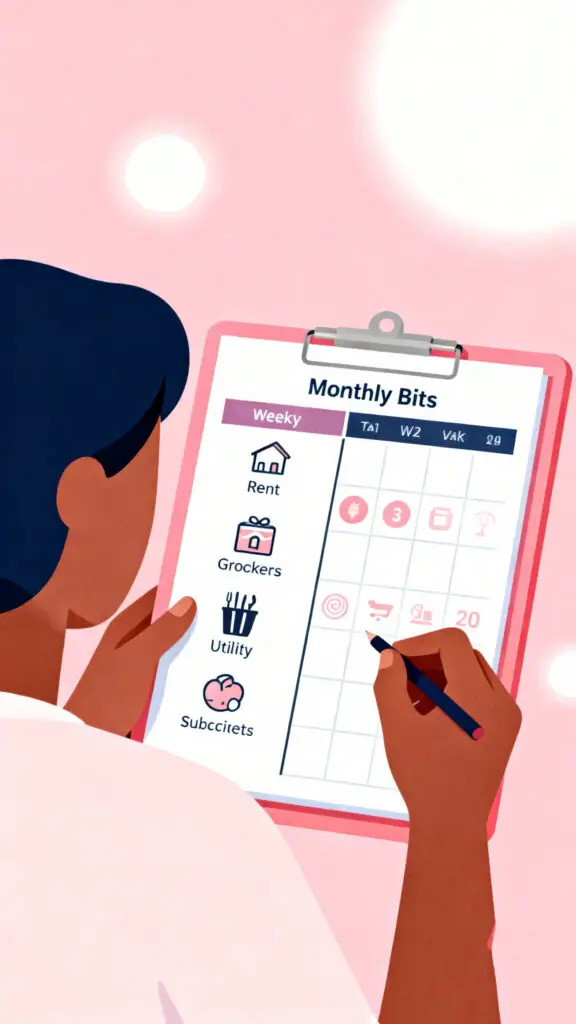
Illustration of a person organizing monthly expenses into two fortnightly sections using a calendar and bill icons on a pastel pink highlighted background.

The next step is to list down all your expenses, from rent to groceries, mortgage payments to subscriptions, and bills to snacks. Most of the bill payments come every month, which is exactly why it is important to plan ahead and divide the bill payment into two, so you know exactly what to set aside every two weeks to pay the bills. 

Whether it’s rent, utility bills, subscriptions, groceries, transport, or tuition fee, breaking down these non-negotiable bills into two can help you plan effectively, planning with structure and discipline. This way you can also avoid the awful feeling of watching your entire paycheck disappear the moment a new month starts because you’ve already budgeted for them in advance, making you feel more satisfied both financially and mentally. 

Use a 50/30/20 Framework Adapted for Bi-Weekly Pay

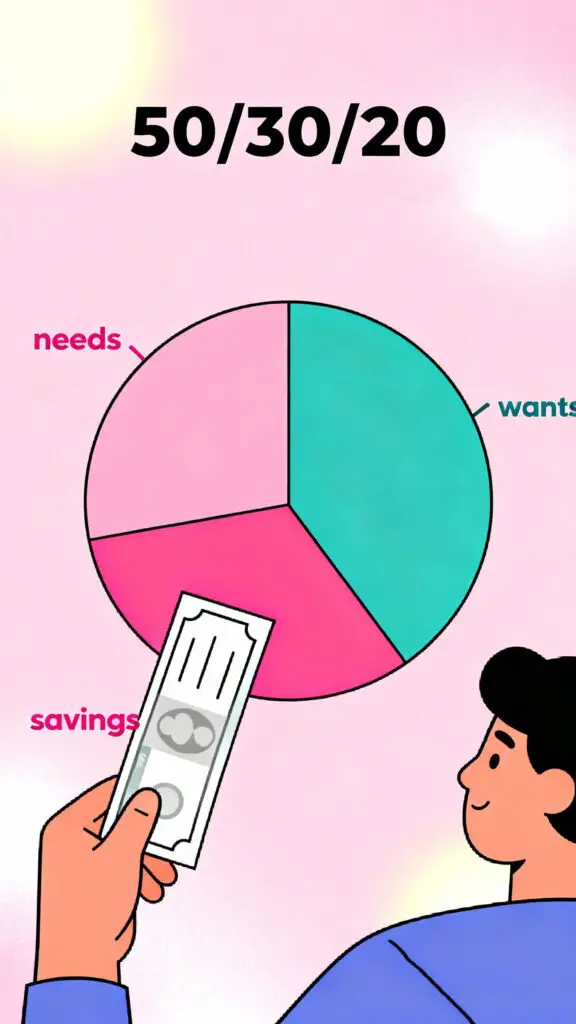
Illustration of a bi-weekly 50/30/20 budgeting pie chart with a person managing income on a pastel pink background.

The next step is to use the 50/30/20 framework which is all about dividing your paycheck into a balanced ratio with three categories. According to the rule, 50% of your income goes to your needs or those essential expenses such as rent, housing, utilities, or transport, 30% goes to your wants or the nice-to-have spending category such as takeouts, coffee runs, or subscriptions, and lastly 20% goes to savings, investments, or paying off debt, if there are any. 

What makes this different from the monthly 50/30/20 rule is that you apply the percentages to every single paycheck instead of waiting for the entire month’s income to arrive. Moreover, with this fortnight approach, you get to manage smaller amounts more frequently, making it easy to track money and adjusting your lifestyle surrounding your budgeting plan rather than struggling with big numbers each month. 

Prioritize Essential Bills First Each Fortnight

The next step is to prioritize your essential bills over the non-essential ones. This can include half of your rent, groceries, utilities, transportations, and other payments. Treat these expenses as those non-negotiable bills and set money aside for them whenever your paycheck arrives, helping you avoid confusion later on. 

Doing this simple but highly effective step can help you create peace of mind that comes along with knowing that your needs are covered before you even think about spending your hard-earned money on anything else. 

Set Up Automatic Savings Transfers

Another considerable option when it comes to budgeting your finances in an effective way is to set up automatic savings transfers. When you are paid every two weeks, small amounts build up surprisingly fast, and automating these transfers removes the temptation to spend. 

Some banking apps allow you to set up an automatic transfer so the moment your paycheck hits your account, a specific account moves to your savings account, helping you set money aside while still enjoying the money you work so hard for. What makes automation a considerable option is that it takes away the intentional effort to save, helping you save in an almost effortless way. 

Create a Cushion for Irregular Expenses

Not all expenses show up every month, some show up occasionally and some up unexpectedly which is why it is so important to prepare yourself for those expenses so you can pay for them without having to put your entire budget on stake. Instead of panicking when these expenses appear, you can create a small category in your fortnightly budget called future expenses. 

Whether it’s for a sudden medical emergency, car repair, birthdays, or holidays, having a cushion can help you plan for these expenses without having to stress over your budget. Over time this small habit can provide you peace of mind and satisfaction, knowing that in case an unexpected expense shows up, you have a safety net in place that can help you take control and make decisions with confidence. 

Use a Simple Tracking System You’ll Actually Follow

A fortnightly budget works the best if you’re tracking it in a way that doesn’t feel like a burden. You can use a budgeting app, a spreadsheet, a notebook, or something as simple as the notes app in your phone. The key is not to overwhelm yourself with details, it is more about helping you stay aware of what you spend at, allowing you to become more mindful and make changes if you identify an unhealthy spending pattern. 

Allocate Personal Pocket Money for Flexibility

When you’re budgeting every two weeks, it becomes extremely important to give yourself a little breathing room, and this is exactly where personal pocket money comes in. This small portion of your paycheck is meant just for you, allowing you to enjoy small treats or comfort purchases without feeling guilty or like you’re breaking your budget. 

Whether it’s a coffee run, a small snack, a quick outing with friends, or something fun that brightens your week, this category keeps your budget realistic and enjoyable. Allocating pocket money helps prevent overspending in other categories since you already have a space for stress-free spending, and it keeps you motivated to stick with your budget long-term because you don’t feel deprived or overly restricted.

Review and Adjust Every Two Weeks

One of the best advantages of budgeting fortnightly is the chance to reset and realign your spending habits every two weeks without waiting for an entire month to pass. This simple review session helps you understand where your money went, what categories worked well, and what areas need adjusting. 

Reviewing frequently gives you a clearer picture of your financial patterns, helping you identify small mistakes before they turn into bigger issues. It’s a chance to celebrate your small wins, correct any overspending early, and adjust plans for the next two weeks with more clarity. 

Plan Meals and Groceries Around the Fortnight Cycle

Groceries can easily take up a big portion of your income, which is why planning meals around the two-week cycle can be one of the smartest decisions. Instead of making several random trips to the grocery store and ending up with unnecessary items, you plan ahead for 14 days, listing what you need and buying intentionally. 

This helps reduce impulse buying, food waste, and the stress of last-minute meal decisions. A simple two-week meal plan can guide your shopping list and keep your food expenses within budget. Over time, this habit not only helps you save money but also saves time and energy, making your daily routine feel more organized and predictable.

Use One Paycheck for Essentials and the Other for Goals 

A helpful budgeting strategy many people find easy to follow is dividing the purpose of each paycheck into two categories, one paycheck mainly for covering essential bills and must-pay expenses, and the second paycheck for financial goals such as savings, sinking funds, debt payments, or investments. 

This method brings structure and clarity to your finances because you aren’t mixing everything together, and you always know what each paycheck is meant to accomplish. 

Conclusion

Budgeting your finances fortnightly is a practical and empowering approach that matches the flow of your income with the way you live your daily life. Instead of juggling large monthly numbers, splitting everything into two-week portions makes your expenses easier to manage, your savings easier to maintain, and your goals easier to reach. With clear steps such as dividing expenses, prioritizing essentials, automating savings, planning meals, reviewing often, and giving yourself flexible spending money, you create a system that works for you rather than controlling you. This method helps you stay consistent, confident, and financially organized, allowing your money to support you in a smoother and more intentional way.

The Best Way To Budgeting Finances For Couples

December 10, 2025 By Ana Rose

Budgeting as a couple can feel a little overwhelming in the beginning, especially when two people with different upbringings, money habits, and spending styles suddenly have to sit together and make joint financial decisions. It’s not just about numbers on a spreadsheet, it’s really about communication, trust, teamwork, and slowly creating a financial system that feels fair and comfortable for both partners. When done intentionally, budgeting becomes something that strengthens the relationship rather than creating stress. It gives both partners a sense of control, clarity, and confidence about where the money is going and how future goals will be met. And the best part is that budgeting doesn’t have to be strict or complicated, it just needs to be honest, simple, and consistent.

The Best Way To Budgeting Finances For Couples

Start With an Honest Conversation About Money

Illustration of a couple discussing finances at a table with money-related icons on a pastel pink highlighted background.

Before planning any budget, the first step is sitting down and having a very real, open-hearted conversation about money. Many couples avoid money talks because they fear disagreement, but in reality, this conversation builds understanding. Both partners should share their income, debts, spending habits, financial fears, and long-term dreams.

Make it a safe space where no one feels judged and when both people understand each other’s background and what money means to them, it becomes easier to work together. This conversation sets the foundation for future decisions, helps avoid hidden surprises, and ensures you both start the budgeting journey as a united team.

Choose Whether to Combine, Separate, or Hybrid Your Finances

Every couple is different, so there’s no single correct way to manage money. Some couples prefer fully combining finances, others prefer completely separate accounts, while many choose a hybrid system where they manage shared expenses together but maintain individual freedom. 

The key is choosing what feels fair and comfortable for both. Discuss openly how you will split bills, savings, and personal spending. The goal should be to remove confusion and resentment while giving both partners independence. When you choose the right system, budgeting becomes smoother and arguments reduce because both people understand their responsibilities clearly.

Create Shared Financial Goals Together

Illustration of a couple creating a shared financial goals board with various goal icons on a pastel pink background.

One powerful way to bond as a couple is through shared goals. Sit together and list what you want to achieve in the next few months and the next few years, maybe saving for a vacation, paying off debt, buying a car, building an emergency fund, or planning for a home. When goals are written down, they become more real and easier to work toward. 

Make sure both partners feel heard and that the goals reflect both people’s desires. You can then break these big dreams into smaller, monthly or weekly targets that feel achievable. Working toward something exciting together makes budgeting feel meaningful rather than restricting.

Track Your Combined Household Income

A couple’s budget starts with understanding exactly how much money is coming in every month. This includes salaries, freelance income, benefits, or bonuses. When both partners know the total household income, planning becomes clearer. Tracking income also helps you divide responsibilities fairly, some couples split everything 50/50, while others contribute based on their income percentage. 

There’s no right or wrong, it just needs to feel fair. Keeping a clean record of your combined income reduces confusion, makes goal-setting easier, and ensures you both have a clear picture of your financial strength as a team.

List Out All Shared Monthly Expenses

To create a stable budget, couples need to write down every fixed and variable expense, from rent and groceries to utilities, transportation, internet, subscriptions, and even small daily expenses like coffee. Many couples underestimate their monthly spending because they don’t track the tiny things. 

Listing everything helps you understand your true lifestyle costs and prevents overspending. This also makes decision-making easier because you can see where changes are needed. When both partners participate in listing expenses, it creates transparency, reduces misunderstandings, and keeps both people aligned on how the household money is being used.

Build an Emergency Fund as a Non-Negotiable

Every couple needs an emergency fund, a safe backup that protects you from unexpected situations like job loss, car repairs, medical bills, or sudden expenses. Treat this fund as a shared responsibility and aim to save at least 3 to 6 months of expenses over time. 

Start small if needed, even if it’s just a little every week because the goal is safety and peace of mind. When couples have an emergency fund, they feel more secure, argue less during stressful times, and handle challenges as a team instead of panicking or blaming each other.

Use the 50/30/20 Rule or a Similar Budgeting Framework

Budgeting becomes much easier when couples follow a simple structure because it removes the stress of guessing how much to spend or save each month. The 50/30/20 rule is a great starting point with 50% going to essential needs, 30% to wants, and 20% to savings and future planning but what makes this method truly helpful is how flexible it is. 

Every couple has different priorities, so you can adjust the percentages to match your income, goals, and lifestyle without feeling restricted. This gentle structure helps both partners stay disciplined, make more mindful spending choices, and still enjoy life without guilt. 

When the boundaries are clear yet adaptable, budgeting becomes a smooth and predictable routine that naturally reduces misunderstandings, overspending, and the small financial disagreements that often create tension in relationships.

Have Weekly or Monthly Budget Check-Ins

Budgeting is not a one-time activity, it’s something couples must revisit regularly so they can stay on track. Pick a day every week or month where you sit together, review expenses, check savings progress, and make any adjustments. 

Keep these meetings calm, short, and kind, so they don’t feel stressful. Celebrate small wins, like sticking to the budget or hitting a goal. Regular check-ins prevent misunderstandings, build trust, and ensure both partners remain involved instead of one person carrying all the financial responsibility.

Set Personal Spending Allowances

One of the biggest reasons couples fight about money is feeling controlled or judged for personal purchases. To avoid this, set personal allowances for each partner, a fixed amount each can spend freely without explaining or justifying it. 

This gives both people independence and removes guilt around treating yourself. Whether it’s shopping, hobbies, or small indulgences, having your own personal funds creates balance in the relationship. It also helps maintain the budgeting system because personal spending stays within a healthy limit.

Tackle Debt Together as a Team

If either partner has debt such as student loans, credit cards, or car financing, treat it as a shared challenge instead of one person’s burden. Discuss how you’ll prioritize repayments, whether you want to clear high-interest debt first, or focus on the smallest balance for motivation. 

Debt can create stress, so the key is building a plan that both feel comfortable with. When couples support each other instead of blaming or hiding debt, repayment becomes faster and emotionally easier. Working together makes the journey feel lighter.

Use Budgeting Apps or Shared Spreadsheets

Technology can make budgeting so much easier for couples. Apps like Goodbudget, YNAB, or even Google Sheets let you track expenses, share updates in real-time, and stay organized. 

When both partners see the numbers clearly, there’s less confusion and fewer disagreements. Use tools that match your comfort level as some prefer simple spreadsheets, while others like automated apps. The goal is to stay transparent, make tracking quick, and help both partners stay involved in managing household money.

Plan for Fun, Celebrations, and Quality Time Together

Budgeting isn’t just about bills and savings, it should also include joy. Make space in your budget for date nights, gifts, celebrations, small trips, or anything that strengthens your bond.

Couples often forget to plan for fun, and then feel guilty later when spending unexpectedly. By allocating a “fun budget,” you both enjoy life without stress. This makes financial planning feel balanced, more human, and less like a strict set of rules. A budget that includes happiness is easier to stick with long-term.

Conclusion

Budgeting for couples is not about restricting each other but about building a life together with clarity, peace, and teamwork. When both partners communicate openly, set goals together, track expenses honestly, and review progress regularly, money becomes a source of stability rather than stress. A good budget helps you achieve dreams faster, avoid unnecessary conflicts, and create a financial partnership that feels fair and supportive. Remember that budgeting is a learning process and it won’t be perfect in the beginning, but with patience, consistency, and kindness, you’ll build a financial system that works beautifully for your relationship and your future.

$10,000 Saving Challenge One Year

December 9, 2025 By Ana Rose

Saving $10,000 in a single year might feel overwhelming at first, but it becomes much more achievable once you break it down into smaller and manageable steps. A saving challenge adds discipline and direction to your financial journey, making it easy for you to stay consistent and save in an effective way. Whether you’re saving for an emergency fund, a new car, travel, or simply building long-term financial stability, committing to this challenge can be life-changing. With the right strategies, consistency, and a little creativity, you can reach your goal without feeling deprived or stressed. This article will help you explore some powerful methods you can mix, match, or follow together to successfully save $10,000 in 12 months.

$10,000 Saving Challenge One Year

Break Down the $10,000 Goal Into Monthly and Weekly Targets

Illustration of a person dividing a $10,000 savings goal into monthly and weekly amounts using a planner and calculator on a pastel pink highlighted background.

Saving $10,000 becomes much less stressful when you stop looking at the big numbers and instead break it into small pieces that feel completely doable on a day-to-day basis. If you divide $10,000 by 12 months, it comes to around $834 every month, and when you break that down even further, it becomes roughly $192 a week. 

Suddenly, the goal feels more realistic because you know exactly what you need to save each week instead of waiting for the end of the month and hoping for the best. This structure helps you stay organized and prevents overspending because each week has a purpose. 

Follow a Weekly Cash Envelope System

Using a weekly cash envelope system is one of the simplest and most old-school methods, yet it works beautifully because it forces you to become more intentional with your spending. You simply label different envelopes for things like groceries, transport, eating out, and fun money, and you only spend the cash you have placed in each one for that week. 

Once the envelope is empty, that category closes for the week and whatever cash remains in the envelopes at the end of the week can be redirected straight into your $10,000 savings challenge, making saving feel natural rather than forced. 

Try the No-Spend Week Challenge Each Month

Illustration showing a no-spend week calendar with crossed-out non-essential items and a growing savings jar on a pastel pink background.

A no-spend week each month may sound intimidating at first, but it’s actually a freeing experience because it helps you pause your spending habits and reset your financial mindset. During a no-spend week, you only pay for true essentials like bills or urgent needs, and everything else such as online shopping, dining out, and random impulse buys, comes to a temporary stop. 

This challenge doesn’t just save money, it improves self-control and helps you notice how often you spend out of boredom or convenience. The money you would have spent during that week can go directly into your savings challenge and give it a big boost. Over the year, doing this just once a month can save hundreds or even thousands without feeling like you’re making major sacrifices.

Use the 100-Envelope or 120-Envelope Variation for $10k

The envelope challenge is extremely popular because it turns saving into a fun little game that feels motivating every single day. For the $10,000 goal, you can use a 100-envelope or 120-envelope version where each envelope has a number written on it, and you save the amount written on the envelope you pick. 

To reach $10k, you can label envelopes from 1 to 120 or adjust the amounts so they add up to the yearly target. Every time you fill an envelope, you feel a little sense of achievement because it’s visible progress you can literally hold in your hands. By the end, you see a pile of filled envelopes representing your hard work, making the challenge both emotional and exciting.

Cut Hidden Expenses and Redirect the Savings

There are so many hidden expenses in our daily routines such as subscription renewals, delivery charges, unused memberships, small convenience purchases, and random shopping that doesn’t even make us happy. When you sit down and look closely at your bank statements, you’ll often find expenses that can easily be reduced or completely removed. 

Cutting even a few of these can save you $50 to $150 every month, which adds up significantly over a year. Instead of letting that money disappear without purpose, redirect it straight into your $10,000 challenge. This way, you’re not restricting yourself, you’re simply giving unwanted expenses a new home where they actually benefit your goals. It’s such a relief to see your money being used intentionally instead of slipping away unnoticed.

Automate Transfers to a High-Yield Savings Account

Automation is one of the most powerful tools when it comes to saving because it takes emotions, hesitation, and forgetfulness out of the equation. By setting up automatic weekly or monthly transfers into a high-yield savings account, you make saving happen quietly in the background without needing to rely on willpower. 

A high-yield account also gives you extra interest, meaning your money grows even while you’re asleep. You can choose a frequency that matches your pay cycle such as weekly, bi-weekly, or monthly, and treat the transfer like a non-negotiable bill you pay to your future self. Over time, automation creates consistency, which is exactly what helps you reach a big goal like $10,000. 

Adopt the Round-Up and Top-Up Savings Method

The round-up method is one of the easiest ways to save without even noticing it because it uses tiny amounts that quickly add up over time. Every time you make a purchase, you round the transaction to the nearest dollar or nearest $5 and move the extra amount to your savings. 

For example, if you spend $7.30, you can round it to $8 or $10, and the difference goes straight to your challenge. You can even set a weekly “top-up” where you add an extra $5, $10, or $20 just to keep the momentum going. These little amounts may seem small, but they build a habit that makes saving feel effortless. By the end of the year, these micro-savings can contribute a huge portion of your $10,000 goal.

Use a Bonus, Tax Refund, or Extra Income Boost

If you receive any extra money throughout the year whether it’s a bonus from work, a small raise, a tax refund, or unexpected gift money, it can become a huge accelerator for your $10,000 challenge. Instead of spending it right away, redirecting even half of it into your savings can give you a big jump forward. 

This approach helps reduce the pressure on your monthly budget and allows you to reach your goal much faster. Extra income like overtime, commission, freelance work, or seasonal jobs can also be set aside specifically for this challenge. You don’t have to sacrifice your entire earning boost, just committing a portion of it can make the journey smoother and less stressful.

Sell Unused Items and Declutter Monthly

You’d be surprised at how much money is sitting around your home in the form of unused clothes, old gadgets, books, toys, decor pieces, and items you no longer love or need. Setting a goal to declutter once every month not only creates a more peaceful and organized living space but also gives you the opportunity to earn money through selling these items online or to local buyers. 

The money you earn goes directly into your $10,000 challenge, making your home cleaner while also supporting your financial goals. It’s a refreshing feeling to let go of things that no longer serve you and convert them into something meaningful.

Pair the Challenge With a Side Hustle

Adding even a small side hustle can make a massive difference when you’re trying to reach a big savings goal because it takes pressure off your main income and gives you an entirely separate stream dedicated to saving. This side hustle could be anything you enjoy such as online writing, tutoring, baking, selling crafts, running errands, babysitting, or even freelancing skills you already have. 

You don’t need to make hundreds every week, even earning an extra $50 to $100 consistently can speed up your progress more than you expect. When you know this extra income is solely for your $10,000 challenge, it feels exciting and purposeful. You’re not just saving, you’re growing your ability to earn and becoming more self-reliant.

Track Your Progress With a Visual Savings Chart

A visual savings tracker is surprisingly motivating because it turns your financial goal into something you can actually see. You can draw a thermometer chart, color-coded boxes, or use a printable sheet where each section represents a specific amount like $100 or $200. Every time you save, you fill in a part of the chart, and watching it slowly get completed gives you a wonderful sense of accomplishment. 

Conclusion

Saving $10,000 in one year is a big achievement, but when broken down into small steps and paired with simple, consistent habits, it becomes something completely manageable. Each strategy above helps you stay focused and motivated, whether through cutting expenses, earning extra income, organizing your money, or using fun challenges to stay on track. As the months pass, you’ll not only see your savings grow but also feel more confident, disciplined, and proud of yourself. By the end of the year, you’ll realize that saving $10,000 wasn’t just about the money, it was about creating a healthier relationship with your finances and proving you can achieve anything with patience and commitment.


  • « Go to Previous Page
  • Go to page 1
  • Interim pages omitted …
  • Go to page 33
  • Go to page 34
  • Go to page 35
  • Go to page 36
  • Go to page 37
  • Interim pages omitted …
  • Go to page 170
  • Go to Next Page »

The Latest Blog Posts:

  • 14 Profitable Things To Sell On eBay June 20, 2026
  • Mason Jar Crafts To Make And Sell June 19, 2026
  • 12 Best Jobs for Retired Teachers  June 18, 2026

As Featured In:

Just Start Investing Press Strip 2020 B&W

Follow Us:

  • Facebook
  • Twitter
  • Pinterest

Copyright © 2026 · Just Start Investing LLC

  • Contact Us
  • Blog
  • Privacy Policy / Disclaimers