• Skip to primary navigation
  • Skip to main content

Just Start Investing

We Make Investing Easy

  • Investing
    • Learn About Investing:
    • Investment Accounts
    • Online Brokerage Accounts
    • Investment Vehicles
    • Start Investing:
    • How to Invest in Index Funds
    • Start Investing with Betterment
    • Start Investing with Charles Schwab
  • Banking
    • Best Bank Accounts
    • Types of Bank Accounts:
    • Checking Accounts
    • Savings Accounts
    • CDs and Money Market Accounts
    • Online Banks vs Brick-and-Mortar
  • Credit Cards
    • Best Credit Cards:
    • Best Cash Back Credit Cards
    • Best No Annual Fee Credit Cards of 2021
    • Best Premium Credit Cards of 2021
    • Credit Card Tool: Find the Best Credit Card for Me
    • Learn About Credit Cards:
    • Types of Credit Cards
  • Blog
    • Investing
      • What is Crypto?
        • Crypto
      • What are stocks?
        • Stocks
      • What is a Real Estate Investment?
        • Real Estate Investments
      • What is an IPO?
        • IPO
    • Banking
    • Credit Cards
    • Budget
    • Finances
  • Earn with Crypto
  • Budget
    • How to Build a Budget
    • 24 Tips to Save More Money
  • Resources
  • About
    • Contact
    • Press
    • Learn More
    • Disclaimers
  • Show Search
Hide Search

Blog

The $1 Challenge to Save $1,500 in 6 Months

November 26, 2025 By Ana Rose

Saving money often feels like a big challenge, especially when the goal is as big as saving $1,500. It feels like something that requires big changes, high income, or endless restriction, but in reality, the $1 challenge serves as a proof that the smallest of efforts if put consistently can lead to big results over time. By saving a single dollar each day and gradually increasing the amount, you can save $1,500 in just 6 months. This article will help you explore the dynamics of the $1 challenge, allowing you to save intentionally and contribute to a secure and stable financial future. 

The $1 Challenge to Save $1,500 in 6 Months

What Makes the $1 Challenge Special

Most people assume that saving money has to start with a big amount to make any real difference, but the $1 challenge completely turns that idea around by showing that meaningful progress doesn’t always come from pressure or perfection. When you begin with just a single dollar, saving suddenly feels simple and even enjoyable instead of stressful or intimidating. 

The beauty of this challenge lies in how these small and consistent actions quietly build over time, teaching you that even with a modest income or tight budget, you can still take control of your finances and create powerful, lasting habits that truly make a difference in the long run.

How Small Amounts Add Up Fast

Illustration of a savings jar gradually filling with tiny dollar bills on a pastel pink background, symbolizing how small amounts add up.

It’s easy to underestimate what a single dollar can do, but when you start saving that one dollar every day, something interesting happens and you realize how quickly those tiny efforts add up. 

One dollar turns into seven in a week, thirty in a month, and hundreds over the course of a few months, all without you feeling like you’ve given up anything important. The process might seem slow at first, but with every small deposit, you build confidence and motivation, and before you know it, your savings start to grow faster than you imagined. This challenge shifts your focus from what you can’t save to what you can, which is where real progress begins.

Creating a Simple 6-Month Plan

Illustration of a woman marking off a 6-month savings plan calendar with dollar icons on a pastel pink background.

Every successful goal begins with a clear and realistic plan, and the $1 challenge is no different. Start by dividing your six months into manageable weekly or monthly milestones so you always know where you stand. For example, you might begin by saving $1 each day during the first week, then increase to $2 a day the next week, and continue raising the amount gradually as your comfort and confidence grow. 

This slow, steady increase helps you reach your $1,500 goal naturally, without feeling like you’re sacrificing too much or struggling to keep up, turning saving into a habit that feels effortless instead of forced.

Why Starting Small Works Best

Starting small can help you build confidence and ease into saving without feeling like it’s a big, stressful task. When the amount feels light and manageable, saving becomes something you can do with ease instead of something you have to force yourself into. 

The $1 Challenge works well because it takes away the pressure and fear that usually come with trying to save large amounts and helps you focus on creating a steady habit, one day at a time. 

You can realize that what truly matters isn’t how much you save each day but how consistently you keep going, because real progress and control over your money come quietly through small, simple steps that add up over time.

Make Your Savings Hard to Touch

One of the best ways to make this challenge truly work for you is to keep your savings in a place where it’s not too easy to reach or spend. You can try opening a separate savings account, use a money jar that you can’t touch, or set up an automatic transfer that moves one dollar from your main account into savings every day. 

When your savings are tucked away and not mixed with your regular spending money, you’re far less likely to use them on impulse buys or emotional spending. It also creates a sense of satisfaction when you see that amount slowly grow, knowing that this money is quietly working for your future. 

Find Simple Ways to Add Extra Dollars

As you move through this challenge, there will be days when you might feel motivated to save a little more, and that’s where creativity comes in. You can try finding small and simple ways to add a few extra dollars to your savings jar such as skipping a coffee run, selling something you no longer use, or putting aside the spare change from your grocery trip.

These small boosts may not seem like much at first, but over time, they help you reach your goal even faster. What makes this fun is that it doesn’t require any big sacrifices, it’s about noticing small opportunities in your day-to-day life where a few saved dollars can quietly make a big difference.

Turn Saving Into a Fun Game

Saving money doesn’t always have to feel serious or heavy, you can turn it into something fun and motivating. You can make a tracker on paper, color in a box for every week you save, or reward yourself with something small when you hit a milestone. Turning saving into a personal game not only keeps you interested but also gives you something to look forward to as you make progress. 

When saving feels like a challenge instead of a chore, you’re more likely to stay excited about it. This simple shift in how you approach money makes the entire process light-hearted and empowering at the same time.

Stay Motivated When It Feels Slow

There will be days when saving a dollar doesn’t feel like it’s doing much, and that’s completely normal. In those moments, you can remind yourself why you started this challenge and think about the peace of mind that comes with having money set aside. Even when progress feels slow, it’s still progress and that’s what truly counts. You can try looking back at how far you’ve come to remind yourself that small, consistent efforts always build up over time. 

Handle Setbacks Without Giving Up

Life happens, and sometimes unexpected expenses or emergencies can throw you off track, but that doesn’t mean your progress is lost. If you ever miss a few days or need to pause, you can simply start again without guilt or frustration.

 Every time you bounce back after a setback, you make your saving habit stronger and more sustainable. You’re not just saving money, you’re building patience and resilience that will help you in every part of your financial journey.

Track Your Growth and Celebrate Wins

Watching your savings grow can be one of the most satisfying parts of this challenge, so it’s important to keep track of your progress. You can try noting down your total each week, using a savings app, or even keeping a small notebook where you record your milestones. Seeing those numbers rise, no matter how slowly, can be incredibly motivating. 

Every dollar added is proof that you’re moving closer to your goal. You can also celebrate little wins along the way, whether it’s completing your first month or crossing the halfway mark because recognizing progress keeps your motivation alive and your spirit high.

Use Your $1,500 Wisely

Once you finally reach your $1,500 goal, the next step is to decide how to use it in a way that truly benefits you. You can consider putting it toward your emergency fund, paying off a debt, starting a small investment, or even saving for something meaningful you’ve been planning for. 

The key is to use your savings intentionally instead of spending it all at once. When you give your money a purpose, it continues to work for you long after the challenge ends, creating a stronger sense of control and satisfaction over your finances.

Keep the Momentum Going

After completing the challenge, it’s easy to fall back into old habits, but you can keep the momentum alive by setting a new goal. You might want to continue saving a small amount each day or move on to a new challenge that helps you grow further. 

The discipline and awareness you’ve built during these six months can become the foundation for bigger financial goals. Saving will no longer feel like a burden, it will feel like a part of your daily routine, something that brings comfort and confidence to your life.

Conclusion

The $1 Challenge is more than just a savings plan, it’s a mindset shift that helps you see how small, intentional efforts can lead to big results over time. By starting small, staying consistent, and giving your money a purpose, you can build not just savings, but also the confidence and discipline to manage your finances wisely. It’s proof that financial success doesn’t come from how much you earn, but from how mindfully you handle what you have. Each dollar saved is a quiet reminder that progress doesn’t have to be fast to be meaningful, it just has to keep going.

How to Use Budgeting for Better Personal Finance Management

November 25, 2025 By Ana Rose

Budgeting may sound like an overwhelming and intimidating task, but with the right strategy and approach, it can become easier in so many ways. Whether you want to get out of debt, build savings, or simply want to manage money in a better way so your financial life gets healthier, understanding how to budget effectively can completely transform your financial life. A common misconception about budgeting is that it is restrictive and involves holding back on things you enjoy, however, in reality, budgeting is about being mindful where your money goes, spend confidently, and save intentionally for the future you. This article will help you explore some helpful ways to manage personal finance in an effective way, leading you towards a secure and stable financial future. 

How to Use Budgeting for Better Personal Finance Management

Understand Why Budgeting Matters

Illustration of a woman reviewing her budget with floating charts and money icons on a pastel pink background.

Before you get to budgeting, you need to know why budgeting matters in the first place. Whether it’s giving you clarity, helping you make confident financial decisions, or simply aligning your income with your expenses, budgeting gives a roadmap to your hard-earned money. 

Instead of wondering where all the money went at the end of each month, budgeting gives you control and freedom at the same time, allowing you to see where your money goes and helping you plan for the future instead of going with the flow. 

Track Your Spending Habits

Illustration of a woman tracking her spending with various expense icons surrounding her on a pastel pink background.

Before you create a realistic budget, you need to know your spending habits. Track every expense for at least one month, either big or small, whether it’s rent, groceries, utilities, snack, coffee runs, or subscriptions you barely use. 

You can use budgeting apps to keep track, create spreadsheets, or use something as simple as a notebook and write down what you spend on. This step might feel boring but it can be eye-opening, allowing you to track your spendings and identify those little leaks that quietly eat away your budget. 

Identify Your Financial Goals

Once you track your spendings, the next step is to identify your financial goals, whether it’s building an emergency fund, paying off a debt, or something as simple as stop living paycheck to paycheck. 

You can write both short-term goals, for example, saving $1,000 in three months, and long term goals, for example, buying a house or investing. When your budget is associated with your goals, it makes the process feel a bit more personal, urging you to achieve the goal, adding motivation and willingness to it as well. 

Choose a Budgeting Method That Fits You

There is no one-size-fits-all when it comes to budgeting and that’s why it is important to consider different budgeting methods and choose the one that suits you, your income, and lifestyle the best. 

You can choose the 50-30-20 rule which is all about spending 50% of your income on needs such as rent, groceries, utilities, or transportation, 30% on wants or those nice-to-have items like takeouts, shopping for clothes, or subscriptions you barely use, and lastly 20% for savings. This method perfectly divides your income in three parts, allowing you to prioritize your wants with needs and savings as well. 

Another considerable option is the envelope method which is all about creating spending categories like groceries, takeouts, transportation, and coffee runs. Once you’ve created categories, the next step is to assign a specific amount to each category. The main catch of this method is to stop spending on a category once you run out of cash for that category, helping you avoid overspending and emotional purchasing. 

Separate Needs from Wants

One of the biggest lessons budgeting teaches you is how to differentiate between needs and wants. Needs are those essential and basic expenses that are necessary for survival including housing, utilities, food, rent, or healthcare. On the other hand, wants are those non-essential expenses that are fun to spend on, such as takeouts, entertainment, or clothes. 

The main catch of the differentiation between the two is not to cut off wants completely, it’s to find a balance between the two and become more mindful with where your hard-earned money goes. 

Create a Dedicated Savings Account

The next step is to create a dedicated savings account for your savings to grow in peace without any drama and distraction. Keeping your savings in the same account as your regular money can make it easy for you to dip into your savings whenever the urge to spend arises which is exactly why it is important to have a separate savings account. 

You can treat this account as untouchable unless it’s an emergency or for something you’ve intentionally saved for. Seeing your savings grow in a separate place is deeply motivating and helps you stick to your plan.

Automate Your Finances

Once you’ve set up your savings account, the next step is to make your money management process easier by automating it. Setting up automatic transfers from your checking account to your savings account right after payday helps you stay consistent without relying on willpower alone. It removes the stress of remembering to move the money yourself and prevents you from spending it impulsively. 

You can also automate your bill payments so that your essentials like rent, utilities, or loan payments are handled on time without any last-minute panic. Over time, these small, consistent automated actions can make a big difference and help you build lasting financial stability.

Plan for Unexpected Expenses

No matter how carefully you plan your budget, life often throws surprises your way like a sudden car repair, a medical bill, or even an urgent home expense. That’s why planning for unexpected expenses is such an important part of personal finance management. You can do this by creating an emergency fund such, a small financial cushion that protects you during unpredictable moments. 

Start with a goal of saving at least three to six months’ worth of essential expenses and gradually build from there. Having this safety net gives you emotional peace because you know that no matter what happens, you’re financially prepared to handle it without falling into debt or derailing your entire budget.

Track and Review Regularly

Budgeting isn’t something you do once and forget about, it’s an ongoing habit that requires a little attention and adjustment from time to time. Make it a habit to review your budget at the end of each month and see how you did. Reviewing your progress regularly helps you understand your financial patterns and make adjustments where needed. 

This practice also keeps you accountable and gives you a sense of progress when you see even small improvements in your saving and spending habits. Remember, awareness is the first step toward lasting change, and when you’re aware of how your money moves, you can control it instead of letting it control you.

Be Flexible and Realistic

One of the biggest mistakes people make with budgeting is trying to stick to an unrealistic plan that doesn’t align with their real life. Your budget should be flexible enough to adapt to life’s changes, maybe a new expense has come up, or your income has shifted a little. Being too rigid can lead to frustration and cause you to give up altogether. 

Instead, give yourself grace and adjust your budget whenever necessary. If one month doesn’t go perfectly, that’s okay, what matters the most is consistency, not perfection. 

Involve Family or Partner

If you share financial responsibilities with your family or partner, it’s important to involve them in your budgeting process. Talking openly about money, what you earn, what you owe, and what you’re saving for as it  helps everyone stay on the same page and reduces misunderstandings. 

You can sit together once a month to go over your expenses, savings goals, and upcoming plans. When everyone feels included and responsible, managing money becomes a team effort rather than a burden on one person. 

Celebrate Small Wins 

Saving money and staying on budget takes patience, discipline, and consistency, so it’s important to celebrate your progress along the way. Whether you manage to pay off a credit card, stick to your budget for a full month, or reach your first savings milestone, take a moment to acknowledge it. 

You don’t need to spend a lot to celebrate, it can be as simple as treating yourself to a quiet night out, a nice meal, or just appreciating how far you’ve come. Recognizing these small wins keeps you motivated, makes the process more enjoyable, and reminds you that every step, no matter how small, brings you closer to your financial goals.

Conclusion 

Budgeting isn’t about restriction or perfection, it’s about clarity, confidence, and control over your finances. By tracking where your money goes, setting realistic goals, automating your savings, and reviewing your progress regularly, you can slowly build a healthy financial routine that works for you. It doesn’t happen overnight, but with consistency and patience, budgeting can bring you peace of mind, financial stability, and the freedom to make choices that truly align with your values and future dreams. Over time, you’ll find that budgeting isn’t about limiting your life, it’s about creating space for the things that matter most.

How to Use The 60-20-20 Budget Hack

November 24, 2025 By Ana Rose

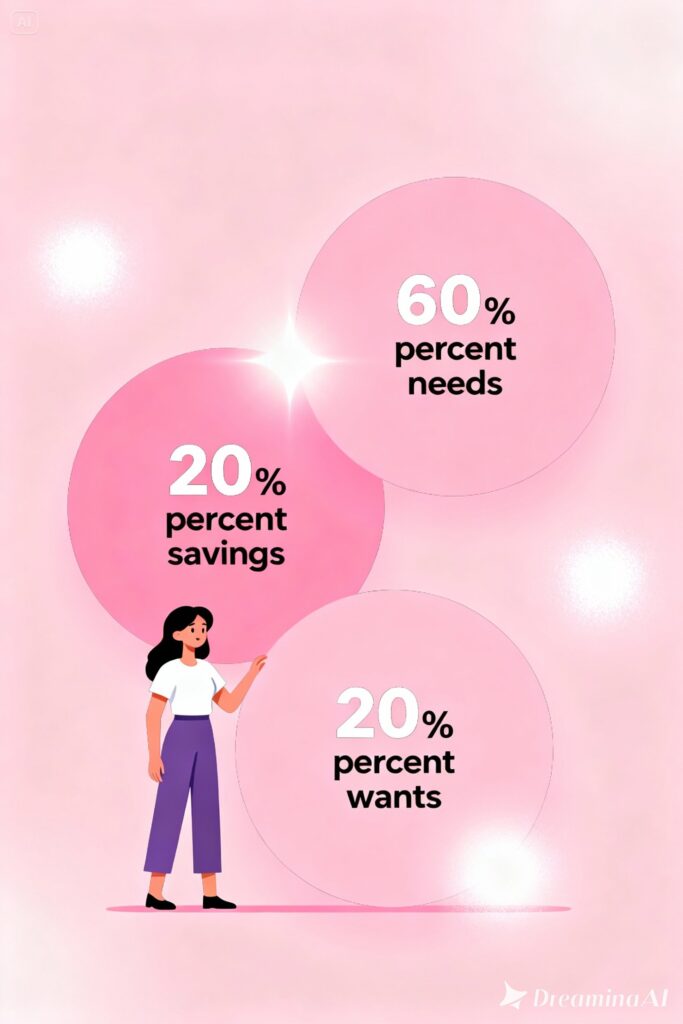
Budgeting doesn’t have to feel like a math problem or a constant struggle between what you need and what you want, it can be simple and straightforward, designed to meet your comfort and balance. The 60-20-20 rule is a simple budgeting method that helps you manage your money without feeling restricted or punished. This method focuses on assigning 60% of your income on your needs and basic expenses, 20% for savings or debt repayments, and lastly, 20% for personal spending or the non-essential expenses. This article will help you explore the dynamics of the 60-20-20 rule in detail, allowing you to manage your finances in a way that brings peace to your financial life. 

dreamina 2025 11 24 3641 vertical blog graphic design bold and p...

Understanding the 60-20-20 Rule

The 60-20–20 rule divides your income into three simple categories, needs, savings or debt repayment, and personal spending. What makes this method a considerable option is that it is simple and flexible, demanding consistency and balance instead of perfection. 

You can start by making sure your essentials or those basic expenses are covered, then move on to setting aside an amount for saving or paying off debt, if there is any, lastly, spend your income on things you enjoy such as coffee runs, snacks, or something you’ve been eyeing. This method makes it easy to stick with the expenses that are essential, makes room for your future, all while addressing your wants as well, offering a framework that perfectly balances all three. 

Illustration of a woman explaining the 60 20 20 budget rule using three large budget circles on a pastel pink background.

Why This Budget Hack Works for Most People

The reason this method works the best for many people is that it prioritizes balance instead of perfection. Many people fail at budgeting or give in midway only because they view budgeting as something that involves cutting back on things they enjoy. 

The 60-20-20 rule focuses on proportion, giving your savings and wants a portion of the income you work so hard for. Whether you’re trying to build an emergency fund, want to save up for a big future purchase, or simply want to manage money in an effective way, this method gives structure and discipline to your finances like none other, making it a considerable option. 

Start by Calculating Your Total Monthly Income

Before you apply the 60-20-20 rule, you need to begin by calculating your exact monthly take-home income, the amount after all the taxes and deductions. Once you have an exact figure, you can divide it into proportions provided by the method, helping you plan your expenses surrounding that number. For example, if you earn $3,000 per month, according to the 60-20-20 rule, 60% of your income goes towards needs, $600 to savings or debt repayments, and lastly $600 to wants. 

Seeing the exact spending amount for each category can help you plan your expenses and avoid emotional spending or overspending in a specific category.

The First 60%: Covering Your Needs and Essentials

Once you know the exact number for your first spending category, those basic and essential expenses that are necessary for survival, you can start planning for them. This category can include rent, housing, mortgage, utilities, food, or transportation. 

If you find that essentials are taking up more than 60% of your income, that’s your hint to reassess your lifestyle choices such as moving to a more affordable place or cutting back on subscriptions you no longer use. You just need to find more intentional and mindful ways to bring your needs to fit the 60% spending limit, ensuring that you don’t constantly have to worry about your finances. 

The First 20%: Prioritizing Savings and Debt Repayment

The next step is to assign 20% of your income to savings or debt repayment. This category is all about paying the future you,, whether it’s building an emergency fund, contributing to investments, or paying off student loans or credit cards. 

If you want, you can even divide this section into two, 10% for savings and 10% for debt repayment. Even if you begin with setting aside a small amount, that is absolutely okay, because what matters the most is your consistency and your willingness to put something aside, contributing to the betterment of your future. 

Illustration of a woman putting money into savings and debt jars with floating coins on a pastel pink background.

The Second 20%: Spending on Wants and Lifestyle

Once you’ve assigned a purpose to 80% of your income, the next step is to focus on the next 20% that goes to your wants and things that bring you pleasure and fun. Whether it’s a nice outing, a fun hangout with friends, or a fun trip you’ve been planning, the key is to balance wants with needs and savings. 

This 20% is not about spending responsibly but about enjoying your money in a guilt-free manner, as long as it’s within limits and doesn’t put your entire progress off track. Giving yourself the space to spend on things you like can help you stick to the process no matter the ups and down, allowing you to follow the rule without feeling restricted or deprived. 

Adjusting the Rule to Match Your Financial Reality

Once you’ve covered all your income, the next step is to consider the possibility of adjusting the rule to match your financial reality. Everyone’s financial situation is unique and that’s completely okay. If you feel like your needs cost more than 60%, you can modify the percentages accordingly by following a 70-15-15 version. Similarly, if you feel like you’re in a high-debt phase, you can consider the 50-30-20 version of the rule. 

This method is all about giving you flexibility and room to make comfortable financial choices that bring you peace and a sense of calm. 

How to Automate the 60-20-20 System

One of the easiest ways to stick to the 60-20-20 rule is by automating your finances. You can set up an automatic transfer from your checking account to your savings account right after your payday. What makes this a considerable hack is that it takes away the stress of remembering to transfer the amount while also taking away the effort of moving it manually. 

Automation helps you rely less on willpower and more on consistency, helping you save in a  low effort and low maintenance manner. Over time those small transfers can add up to something big and meaningful, making every deposit worth it. 

Tracking Your Progress Without Stress

Tracking doesn’t always have to mean logging every penny or creating complex spreadsheets, it’s simply about staying aware of where your money is going every month. You can track your expenses using apps, notes, or something as simple as a journal that helps you see how closely you’re following the 60-20-20 framework. 

This awareness can help you see patterns or identify those leaks where you’re more likely to spend your hard-earned money on, allowing you to make modifications to your spending habits and urging you to spend mindfully and intentionally. 

Common Mistakes to Avoid

While the 60-20-20 rule is simple, there are a few common mistakes that can make it less effective if you’re not careful. One of the biggest ones is not being realistic about your expenses. Many people underestimate how much they actually spend on needs like groceries or transportation, which later leads to overspending in the essentials category.

Another common mistake is not treating savings as a priority. Often, people save only what’s left after spending, but the 60-20-20 rule encourages the opposite, to treat savings as a fixed expense that comes before wants. 

Similarly, some people completely skip the “wants” section in the name of being productive, but that can backfire too. Giving yourself the freedom to spend on things you love, within reason, makes the process more joyful in the long run.

When to Reassess and Rebalance Your Budget

You should reassess your 60-20-20 budget every few months or whenever a major financial change occurs. For instance, if you get a raise, change jobs, move to a new city, or start paying off a big loan, those are signs that it’s time to rebalance your percentages.

Reassessing helps you make sure your budget still reflects your current lifestyle and goals. Maybe your rent increased and your “needs” category needs more room, or maybe you’ve paid off a big debt and can now save more. 

Who Should Try the 60-20-20 Budget

The 60-20-20 budgeting method works best for people who want simplicity and structure without feeling restricted. If you’re someone who struggles to keep up with complicated budgeting spreadsheets or detailed tracking systems, this rule can bring calm and clarity to your financial life. It’s especially helpful for beginners who want a starting point that’s easy to follow and doesn’t require too many calculations.

This method is also great for people with a steady income who want to balance their responsibilities with their personal enjoyment. 

Conclusion

The 60-20-20 rule is more than just a budgeting formula, it’s a lifestyle framework that teaches you how to live with balance and intention. It takes away the guilt of spending while giving structure to your saving habits, allowing you to enjoy your money without losing control of it. What makes this method truly effective is its simplicity, you don’t need to be a financial expert to follow it, just stay consistent and mindful about how you handle your income. Over time, these small intentional steps can turn into lasting habits that build a secure and joyful financial life.

Try these Simple Steps to Save $10,000 

November 23, 2025 By Ana Rose

Saving $10,000 might sound like a huge goal and a distant dream only financial experts and those with six figure salaries can achieve but in reality, if you follow a clear plan and stay consistent throughout the process, you can absolutely make it happen. The key isn’t to make big sacrifices or deprive yourself, you just need to build small and consistent habits that serve you in the longer run. Whether you’re saving up for an emergency fund, have a big future purchase planned out, or simply want a sense of calm and peace of mind knowing you’ve saved an amount for those unforeseen future circumstances, setting aside money can never go wrong. This article will help you explore some simple steps to save $10,000, guiding you towards a journey that takes you closer to financial stability and security over time. 

dreamina 2025 11 23 6517 vertical blog graphic design bold and p...

Set a Clear and Realistic Goal

Before you get to saving, it is necessary to set a clear and realistic goal whether it is for an emergency fund, a dream vacation, or something as simple as the sense of calm that comes along with having a good figure in your bank account. 

When your goal is clear and realistic, it is easier to stick to the process, no matter the ups and downs. You can write your goal somewhere you can see it often such as your fridge door, on your mirror, or a reminder on your phone. Each time you see your goal, you can remind yourself why you started this journey in the first place. 

Break Down the $10,000 into Smaller Milestones

Once you’ve set a clear and realistic goal, the next step is to break down the $10,000 goal into smaller and more manageable chunks so you’re not overwhelmed by the figure. For example if you want to save $10,000 in a month, you need to set aside around $833 a month, or roughly $27 a day. 

This way you can reach the smaller milestones quickly, making you more motivated to achieve the goal, and you no longer feel intimidated by the big figure. No matter how small the progress is, it deserves recognition because at the end of the day, it is less about perfection and more about consistency. 

bd1f70b9 cbf3 4509 93c6 271733f3a1d1
Illustration of a woman tracking small savings milestones on a large thermometer-style savings chart with coins and calendar icons on a pastel pink background.

Track Every Dollar You Spend

After breaking down your goal into manageable chunks the next step is to track every dollar you spend, either big expenses or smaller ones. From online shopping to utility bills, coffee runs to grocery shopping, it is essential to track every single expense. You can use tracking apps, create a spreadsheet, or use something as simple as a notebook and write down every expense. 

While this step may seem simple, it truly helps you see the unhealthy spending patterns or those leaks where you spend the most on. Sometimes even the smallest of leaks like daily coffees or random app subscriptions can add up to hundreds per month, the same money that could go into savings or to something much more meaningful. 

Create a Dedicated Savings Account

It’s easy to dip into your savings when your regular money and savings are kept together in one single account. While this may not sound like a big deal, it often becomes one of the biggest reasons why people struggle with consistency. 

To deal with this, you can create a separate savings account, giving you savings a quiet space to grow in peace without any drama or distractions. Look for a high-yield savings account that earns you a bit of interest over time and that way, your money works for you even while you sleep. 

Automate Your Savings

Once you’ve created a dedicated savings account, the next step is to automate your transfers from your checking account to your savings account so that saving becomes a low effort and low maintenance job.

When you automate the process, you take away the stress of remembering and intentionally moving the money, helping you rely less on willpower and more on consistency. This is one of the easiest yet highly effective habits for growing your savings. 

20c346dc 2556 4203 b7f5 c07d6fb52bc0
Illustration of a woman setting automated bank transfers on her phone with floating money-transfer icons on a pastel pink background.

Cut Back on Non-Essential Spending

The next step is to cut back on non-essential spending whether it’s cutting back on takeout, cancelling subscriptions you barely use, or shopping less often. You don’t have to give up on everything you enjoy, you just have to be more intentional and mindful with where your hard-earned money goes. 

You can try cooking more at home, carpooling to work, or finding free entertainment instead of fancy outings. These small adjustments can add up surprisingly fast, helping you save money to put toward your savings goal every single month. 

Take on a Small Side Hustle

Relying solely on a single income in today’s economy can be stressful, especially when you’re working on a savings goal as well. You can consider the option of freelancing, babysitting, pet sitting, working on a side hustle, or even rent out a spare room.  

Even an extra $100 can help you reach your big goal fast, making this simple yet highly effective step a considerable option. The beauty of taking up a side hustle is that it gives you flexibility and provides room for your finances to breathe, making your journey a lot easier and less stressful. 

Use the 24-Hour Rule Before Buying

The next step is to use the 24 hour rule before you buy anything non-essential. The reason behind this 24 hour gap is that it gives you the time and space to reflect on your decision and whether the purchase is worth your hard-earned money or does it just bring you temporary satisfaction. 

In most cases, the urge to spend fades away, however, in case it doesn’t, you can go on with the purchase. It’s a simple trick that trains your mind to prioritize long-term satisfaction over short-term happiness. 

Cancel or Pause Unused Subscriptions

With so many apps and services around, it’s easy to forget how many monthly subscriptions quietly eat away at your balance. Whether it’s streaming platforms, gym memberships, editing apps, or even that online magazine you rarely read, they all add up. Take a few minutes to go through your bank statement or app store history and cancel anything you haven’t used in the past month or two. 

Even small subscriptions of $5 or $10 can add up to hundreds every year. Redirect the money you save each month straight into your savings account and that’s how you turn small expenses into meaningful progress toward your $10,000 goal.

Try a No-Spend Challenge

A no-spend challenge is one of the simplest yet most eye-opening ways to save more. It’s a personal challenge where you commit to spending money only on essentials like groceries, bills, and transportation for a set period, such as a week or a month. 

You can skip unnecessary purchases like takeout, new clothes, or impulse buys. The goal isn’t to deprive yourself but to become more aware of how often you spend without thinking. During this challenge, you’ll realize how much you already have and how little you actually need. 

Save Any Unexpected Money

Anytime you receive money that wasn’t a part of your regular income like a tax refund, a bonus, a birthday gift, or even cash back rewards, put it straight into your savings. This is one of the easiest ways to boost your balance without cutting anything from your current budget. 

Since this money isn’t part of your usual spending plan, you won’t really miss it. Over the course of a year, these unexpected deposits can easily push you hundreds or even thousands of dollars closer to your goal. 

Review and Adjust Your Plan Regularly 

Saving money isn’t a one-time effort, it’s a journey that needs regular check-ins. As your income, lifestyle, or expenses change, your savings plan should evolve too. Set a time each month to review how much you’ve saved, what worked well, and where you might need adjustments. 

Maybe your side hustle is starting to bring in more income and you find yourself in a position to save a little extra each month, or maybe a new expense has appeared that requires you to slightly adjust your approach, both situations are completely normal and part of real financial growth. The key is to remain flexible and view your plan as something that evolves with your life, not something that restricts it. When you allow room for change, you prevent frustration and burnout, which are often the reasons people abandon their savings goals altogether. 

Conclusion

Saving $10,000 isn’t about perfection or strict rules, it’s about small, intentional actions that move you closer to your goal every day. When you break it down into smaller milestones, stay consistent, and make mindful financial choices, the big number stops feeling intimidating. It becomes something achievable and deeply satisfying. Whether your goal is security, freedom, or peace of mind, remember that every dollar you save is a step toward the life you want. Stay patient, stay focused, and most importantly, celebrate your progress along the way, because saving money isn’t just about numbers, it’s about building confidence and control over your future.

What Is The 30-30-30-10 Budget | Will It Work For You?

November 22, 2025 By wajahat

Budgeting can often feel like a complicated task, especially when you’re unsure where you money goes every month and this is exactly where the simple yet highly effective 30/30/30/10 rule comes into play. This rule divides your income into four clear categories, needs, wants, savings, and giving (or debt repayment). This isn’t about cutting out every joy from your life or living on the bare minimum, it’s about finding the right balance between spending, saving, and giving, so your money supports the life you want instead of silently controlling it. This article will help you explore the dynamics of the 30/30/30 rule, making it easy for you to understand the method and use it to manage money in an effective way. 

What is The 30-30-30-10 Budget | Will it work for you?

1. Understanding the 30-30-30-10 Budget Rule

The 30-30-30-10 rule gives your money direction and meaning with each portion of your income serving a specific purpose, allowing you to feel organized and in control without getting confused in complicated spreadsheets or endless calculations. 

It’s designed for real life, where you have bills to pay, dreams to chase, and moments you want to enjoy along the way. By splitting your income equally among needs, wants, and savings, and leaving a smaller portion for giving or paying off debt, it creates a rhythm that feels balanced and doable. 

2. The First 30%: Covering Your Needs

Illustration of a woman reviewing essential expenses like rent, groceries, and utilities with icons floating around her on a pastel pink background.

The first 30% of your income is all about survival and stability, it’s what keeps your life functioning smoothly. This can include your rent or mortgage, groceries, utilities, insurance, transportation, and any other essentials you depend on to live comfortably. 

If you find that your needs regularly exceed this percentage, it might be time to take a closer look at your lifestyle, maybe it means finding a slightly cheaper apartment, cutting back on unused services, or shopping more consciously for groceries. 

3. The Second 30%: Enjoying Your Wants

Life isn’t just about paying bills and saving for the future, it’s also about enjoying the present moment. The second 30% of your income belongs to the “wants” category, and it’s what allows you to live fully. This can include the little pleasures and experiences that make your days brighter such as eating out with friends, buying something you’ve had your eye on, going to the movies, or taking a short weekend trip. 

These things may not be essential for survival but they are important for your emotional well-being and overall happiness. The key is to spend mindfully and intentionally, choosing experiences or items that truly bring value rather than shopping impulsively out of boredom or stress. 

4. The Third 30%: Saving and Investing for the Future

This is the portion that quietly shapes your future, the 30% set aside for savings and investments. It’s what gives you long-term security and the freedom to make choices on your own terms. You can use this part to build an emergency fund, contribute to retirement, invest in stocks, or save for a big goal like buying a home, starting a business, or going back to school. 

What makes this portion powerful is its consistency and the habit of saving regularly, no matter the amount. 

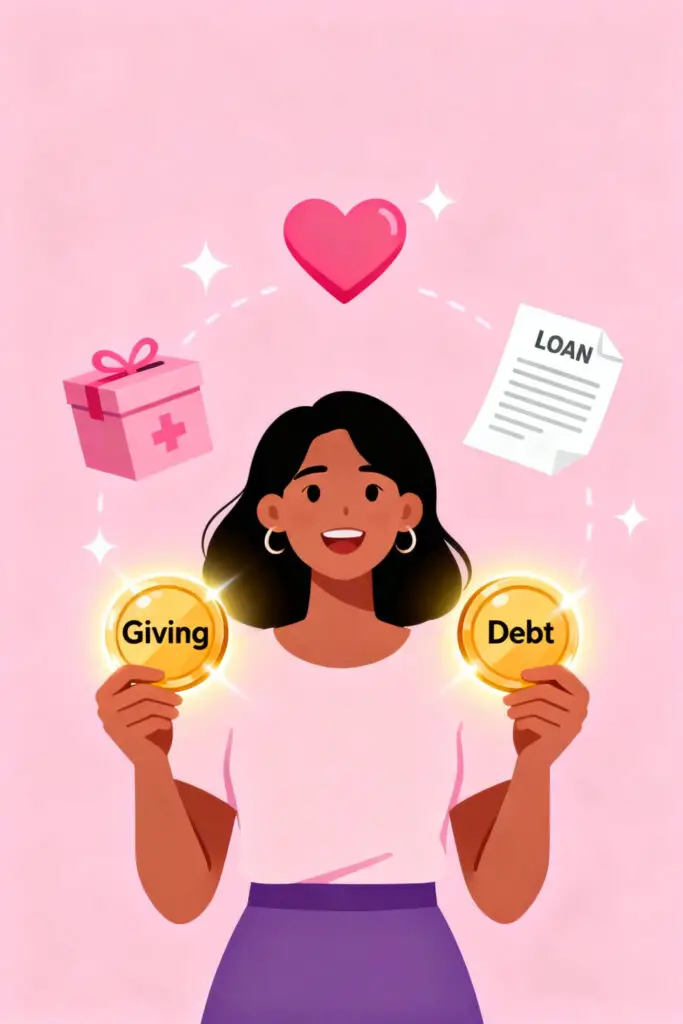
5. The Final 10%: Giving or Debt Repayment

Illustration of a woman deciding between giving and debt repayment, with charity and loan icons on a pastel pink background.

Money feels more meaningful when it’s not only used for personal comfort but also to make a difference, whether that means supporting others or freeing yourself from financial burdens. 

The final 10% of your income can be directed toward giving such as donating to a cause you care about, helping a loved one in need, or contributing to your community, or it can go toward repaying debt if you’re still working on clearing it. This part of the budget adds emotional balance to your financial plan and reminds you that money has the power to relieve stress and spread kindness. 

6. Why This Budget Works for Many People

The reason this budgeting method resonates with so many is that it feels fair and realistic. It doesn’t demand that you give up your lifestyle or cut everything down to the bare minimum. Instead, it creates a sense of balance that allows you to enjoy your life now while still making responsible decisions for the future. 

It’s flexible enough to adapt to different income levels, which makes it perfect for both beginners who are just starting to get organized and those who want a simpler way to manage their finances without the stress of overcomplicating things.

7. Adjusting the Rule to Fit Your Lifestyle

While the 30-30-30-10 rule provides a solid framework, it’s important to remember that no budgeting method should feel strict or limiting. Everyone’s financial situation is different whether it’s your priorities, goals, and expenses might not look like anyone else’s. For example, if you live in a city with high rent costs, your “needs” might take up more than 30%, and that’s perfectly okay. 

The goal is not to force your life into exact numbers but to use the rule as a guide which is why you can slightly adjust the percentages to better match your reality, such as 40-30-20-10 or even 35-25-30-10, depending on what makes the most sense for you. 

8. Comparing It to the 50-30-20 Rule

The 30-30-30-10 budget rule is often compared to the well-known 50-30-20 rule, and while both are designed to simplify money management, they serve slightly different purposes. The 50-30-20 rule focuses more on balancing needs, wants, and savings in a broader sense, giving half your income to necessities, 30% to personal wants, and 20% to savings or debt repayment. 

On the other hand, the 30-30-30-10 method encourages a stronger commitment to saving by giving it equal importance to your needs and wants. It also adds an intentional 10% category for giving or debt repayment, which makes it feel more thoughtful. If you’re someone who wants to prioritize saving and generosity while still enjoying life’s pleasures, the 30-30-30-10 rule may suit you better than the traditional 50-30-20 split.

9. How to Start Using the 30-30-30-10 Rule

Starting this budgeting method doesn’t require complex tools or financial expertise, just a little awareness and consistency. Begin by calculating your total monthly income after taxes, then divide it into the four categories, 30% for needs, 30% for wants, 30% for savings or investments, and 10% for giving or debt repayment. 

Write down your typical expenses in each category to see how they fit, and adjust as needed. You might realize that you’re overspending on wants or that your savings are too low and that’s normal at first. 

10. Tools to Help You Stay on Track

In today’s world, there are so many tools that can make budgeting effortless and even enjoyable. You don’t need to rely on notebooks or mental math, apps like YNAB (You Need A Budget), Mint, or Goodbudget can track your spending automatically, categorize transactions, and give you visual insights into where your money goes each month. 

Even a simple spreadsheet in Excel or Google Sheets can work wonders if you prefer a more hands-on approach. The idea is to make tracking your budget easy enough that it becomes a natural habit instead of a chore.

11. Common Mistakes to Avoid

Like any financial plan, the 30-30-30-10 rule can lose its effectiveness if it’s not applied carefully. One of the most common mistakes is underestimating expenses in the “needs” category, for example, forgetting about annual payments, medical costs, or subscriptions that renew automatically. 

Another mistake is being too strict too quickly, cutting out all your wants at once and feeling deprived, which usually leads to burnout or impulsive spending later. Some people also focus too heavily on short-term rewards, neglecting the savings or giving portions of the budget. The best way to avoid these mistakes is to stay flexible and honest with yourself. 

12. Who Should Try the 30-30-30-10 Budget? 

This budgeting method works beautifully for people who want structure but also crave balance. It’s ideal for those who don’t want to feel restricted by strict rules yet still wish to make meaningful financial progress. If you’ve struggled to save consistently, this plan can help you build that habit without feeling like you’re sacrificing too much. It’s also a great option for individuals or families who value giving or are focused on paying off debt, since it creates intentional space for those priorities. 

Conclusion

The 30-30-30-10 budget rule isn’t a strict formula you have to follow perfectly, it’s a guide that helps you build a healthy relationship with your money. It teaches you that financial stability doesn’t come from cutting every joy out of your life but from finding balance and knowing when to spend, when to save, and when to give. Over time, this approach brings a quiet kind of confidence, where your bills are paid, your future is secure, and you still have space for the things that make life feel warm and fulfilling. With this budget, you’re not just managing your money, you’re shaping a life that feels both grounded and free.

  • « Go to Previous Page
  • Go to page 1
  • Interim pages omitted …
  • Go to page 36
  • Go to page 37
  • Go to page 38
  • Go to page 39
  • Go to page 40
  • Interim pages omitted …
  • Go to page 170
  • Go to Next Page »

The Latest Blog Posts:

  • 14 Profitable Things To Sell On eBay June 20, 2026
  • Mason Jar Crafts To Make And Sell June 19, 2026
  • 12 Best Jobs for Retired Teachers  June 18, 2026

As Featured In:

Just Start Investing Press Strip 2020 B&W

Follow Us:

  • Facebook
  • Twitter
  • Pinterest

Copyright © 2026 · Just Start Investing LLC

  • Contact Us
  • Blog
  • Privacy Policy / Disclaimers