• Skip to primary navigation
  • Skip to main content

Just Start Investing

We Make Investing Easy

  • Investing
    • Learn About Investing:
    • Investment Accounts
    • Online Brokerage Accounts
    • Investment Vehicles
    • Start Investing:
    • How to Invest in Index Funds
    • Start Investing with Betterment
    • Start Investing with Charles Schwab
  • Banking
    • Best Bank Accounts
    • Types of Bank Accounts:
    • Checking Accounts
    • Savings Accounts
    • CDs and Money Market Accounts
    • Online Banks vs Brick-and-Mortar
  • Credit Cards
    • Best Credit Cards:
    • Best Cash Back Credit Cards
    • Best No Annual Fee Credit Cards of 2021
    • Best Premium Credit Cards of 2021
    • Credit Card Tool: Find the Best Credit Card for Me
    • Learn About Credit Cards:
    • Types of Credit Cards
  • Blog
    • Investing
      • What is Crypto?
        • Crypto
      • What are stocks?
        • Stocks
      • What is a Real Estate Investment?
        • Real Estate Investments
      • What is an IPO?
        • IPO
    • Banking
    • Credit Cards
    • Budget
    • Finances
  • Earn with Crypto
  • Budget
    • How to Build a Budget
    • 24 Tips to Save More Money
  • Resources
  • About
    • Contact
    • Press
    • Learn More
    • Disclaimers
  • Show Search
Hide Search

Blog

Budget Planning: 50 30 20 Budget

November 21, 2025 By wajahat

Budgeting may sound like an overwhelming or intimidating task, but in reality, it’s one of the easiest and most empowering things you can do for yourself and your money. The 50/30/20 budget is one of the simplest and most effective methods to organize your income, giving each dollar a meaning and purpose to serve, without making you feel restricted or deprived. Whether you’re just starting out with budgeting or trying to get back on track, the 50/30/20 rule can be your go to for making money management more structured and less stressful. This article will help you explore the dynamics of the 50/30/20 budgeting method, allowing you to understand it and use it to control your money rather than letting it control you.
Budget Planning: 50 30 20 Budget

What Is the 50/30/20 Budget Rule?

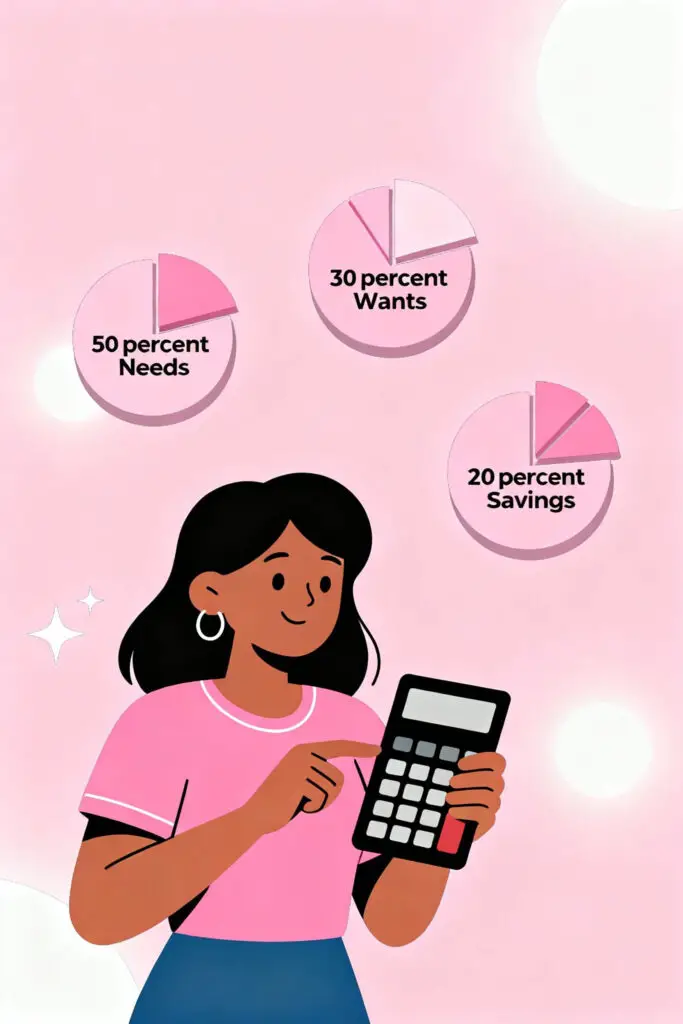
Illustration of a woman calculating her 50/30/20 budget using a pie-chart style breakdown on a pastel pink background

The 50/30/20 rule is a simple budgeting guideline that helps you manage your monthly income. This rule suggests that 50% of your income is spent on needs, 30% on wants, and 20% on savings or debt repayment. 

This structure ensures that your essential expenses are covered, lifestyle is balanced, and savings is given a room alongside your other expenses, ensuring structure and balance. It’s a flexible system that adapts to different income levels, making it especially helpful for beginners who want an easy way to manage their money without complex spreadsheets or strict rules.

Understanding the 50% for Needs Category

Illustration of a woman checking off essential expenses such as rent, groceries, and utilities on a pastel pink background.

According to this rule, 50% of your paycheck goes to your needs or those essential expenses, including rent, groceries, housing, utilities, or transportations. If you feel like your needs are taking up more than half of your income, it might be a considerable option to look for ways to lower some of those costs, like moving to an affordable place or cutting off unnecessary services. 

Keeping your basic needs within this 50% spending limit can help you avoid financial stress and ensures that an enough portion of your income is left behind for wants and savings category. 

Breaking Down the 30% for Wants Category

According to this rule, 30% of your income is assigned to your wants or those nice-to-have items including shopping for clothes, takeouts, or subscriptions you barely use. This 30% is meant to give you the freedom to spend on things you like without any shame or guilt. It’s more of a guilt-free spending category that makes you happy while also prioritizing other important expenses. 

While this category allows you to spend on things you find fun and enjoyable, it is important to spend this money mindfully and intentionally, not on impulse purchases but on experiences or items that add value to your life. 

The Importance of 20% for Savings and Debt RepayAment

Lastly, 20% of your income goes to savings, investment or debt repayment, if there is any. You can use this portion of the 50/30/20 rule to save for a big future purchase, an investment, or something as simple as building an emergency fund. 

This portion of your budget perfectly secures your future, saving you from those unforeseen future circumstances that can cost a fortune or those unexpected expenses that can put your entire budget off track. Even if you start with setting a small amount aside, what matters the most is your willingness and consistency to set something aside, serving the future you in the best way possible.  

How to Calculate Your 50/30/20 Budget

To apply this rule, what you need to start with is to calculate what your monthly take-home income is, the amount after all the taxes and deductions. Once you have a specific figure, calculate what 50%, 30%, and 20% of that figure comes out to be. For example, if you earn $3,000 per month, you’d spend $1,500 on needs, $900 on wants, and $600 on savings or debt repayments. 

Having a clear figure and its clear division can make the whole process feel a lot easier, allowing you to plan your expenses considering the amount, keeping you from overspending on one area. 

Tracking Your Spending Habits

Before you can start with the budgeting method, it is important to understand and track your expenses for at least one month. Whether it’s a grocery bill, an online order, or a coffee run, you can use an app, create a spreadsheet, or use something as simple as a notebook to track what you spend on. 

This step can help you see your spending patterns clearly, allowing you to make changes or modifications to your unhealthy spending patterns. Once you’re done tracking your habits, it might surprise you how much you spend on those small and seemingly harmless expenses that cost you way more than you realize, eating away a huge chunk of your budget. 

Adjusting the Rule to Fit Your Lifestyle

The 50/30/20 rule is just a financial guideline and not something strict that you’re supposed to follow. Everyone’s financial situation is different which is exactly why it is okay to make modifications to the rule as per your convenience. If you feel like your needs cost way more and 50% is a bit less for them, you can follow a 60/20/20 ratio for the three categories. 

What matters the most is to make sure you’re still saving each month, even if it’s a small amount. 

Automating Your Finances

One of the easiest ways to stay consistent with the 50/30/20 rule is to automate your finances. A smart approach would be to set up automatic transfers from your checking account to your savings account right after you receive your paycheck. This way you allow your savings to grow in peace without any drama or distractions. 

Automation of transfers also takes away the effort of moving money, relying less on willpower and more on consistency. Moreover, it also takes away the temptation to spend that money elsewhere and helps you build discipline effortlessly.

Reducing Overspending in the Wants Category

It can be very easy to let your “wants” category get out of control, especially when small purchases feel harmless at the moment. A coffee here, a new shirt there, and before you know it, those little spends add up quickly and eat into your savings portion. 

The key to reducing overspending in this category is to be more mindful of what truly brings you joy and what’s just an impulse purchase. Before buying something, pause for a while and ask yourself if you really need it or if it will lose its charm in a few days. You can even make a list of your favorite “wants” and set a small limit each month so you can enjoy spending without guilt or stress. 

Building an Emergency Fund with the 20% Portion

An emergency fund is one of the most powerful forms of financial security you can give yourself. Using the 20% savings portion of your budget, you can slowly build a small safety net that protects you from unexpected expenses like medical bills, car repairs, or job loss. You don’t have to start big, even saving a small portion of that 20% each month can make a huge difference over time. 

The goal is to build at least three to six months’ worth of living expenses, which gives you peace of mind and financial stability during uncertain times. 

Using the 50/30/20 Rule for Long-Term Goals

The beauty of the 50/30/20 rule is that it not only helps with your daily budgeting but also supports your long-term financial goals. The 20% category can be divided into different purposes, such as saving for retirement, buying a home, or investing in your education. Having a clear idea of what you’re saving for gives your money a sense of direction and purpose. 

You can even set up separate savings accounts for each goal, so you can track your progress more easily. 

Reviewing and Adjusting Your Budget Regularly 

Budgeting isn’t something you set once and forget, it’s a living plan that changes as your life and priorities evolve. Reviewing your 50/30/20 budget regularly, ideally once every few months, can help you identify what’s working and what isn’t. 

By reviewing your budget, you ensure that your financial plan still fits your current lifestyle and goals. This habit also keeps you aware of where your money is going and prevents you from slipping back into unhealthy spending habits. 

Conclusion

The 50/30/20 budget rule is one of the simplest yet most effective methods to take control of your finances without feeling restricted or overwhelmed. It gives structure to your income while allowing you the flexibility to enjoy life, save for the future, and meet your needs with balance. Whether you’re trying to pay off debt, save for a big purchase, or simply manage your money better, this rule can be easily tailored to fit your lifestyle. What truly matters is consistency and mindfulness, small steps taken regularly can create big changes over time. With this budgeting method, you’re not just managing your money, you’re building a stronger and more secure financial future for yourself.

20 Simple Budget Hacks for Beginners

November 20, 2025 By Ana Rose

Budgeting doesn’t have to be complicated or restrictive, it’s simply a plan for how you want your money to work for you. Whether you’re saving up for a big goal, trying to get out of debt, or simply want to stop living paycheck to paycheck, a few simple budgeting hacks can make a huge difference for you and your finances. Some small and practical tips can help you save in a smarter way, allowing you to build financial freedom and stability in the long run. This article will help you explore 20 simple yet highly effective budgeting hacks, allowing you to make your money work for you rather than letting it control you. 

20 Simple Budget Hacks for Beginners

1. Start with the 50/30/20 Rule

For a helpful way to budget your money, consider the 50/30/20 rule which perfectly assigns spending percentages for your expenses. According to this rule, 50% of your paycheck goes to your needs including rent, housing, utilities, or transportation, 30% of your income is spent on those extras or the non-essential spending category including clothes, takeouts, or subscriptions you barely use. Lately 20% of your income is assigned to your savings, investments, or paying off debt, if there is any. 

2. Track Every Expense for a Month

Illustration of a woman tracking her monthly expenses using a notebook and phone app on a pastel pink background.

Before making a budget, it is necessary to track your expenses for at least one month, whether small or big. You can use apps like Mint, create a spreadsheet or use something as simple as a notebook and write every expense down. 

While this hack may seem simple, it can help you identify those leaks, allowing you to modify or alter your unhealthy spending patterns. 

3. Use Separate Bank Accounts

It can be tempting to dig into your savings when all your money is kept together in one single account. Instead of using a single account, a smarter approach would be to use a separate account for regular money and savings. This way your savings can grow in a separate yet easily accessible account, giving them the room to grow in peace without any drama or distraction.

4. Automate Your Savings

For another helpful hack, you can set up an automatic transfer from your checking account to your savings account right after pay day. The main catch of this hack is to treat your savings as a non-negotiable bill, and this way your savings can quietly take place in the background, making it a low effort and low maintenance saving method. 

5. Set a Weekly Spending Limit

Instead of budgeting monthly, a better approach is to divide your spending money by weeks because this can make it easier to stay on track and adjust when you can see what’s left each week rather than waiting until the end of the month.

6. Cook More, Order Less

Takeouts, dining out, and deliveries can cost you way more than you may ever realize which is exactly why it is helpful to cook more and order less, especially when you’re looking for budgeting hacks that can help you make your money last. Try meal prepping on Sundays, packing lunches, or cooking simple one-pot dinners and this way, not only will you save money but you’ll probably eat healthier.

7. Follow the 24-Hour Rule

A simple yet highly effective budgeting strategy is using the 24 hour rule. This rule is all about giving yourself a 24 hour gap whenever you’re tempted to buy something. During this 24 hour gap, you can reflect on your decision to spend, whether the purchase is worth your hard-earned money or are you just spending on it because it feels right in the moment. 

8. Unsubscribe from Temptation

It can be tempting to go through those promotional emails or posts that urge you to buy a specific product. What you can do to deal with this marketing strategy is to unsubscribe those emails or unfollow shopping pages that trigger you to spend. 

9. Use Cash for Discretionary Spending

Withdraw a specific amount of cash for weekly fun money for extra expenses like coffee, snacks, outings, or personal spending. The main catch of this trick is to stop spending on those non-essential expenses when you run out of cash, a simple way to make your finances organized and structured while staying disciplined when it comes to your hard-earned money. 

10. Review and Cancel Unused Subscriptions

To ensure effective budgeting, you can review the services you’ve subscribed to and cancel the one you don’t use. Whether it’s fitness memberships, streaming services, or music, it is essential to make sure that a portion of your paycheck doesn’t go to subscriptions you no longer use. 

11. Shop with a List (and Stick to It)

Another helpful trick when it comes to budgeting is to make a list every time you go shopping, whether it’s for groceries, clothes or something else. The key is to stick to the list which helps you avoid impulse buying or spending emotionally, helping you prioritize what truly matters. 

12. Use Cashback and Rewards Wisely

If you use a credit card, make sure it benefits you instead of costing you more in the long run. Many cards offer cashback or reward points, which can actually help you save money if you use them wisely. The key is to pay off your full balance every month so you don’t end up paying interest. You can also try apps like Rakuten or Honey that automatically find discounts or give you cashback when you shop online. 

13. Compare Prices Before Every Purchase

Before you make a purchase, a smart move would be to check prices online or in different stores. Even a quick search can save you a few bucks on groceries, gadgets or clothes. 

While this may seem like a simple step, comparing prices and saving those few dollars can gather up over time, allowing you to collect a big and meaningful amount over time. 

14. Set Mini Savings Challenges

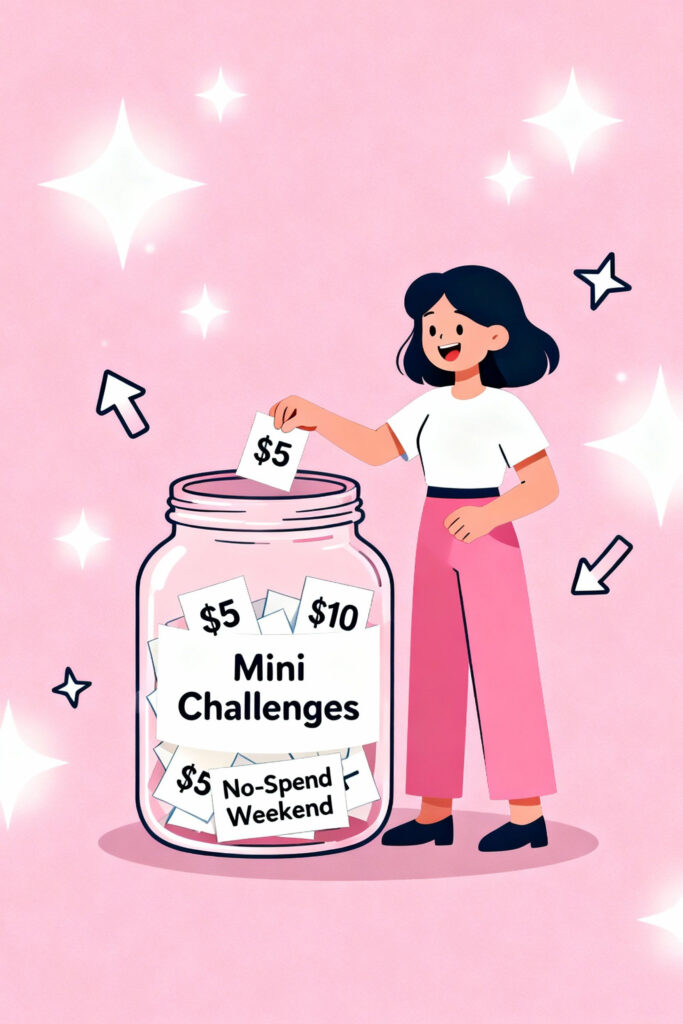
Illustration of a woman adding a $5 mini savings challenge slip into a jar on a pastel pink background.

If you often struggle to save money, setting up mini savings challenges can make the process easier and more fun. Instead of thinking about saving big amounts all at once, you can challenge yourself to save smaller amounts like $5 or $10 every few days, or take part in a “no-spend weekend” where you avoid unnecessary purchases. 

These small, simple challenges can keep you motivated and make saving feel like a rewarding habit rather than a difficult task. 

15. Plan for Irregular Expenses

It’s very common to forget about irregular or unexpected expenses that come up throughout the year, like gifts, car repairs, annual fees, or seasonal shopping. To avoid last-minute financial stress, it’s a good idea to set aside a small amount every month for these types of costs. 

This way, when those expenses come around, you already have money saved for them instead of having to dip into your emergency fund or rely on credit cards. 

16. Buy Generic or Store Brands

While it can be tempting to always go for name brands, most of the time store-brand or generic products are just as good and can save you a noticeable amount of money. This applies to everyday items like groceries, household goods, and even medicines. 

By switching to store brands for basic necessities, you can easily cut down your monthly spending without feeling any difference in quality.

17. Reevaluate Recurring Bills

Many people don’t realize how much money quietly goes toward recurring bills each month. Whether it’s your internet plan, phone package, or insurance, these costs can often be reduced with just one simple phone call. 

Try contacting your service providers once or twice a year to ask about better deals, loyalty discounts, or promotions. You might be surprised at how much you can save just by asking. 

18. Make Use of Free Entertainment

Having fun doesn’t always have to mean spending money, there are plenty of ways to enjoy your free time without straining your wallet. You can plan movie nights at home, explore local parks, visit free community events, or try new hobbies that don’t require much spending, like reading, hiking, or cooking. These activities not only help you save but also allow you to slow down and enjoy life in a simpler, more mindful way. 

19. Track Your Progress Monthly

Once you start budgeting, it’s important to check in with yourself at the end of every month. Take some time to look over your expenses, savings, and goals to see how well you’re doing. 

This monthly reflection helps you understand what’s working, what needs improvement, and where you might be slipping up. Celebrate your progress, no matter how small, because consistency is what leads to long-term success. 

20. Reward Yourself Responsibly 

Budgeting shouldn’t feel like a punishment or deprivation, it should be about balance and intention. When you reach a milestone or successfully stick to your budget, it’s okay to reward yourself. 

The key is to do it responsibly, like treating yourself to a nice meal, buying something small you’ve wanted, or spending on an experience that truly makes you happy. These small rewards keep you motivated and remind you that managing your money doesn’t mean giving up all the things you love, it just means being thoughtful about how and when you enjoy them.

Conclusion

Budgeting may seem overwhelming at first, but once you take the first step and start applying small, consistent changes, it becomes much easier to manage. The goal is not to live with strict restrictions but to create a plan that gives you freedom and peace of mind. These 20 simple hacks can help you save more, spend wisely, and feel confident about your financial future. Remember, the journey to financial stability isn’t about perfection, it’s about progress. Start small, stay consistent, and with time, you’ll build habits that make your money truly work for you.

From Broke to $3,000 in Savings — My 3-Month Money Challenge

November 19, 2025 By Ana Rose

There was a time when saving money felt extremely impossible for me and no matter how hard I tried, I always struggled with bills, groceries, and other expenses and there was no money left behind for me to save. I told myself that if I started earning more, I may be able to save some of my income but that moment never came. One day, after another month of being broke by the 20th, I realized I had to change something and that’s when I decided to challenge myself to save $3,000 in three months. The goal sounded impossible at first but it turned out to be one of the best things I’ve ever done for myself and my finances. This article will help you explore the dynamics of saving $3000 in 3 months, making room for your savings while still enjoying the life you love.  

From Broke to $3,000 in Savings — My 3-Month Money Challenge

The Moment I Realized I Needed to Change

The turning point for my finances came when I checked my bank balance and saw a number that barely covered my next week’s expenses and as soon as I saw that, I realized that I wasn’t living an extravagant life, but I also wasn’t paying much attention to where my money was going. It felt more like a loop of earning money and spending it on impulse purchases or late night cravings, with no room for saving. 

That moment of discomfort made me decide that if I wanted to change my life, I had to take control of my money rather than letting it control me and do things differently. 

Setting a Clear and Realistic Goal

Illustration of a woman writing down her $3,000 in 3 months savings goal in a notebook on a pastel pink background.

The first thing I did in my journey was writing down a goal that was clear, measurable, realistic, and time-limited. I broke it down into smaller targets like $1,000 per per month or roughly $250 per week. 

This simple breakdown can make the whole journey feel manageable and much more doable, rather than being overwhelmed by the big figure. I also reminded myself that even if I fail to save $3,000 by the end of the challenge, any amount saved would still be better than where I started from, which was zero. 

Tracking Every Dollar I Spent

During the first week of my challenge, I decided to write down every single thing I spent money on, from my rent and groceries to that quick $5 snack I used to grab without even thinking. At first, it felt like extra work, but by the end of the week, I was genuinely surprised by how many tiny purchases were quietly draining my money. 

I started to see a pattern that it wasn’t the big bills that were holding me back, it was all those small, careless moments where I spent without thinking twice. Writing it all down made me feel more connected to my money because I could finally see it clearly rather than wondering where it went.

Creating a Simple but Strong Budget Plan

When I first sat down to create a budget, I’ll admit it felt intimidating and I had always thought of budgeting as something complicated full of strict rules, color-coded spreadsheets, and math that never seemed to add up in real life. But this time, I decided to keep it simple.

Instead of trying to track every single category down to the smallest detail, I divided my income into three main parts: needs, wants, and savings. My needs were the basics including rent, groceries, bills, and transport. My wants were the little things that made life enjoyable, like a meal out with friends or a small online treat, and savings became my non-negotiable category, something I paid first instead of last.

Cutting Out “Silent Expenses”

Once I started paying closer attention to where my money was actually going, I realized that a big part of it was quietly disappearing through what I now call “silent expenses.” These were the tiny, everyday costs that seemed harmless on their own but added up without me noticing, things like forgotten subscriptions, random delivery charges, impulsive online orders, or those extra snacks and coffees that I didn’t even fully enjoy. I decided to take a closer look and slowly started cutting them out, canceling unused memberships, cooking at home a little more, and being mindful about whether a purchase truly added any value to my life. 

It was such a simple shift, but it made a huge difference, showing me that saving isn’t always about earning more or making big sacrifices, sometimes it’s just about paying attention to the quiet leaks that go unnoticed until you finally decide to fix them.

Building a Weekly Saving Routine

Illustration of a woman doing her weekly savings check-in with a tracker and piggy bank icons on a pastel pink background.

One of the biggest changes that helped me stay consistent during my three-month challenge was creating a weekly saving routine. Instead of waiting until the end of the month to see what was left, I decided to save a small, fixed amount every single week. Every Sunday, I’d sit down with a cup of tea, look at my expenses, and transfer a set amount into my savings account, even if it was just $50 or $100. 

It became a quiet little ritual that helped me feel grounded and intentional about my money. At first, it didn’t seem like much, but over time, those small amounts started adding up faster than I expected. 

Finding Small but Steady Income Boosts

While cutting back on expenses helped me save a good amount, I realized that to reach my $3,000 goal faster, I also needed to bring in a little extra money on the side. I didn’t go looking for anything huge or complicated. Instead, I focused on small and practical ways to boost my income that fit easily into my routine. 

I started selling a few things I no longer used, like clothes, books, and old gadgets, and was surprised at how quickly those small sales added up. Then, I took on some simple freelance work online, helped a neighbor with errands, and even babysat a few weekends. What I learned through that process was that extra income doesn’t always have to come from big business ideas or huge time commitments, sometimes, it’s about using the skills, time, and resources you already have. 

Learning to Say No (Without Feeling Deprived)

One of the biggest lessons I learned during this challenge was that saying “no” doesn’t always mean missing out, sometimes, it actually means choosing peace and progress over temporary pleasure. At first, it was hard to turn down invitations that involved spending, like random dinners out or spontaneous shopping trips. I used to say yes just to avoid feeling left out or awkward, but later realized that most of those moments didn’t even make me genuinely happy, they just made me broke. 

I found other ways to connect with friends, like going for walks, movie nights at home, or cooking together, and those moments felt even more meaningful. The truth is, when you start valuing your financial goals, you begin to understand that saying no isn’t about restriction, it’s about making room for the life you actually want.

Using the Cash Envelope Method for Control

One thing that really helped me gain control over my spending was using the cash envelope method. It might sound old-fashioned, but it gave me a level of awareness that digital payments never did. I divided my cash into different envelopes, one for groceries, one for personal treats, one for transportation, and once an envelope was empty, that was it for the week. 

There was something about physically seeing the money leave my hands that made me pause and think twice before buying anything unnecessary. It wasn’t about depriving myself, but about making every purchase more intentional. 

Staying Motivated Through Visual Progress

Saving money can sometimes feel slow and invisible, which is why I found it so important to make my progress visual. I created a simple chart on my wall and colored in a small block every time I saved another $100. 

I also took screenshots of my growing savings account balance and kept them in a folder as a quiet reminder of how far I’d come. It’s funny how something as simple as a drawing or a picture can spark so much encouragement, but it truly helped me stay consistent. 

Dealing with Setbacks Without Giving Up

Not every week went smoothly, there were times when unexpected expenses popped up or I just slipped back into old habits. In the past, a setback like that would’ve completely thrown me off, but this time, I decided to handle it differently. Instead of beating myself up, I treated each setback as a lesson.

The key was not to give up the moment things went wrong but to get back on track as soon as I could. With time, I stopped chasing perfection and started appreciating consistency, and that’s when saving truly became realistic.

Conclusion

This three-month challenge changed far more than my bank balance, it reshaped my mindset. It taught me that saving money doesn’t have to mean giving up joy or comfort, it’s about building habits that bring lasting peace. Every small decision like tracking expenses, saying no to impulse buys, sticking to cash, and celebrating little wins played a role in building something meaningful. If you’re starting your own challenge, remember that it’s not about being perfect or saving huge amounts overnight, it’s about showing up for yourself and trusting that even the smallest steps can lead to something life-changing.

Beginner-Friendly Ways to Save $1,000 Fast (No Cutting Coffee!)

November 18, 2025 By Ana Rose

Saving $1,000 may sound overwhelming and frustrating, especially when you have to deal with bills, groceries, or daily expenses. Most financial advice starts with “stop buying coffee” but in reality, skipping small joys isn’t always the answer. Saving shouldn’t feel like a restriction or a punishment, it should feel like progress. The good news is that you don’t need to completely change your lifestyle or earn a six figure salary to save a big amount like $1,000. With just small adjustments, you can build consistency and see results fast. This article will help you explore some beginner friendly ways to save money fast, helping you save with consistency and motivation without taking away the joy of small costs like grabbing yourself a cup of coffee. 

Beginner-Friendly Ways to Save $1,000 Fast (No Cutting Coffee!)

Automate Your Savings Before You Spend

Illustration of a phone showing an automatic transfer to savings with floating money icons on a pastel pink background.

One of the easiest ways to save money fast is to automate your savings before you spend. The main catch of this trick is to pay yourself first rather than saving the leftover money, allowing you to prioritize your savings. Having a fixed amount, even if it’s something as little as $20 or $30 can help you save with consistency. 

When you treat saving like a non-negotiable bill, it becomes low effort and low maintenance, making it easy for you to stick with the challenge even when it becomes difficult to follow it. You can set up automatic transfers from your checking account to your savings account each month, so that savings quietly happen in the background, allowing your money to grow without any drama or distraction. 

Do a 30-Day No-Spend Challenge

A 30-day no spend challenge can help you reset your spending habits, allowing you to become more mindful and intentional when it comes to your hard-earned money. This challenge isn’t about holding back on every expense because that would be unrealistic, you can commit to spending only on essentials like rent, groceries, and bills, while cutting out those non-essential expenses like shopping, takeouts, or subscribing to services. 

At the end of the challenge, you might be surprised by how much money you can save simply by holding back on those non-essential spending categories. 

Sell Unused Items Around the House

Illustration of a woman sorting unused items into “For Sale” boxes with money icons floating above on a pastel pink background.

One of the simplest ways to build your savings quickly is by selling things you no longer use or need. You’d be surprised at how many valuable items might be sitting around your home, from clothes that no longer fit to gadgets, books, decor pieces, or kitchen tools you rarely touch. 

Instead of letting them sit idle, turn them into cash through online marketplaces like Facebook Marketplace or local buy-and-sell groups. Not only does this help you declutter your space and create a sense of calm, but it also gives you a quick financial help without changing anything in your daily life. 

Cook at Home More Often

Eating out or ordering takeout can quietly drain your wallet without you even noticing it. Cooking at home doesn’t mean giving up convenience or flavor, in fact, it can become one of the most satisfying habits once you get into it. You can start by planning a few easy meals each week, using ingredients you already have, and gradually building your cooking routine.

Try preparing larger portions so you have leftovers for lunch the next day, which saves both time and money. Even replacing just a few takeout meals per week with home-cooked ones can help you save a significant amount without ever feeling deprived.

Cancel or Pause Unused Subscriptions

Most of us have at least one subscription we’ve forgotten about, whether it’s a streaming service we no longer use or an app we subscribed to months ago. Take a few minutes to check your bank statements and identify any subscriptions that quietly renew each month.

Cancel or pause the ones that no longer add value to your life, however, you can always resubscribe later if you truly miss them, but in the meantime, you’ll be saving that money instead of letting it disappear unnoticed. Sometimes, even trimming just two or three small subscriptions can make a noticeable difference in your monthly budget.

Use the “Cash Envelope” System

Sticking to cash may sound old-fashioned, but it can be incredibly effective when you’re trying to control your spending. The cash envelope system involves setting aside cash for different spending categories, like groceries, dining out, or entertainment, and keeping them in labeled envelopes. 

Once the money in a specific envelope runs out, that’s your signal to stop spending in that area for the month. This physical method helps you become more aware of how much you’re spending and makes every purchase feel more intentional. It’s a simple yet powerful way to stay disciplined without constantly checking your bank balance.

Round Up Your Purchases Automatically

If you ever struggle to save consistently, round-up apps can make the process effortless. These apps automatically round up your purchases to the nearest dollar and transfer the spare change into your savings account. For example, if you spend $7.40 on a coffee, the app will round it up to $8 and save the extra $0.60 for you.

pIt might sound small, but over time, those little amounts can quietly grow into something meaningful. This method is perfect for people who prefer “set it and forget it” saving because it doesn’t feel like you’re losing anything, you’re just making your spare change work harder for you.

Pick Up a Small Side Hustle

If you want to accelerate your savings even more, consider picking up a small side hustle that fits your lifestyle. This doesn’t have to be something big or time-consuming, even a few hours of freelancing, pet sitting, babysitting, or selling handmade items online can make a noticeable difference. 

The key is to dedicate any income from your side hustle directly to your savings goal rather than spending it. Seeing your balance grow from your own effort can be incredibly motivating, reminding you that even small actions can lead to big results over time.

Lower Your Utility Bills

Cutting your utility costs is one of the most underrated ways to save money without changing much about your routine. Start with simple adjustments like turning off lights when not in use, unplugging chargers, using energy-efficient bulbs, or washing clothes in cold water.

 You can also set your thermostat a few degrees lower in winter or higher in summer to save on heating and cooling costs. While these might seem like minor changes, they can add up to a noticeable reduction in your monthly bills, allowing you to redirect that extra cash straight into your savings.

Try a Weekly “Spending Freeze”

A spending freeze doesn’t mean depriving yourself of everything, it simply means committing to one or two days each week where you spend absolutely nothing. During those days, you can focus on free activities like cooking at home, watching movies you already have, or spending time outdoors. 

This small habit builds awareness and helps you realize how often you buy things out of impulse rather than need. Over a few weeks, you’ll find it easier to say no to unnecessary purchases and yes to your savings goals, all without feeling like you’re missing out.

Use Cashbacks and Reward Apps Wisely

Cashback apps and reward programs can be surprisingly helpful when used intentionally. Instead of chasing every deal, focus on earning rewards from purchases you were already planning to make. 

Whether it’s grocery shopping, online purchases, or travel bookings, these small cashbacks can add up over time. Just be careful not to overspend in the name of earning points, the goal is to save money, not to find excuses to spend more. Treat cashback as a bonus that goes directly into your savings jar, bringing you one step closer to your $1,000 goal.

Save All Your “Extra” Money

Extra money often comes and goes faster than we expect, whether it’s a tax refund, work bonus, cash gift, or even loose change, make it a rule to save it rather than spend it. Since this money isn’t part of your regular income, you won’t miss it if you put it away immediately.

Creating this simple habit helps your savings grow faster without making you feel like you’re cutting back on anything. Over time, these occasional boosts can make a big difference and help you hit your $1,000 target much sooner than you thought.

Conclusion

Saving $1,000 might feel like a challenge at first, but once you start making small, thoughtful changes, you’ll realize that it’s entirely within reach. The key is to focus on building better habits rather than chasing perfection. You don’t have to give up your coffee, stop living your life, or feel guilty about small pleasures. By staying consistent, automating smartly, and finding easy ways to cut back without sacrificing joy, you’ll not only hit your savings goal but also build confidence in managing your money, one mindful choice at a time.

The Japanese Kakeibo Savings Method That Changed My Finances

November 16, 2025 By Ana Rose

A few years ago managing money felt like an overwhelming task where I had to constantly wonder where my money was going. No matter how much I earned, it was never enough and those small leaks were always one step ahead. Whether it was paying bills, buying groceries, or spending on myself, I constantly had to worry if my paycheck would make it till the end of the month, until I was introduced to the Japanese Kakeibo savings method. Unlike the modern budgeting methods or ways to manage finances that focus on spreadsheets or budgeting apps, Kakeibo focuses on mindful spending, reflection, and putting pen to paper. This article will help you explore the dynamics of the Japanese Kakeibo savings method, helping you change your finances the same way I changed mine a few years back. 

The Japanese Kakeibo Savings Method That Changed My Finances

What Is the Kakeibo Method?

Illustration of an open Kakeibo notebook with income, expenses, and savings sections on a pastel pink background.

The Japanese word Kakeibo literally translates to household financial ledger. It’s a Japanese practice created more than a century ago to help families manage their finances without any stress and worry. 

What makes the Kakeibo method so special is that it is simple, practical, and easy to understand. It is all about tracking your income, expenses, and savings goals manually in a notebook. While this approach may seem simple, it helps you truly think before you spend, helping you understand why money flows the way it does. 

The Philosophy Behind Kakeibo

Unlike most of the budgeting methods that focus on restriction and holding back on things you enjoy, the Kakeibo method is more about reflection and mindful spending. The Japanese believe that financial peace does not come from having more money, it comes from knowing how to manage it wisely and calmly. 

What makes this method a considerable option is that you can develop a deeper and more meaningful connection with your money rather than treating it as something that helps you run your life smoothly or as a source of stress. 

The Four Fundamental Questions

Illustration of a person reflecting at a desk with four financial question bubbles floating around them on a pastel pink background.

Each month the Kakeibo method begins with four fundamental questions that help guide you towards mindful decision taking. You can ask yourself questions like, “How much money do I have?”, “How much would I like to save?”, “How much am I spending?”, and “How can I improve next month?”

All of these questions focus on reflection and self-growth, allowing you to manage your finances while also making room for improvement and a deeper connection with money. By answering all of these questions with honesty, you may begin to see your spending patterns, your priorities, and how your emotions may be impacting your spending choices.

The Four Spending Categories

To simplify your expenses, the Kakeibo method classifies your expenses into four easy categories: needs, wants, culture, and those unexpected expenses. Needs can include your essentials like groceries, rent, housing, or transportation, wants can include shopping, subscriptions, or takeouts, culture can include spending on books, hobbies, or classes that enrich your mind, and lastly, the unexpected expenses category can include gifts, repairs, or unplanned costs that show up out of nowhere. 

The main catch of having these four categories is that it gives your finances structure and discipline, giving you the clarity on where to cut back or adjust. 

Writing Everything Down

The main catch of Kakeibo is writing by hand instead of relying on digital apps. This method allows you to record every income and expenses manually which can help you become more aware of your income, expenses, and spending habits. This small act of writing can create awareness, allowing you to become more intentional and mindful when it comes to your hard-earned money. 

Over time, this act can reveal your unhealthy spending patterns, ensuring you make logical financial decisions whenever you need to make one. 

Setting a Monthly Savings Goal

Every month, the Kakeibo method begins with a simple yet highly powerful exercise that is setting a savings goal. You can decide how much you want to save this month and that becomes your goal for that month. Whether it’s $50 or $500, it’s your choice to set a goal but the key is to choose a number that is doable and practical. 

Once you have planned your savings amount, you can plan for the rest of the month accordingly, ensuring that saving is more about intention and planning. Over time these goals can help you save a large and meaningful amount that can help you build financial stability and security in the long run. 

Reflecting at the End of Each Week

The Kakeibo method is mainly about putting thought and reflection in your actions which is exactly why it is important to review at the end of every week You can review by asking yourself meaningful questions like “What did I spend the most on?”, “Was the purchase worth my money?”, “How did I feel after I spent my money?”, “or What improvements can I make for the next week?”
While this may seem like a simple exercise, this habit can help you identify patterns and make decisions to modify them, allowing you to turn saving into a conscious lifestyle choice that will serve you in the future. 

Learning to Differentiate Between “Wants” and “Needs”

We can often confuse needs with wants, which is exactly why it is important to confront one of the hardest financial truths that only because one thing feels like a need, does not make it one. Before any purchase, make sure to pause and ask yourself questions like “Do I really need it?”, Do I just want it right now?”, “Is this purchase really necessary or does it only bring temporary satisfaction with it.”

These tiny moments of reflection can create long-term financial discipline, helping you stick to what truly matters. It’s less about depriving yourself and more about making sure that your actions align with your goals and values. 

Tracking Savings Progress Visually

What truly helps to keep track of your saving process is monitoring it visually through charts, color codes, or envelopes. Seeing the numbers go up or the chart being filled up can make the process feel a bit more personal than looking at just a number in an app or keeping track through spreadsheets. 

This seemingly simple step can turn saving into something tangible and regarding, almost like a personal achievement that serves as a reminder that you can achieve anything if you put your heart into it. 

Mindful Spending Moments

Kakeibo encourages mindfulness which is exactly why it is necessary to be aware of the why behind your purchase. Whether it’s for your pleasure, a need, or just something you bought for the sake of buying it, it is important to know the reason behind the purchase. 

This simple activity can help you start noticing triggers like buying yourself some snacks, grabbing a coffee, or shopping online only out of boredom. Once you identify these patterns, it becomes easier to make intentional changes, for example instead of emotional spending, you can replace it with journaling, a walk, or a small self-care activity that doesn’t involve money.

Using Cash for Better Control

In today’s world, where most of us rely on digital payments, it’s easy to lose track of how much we’re spending because money feels less real when it’s just numbers on a screen. The Kakeibo method, however, encourages you to use cash for your daily or weekly expenses so that you can see and physically feel the money leaving your hands. When you pay with cash, you become more aware of every purchase you make because you can literally see your wallet getting lighter. 

 Many people who follow Kakeibo keep separate envelopes for different spending categories, such as food, transport, entertainment, or personal care, and once an envelope is empty, that’s a clear sign that it’s time to pause and wait for the next budget cycle. 

How Kakeibo Changed My Relationship With Money

Before I discovered Kakeibo, I used to feel like my finances controlled me instead of the other way around. I often made impulse purchases to feel better, told myself I “deserved” a treat after a stressful week, and felt anxious whenever it came time to check my bank balance. But once I started practicing Kakeibo, something shifted and I became more intentional, calmer, and surprisingly more grateful. Writing things down helped me understand not just what I was spending on, but why I was spending in the first place.

Over time, saving money no longer felt like punishment or deprivation, it became something deeply rewarding not because of a bigger paycheck, but from having a better relationship with my money. 

Conclusion

The Japanese Kakeibo savings method is not just another budgeting trend, it’s a mindful lifestyle approach that helps you create balance between your needs, your desires, and your financial goals. It reminds you that saving money doesn’t have to be complicated or strict, it can be reflective and personal. By slowing down, writing things by hand, and taking a moment to understand your emotions behind each purchase, you begin to see money in a completely new light. You might be surprised by how a simple pen, a few honest reflections, and a little mindfulness can completely change the way you handle money, and the way you feel about it too.

  • « Go to Previous Page
  • Go to page 1
  • Interim pages omitted …
  • Go to page 37
  • Go to page 38
  • Go to page 39
  • Go to page 40
  • Go to page 41
  • Interim pages omitted …
  • Go to page 170
  • Go to Next Page »

The Latest Blog Posts:

  • 14 Profitable Things To Sell On eBay June 20, 2026
  • Mason Jar Crafts To Make And Sell June 19, 2026
  • 12 Best Jobs for Retired Teachers  June 18, 2026

As Featured In:

Just Start Investing Press Strip 2020 B&W

Follow Us:

  • Facebook
  • Twitter
  • Pinterest

Copyright © 2026 · Just Start Investing LLC

  • Contact Us
  • Blog
  • Privacy Policy / Disclaimers