• Skip to primary navigation
  • Skip to main content

Just Start Investing

We Make Investing Easy

  • Investing
    • Learn About Investing:
    • Investment Accounts
    • Online Brokerage Accounts
    • Investment Vehicles
    • Start Investing:
    • How to Invest in Index Funds
    • Start Investing with Betterment
    • Start Investing with Charles Schwab
  • Banking
    • Best Bank Accounts
    • Types of Bank Accounts:
    • Checking Accounts
    • Savings Accounts
    • CDs and Money Market Accounts
    • Online Banks vs Brick-and-Mortar
  • Credit Cards
    • Best Credit Cards:
    • Best Cash Back Credit Cards
    • Best No Annual Fee Credit Cards of 2021
    • Best Premium Credit Cards of 2021
    • Credit Card Tool: Find the Best Credit Card for Me
    • Learn About Credit Cards:
    • Types of Credit Cards
  • Blog
    • Investing
      • What is Crypto?
        • Crypto
      • What are stocks?
        • Stocks
      • What is a Real Estate Investment?
        • Real Estate Investments
      • What is an IPO?
        • IPO
    • Banking
    • Credit Cards
    • Budget
    • Finances
  • Earn with Crypto
  • Budget
    • How to Build a Budget
    • 24 Tips to Save More Money
  • Resources
  • About
    • Contact
    • Press
    • Learn More
    • Disclaimers
  • Show Search
Hide Search

General Personal Finance Blog

Budgeting Tips For Saving Money Fast

September 27, 2025 By Ana Rose

When it comes to building financial freedom and security, budgeting can help you transform your financial life. A good budget gives you clarity and direction, reduces stress, and helps you use your money with a more mindful and thoughtful approach instead of wondering where it all went at the end of the month. Whether you’re planning a big future purchase, trying to build an emergency fund, or something as simple as saving money so it can serve you in the future, learning how to budget effectively can transform the way you manage your finances. This article will help you explore some of the most practical budgeting tips to help you save money, stress less, and create a plan that actually works for your life.

Budgeting Tips For Saving Money Fast Graphic

1. Start by Tracking Your Spending

Before you get to budgeting, it is important to track your current spending patterns and habits. Spend at least a month writing down every expense you spent your money on, no matter how small or big, including rent, utilities, medical expenses, transportation, subscriptions, coffee runs, or takeouts. 

You may come to realize that you’re spending way more on those seemingly harmless ’small’ expenses than you thought. By allowing yourself to track the spending, you give yourself a clear picture of where your money is going, giving yourself the opportunity to take action and become more mindful and intentional of what you spend on. 

2. Set Clear Financial Goals
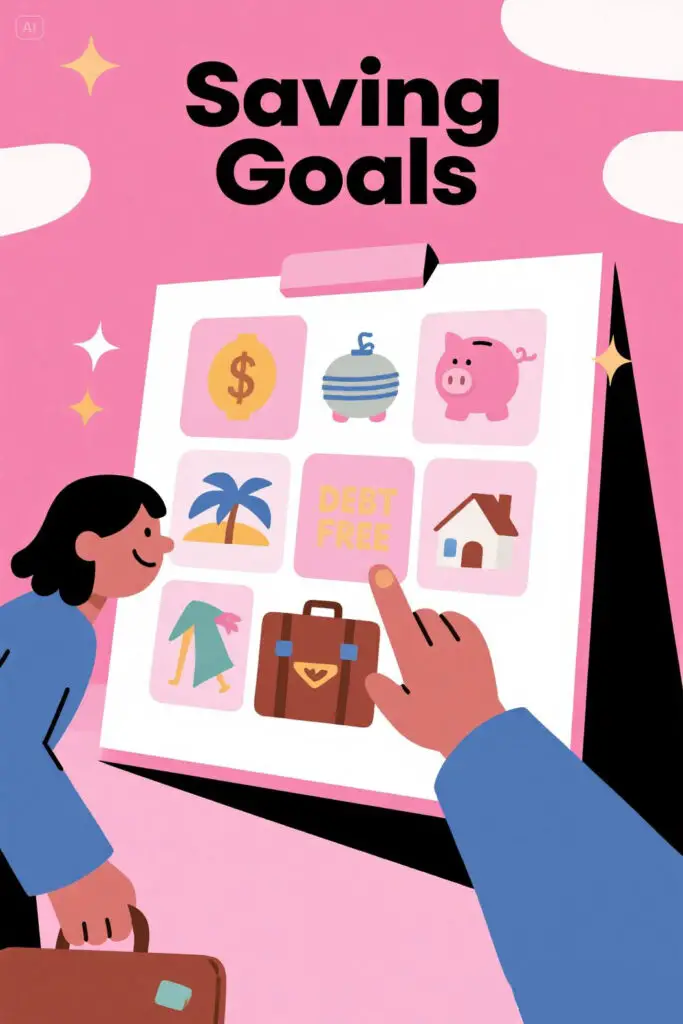
Illustration of a person standing in front of a vision board filled with financial icons like a piggy bank, house, suitcase, and debt-free sign, on a pastel pink background with highlight accents, symbolizing setting clear financial goals.

Another helpful tip is to make the process feel a bit more personalized by associating it with a clear purpose or target. You can ask yourself questions like “What do I want my money to do for me?”, or “Do I have something important coming up that I’d rather use my money for later?”. Asking yourself these can help you reflect on what your future goals and targets are. 

Whether it’s building an emergency fund, paying off credit card debt that feels overwhelming, or saving for a family trip, having a specific and realistic goal can help you become more motivated and consistent to achieve the goal. 

3. Use the 50/30/20 Rule as a Guideline

For a simple yet effective budgeting framework, you can consider the 50/30/20 rule that is all about prioritizing your basic expenses over those extras. The catch of this budgeting method is simple, 50% of your paycheck is spent on basic expenses or anything that falls under ‘needs’ such as rent, groceries, utilities, or gas. 30% of your income is spent on those ‘wants’ such as dining out, subscriptions, shopping, or streaming services. Lastly, 20% of your income goes to savings or paying off debt, if there is any. 

What makes this budgeting method a considerable option is that it makes your finances structured and organized, without being overly strict or cutting back on fun and entertainment.  

4. Prioritize an Emergency Fund

Life has its way of throwing unpredictable surprises when you least expect them, and not all of them are pleasant. Whether it’s a sudden car repair, job loss, or unforeseen medical expenses, it’s essential to have an emergency fund in place so your entire budget isn’t thrown off track when life throws a curveball your way. 

Start small if you need to, aim for $500–$1,000 as a starter goal, and then gradually work your way up to cover three to six months’ worth of essential expenses. Knowing you have that safety net in place not only keeps you financially secure but also reduces stress and gives you peace of mind.

5. Pay Yourself First

One of the smartest budgeting habits is to pay yourself first which means treating your savings like a non-negotiable bill, just like rent or electricity. Instead of waiting until the end of the month to see what’s left, set aside money for savings as soon as you receive your paycheck. 

Even if it’s a small amount, consistently putting money away builds discipline and helps you reach your goals faster. Over time, these contributions add up, and you’ll be surprised at how much you can save when you prioritize your future self first.

6. Cut Back on Non-Essentials Mindfully

Saving money doesn’t mean you have to stop doing everything you enjoy or find comfort in, it just means becoming more thoughtful about where your money goes. Look at your non-essential spending categories, like dining out, streaming subscriptions, or impulse shopping and instead of cutting them out completely, ask yourself which ones bring you the most joy and which ones you barely notice. 

Keep the meaningful ones and try to cut back on the rest. This way, you’re saving money without feeling deprived, making it easier to stick to your budget in the long run.

7. Use Cash for Discretionary Spending

Illustration of a person holding cash and budgeting envelopes labeled “Food,” “Fun,” and “Shopping,” with a wallet full of cash beside unused credit cards, on a pastel pink background with light highlights, representing mindful cash-based spending.

In today’s world of credit cards and online banking, it’s easy to swipe a card or tap your phone without realizing how much you’ve spent. One effective way to manage discretionary spending like entertainment, eating out, or personal treats is to use cash instead of cards, so you can actually feel the money leaving your hands. 

Decide how much you want to spend in a week, withdraw that amount, and use only that cash for your expenses. This simple habit makes you more aware of your choices and helps you stay within the spending limits and avoid impulse buying and overspending. 

8. Review and Cancel Unused Subscriptions

Many people waste money every month on subscriptions they barely use or forgot they have subscribed to. These small and recurring charges like extra streaming platforms, unused gym memberships, or apps can quietly eat away your budget. 

Take a moment to review your bank statements, list all your subscriptions, and ask yourself which ones you actually use regularly and cancel the rest. Even if it’s just $10 or $20 a month, cutting back on these hidden expenses adds up to big savings over the course of a year.

9. Meal Plan and Shop Smart

Food is one of the biggest expenses in most households, but it’s also one of the easiest to overspend on. Without planning, you might find yourself eating out often or making frequent grocery runs that add up quickly. 

A simple way to handle this is to plan ahead meals for the week by creating a list of meals, shopping with a clear grocery list, and making the most of what you already have at home. Buying in bulk, using coupons, and avoiding shopping when you’re hungry can also save a surprising amount. Not only does meal planning save money, but it also reduces food waste and makes mealtimes less stressful.

10. Avoid Lifestyle Creep

As your income grows, it’s tempting to upgrade your lifestyle by buying nicer clothes, going for bigger purchases, or enjoying more frequent outings. This is called “lifestyle creep,” and it’s one of the fastest ways to lose sight of your financial goals. 

Instead of spending more every time you earn more, focus on keeping your expenses steady and using that extra income to boost savings, investments, or debt repayment. By resisting lifestyle creep, you’ll make real progress toward financial freedom without feeling like you’re stuck living paycheck to paycheck.

11. Review Your Budget Regularly

A budget isn’t something you create once and forget, it needs regular check-ins and adjustments. Whether you’ve paid off a loan, moved to a new place, or your income has shifted, reviewing your budget monthly or quarterly helps you stay on top of these changes and make adjustments where needed. 

Think of it as a financial health check-up where you want to make sure your budget is still serving your goals and supporting your lifestyle in the best way possible.

12. Use Apps or Spreadsheets to Stay Organized

Budgeting doesn’t have to feel like a complicated or overwhelming task, in fact, with all the tools available today, staying organized can be easier than ever before. There are apps that automatically track your spending, sort it into categories, and even send you reminders when you’re close to going over budget. 

On the other hand, if you prefer something simpler and more hands-on, a basic spreadsheet can work just as well because it allows you to see your numbers laid out clearly and in a way that makes sense to you. What matters most isn’t which tool you use, but whether you stick with it consistently. 

When all of your income, expenses, and goals are in one place, it not only gives you clarity about where your money is going but also makes it so much easier to track your progress and stay accountable to the financial future you’re trying to build.

Conclusion

Budgeting is one of the most powerful tools for saving money and building financial security and stability in the long run. It isn’t about saying no to things you enjoy and find comfort in, it’s about saying yes to a secure and stable financial future. By tracking your expenses, setting clear goals, and sticking to a budget that suits you, your income, and lifestyle the best, you can take control of your money instead of letting it control you. The sooner you start budgeting, the sooner you’ll feel the freedom and confidence that comes with financial stability.

7 Most Effective No Spend Challenge Ideas

September 26, 2025 By Ana Rose

In today’s world, it feels like there’s always something to spend money on, whether it’s grabbing your comfort coffee way back home, buying something from the sale, or having a fun hangout with friends that ends up getting costly. This is exactly why a no spend challenge is necessary to reset your financial habits and direct your money towards more essential and meaningful expenses. The no spend challenge is less about being restrictive and more about becoming mindful of your money, figuring out your unhealthy spending habits, and breaking free of them. This article will help you explore the 7 most effective no spend challenge ideas, allowing you to regain control over your finances and become financially free and stable in the long run by developing healthy spending habits. 

7 Most Effective No Spend Challenge Ideas Graphic

Why Try a No-Spend Challenge?

Many of us don’t realize how our spending usually runs on autopilot with us buying things whenever we feel like it and then end up wondering where all our money went at the end of the month. Whether you’re saving for a big goal, trying to break the paycheck-to-paycheck cycle, or simply curious about your spending patterns, this challenge can be an eye-opening experiment. 

The no spend challenge urges us to pause and rethink our spending habits, pushing us to ask questions like, “Do I really need this?”, “Is this purchase worth my hard earned money?”, or “Am I buying this just for the sake of buying it?”. Asking yourself these questions can help you reflect your choices and become more mindful towards the money you work hard for.  

Key Benefits of No-Spend Challenges

Saving money might be an obvious advantage of this no spend challenge, but it goes way beyond that. A no spend challenge can help reduce impulse buying, encourage creativity, and strengthen self-discipline, essential for financial freedom and stability. 

It can also bring unexpected perks like more family time at home, a cleaner pantry, or the joy of rediscovering hobbies you’ve neglected and no longer pursue. In short, the no spend challenge can help you learn that fulfillment and contentment doesn’t always have to come with a price tag.

How to Prepare for a No-Spend Challenge

Person organizing groceries and essentials in a kitchen while marking a checklist on a clipboard, with a calendar showing marked days in the background, pastel pink backdrop with soft highlights.

To ensure that the challenge works the best for you, it’s essential to prepare beforehand so that when the challenge starts, you don’t have to fight the temptations to spend. Before starting, you can set clear rules such as what counts as an essential expense and what may fall under the non-essential spending category. 

Stock up on household basics so you’re not caught off guard, and let your family or roommates know what you’re doing so they can support you. Moreover, planning free activities ahead of time can also make it easier to fight temptations when boredom or the urge to spend shows up.

7 Effective No Spend Challenge Ideas

1. The Weekend No-Spend Challenge

Weekends are usually when the urge to spend shows up the most, whether it’s eating out, going to the movies, or hanging out with friends, weekends have their way of eating away your wallet before you even realize it. 

That’s why the weekend no-spend challenge is the perfect starting point for beginners. For two days, commit to spending only on those basic expenses like groceries or transportation, and cut out all the extras. Instead of going to the mall, you can plan a family picnic, explore a local park, try new recipes at home, or even host a game night. 

2. The Weekday Coffee or Lunch Swap

Coffee runs and daily lunches may seem like tiny expenses, but when added up, they can eat a huge chunk of your monthly budget. This challenge focuses on replacing those daily purchases with home alternatives such as trying to brew your coffee before leaving for work or prepping your lunch the night before so you don’t rely on dining out or takeouts. 

Not only will you save money, but you’ll also likely eat healthier, making this no spend challenge idea a considerable option.

3. The 7-Day Essentials-Only Challenge

For one week, challenge yourself to spend only on absolute necessities, such as on things like groceries, rent, utilities, or medical needs. Everything else, whether it’s snacks, takeout, or impulse shopping, is put on hold. 

While it can feel restrictive at first, this challenge helps you recognize how often spending happens out of habit and it’s truly needed. By the end of the week, you’ll likely feel more disciplined and in control, with a clearer understanding of what truly counts as essential.

4. The Pantry and Freezer Clean-Out Challenge

Most households have a pantry or freezer full of food items that often go unused. The pantry and freezer clean-out challenge encourages you to make meals using only what you already have at home before buying more. 

It pushes you to get creative in the kitchen, reduces food waste, and saves money at the same time. Moreover, it’s surprisingly satisfying to see your pantry organized and your freezer finally cleared of things you’d forgotten about. This challenge not only organizes your food budget but also teaches you to be more mindful about grocery shopping in the future.

5. The No Online Shopping Challenge

Online shopping is one of the biggest spending loopholes where we’re caught up in the never ending track of scrolling, clicking, and buying, all within minutes. For this challenge, you can try to delete shopping apps, log out of your accounts, and unsubscribe from promotional emails to avoid any triggers. 

The idea is to create a space between yourself and the temptation to shop and while it may feel uncomfortable at first, especially if online shopping has become a habit, you’ll quickly notice how much money you save by the end of the challenge. 

6. The Entertainment Swap Challenge

Group of friends enjoying a board game night at home with snacks and laughter, with faint icons of hiking, books, and movies floating in the background on a pastel pink highlighted backdrop.

Entertainment can be one of the most expensive parts of a monthly budget, but it doesn’t always have to be. This challenge is all about replacing costly outings with free or low-cost alternatives such as instead of going to the cinema, you can plan a cozy movie night at home, trade concerts for free community events, or swap expensive dinners for a fun potluck with friends. 

Activities like hiking, biking, or visiting a library with a friend can provide just as much enjoyment but without draining your wallet and can also serve as a reminder that making memories doesn’t always have to mean spending money.

7. The 30-Day No-Spend Challenge

This is the ultimate version of the challenge which is all about an entire month of no unnecessary spending. This 30 day no spend challenge requires commitment and planning but can completely reset your financial habits. 

For 30 days, you’ll stick to only essential expenses and cut out all extras. The first week may feel tough, but as the month goes on, you’ll likely notice positive changes and by the end, you’ll feel empowered and confident about managing your money.

Common Mistakes to Avoid During a No-Spend Challenge

While a no spend challenge may sound simple and easy to follow, it’s common to make mistakes. One of the biggest mistakes people make is not setting clear rules, and without those clear rules, it is easy to justify spending on those ‘small’ yet harmful expenses that affect the whole point of the no spend challenge. 

Another mistake is that some people focus too much on what they can’t do which makes the whole challenge feel more of a punishment than a liberation from those unhealthy spending habits. Lastly, some people start too big, for example, starting a 45 day no spend challenge as a beginner. This usually leads to burnout and frustration, ultimately resulting in quitting the challenge midway. 

How to Stay Motivated Through the Process

The hardest part of the challenge is not starting, it is staying motivated and committed to the challenge throughout the journey.  To keep your motivation high, try to find ways to track your progress such as writing down each no-spend day on a calendar or using a savings app to see your balance grow. 

Celebrate small wins with free rewards, like a relaxing self-care night or a fun outing that doesn’t cost money. Sharing the challenge with a friend or family member can also keep you accountable and make the process feel more fun. 

Life After the Challenge

When the challenge ends, you may feel drawn towards a costly celebration but that often erases all your hard work. Instead, use the end of the challenge as an opportunity to reflect on the journey and the choices you made. You can ask yourself questions like “What did I learn?”, “What habits were the hardest to break?”, or “Did I make any progress?”. 

You may come to realize that you don’t have to grab a coffee everyday on your way to work, or that those seemingly harmless online shopping was eating more of your budget than you thought. 

Conclusion

A no-spend challenge is much more than skipping purchases, it’s a powerful tool for self-awareness and financial growth. By planning ahead, staying motivated, and avoiding common mistakes, you can turn a simple challenge into a life-changing experience. Along the way, you’ll save money, build discipline, and discover that happiness and fulfillment don’t always come with a price tag. And when the challenge is over, the real reward isn’t just the money you’ve saved, it’s the confidence and control you gain over your financial life.

9 Must Things For Your First No Spend Challenge

September 25, 2025 By Ana Rose

A no spend challenge may sound intimidating and difficult at first but once you get to know it, you may come to the realization that this challenge is less about deprivation and more about breaking unnecessary habits and becoming more mindful and intentional with your spending habits. Whether your goal is to purchase something big in future, build an emergency fund, or pay off a debt, a no spend challenge can be a game-changer. This article will help you explore the complexities of the no spend challenge and the 9 must-do things to ensure the effectiveness of this challenge. 

9 Must Things For Your First No Spend Challenge Graphic

Why Consider a No-Spend Challenge?

In a world where advertisements constantly encourage us to buy more, a no spend challenge is necessary to help reset our spending habits and become more mindful and intentional when it comes to purchasing something. This challenge is less about restriction or punishment and more about breaking free from the endless loop of scrolling through online ads and swiping the card, giving in to your impulsive spending habits. 

This intentional break can reset your mindset and give you greater clarity about your financial priorities, urging you to spend your money where it is actually needed. 

Key Benefits Beyond Savings

The most obvious advantage of this challenge is to save money, but beyond this basic advantage, there is so much more. Many people experience less stress when they take a break from thinking about what to buy next. 

Families can discover alternative ways to have fun instead of relying on costly outings. Most importantly, you may come to develop a sense of gratitude for what you already have, learning that contentment often comes from appreciation and not accumulation. 

The Role of Mindset

A digital illustration of a person standing at a crossroads, with one path filled with shopping bags and sale signs and another glowing path labeled “Financial Freedom.” The person confidently chooses the bright path. The scene is set against a pastel pink background with soft highlights, symbolizing positive mindset and empowerment.

Mindset is the backbone of every challenge. If you approach the challenge with the mindset that you’re being deprived, you’ll likely feel frustrated and quit midway. Similarly, if you view the challenge as an empowering step towards financial freedom, it can become motivating and easier for you to move forward and complete the challenge with precision and accuracy.

The 9 Must Things

1. A Clear Financial Goal

Without a clear financial goal, the challenge may feel directionless and pointless. Whether it is building an emergency fund, preparing yourself for a big purchase, or paying off a debt, setting a clear financial goal can help you stay motivated and consistent throughout the challenge. 

Having a clear target can act like an anchor that keeps you focused whenever temptation to spend arises, making it a must-have. 

2. A Defined Timeframe

A no-spend challenge needs boundaries such as committing to a specific timeframe, such as one week, two weeks, or a full month, which can help you measure progress and maintain discipline. 

Shorter challenges work well for beginners, while longer ones can produce bigger savings and stronger habits. The key is to pick a timeframe that feels challenging but achievable.

3. Written Ground Rules

Before starting any challenge, it is crucial to have clarity regarding the rules of the challenge. You can outline what counts as essential spending and what falls under the non-essential spending category. 

For most people, essential expenses can include rent, groceries, transportation, or utilities, while non-essential expenses may include dining out, entertainment, or subscriptions. Having these spending categories written as ground rules can help prevent loopholes and reduce the chances of you bending your own system. 

4. Stocked Pantry and Household Basics

The no spend challenge is mainly about preparations before you begin the challenge. If you run out of basics during the challenge, you may give in to impulse purchasing or overspend when you go shopping. 

The key is to stock up on essentials like dry foods, toiletries, and household supplies before you begin, so that when you step into the challenge, you eliminate one of the biggest threats to your intentional spending choices. 

5. A Tracking System

It’s easier to lose sight of the challenge and its progress when you’re not tracking it, making it essential to monitor your daily choices and regularly review how far you’ve come with the challenge. 

You can use a budgeting app, a spreadsheet, or something as simple as a notebook that allows you to monitor what you spend on essentials and more importantly, how much money you’re saving by avoiding spending on extras and those non-essential expenses. Tracking the progress can also develop a sense of achievement which further makes you more motivated to move on with the challenge and stay consistent with it. 

6. Free or Low-Cost Alternatives

A cheerful family gathered at home for a cozy board game night, smiling and laughing together. Floating icons in the background show a hiking trail, a book, and DIY crafts, representing fun activities that don’t cost money. The illustration has a pastel pink background with glowing highlights.

One of the biggest secrets to surviving a no-spend challenge is realizing that fun doesn’t always have to come with a price tag. Instead of feeling deprived, you can use the challenge as a chance to get creative with how you spend your time. 

Think about those activities that bring you genuine joy without having you pull out your wallet such as family game nights that bring you close, long walks or hikes that allow you to spend some time alone with your thoughts, or DIY projects that let you explore your creative side and utilize stuff you already have at home. 

When you consciously replace old spending habits with meaningful and low-cost alternatives, the challenge feels less like restriction and more like freedom.

7. An Accountability Partner

When it comes to maintaining discipline in a challenge, it always comes down to staying accountable for whatever decisions you intentionally make and take. To make this factor go a long way in the challenge, you can tell a trusted friend, sibling, or even join an online group where others are also taking up on this challenge. 

Sharing struggle and celebrating small wins together can keep you motivated and reduce the stress of dealing with this challenge all alone. 

8. A Strategy for Triggers

We all have our weak spots when it comes to spending money, whether it’s that fresh aroma of coffee, the sale notification on your phone, or the urge to scroll through online shops whenever you’re bored. 

While these triggers may seem harmless, they can be a threat to your progress if you don’t prepare for them in advance. The main catch of this must-do is to make preparations in advance, such as unsubscribe emails that notify you about sales, if scrolling on social media triggers you to buy impulsively, take a break from social media during the challenge, and if grabbing coffee is a part of your everyday routine, try brewing it at home and turn it into a comforting ritual instead. It is all about figuring out your triggers and making preparations to fight the urge to spend before your progress is at stake. 

9. A Reward System (Non-Spending)

We all love rewards and that’s exactly what makes sticking to a challenge feel fun. The best part of a no-spend challenge is realizing that rewards don’t always need to cost money. Instead of rushing out to shop the moment it ends, try giving yourself a treat that feels special in a different way. 

You could enjoy a cozy self-care evening, take a long relaxing bath, plan a picnic with your family using food you already have, or spend time on a hobby you love but usually put off like reading, drawing, or baking. These free rewards not only make you proud of what you achieved but also show you that happiness doesn’t always come with a price tag.

Common Mistakes to Avoid

A no-spend challenge might sound simple, but many people fail because they don’t prepare enough. One big mistake is not setting clear rules and without them, it’s too easy to fail the challenge before it even begins. 

Another major mistake is starting too big, like trying to go an entire month, especially when you’ve never done even a week and are a beginner, which can feel overwhelming and make you quit early. Some people also focus too much on what they can’t do, which makes the challenge feel like punishment instead of a reset. 

How to Transition After the Challenge

When the challenge ends, it’s tempting to celebrate with a big shopping spree but that can undo all the good you just did, instead try to take a moment to reflect. 

You can slowly bring spending back, but try to be more mindful and thoughtful regarding spending. The idea is to hold onto the good habits you built and let them shape your everyday life so that way, the challenge isn’t just a short-term reset, it becomes the start of a long-term change.

Conclusion

A no-spend challenge is more than just avoiding shopping, it’s about taking back control of your money and your habits. With a clear plan, realistic goals, and the right mindset, it can become a tool for both saving money and learning about yourself. Along the way, you’ll see that fun, comfort, and joy don’t always need a price tag. When it’s over, the lessons you take with you, like being more intentional, creative, and grateful, can make a lasting difference in how you spend. The challenge might end, but the positive habits you build can stay with you for life.

The Ultimate Financial Planning Black Women 101

September 23, 2025 By Ana Rose

Financial planning is less about planning numbers, figures, and having a large amount in your bank account and more about building security, wisdom, and creating opportunities for your future self when it comes to finances. For black women, financial planning carries even more significance because of the challenges they may face such as pay gaps, limited access to financial resources, and the overwhelming responsibility of caring for both family and community. Despite these hurdles, black women are known for their resilience, strength, and commitment to keep moving forward no matter what the circumstances are. This article will help you explore a financial planning guide for black women, helping them take control of their finances, build wealth, and live life on their own terms and conditions. 

The Ultimate Financial Planning Black Women 101 Graphic

Step 1: Understand Your Financial Starting Point

A Black woman sits at a desk with a laptop, calculator, and notebook, reviewing her income and expenses. Icons of coins, bills, and a credit card float around her on a pastel pink background with glowing highlights.

The first and one of the most important steps of your financial journey is to have a clear picture of where you currently stand. This step means taking a closer look at your income, expenses, spending habits, debts, and savings. Not only does this step bring awareness, it also provides you with the intentional choice of altering your habits and considering room for improvement, eventually helping your finances grow. 

It may feel overwhelming at first but knowing your financial standing gives you powers, telling you exactly where you are and what changes you need to make to serve your future self. 

Step 2: Create a Realistic Budget

The next step is to build a realistic and practical budget that suits you, your lifestyle, your income, and spending habits the best. As a black woman, working in multiple roles, whether as a professional, student, caregiver, or entrepreneur, a budget can help you prioritize what matters the most. 

For one of the most classic budgeting methods, you can consider the 50/30/20 rule where 50% of your income goes to essential expenses or needs such as rent, groceries, or utilities. 30% of your income is spent on non-essential expenses or wants such as entertainment, subscriptions, or takeouts. Lastly, 20% of your paycheck goes to savings or paying off debts. 

Step 3: Build an Emergency Fund

Life is unpredictable and not all surprises are pleasant. It is important to prepare yourself financially in case of unforeseen circumstances so that in the time of need, you don’t have to depend on borrowing money, falling into debt, or making rushed decisions under pressure. 

An emergency fund acts as your financial safety net, helping you avoid debt when life throws you surprises. Start small if you have to, even $20–$50 a month, and aim to build at least three to six months of living expenses over time. This  safety cushion can provide you with peace of mind and allows you to move forward with confidence.

Step 4: Manage and Reduce Debt

Debt is something that can weigh heavily on your shoulders if it is not managed wisely, and for many black women, debt can often come from student loans, credit cards, or personal loans taken to support family responsibilities. 

The good news is that debt does not have to control your life, you can take it step by step and create a plan that works for you. Some women find it easier to start with the smallest debts first so they can feel a sense of accomplishment quickly, while others prefer to tackle the debt with the highest interest rate to save more money in the long run. 

Whichever method you choose, what matters is that you stay consistent, keep making progress, and remind yourself that reducing debt can free up more of your income for the things that truly matter to you.

Step 5: Prioritize Retirement Planning Early

Retirement can feel like something that is far away and not urgent when you are dealing with responsibilities present in the moment, but starting early can make a huge difference in how secure and comfortable your future can look. Because of the wage gap and career interruptions that many black women face, there can be less saved for retirement compared to others, which makes it even more important to begin as soon as you can. 

Contributing to an employer’s retirement plan, such as a 401(k), or opening your own IRA can help you slowly build wealth for your future self. The earlier you start, the more time you give your money to grow, and you can also save yourself from the stress of trying to catch up later in life.

Step 6: Invest to Build Wealth

A smiling Black woman holds a plant with golden coins as leaves, symbolizing investment growth. A piggy bank, books, and stock market charts appear in the background on a pastel pink backdrop with glowing highlights.

Saving money can help you feel secure, but investing is what can truly allow your money to grow and work for you over time. For many black women, investing may feel intimidating or unfamiliar, especially if you have not had exposure to it in your family or community. 

The good thing is that today, there are many beginner-friendly resources that can help you start small and grow with confidence. Investing may feel slow at first but over time, it can be one of the most powerful tools to build long-term wealth and give you financial choices that go beyond just covering your monthly bills.

Step 7: Protect Yourself with Insurance

Financial planning is not only about growing your money, it is also about protecting yourself and your loved ones in case life takes an unexpected turn. Health insurance can prevent medical bills from draining your savings, life insurance can ensure that your family is taken care of if something happens to you, and disability coverage can replace your income if you are unable to work. 

Many women put off insurance because it feels like an extra expense, but it can actually save you from a financial disaster in the long run. You can think of it as a shield that protects the future you are working so hard to build, giving you peace of mind that you and your loved ones can be safe even in difficult times.

Step 8: Prioritize Financial Literacy and Community Support

Knowledge is power, and when it comes to money, learning even the basics can completely change how you manage your finances. Financial literacy can help you make better choices about saving, spending, borrowing, and investing, and it can also give you confidence when dealing with banks, jobs, or even personal situations. 

Reading books, listening to podcasts, or joining workshops designed for black women can make the learning process feel relatable and practical. At the same time, leaning on community support, whether that is family, friends, or groups of women with similar financial goals, can motivate you and keep you accountable. 

Step 9: Create Short and Long Term Goals

Money feels more meaningful when it is tied to goals that you care about, because instead of just saving for the sake of saving, you are working toward something that inspires you. Short-term goals can be things like paying off a credit card, building your emergency fund, or saving for a trip, while long-term goals can be buying a home, starting a business, or preparing for retirement. 

Writing down your goals and keeping them visible can help you stay motivated, and breaking them down into smaller steps can make them feel less overwhelming. Goals can change as life changes, but having them in place can give you direction and keep your financial decisions aligned with the life you want to create.

Step 10: Leave a Legacy

Financial planning does not have to stop with you, it can extend to the generations that come after you. Leaving a legacy can mean passing down wealth, but it can also mean passing down wisdom, habits, and security. 

Creating a will, setting up trusts if needed, and making sure your assets are organized can protect your family from stress and conflict in the future. Even if you don’t feel like you have “a lot,” planning your estate can ensure that what you do have is passed on with care and intention. 

Conclusion

Financial planning for black women is not about perfection or having it all figured out at once, it is about taking intentional steps that can protect your present and shape your future. From understanding your current situation and reducing debt, to building savings, investing, and leaving a legacy, every action you take can build confidence and security. The challenges are real, but so is the strength, resilience, and determination that black women have always carried with them. By starting today, even with small steps, you can create financial freedom not only for yourself but for the generations that will come after you.

The Ultimate Financial Planning For Students Guide

September 22, 2025 By Ana Rose

Being a student comes with endless responsibilities like classes, quizzes, assignments, and at times, part-time side hustles as well. With so much going on, financial planning is usually the last thing on your mind, especially when you’re dealing with academic stuff. However, the importance of managing money as a student can’t be denied and it is surely one of the most powerful skills you can develop as a student. This article will explore a helpful and practical guide that will walk you through student-friendly strategies to manage money wisely without having to feel restricted and deprived.

The Ultimate Financial Planning For Students Guide Graphic

Step 1: Understand Your Income Sources

The first step in financial planning is to know exactly how much money you have coming in. As a student, this could come from different places, whether you’re getting an allowance from your parents, have earned a scholarship, or work part-time or take on small side hustles like tutoring, freelancing, or online gigs. 

Having clarity about your income gives you a realistic picture of what you’re working with each month, and it helps you avoid overspending more than what you actually have. Writing down your income sources makes it easier to plan, and it also helps you appreciate what you’re receiving, whether big or small.

Step 2: Track Your Expenses

Student sitting at a desk, looking surprised while reviewing a notebook of daily expenses like coffee, snacks, and subscriptions, with floating coins and bills symbolizing money slipping away. Pastel pink background with soft glowing highlights.

Most students don’t realize how much money slips through their fingers until they start keeping track. You might feel like you didn’t spend much but those seemingly harmless daily coffee runs, snacks, or subscriptions you barely use add up more quickly than you may realize. 

By simply writing down your expenses in a notebook or using a budgeting app, you can see exactly where your money is going. This doesn’t mean you stop spending on things you enjoy, but it does mean you become more aware, which is the first step toward making better choices. It’s often surprising how many small and unnecessary costs can be avoided once you start noticing them and make intentional decisions to change them.

Step 3: Create a Student-Friendly Budget

Budgeting might sound like a boring or restricting task, but in reality, it’s simply giving your money a plan so that you control it instead of letting it control you. A simple rule like the 50/30/20 method can be really helpful in which 50% of your income goes to your needs such as food, transport, or rent, 30% goes to non-essential expenses or wants like hanging out with friends or hobbies, and 20% for savings or paying off debt. 

Another helpful budgeting method is the envelope method where you assign a specific amount to each category such as $300 for groceries, $250 for gas, and $200 for entertainment. The catch of this budgeting method is to avoid overspending on each category than the money assigned to it. 

Even if your income is small, having a budget ensures that you don’t run out of money halfway through the month, and it teaches you how to prioritize the essentials while still enjoying student life without guilt.

Step 4: Build an Emergency Fund

Life is unpredictable and things don’t always go the way we plan. As a student, you might suddenly need to repair your laptop, cover medical expenses, or buy unexpected study materials. 

An emergency fund is like a safety net that protects you from stress in such situations. Even saving small amounts regularly, like $5–$10 a week, can slowly add up to a useful cushion. Aim for at least a few hundred dollars set aside, because that alone can save you from borrowing money at the wrong time or falling into debt when something unexpected happens.

Step 5: Be Smart with Debt

Debt can easily become a heavy burden if it’s not managed wisely. Whether it’s student loans, credit cards, or borrowing from friends, it’s important to treat debt with caution. If you use a credit card, always pay on time to avoid interest charges and late fees, and never spend more than you can realistically pay back. 

With student loans, only borrow what you truly need, and make sure you understand how repayment will work in the future. By being smart now, you can prevent yourself from carrying financial stress long after your studies are over.

Step 6: Save Wherever You Can

Being a student often means living on a tight budget, but that doesn’t mean you can’t save money in creative ways. Look for student discounts on transport, shopping, software, and entertainment and instead of always buying new textbooks, check if you can borrow from the library, buy second-hand, or share with classmates. Moreover, cooking simple meals at home instead of eating out daily can save you a surprising amount each month. 

These small choices may feel insignificant at the moment, but over time they make a big difference and allow you to use your money for bigger goals.

Step 7: Start Investing Early (If Possible)

Student happily watering a small plant that grows golden coins, with books and a piggy bank nearby, representing the benefits of starting investments early. Pastel pink background with soft glowing highlights.

It might sound strange to think about investing while you’re still a student, but the truth is that starting early, even with very small amounts, can give you a huge advantage. Thanks to compound growth, the money you invest now has more time to grow compared to money you put in later. 

Even investing as little as $20 a month in a beginner-friendly option like index funds or a retirement account can build into something meaningful over the years. 

Step 8: Learn About Financial Literacy

Money management is not just about saving and spending, it’s also about understanding how money works. As a student, you can take small steps to build financial literacy by reading personal finance blogs, watching videos, or even attending workshops. 

Learning about topics like credit scores, interest rates, and basic investing will make you feel more confident and independent in handling your own money. The more you know, the fewer mistakes you’ll make, and the better prepared you’ll be for financial decisions in the future.

Step 9: Set Short- and Long-Term Goals

Having goals gives your financial planning a sense of purpose. Short-term goals might include saving for a laptop, paying off a small loan, or building your emergency fund whereas long-term goals could be saving for higher education, starting a business, or planning for future independence after graduation. 

When you know what you’re working toward, it’s easier to stay motivated and disciplined with your money. Goals turn your financial habits into something meaningful rather than just rules you’re following.

Step 10: Balance Money and Lifestyle

It’s important to remember that money is not everything, you’re still a student, and this phase of life is meant to be enjoyed. Financial planning isn’t about cutting all the fun out of your life, it’s about balance. 

You should be able to save and plan for the future while still enjoying outings with friends, hobbies, and experiences that make you happy. By finding a healthy balance, you can avoid the extremes of overspending or over-restricting, and instead live a lifestyle that keeps you both financially secure and emotionally satisfied.

Conclusion

Financial planning as a student may feel overwhelming at first, but once you take the first few steps, it becomes a habit that brings freedom and peace of mind. By understanding your income, tracking expenses, making a budget, saving consistently, and setting goals, you’re not just managing money, you’re building a foundation for your future. The earlier you start, the stronger your financial habits will become, and the more confident you’ll feel as you move into adulthood. Remember, it’s not about being perfect, it’s about being intentional with the resources you have and making choices today that will reward you tomorrow.

  • « Go to Previous Page
  • Go to page 1
  • Interim pages omitted …
  • Go to page 26
  • Go to page 27
  • Go to page 28
  • Go to page 29
  • Go to page 30
  • Interim pages omitted …
  • Go to page 73
  • Go to Next Page »

The Latest Blog Posts:

  • 14 Profitable Things To Sell On eBay June 20, 2026
  • Mason Jar Crafts To Make And Sell June 19, 2026
  • 12 Best Jobs for Retired Teachers  June 18, 2026

As Featured In:

Just Start Investing Press Strip 2020 B&W

Follow Us:

  • Facebook
  • Twitter
  • Pinterest

Copyright © 2026 · Just Start Investing LLC

  • Contact Us
  • Blog
  • Privacy Policy / Disclaimers