• Skip to primary navigation
  • Skip to main content

Just Start Investing

We Make Investing Easy

  • Investing
    • Learn About Investing:
    • Investment Accounts
    • Online Brokerage Accounts
    • Investment Vehicles
    • Start Investing:
    • How to Invest in Index Funds
    • Start Investing with Betterment
    • Start Investing with Charles Schwab
  • Banking
    • Best Bank Accounts
    • Types of Bank Accounts:
    • Checking Accounts
    • Savings Accounts
    • CDs and Money Market Accounts
    • Online Banks vs Brick-and-Mortar
  • Credit Cards
    • Best Credit Cards:
    • Best Cash Back Credit Cards
    • Best No Annual Fee Credit Cards of 2021
    • Best Premium Credit Cards of 2021
    • Credit Card Tool: Find the Best Credit Card for Me
    • Learn About Credit Cards:
    • Types of Credit Cards
  • Blog
    • Investing
      • What is Crypto?
        • Crypto
      • What are stocks?
        • Stocks
      • What is a Real Estate Investment?
        • Real Estate Investments
      • What is an IPO?
        • IPO
    • Banking
    • Credit Cards
    • Budget
    • Finances
  • Earn with Crypto
  • Budget
    • How to Build a Budget
    • 24 Tips to Save More Money
  • Resources
  • About
    • Contact
    • Press
    • Learn More
    • Disclaimers
  • Show Search
Hide Search

Blog

22 Best Passive Income Ideas For 2026

January 13, 2026 By Ana Rose

Earning passive incomes in 2026 is less about earning huge amounts overnight and more about building a system that provides financial security and stability through planned and intentional actions. Whether you’re a student, an entrepreneur, or somebody with a full-time job, today’s economy and inflation calls for a backup plan in case your finances take a turn for the worse. With uncertain job markets and more digital opportunities than ever, passive income has become a great way to earn money rather than relying on a single source of income. This article will help you explore 22 passive income ideas for 2026, allowing you to focus on the long run and become financially independent. 
22 Best Passive Income Ideas For 2026

1. Create and Sell Digital Products

Digital products are one of the easiest ways to build passive income because they require upfront effort only once. Items like planners, checklists, budgeting sheets, templates, or short guides solve everyday problems for people. Once created, you can sell them repeatedly without worrying about inventory, shipping, or restocking. 

In 2026, people prefer affordable, instantly downloadable solutions that save time and mental effort. With the right niche and clear value, digital products can quietly generate income day and night.

2. Start a Print-on-Demand Business

Print-on-demand lets you sell physical products without touching inventory by designing graphics or text, uploading them to a platform, and when someone orders, the product is printed and shipped automatically. This model removes storage and upfront stock costs, making it beginner-friendly. 

In 2026, niche-focused designs such as motivational quotes, humor, hobbies, or identity-based themes perform especially well. Once your store is set up, sales can continue with minimal involvement.

3. Build an Affiliate Blog

Illustration of a blogger building an affiliate blog on a laptop to earn passive income, shown on a pastel pink background.

Affiliate blogging works by recommending useful products or services through helpful content. You earn a commission whenever someone buys through your link. The power of this model is that blog posts can keep earning long after they’re published. 

In 2026, readers trust honest, experience-based writing more than sales-heavy content. A well-researched blog that answers real questions can become a long-term income asset with consistent traffic.

4. Launch a Faceless YouTube Channel

Faceless YouTube channels allow you to earn without showing your face or being on camera. Videos can be created using voiceovers, text, stock clips, or AI visuals and once uploaded, YouTube videos can generate ad revenue and affiliate income for years.

Evergreen topics such as education, finance, motivation, and storytelling perform especially well. With consistency and automation tools, older videos keep working even when you’re not actively posting.

5. Invest in Dividend-Paying Stocks
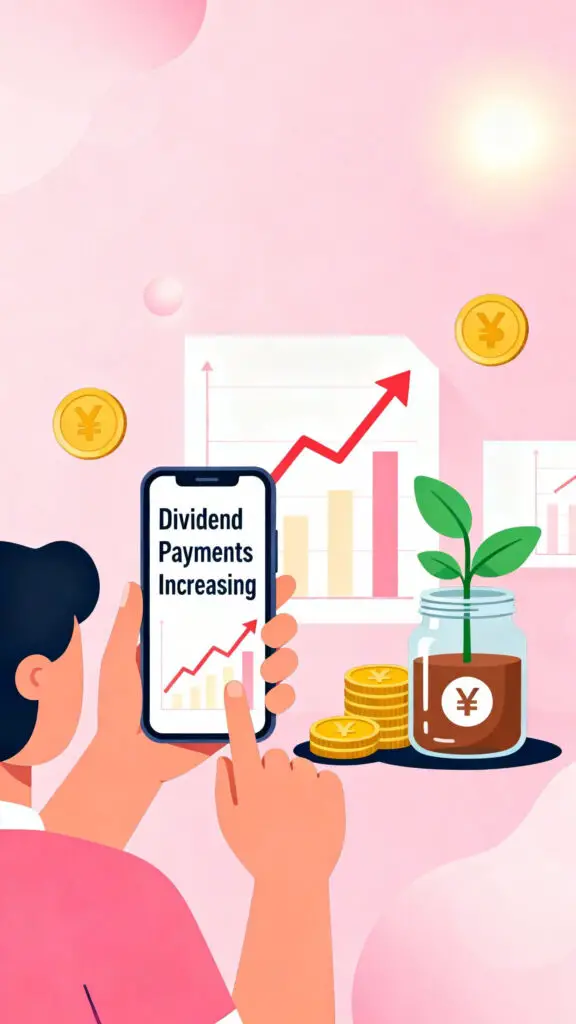
Illustration representing dividend-paying stocks and passive income growth with charts and coins on a pastel pink background.

Dividend-paying stocks provide income simply for holding shares. Companies distribute a portion of their profits to shareholders on a regular basis and this creates a steady income stream without selling your investment. 

In 2026, many people will use dividends to support monthly expenses or reinvest for compound growth. While this requires patience and research, it’s one of the most hands-off passive income options available.

6. Open a High-Yield Savings Account

High-yield savings accounts are a low-risk way to earn passive income on money you already have. Your balance earns interest automatically, with no effort required. While returns are smaller compared to investments, this option is ideal for emergency funds or short-term savings. 

In uncertain economic times, having money grow safely while remaining accessible offers both peace of mind and steady earnings.

7. Earn Through Long-Term Rental Properties

Long-term rentals generate monthly income by leasing property to tenants and once systems like rent collection and maintenance are in place, the income becomes predictable and stable. Property managers can handle day-to-day tasks, making it more passive.

In 2026, demand for affordable rentals remains strong, especially in growing cities. Over time, rental income combined with property appreciation builds long-term wealth.

8. Make Money with Short-Term Rentals

Short-term rentals often earn more than traditional long-term rentals when they are managed strategically, especially in areas with steady tourism or frequent business travel, where demand stays consistent throughout the year. Platforms now automate bookings, payments, pricing adjustments, and even guest communication, which significantly reduces the amount of daily involvement required from the owner. 

9. Sell Stock Photos and Videos

Stock photography and video allow creators to earn income repeatedly from content that is created only once, making it a strong passive option for anyone with basic photography or video skills. Businesses, marketers, bloggers, and website owners constantly need fresh visuals for branding and content, which creates ongoing demand across multiple industries. 

10. Create and Sell Online Courses

Online courses turn your existing skills, experience, or knowledge into a digital asset that can generate income long after it is created. Once your lessons are recorded, organized, and uploaded to a course platform, they can be sold repeatedly with little need for updates or involvement. In 2026, learners prefer short, practical lessons that focus on solving specific problems rather than long, theory-heavy content. 

11. Self-Publish E-Books

E-books are a powerful passive income option because they remove the need for physical printing, storage, or shipping, allowing you to focus entirely on content creation. You can write about practical skills, personal experiences, problem-solving guides, or niche topics that serve a specific audience. 

12. Own a Simple Mobile App

You don’t need to create a complex or feature-heavy app to earn passive income, as simple tools and niche-specific apps often perform just as well when they solve a clear problem. Apps such as habit trackers, calculators, planners, or wellness tools can generate income through ads, subscriptions, or one-time purchases. 

13. Start a Paid Newsletter

Paid newsletters generate recurring income by offering exclusive insights, curated information, or expert perspectives that readers find genuinely valuable. Once subscribers sign up, payments become predictable, which helps create stable monthly income rather than one-time sales. Automation tools handle email delivery, billing, and subscriber management, making this model easy to maintain. 

14. License Your Creative Work

Licensing allows others to legally use your designs, writing, music, or illustrations in exchange for a fee while you retain full ownership of your work. This income model is especially appealing for creatives who want to avoid customer service, fulfillment, or ongoing management. Once licensed, your work can generate royalties repeatedly without additional effort. 

15. Run a Vending Machine Business

Modern vending machines are far more efficient and easier to manage than traditional ones, thanks to smart inventory tracking and cashless payment systems. Once placed in high-traffic locations such as offices, gyms, or residential buildings, they require very little daily attention.

16. Buy and Sell Domain Names

Domain investing involves purchasing website names that have branding or niche value and selling them later at a profit. Businesses are constantly searching for short, memorable, and relevant domains to establish their online presence. 

17. Build an Automated Dropshipping Store

Dropshipping allows you to sell products online without holding inventory or managing shipping, as suppliers handle fulfillment directly. Automation tools manage product listings, order processing, tracking updates, and pricing adjustments, reducing manual work. While marketing and setup require effort upfront, a well-optimized store can operate with minimal involvement once systems are in place.

18. Earn Through Peer-to-Peer Lending

Peer-to-peer lending platforms allow you to earn interest by lending money directly to individuals or small businesses through automated systems. Payments are scheduled and distributed over time, creating predictable passive income. 

19. Sell Music, Beats, or Sound Effects

Audio assets such as music tracks, beats, and sound effects are in constant demand from content creators, advertisers, and filmmakers. Once uploaded to licensing platforms, these assets can be sold repeatedly to different buyers without any additional work.

21. Invest in Real Estate Investment Trusts (REITs)

REITs allow you to earn income from real estate without the responsibilities of owning or managing physical property. These investments pay dividends and are easy to buy and sell, making them accessible to many investors. REITs are ideal for people who want exposure to real estate without dealing with tenants or maintenance.

21.Create AI-Powered Content Assets

AI-powered blogs, tools, and databases can generate income through advertising, subscriptions, or digital sales once they are set up properly. Automation handles most of the content creation and delivery, reducing the need for constant involvement.

22. Buy Established Online Businesses 

Buying an existing website, app, or digital business allows you to start earning immediately rather than building from scratch. Many profitable businesses are sold due to personal reasons, lack of time, or shifting priorities rather than poor performance. With systems already in place, ownership can remain mostly passive while still generating income.

Conclusion

Earning a passive income in 2026 is no longer about chasing unrealistic and distant dreams or overnight success, it is more about building thoughtful, long-term systems that continue to support you financially even when your attention is focused elsewhere. The most sustainable income streams are created by combining smart planning, automation, and patience, rather than constant hustle. Whether you choose digital assets, investments, or physical systems, the goal is to reduce dependence on time-based income and create stability over the long run. Over time, these passive sources of income can become a powerful tool for your finances, guiding you towards a secure and stable financial future. 
15 Most Effective Saving Money Hacks

January 11, 2026 By Ana Rose

Saving money often feels impossible when expenses keep rising and income stays the same, which is why many people give up before they even begin, but the truth is that saving does not require extreme sacrifices or perfect discipline, it simply requires small, smart changes that slowly add up over time. The most effective money saving hacks are not about cutting joy out of your life, but about becoming more aware of your habits and making better choices with the money you already have. When saving becomes part of your routine instead of a struggle, it feels more natural, less stressful, and far more sustainable in the long run. This article will help you explore 15 most effective money saving hacks, guiding you towards a secure and stable financial future. 
15 Most Effective Saving Money Hacks

1. Pay Yourself First

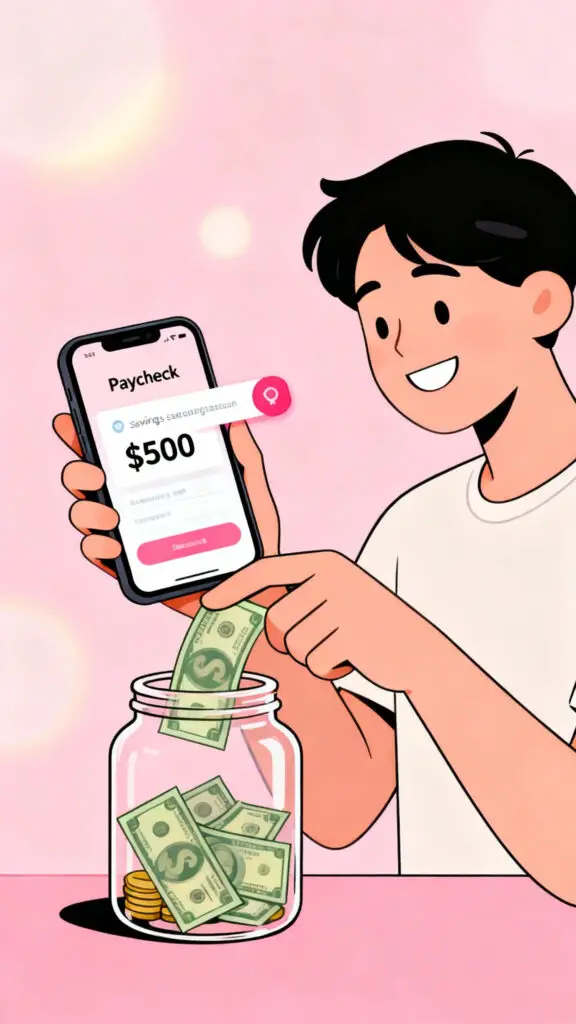
Illustration showing a person saving money first by transferring income into savings using a mobile app on a pastel pink background.

Paying yourself first means setting aside money for savings as soon as you receive your income instead of waiting to see what is left at the end of the month, which usually results in nothing being saved at all. When savings come first, even in small amounts, you train your mind to treat saving as a priority rather than something optional or extra. 

This habit removes the pressure of deciding later and helps you build consistency over time, because the money is already saved before daily spending begins. Slowly, this approach creates a sense of security and control, making saving feel natural instead of stressful or restrictive.

2. Track Every Expense

Tracking every expense helps you clearly understand how your money is being used, because many people underestimate how much they spend on small daily purchases that quietly drain their income. When you write down or record each expense, you begin to notice patterns, habits, and unnecessary spending that you may have ignored before. 

This awareness alone often leads to better choices without forcing yourself to cut everything at once. Over time, tracking helps you stay mindful, reduces careless spending, and makes saving easier because you are no longer guessing where your money is going.

3. Create a Simple Monthly Budget

A simple monthly budget gives your money structure and direction, helping you decide in advance how much you can spend and how much you should save without feeling overwhelmed by complicated rules. When your budget is clear and realistic, it reduces stress and prevents overspending because you already know your limits. 

Budgeting is not about restriction but about clarity, and when you know where your money is meant to go, you feel more confident making daily spending decisions. This clarity makes saving money more consistent and sustainable in the long run.

4. Cancel Unused Subscriptions

Unused subscriptions are one of the easiest ways money slips out of your budget without you noticing, because small monthly charges often feel insignificant on their own. Over time, these forgotten subscriptions can add up to a large amount of wasted money that could have been saved instead. Reviewing and canceling subscriptions you no longer need instantly frees up extra cash without affecting your lifestyle. 

Redirecting that money toward savings helps you build momentum, and seeing immediate results can motivate you to continue improving your financial habits.

5. Use the 24 Hour Rule for Purchases

The 24 hour rule helps control impulse spending by encouraging you to pause before making non essential purchases, giving your emotions time to settle before money is spent. Many purchases feel urgent in the moment but lose their appeal after some time has passed. 

Waiting even one day often leads to better decisions and fewer regrets. This habit protects your savings by reducing unnecessary spending and helps you become more intentional with your money, making saving easier without feeling deprived or restricted.

6. Cook More Meals at Home

Illustration showing a person saving money first by transferring income into savings using a mobile app on a pastel pink background.

Cooking meals at home more often can significantly reduce your monthly expenses, because eating out frequently adds up faster than most people realize. Home cooked meals allow you to plan portions, reduce food waste, and control costs while still enjoying satisfying meals. 

Over time, this habit saves a noticeable amount of money that can be redirected toward savings without feeling like a sacrifice. Even small changes, such as preparing a few extra meals each week, can create meaningful financial improvement.

7. Shop with a List

Shopping with a list helps you stay focused and avoid impulse purchases that increase spending without adding real value. When you know exactly what you need before entering a store, you are less likely to be influenced by discounts or unnecessary items. 

This simple habit keeps spending under control and helps you stick to your budget more easily. Over time, shopping with a list builds discipline and consistency, allowing you to save money without constantly relying on willpower.

8. Automate Your Savings

Automating your savings removes the effort and decision making from the process, ensuring money is saved regularly without depending on motivation. When savings happen automatically, you are less likely to skip or delay them. 

This consistency helps savings grow steadily over time, even if the amounts are small. Automation also reduces stress because you no longer have to think about transferring money manually, making saving a natural and effortless part of your routine.

9. Buy Generic or Store Brands

Choosing generic or store brand products instead of name brands can lead to significant savings without sacrificing quality. Many store brands offer the same ingredients and performance at a lower price, allowing you to stretch your money further.

Making this switch regularly helps reduce grocery and household expenses, freeing up extra cash for savings. These small changes may seem minor, but when practiced consistently, they contribute to noticeable long term financial benefits.

10.Reduce Energy and Utility Usage

Being mindful of energy and utility usage can lower monthly bills without requiring major lifestyle changes. Simple habits like turning off lights, unplugging unused devices, and using water efficiently can create noticeable savings over time. 

These reduced costs free up money that can be added to savings while also promoting responsible resource use. Small daily actions, when repeated consistently, can lead to meaningful financial and environmental benefits.

11. Set Clear Savings Goals

Clear savings goals give your efforts direction and purpose, making it easier to stay motivated when saving feels challenging. When you know exactly what you are saving for, whether it is emergencies, travel, or financial security, saving feels meaningful rather than frustrating. Goals help you measure progress and celebrate milestones, which reinforces positive habits. This clarity keeps you focused and encourages long term consistency.

12. Avoid Lifestyle Inflation

Lifestyle inflation happens when spending increases as income increases, preventing savings from growing. Avoiding this habit allows you to save more without changing your standard of living. By maintaining your current lifestyle and saving extra income, you build financial stability and security faster. This approach helps you benefit fully from income growth instead of letting expenses rise unnecessarily.

13. Use Cash for Problem Spending Areas

Using cash for categories where you tend to overspend creates natural limits and awareness. When the cash runs out, spending stops, making it easier to stay within your budget. This method reduces reliance on credit cards and encourages mindful spending. Over time, using cash helps build discipline and protects your savings from unnecessary expenses.

14. Plan for Irregular Expenses

Irregular expenses like repairs, gifts, or medical costs often disrupt budgets because they are not planned for. Setting aside money in advance helps you handle these expenses without stress or debt. Planning ahead protects your savings and keeps your finances stable. This habit reduces financial surprises and helps maintain consistency in your saving routine.

15. Review Your Finances Regularly 

Regularly reviewing your finances helps you stay aware of progress, adjust plans, and catch problems early. This habit keeps saving intentional and ensures your budget continues to fit your lifestyle. When you check in often, you stay connected to your goals and remain motivated. Consistent reviews help turn saving into a long term habit rather than a temporary effort.

Conclusion

Saving money is not about cutting all enjoyment from your life or following strict rules that feel impossible to maintain, but about building awareness, making small thoughtful changes, and staying consistent even when progress feels slow. When you focus on simple habits like planning ahead, tracking spending, and being intentional with everyday choices, saving gradually becomes part of your routine rather than a constant struggle. These money saving hacks work best when they are applied patiently and realistically, because long term financial stability is built through repeated small actions, not sudden perfection. Over time, these habits help reduce stress, prevent unnecessary debt, and create a sense of security that allows you to handle unexpected expenses with more confidence. By committing to these practical strategies and giving yourself grace along the way, you can create healthier money habits, protect your future, and build a stronger financial foundation that supports both your needs and your peace of mind.

These Apps Will Help You To Get Out Of Debt

January 10, 2026 By Ana Rose

Getting out of debt can feel overwhelming, especially when bills, payments, and daily expenses are constantly pulling at your income. The good news is that you no longer have to manage everything on your own because with the right apps, you can track spending, organize payments, stay motivated, and make smarter financial decisions without feeling stressed or confused. Some apps act like personal money assistants, helping you stay focused, consistent, and in control. Whether you are dealing with credit card debt, loans, or simply trying to stop living paycheck to paycheck, the right tools can make the journey easier and more manageable. This article will help you explore 12 helpful apps that will help you get out of debt, making it easy for you to stay clear of debt and avoid any new debts that can keep you in the unending loop of borrowing and struggling to make ends meet. 

These Apps will Help you to Get Out Of Debt

1. Mint

Mint is a helpful app for anyone who feels confused or stressed about where their money actually goes every month, because it brings all your bank accounts, credit cards, bills, and loans into one simple dashboard that shows your full financial picture without forcing you to do complicated calculations or manual tracking. This makes it easier to finally understand how much debt you really have and how your daily spending habits affect it. 

When you can clearly see patterns like frequent small purchases, forgotten subscriptions, or rising credit card balances, you naturally start making better choices without feeling restricted or guilty, and this awareness alone helps you redirect extra money toward paying off debt while staying consistent and avoiding the cycle of spending blindly and borrowing again.

2. YNAB (You Need A Budget)

YNAB is built around the idea that your money should work for you instead of disappearing without explanation, and it helps you assign a purpose to every dollar you earn so that debt payments become part of your plan rather than something you hope to deal with later when there is extra money left, which rarely happens. 

By encouraging intentional spending and flexible budgeting instead of strict rules, YNAB helps you adjust to real life expenses without feeling like you failed, and over time this mindset shift reduces financial stress, prevents new debt from forming, and creates a sense of control that makes paying off existing debt feel achievable rather than overwhelming.

3. Debt Payoff Planner

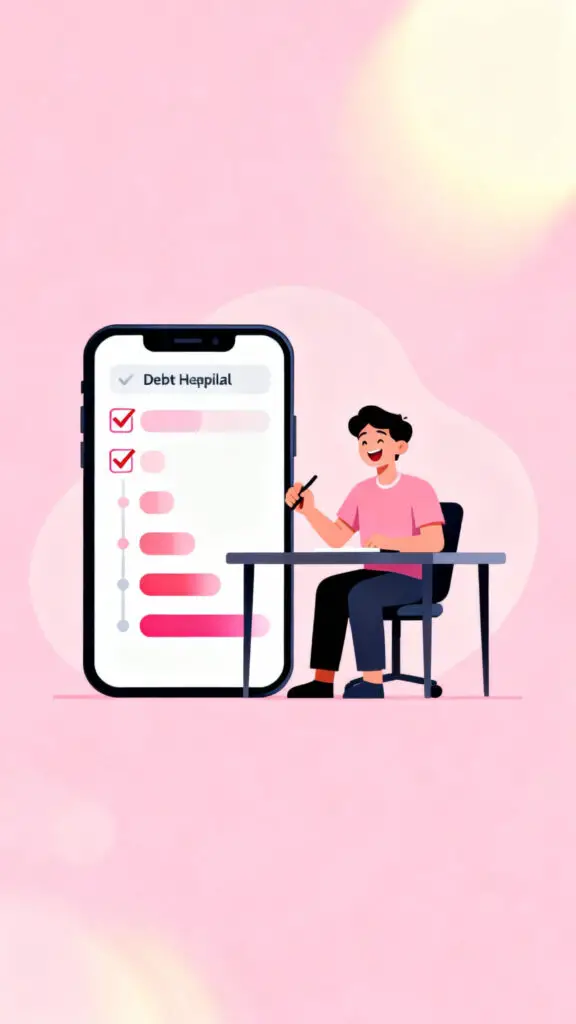
Illustration of a person using a debt payoff planner app to track progress and stay motivated on a pastel pink background.

Debt Payoff Planner is designed specifically for people who want a clear and motivating path out of debt, because it allows you to list all your debts in one place and choose a payoff method that suits your personality, whether you prefer quick emotional wins or long term interest savings. 

Seeing visual progress as balances slowly decrease helps you stay committed during difficult months when money feels tight, and instead of feeling stuck in an endless cycle of payments, you begin to see realistic timelines and achievable milestones that remind you your efforts are working and that debt freedom is not a distant dream but a result of consistency and intentional planning and action.

4. EveryDollar

EveryDollar makes budgeting feel less intimidating by keeping things simple and focused on planning ahead rather than reacting to mistakes after they happen, which is especially helpful when debt already feels heavy and stressful. By creating a clear plan for your income at the beginning of each month, you can intentionally set aside money for debt payments before it gets spent elsewhere. 

This proactive approach reduces the chances of overspending while also helping you feel more confident about your financial decisions, because you know exactly where your money is going and why instead of constantly wondering why there is never enough left at the end of the month.

5. PocketGuard

PocketGuard is ideal for people who struggle with overspending without realizing it, because it shows you how much money you actually have available to spend after covering bills, savings, and debt payments, which helps prevent those small but frequent purchases that slowly keep you stuck in debt. 

When you know your safe spending limit, you are less likely to rely on credit cards or borrow money to cover everyday expenses, and this sense of clarity makes it easier to stick to your plan while still enjoying life responsibly, because you are making informed choices rather than reacting emotionally to money stress or temporary desires.

6. Credit Karma

Credit Karma helps you understand how your debt affects your financial future by showing your credit score and explaining the factors that influence it in simple language that does not feel overwhelming or judgmental. 

As you pay down balances and improve your habits, seeing positive changes in your score can be very motivating, because it reminds you that your efforts are making a real difference, and this motivation often encourages people to stay consistent, avoid unnecessary borrowing, and make smarter financial decisions that support long term stability instead of short term relief.

7. Goodbudget

Goodbudget uses a digital envelope system that helps you divide your money into categories like groceries, bills, and debt payments, which creates natural spending boundaries without making you feel restricted or punished. 

When each category has a clear limit, you become more mindful about your choices and less likely to overspend, and this structure helps ensure debt payments are prioritized consistently, allowing you to slowly regain control of your finances while building discipline and awareness that prevents future debt from forming again.

8. Tally

Tally is especially useful for managing credit card debt because it helps organize multiple cards and focuses on reducing interest costs, which can quietly keep people trapped in debt even when they are making regular payments. 

By guiding smarter payment strategies and helping you understand which balances need attention first, Tally removes confusion and guesswork, allowing you to focus on progress instead of feeling overwhelmed by numbers, and this clarity often leads to faster payoff timelines and reduced financial stress over time.

9. Prism

Prism is extremely helpful for people who feel overwhelmed by juggling multiple bills, loan payments, and due dates every month, because it brings everything into one organized place and gently reminds you before payments are due, which helps you avoid late fees and penalties that silently increase your debt without adding any real value to your life. 

When you no longer have to rely on memory or constant checking, your stress levels naturally decrease, and staying consistent with payments becomes much easier and less exhausting, which allows you to think ahead instead of reacting at the last minute, and this sense of control often frees up extra money that would otherwise be wasted on fees and mistakes, making it easier to put that money toward actually reducing your debt.

10. Rocket Money

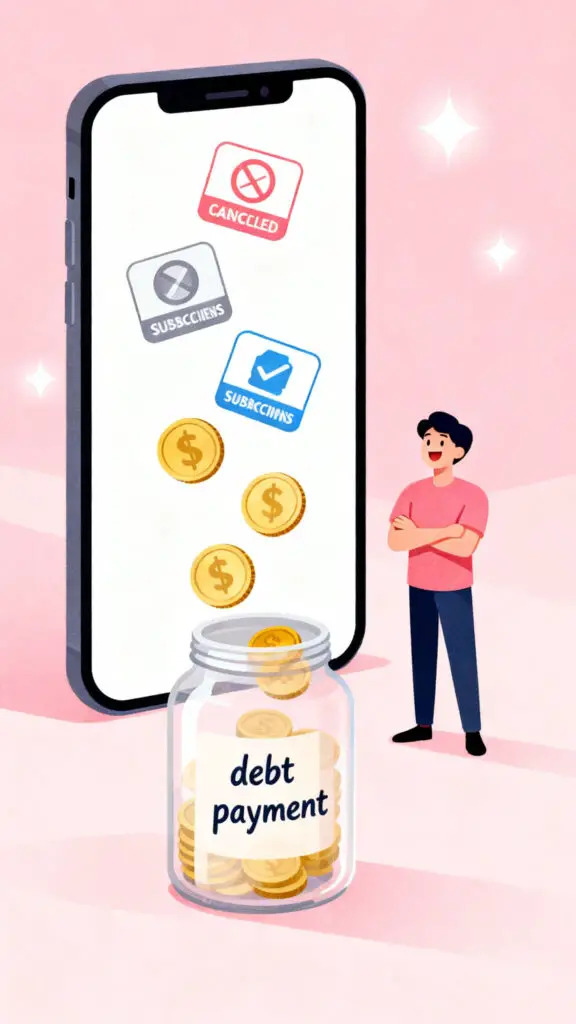
Illustration showing subscription cancellation through a budgeting app to free money for paying off debt, set on a pastel pink background.

Rocket Money helps you become aware of how much money is slowly leaking out of your budget through subscriptions and recurring charges that you may have signed up for once and forgotten about, which can quietly keep you stuck in debt without you even realizing why progress feels so slow. By clearly showing these expenses and making it easier to cancel what you no longer need, the app can help you reclaim money that can be redirected toward debt payments. While these amounts may seem small at first, over time they add up and create breathing room in your finances, helping you feel more stable, more confident, and less dependent on credit cards or borrowing when unexpected expenses come up.

11. Simple Budget

Simple Budget is ideal for people who feel intimidated or discouraged by complicated budgeting apps, because it focuses on clarity and ease rather than overwhelming features that are difficult to keep up with during stressful financial periods. By allowing you to plan your spending in a straightforward way and track where your money goes without confusion, the app encourages consistency, which is one of the most important parts of getting out of debt. 

12. Zeta 

Zeta is designed for couples who want to manage money together without tension or confusion, making it easier to track shared expenses, plan debt repayment, and work toward common financial goals in a transparent and supportive way. When both partners can see where the money is going and agree on priorities, debt stops feeling like a personal burden carried by one person and becomes a shared responsibility that is handled as a team. 

Conclusion

Getting out of debt is rarely about finding a sudden solution or making one perfect decision, but instead it is about building awareness and using the right tools that make the process feel less overwhelming and more manageable over time. These apps are designed to support you through real life situations by helping you stay organized, avoid costly mistakes, track your progress, and make better choices without pressure or guilt. When you stay informed and remain patient with yourself, debt stops feeling like a permanent trap and starts feeling like a temporary phase that you can work through step by step, eventually allowing you to regain control and reduce financial stress.

9 Proven Strategies to Pay Off Credit Cards

January 9, 2026 By Ana Rose

Credit card debt is one of the most common financial struggles, and it can quietly grow into a heavy burden if left unmanaged. High interest rates, minimum payments, and everyday expenses often trap people in a cycle where balances barely move, even after months or years of payments. Many people feel ashamed or overwhelmed, but credit card debt is not a sign of failure, it is usually the result of emergencies, rising living costs, or relying on credit during difficult times. The key to paying off credit cards is not earning a massive income overnight, but building a realistic plan and staying consistent with it. Small changes, when repeated month after month, can create powerful results. With the right strategies, you can reduce interest, regain control over your finances, and slowly move toward a debt-free life. This article will help you explore 9 proven strategies that are practical, realistic, and designed to help you make steady progress without burnout.

9 Proven Strategies to Pay Off Credit Cards

Stop Adding New Charges Immediately

Illustration showing a person stopping credit card use by switching to a debit card to prevent new debt, set on a pastel pink background.

One of the most important steps in paying off credit card debt is stopping new charges, because as long as you continue using your cards, the balance will keep growing and slow down the progress. This does not mean giving up all convenience or comfort, but it does mean building enough discipline to separate old debt from daily spending. 

You can start by using cash or a debit card for regular purchases and removing saved credit card details from shopping apps and online stores to reduce impulse buying. Keeping your credit cards out of your wallet and placing them somewhere safe can also create a pause before spending and help you think more carefully. When new charges stop, your payments finally begin to work toward lowering your balance instead of chasing new debt. Creating this boundary is necessary for success, because without it, even the strongest repayment plan will fail and continue adding stress.

Pay More Than the Minimum Every Month

Minimum payments are designed to keep you paying for a long time while most of your money goes toward interest instead of reducing the actual balance. When you only pay the minimum, debt can last for years and quietly cost you much more than you expect. 

Paying more than the minimum, even by a small amount, can change everything and help you see real progress sooner. Adding an extra twenty-five or fifty dollars each month reduces the balance faster and gives interest less room to grow. You can find this extra money by making small changes in your spending, such as eating out less, canceling unused subscriptions, or cutting back on unnecessary purchases. 

Use the Debt Snowball Method for Motivation

One of the most important steps in paying off credit card debt is stopping new charges, because as long as you continue using your cards, the balance will keep growing and make progress feel impossible. This does not mean giving up all convenience or comfort, but it does mean building enough discipline to separate old debt from daily spending. 

You can start by using cash or a debit card for regular purchases and removing saved credit card details from shopping apps and online stores to reduce impulse buying. Keeping your credit cards out of your wallet and placing them somewhere safe can also create a pause before spending and help you think more carefully.

Try the Debt Avalanche Method to Save on Interest

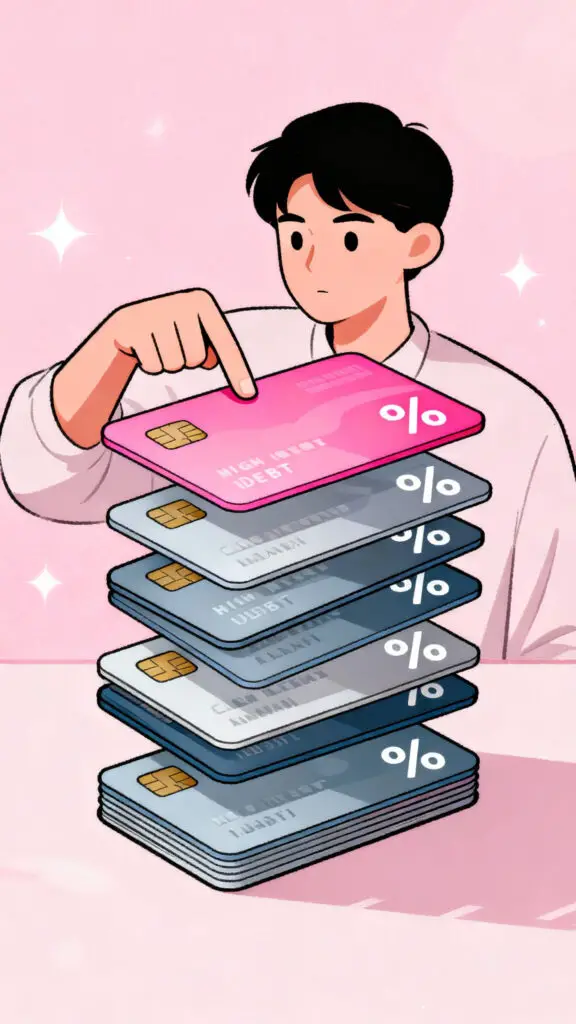
Illustration representing the debt avalanche method by focusing on paying off high-interest credit cards first, on a pastel pink background.

The debt avalanche method focuses on saving the most money by reducing interest as quickly as possible, which makes it a strong choice for people who prefer a more practical and numbers-based approach. 

With this method, you list your credit cards from the highest interest rate to the lowest and direct extra payments toward the card that is costing you the most in interest while paying the minimum on the rest. Once the highest-interest card is paid off, you move to the next one and repeat the process. Progress may feel slower at the beginning, especially if the highest-interest balance is large, but the long-term savings are meaningful. 

Negotiate a Lower Interest Rate With Your Card Issuer

Many people do not realize that credit card interest rates can often be lowered simply by asking, and a calm phone call to your card company can sometimes lead to a better rate, especially if you have a record of paying on time. When your interest rate is reduced, more of your monthly payment goes toward lowering the balance instead of being lost to interest, which helps you make progress faster without increasing what you pay. 

Before calling, it helps to look over your account, understand your current rate, and prepare to speak in a polite but confident way about your goal of paying off debt. You can explain that you are actively working on repayment and ask if they can offer a lower rate for a period of time or even permanently. Even a small drop in interest can save a lot of money over the long run, and if the first person says no, calling again later may lead to a better result.

Consider Balance Transfers With a Clear Payoff Plan

Balance transfer credit cards can be helpful when they are used with care and a clear plan, because they often come with a 0 percent interest period that allows you to focus on paying down the balance without interest growing at the same time. This option can be useful if high interest is slowing your progress and making payments feel pointless, but it also requires strong self-control to avoid creating new debt. 

Promotional periods usually last between twelve and eighteen months, and once that time ends, interest rates can rise quickly if the balance is still there. There may also be transfer fees, which means this choice should be planned carefully before moving forward. It is important to calculate whether you can realistically pay off the balance within the interest-free period and avoid using the new card for purchases. When handled responsibly, balance transfers can reduce interest and speed up debt payoff, but when misused, they can make the problem worse.

Create a Targeted Budget Focused on Debt Repayment

A targeted budget helps you give your money clear direction so it supports your goal of paying off credit card debt instead of disappearing without notice. Instead of loosely tracking spending, you focus on finding areas where you can cut back for a short period, such as eating out less often, pausing unused subscriptions, or avoiding small impulse purchases that add up over time. 

These changes do not mean you have to live unhappily or give up everything you enjoy, but they do require making thoughtful choices until your debt is under control. Writing your expenses down and reviewing them regularly helps you stay aware of how your money is being used and keeps you accountable to your goals. When you clearly see where your money goes, adjusting habits becomes easier and less stressful. Over time, even small budget changes can create meaningful progress and turn debt repayment into a clear and manageable plan.

Use Windfalls and Extra Income Wisely

Unexpected money can play a powerful role in helping you pay off credit card debt faster when it is used with intention rather than spent without a plan. This type of money may come from tax refunds, bonuses, gifts, side income, or cashback rewards, and while it is natural to want to spend it, using most of it toward debt can create strong momentum. 

Making a large payment right away lowers your balance and reduces how much interest builds up in the future, which helps your monthly payments work more effectively. Planning ahead by deciding how much of the windfall will go toward debt makes it easier to avoid emotional spending and stay focused on your goal. Each time you apply extra money to your credit cards, you strengthen healthy money habits and move closer to lasting financial freedom.

Stay Consistent and Track Your Progress

Consistency is the most important part of paying off credit card debt because even when progress feels slow, steady payments always move you forward. When you check your balances each month, you can see small changes that show your effort is working, and watching the numbers go down helps you feel motivated and more confident about your money. 

Taking time to celebrate small wins, such as paying off one card or lowering a balance, keeps you encouraged and reminds you that your hard work matters. It is also important not to compare your journey with others, because everyone’s income, bills, and struggles are different. Missing a perfect month does not mean you have failed, because what truly matters is getting back on track and continuing the plan. Paying off debt takes time and patience, not quick fixes, and when consistency becomes part of your daily habits, small steps slowly turn into real freedom from debt.

Conclusion

Paying off credit card debt is a process that takes time, patience, and steady effort, but it is completely possible when you follow a clear plan and stay consistent with your actions. You do not need to make perfect choices every month or have a large income to succeed, because small and regular steps matter more than big changes that are hard to maintain. By stopping new charges, paying more than the minimum, choosing a repayment method that fits your personality, and staying focused on your budget, you slowly take back control of your money. 

How To Pay Off Debt Even When You Are Broke

January 7, 2026 By Ana Rose

Carrying debt when you’re broke can feel burdening, especially when you have to deal with pending bills and other expenses that keep you in the unending loop of earning and spending. Paying off debt is not about having extra money or waiting for extra income to take any action, it’s about building a plan, strategizing, and staying consistent throughout the process. Even small and intentional steps can reduce stress, stop debt from growing, and help you slowly pay it off through consistent and intended actions. This article will help you explore ways to pay off debt even when you’re broke, leading you towards financial independence and a secure and stable financial future. 

How To Pay Off Debt Even When You Are Broke

Stop Adding New Debt

When paying off a debt, an important step is to stop adding new debt to the already financially demanding situation. Stopping new debt doesn’t mean your life has to become miserable, it just means that you need to become more intentional and mindful with where your money goes. 

It’s important to realize that using credit cards, buy now pay later options, and emotional spending can make your budget fall apart more than anything, making it important to consider the option of pausing these spending habits. Instead, try spending through debit cards or cash, allowing you to move forward and leaving behind the unending loophole of falling into debt. 

Get Clear About What You Owe

The next step is to get clear about what you owe, including balances, minimum payments, and interest rates. Seeing the numbers can become intimidating and overwhelming at first, but it’s important to look at the positive side of this step that it brings along clarity and awareness, giving you a number to begin with.

Instead of wondering and living in fear, this step makes it easy by turning your problem into a written form. This step also helps you make informed decisions instead of relying on guesswork, making it a considerable step when working with paying off debt. 

Focus on Minimum Payments First

When money is extremely limited, the first priority is not to pay off debts, it’s to focus on stability and security. If you’re living paycheck to paycheck, your debt repayments can begin with minimum payments first that can help you avoid late fees, penalties, and additional stress. 

A smarter approach would be to direct any extra money towards something much more meaningful like savings or paying off debt while continuing minimum payments on the rest. This small yet thoughtful effort can help you see results over time, reminding you that those seemingly small but intentional efforts can serve you in the long run too. 

Pick One Debt to Pay Off First

Illustration showing a person focusing on paying off one debt at a time to stay motivated while managing debt on a tight budget, on a pastel pink background.

Trying to pay off all your debts at once can feel exhausting and intimidating which is exactly why it is important to choose one debt at a time and focus on paying it off. It can either be the one with the smallest balance or the one with the highest interest. 

Focusing on one debt can help you become more motivated and consistent, allowing you to build progress around one debt at a time. Small wins matter because even when you’re broke they remind you that simple but intentional actions can lead to meaningful results over time. 

Cut Small Expenses Without Stress

Paying off debt doesn’t mean restricting your wants and making the whole process feel like a punishment, it’s more about looking for small but meaningful steps that allow you to manage all your expenses with balance. However, you can look for small and manageable cuts in your spendings, such as impulse shopping, frequent takeouts, or unused subscriptions. 

These changes may not seem significant, but over time, you may come to realize how much much you allow yourself to save simply by being more intentional and mindful towards the money you work so hard for.  The key is to realize that you don’t need to cut every non-essential expense off, you just need to be smart and make decisions that benefit your financial life. 

Use Extra or Unexpected Money Wisely

Another helpful way to pay off debt is to use extra or unexpected money wisely, instead of spending it on unnecessary expenses. Extra money such as tax refunds, gifts, side income, or bonuses can be a great way of paying off debt, if spent intentionally and smartly. 

It can be tempting to spend emotionally, buy new clothes, or go out for fancy dinners, but the truth is that these temporary sources of happiness are some of the biggest financial leaks that keep you stuck in the unending loop of financial dependence. Instead of spending your money on these expenses, a smarter approach would be to direct your money towards paying off debt. 

Ask for Lower Interest or Payment Help

Many people do not realize that creditors are often willing to work with you. All you have to do is call them and ask for lower interest rates, waived fees, or flexible payment plans. 

This does not mean you have failed, it simply means that you are taking responsibility. Even a small reduction in interest can save money and make payments more manageable. It is important to remember that asking for help is not a sign of weakness, it shows that you can make smarter financial choices and handle them with responsibility. 

Increase Income in Simple, Realistic Ways

Relying on a single income when trying to pay off debt can become difficult, especially when your current income isn’t enough and you have to live paycheck to paycheck. A smarter move would be to consider any side hustle such as pet sitting, babysitting, freelancing through freelancing platforms such as Fiverr, Upwork, or freelancer.com, or combining passion with income through baking, cooking, painting, or selling handmade crafts. 

The goal is not to burden yourself but to earn extra cash that can help you pay off your debt fast, allowing you to increase your income and slowly become debt free. 

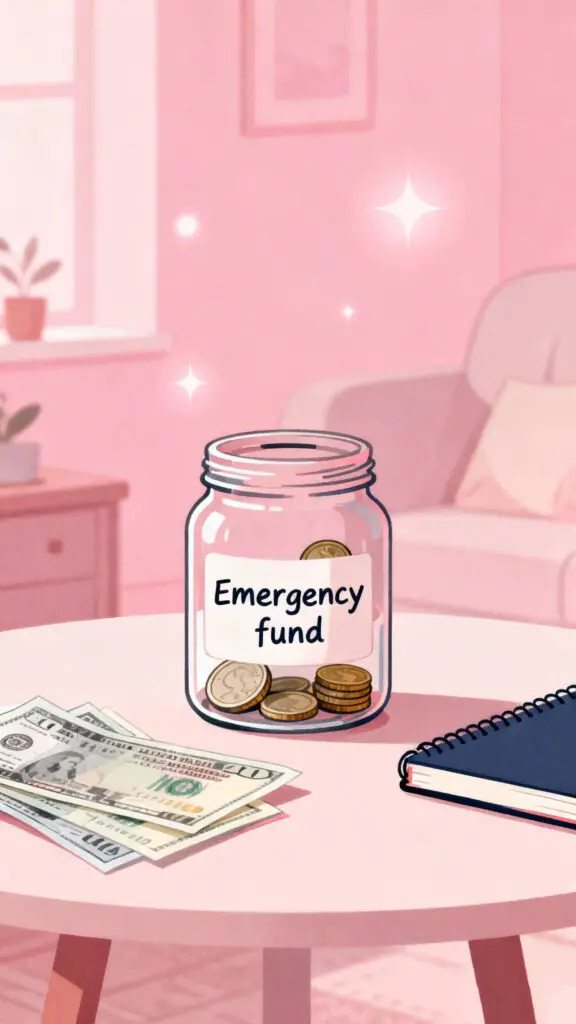
Build a Small Emergency Cushion

Illustration representing the importance of building a small emergency fund to avoid falling back into debt, on a pastel pink background.

Trying to pay off debt without any savings can be risky because even a small unexpected expense can push you back into borrowing again. A medical bill, car repair, or sudden household expense can undo months of effort if you have no backup money and that is why building a small emergency cushion is important, even if it feels slow. 

You do not need a large amount, even saving $100 to $300 can make a big difference. This small buffer gives you peace of mind and protects you from falling back into debt, helping you stay consistent with your repayment plan.

Track Progress to Stay Motivated

When you are broke, debt payoff can feel slow and discouraging, especially if you do not see visible results right away. Tracking your progress helps you stay motivated during tough months. You can write down your balances, use a simple notebook, or track changes monthly on your phone. 

Watching the numbers slowly go down reminds you that your efforts matter, even if progress feels small. This habit helps turn patience into motivation and keeps you focused on your long-term goal instead of short-term struggles. Seeing progress makes it easier to keep going when things feel hard.

Be Patient and Forgiving With Yourself

Paying off debt is not a straight path, especially when you are living paycheck to paycheck. There may be months when you cannot pay extra or when unexpected expenses slow you down. This does not mean you have failed. Being patient and forgiving with yourself helps you stay consistent instead of giving up. 

Debt often builds over years, so it is unrealistic to expect it to disappear overnight. What matters most is continuing to show up and making intentional choices whenever you can. Progress is made through consistency, not perfection, and every small effort counts.

Redefine What Financial Success Looks Like

While paying off debt, financial success may not look glamorous or exciting, but it is deeply meaningful. Success during this phase means being mindful with money, avoiding unnecessary spending, and choosing long-term stability over short-term comfort. It may mean saying no to certain things now so you can say yes to peace later. 

Living simply while working toward debt freedom is not failure, it is strength and discipline. Redefining success helps you stay proud of your journey, even when life feels restricted, and reminds you that you are building a more secure future step by step.

Conclusion

Paying off debt when you are broke is challenging, but it is absolutely possible with the right mindset and consistent effort. You do not need extra money to start, you need intention, patience, and a clear plan. By stopping new debt, managing expenses wisely, focusing on one step at a time, and staying kind to yourself, you can slowly break free from the cycle of financial stress. Every small action adds up over time, even when progress feels slow. Remember, debt freedom is not achieved overnight, but through steady and thoughtful decisions that lead you toward stability, independence, and peace of mind.

  • « Go to Previous Page
  • Go to page 1
  • Interim pages omitted …
  • Go to page 28
  • Go to page 29
  • Go to page 30
  • Go to page 31
  • Go to page 32
  • Interim pages omitted …
  • Go to page 170
  • Go to Next Page »

The Latest Blog Posts:

  • 14 Profitable Things To Sell On eBay June 20, 2026
  • Mason Jar Crafts To Make And Sell June 19, 2026
  • 12 Best Jobs for Retired Teachers  June 18, 2026

As Featured In:

Just Start Investing Press Strip 2020 B&W

Follow Us:

  • Facebook
  • Twitter
  • Pinterest

Copyright © 2026 · Just Start Investing LLC

  • Contact Us
  • Blog
  • Privacy Policy / Disclaimers