• Skip to primary navigation
  • Skip to main content

Just Start Investing

We Make Investing Easy

  • Investing
    • Learn About Investing:
    • Investment Accounts
    • Online Brokerage Accounts
    • Investment Vehicles
    • Start Investing:
    • How to Invest in Index Funds
    • Start Investing with Betterment
    • Start Investing with Charles Schwab
  • Banking
    • Best Bank Accounts
    • Types of Bank Accounts:
    • Checking Accounts
    • Savings Accounts
    • CDs and Money Market Accounts
    • Online Banks vs Brick-and-Mortar
  • Credit Cards
    • Best Credit Cards:
    • Best Cash Back Credit Cards
    • Best No Annual Fee Credit Cards of 2021
    • Best Premium Credit Cards of 2021
    • Credit Card Tool: Find the Best Credit Card for Me
    • Learn About Credit Cards:
    • Types of Credit Cards
  • Blog
    • Investing
      • What is Crypto?
        • Crypto
      • What are stocks?
        • Stocks
      • What is a Real Estate Investment?
        • Real Estate Investments
      • What is an IPO?
        • IPO
    • Banking
    • Credit Cards
    • Budget
    • Finances
  • Earn with Crypto
  • Budget
    • How to Build a Budget
    • 24 Tips to Save More Money
  • Resources
  • About
    • Contact
    • Press
    • Learn More
    • Disclaimers
  • Show Search
Hide Search

Blog

12 Hacks to Live on One Income and Never Be Poor

January 6, 2026 By Ana Rose

Living on one income can feel scary, especially in a world where prices keep rising and financial pressure seems constant. Many families worry that relying on one paycheck means struggle, stress, and always feeling behind. But the truth is, living on one income does not automatically mean living poorly. In fact, many families who choose or are forced into a single-income lifestyle often build stronger money habits, deeper family connections, and long-term stability. Being poor is not just about how much money you earn, it is about living without control, without savings, and without peace of mind. When you learn how to manage one income intentionally, you stop surviving and start building a secure life. This article will help you explore 12  hacks that are not about extreme frugality or denying yourself happiness, they are about mindset shifts and realistic habits that help families live comfortably and confidently.

12 Hacks To Live On One Income And Never Be Poor

1. Treat One Income Like a Fixed Resource, Not a Limitation

Living on one income often feels stressful because it is easy to see it as something “not enough,” but the real breakthrough comes when you stop thinking of it as a limitation and start treating it like a fixed resource that needs careful management, just like your time or energy. Accepting the number you have shifts your focus from chasing what you do not have to working with what is already available, which makes every decision calmer and more intentional. 

Families who succeed on one income are not magically earning more, they are simply aligning their spending with reality, prioritizing needs over wants without resentment, and designing a lifestyle that fits their resources instead of forcing their resources to support an unrealistic way of life. 

2. Build a Bare-Bones Budget Before a Perfect Budget
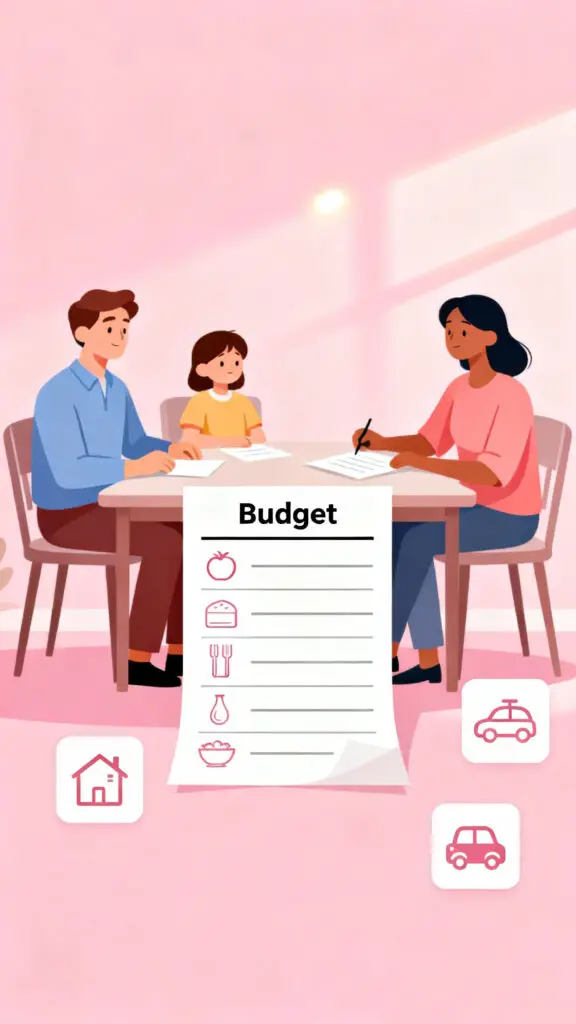
Illustration showing a family calmly creating a simple bare-bones budget to manage one income with clarity and peace, on a pastel pink background.

Many people struggle with budgeting because they aim for perfection, which makes the process overwhelming and discouraging, but on one income, starting with a bare-bones budget is far more effective. This means focusing only on essentials such as housing, food, utilities, transportation, basic insurance, and minimum debt payments, so that you know exactly how much it truly costs to keep your household running. 

Once the essentials are covered, everything else becomes optional and adjustable, creating clarity and peace instead of stress and panic. A bare-bones budget is not limiting or depressing, it is empowering because it shows that stability is achievable, helps you prioritize spending, and makes saving and planning feel practical instead of impossible. 

3. Design Your Lifestyle Around One Income, Not Social Pressure

One of the hardest challenges for families living on one income is resisting comparison, because social media, relatives, and friends often make life look effortless or luxurious, which can create unnecessary pressure to spend beyond your means. 

The solution is to intentionally design a lifestyle that fits your income instead of trying to imitate someone else. Choose a home that is comfortable and affordable, a car that meets your family’s needs rather than impressing others, and activities that bring joy rather than stress. 

When your lifestyle aligns with your actual income, money stops feeling tight, daily decisions feel lighter, and contentment replaces constant frustration. True peace comes not from appearances or keeping up with others, but from living a life that is in harmony with your resources, priorities, and long-term goals.

4. Make Saving Automatic, Even If the Amount Is Small
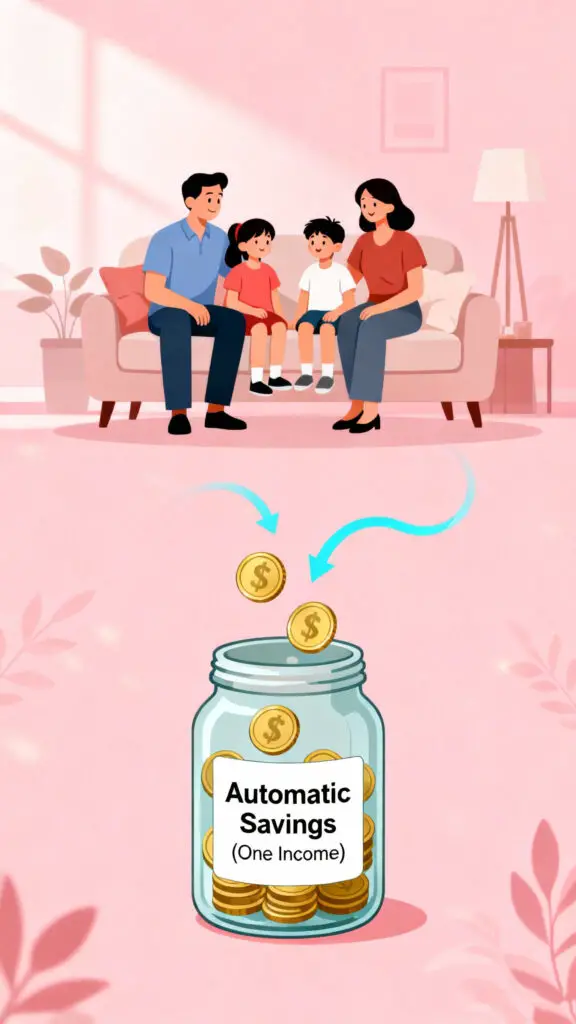
Illustration representing automatic savings habits that help families build financial security on one income, on a pastel pink background.

Many families living on one income believe that saving money is unrealistic or something to do later, but in reality, it is the habit of saving small amounts consistently that creates protection and prevents financial struggle over time. Even setting aside a small percentage of income builds a quiet buffer between your family and unexpected expenses, which reduces fear and uncertainty. 

Automation plays a powerful role because when savings happen automatically, you no longer depend on motivation or self-control. 

5. Eliminate High-Interest Debt as Fast as Possible

High-interest debt is one of the main reasons people feel trapped financially, even when their income should be enough, and on one income, this pressure becomes even heavier because debt removes flexibility and creates constant stress. 

Focusing on paying off credit cards and high-interest loans as quickly as possible does not require extreme sacrifice, but it does require clear focus and consistency. Each debt you eliminate frees up money and mental space, allowing your income to stretch further. 

6. Learn to Cook Simply and Consistently at Home

Food is one of the easiest places for money to quietly disappear, especially when convenience becomes a habit, and for families living on one income, cooking at home is not a restriction but a powerful tool for stability. This does not mean preparing complicated meals or following strict plans, but choosing simple, repeatable dishes that fit your routine. 

Cooking at home keeps grocery spending predictable, reduces daily stress, and often improves health without extra effort. 

7. Separate Needs, Comforts, and Luxuries Clearly

Living on one income becomes far more manageable when you clearly understand the difference between needs, comforts, and luxuries, because not everything that feels important is truly essential. Needs are non-negotiable and keep life functioning, comforts add ease and enjoyment, and luxuries are optional and occasional. 

Financial stress often comes from confusing these categories, which causes money to disappear faster than expected. 

8. Build an Emergency Fund Before Lifestyle Upgrades

When families start feeling slightly comfortable, it is tempting to upgrade phones, furniture, or vacations, but on one income, this can quietly increase risk if there is no safety net in place. Building an emergency fund first protects your family from sudden income loss, medical expenses, or unexpected repairs, preventing panic and debt.

Having backup money creates confidence and emotional security, allowing you to make decisions calmly rather than out of fear. Once emergencies are covered, lifestyle upgrades feel more enjoyable and less stressful because they are built on stability, not financial vulnerability.

9. Teach Everyone in the Household the Why

Living on one income becomes much easier when everyone in the household understands why certain choices are being made and why some things are prioritized while others are delayed, because clarity removes confusion and teamwork replaces frustration. 

This includes partners and children, since silence around money often creates misunderstanding, resentment, or unrealistic expectations. When families talk openly about goals, savings, and limits in a calm and honest way, everyone feels included rather than restricted. Children who grow up understanding money boundaries learn patience, responsibility, and gratitude, which helps them make better choices as adults. 

10. Reduce Fixed Monthly Expenses Aggressively

Fixed monthly expenses are especially risky on one income because they demand payment regardless of how life changes, which means housing, car payments, subscriptions, insurance, and long-term contracts deserve serious attention. When too much income is locked into fixed costs, even small emergencies can cause stress and panic. Reducing these expenses creates breathing room every single month, not just once. 

This may involve downsizing to a more affordable home, choosing a reliable older vehicle instead of a newer one, canceling unused subscriptions, or negotiating insurance and service bills. 

11. Value Time, Peace, and Stability Over More Money

Many people believe earning more money will solve their problems, but often it comes at the cost of health, family time, and emotional peace, which slowly drains happiness and connection. Living on one income teaches a powerful lesson that stability is often more valuable than constant hustle and exhaustion. 

When expenses are controlled, systems are simple, and expectations are realistic, one income can support a calm and fulfilling life. You gain time to be present with your family, energy to care for yourself, and mental space free from constant financial worry. 

12. Redefine What Never Being Poor Truly Means

Never being poor does not mean living a rich or luxurious life, but reaching a point where money no longer creates constant worry, fear, or instability, because you have control over your spending, savings set aside, and the ability to handle unexpected expenses without panic. 

On one income, financial security is not built by chasing more money, but by managing what you already earn with intention, patience, and discipline. When you align your lifestyle with your income, avoid unnecessary debt, and create small financial buffers, security becomes a habit rather than a miracle, allowing one income to feel stable, reliable, and enough.

Conclusion

Living on one income does not mean living with fear, lack, or constant stress, it simply means creating a life where money serves your family rather than controlling it. By treating your income as a resource, focusing on essentials, designing your lifestyle intentionally, and making clear, thoughtful choices, you gain control, clarity, and stability. Financial security becomes a natural part of life rather than a distant dream, allowing your family to thrive emotionally, mentally, and practically. One income becomes enough not because you earn more, but because your habits, priorities, and mindset make every dollar count, and peace becomes the true measure of wealth.
How to Live Cheaply: 37 Cheap Living Tips for Families

January 5, 2026 By Ana Rose

Living cheap does not have to mean living poorly and cutting off on all the fun and things you enjoy, it’s more about being intentional with how you spend and save. In today’s economy with rising grocery prices, school expenses, and housing costs, it’s only fair to consider the possibility of adapting a lifestyle that promotes smarter decision making when it comes to the money you work so hard for. The good news is that small but intentional efforts can create meaningful results over time, allowing you to take a step closer to financial freedom and stability. This article will help you explore 37 cheap living tips for families while still allowing them to spend on things and activities they find pleasure in. 

How to Live Cheaply: 37 Cheap Living Tips for Families

1. Create a Simple Family Budget

A simple family budget helps you understand how much money comes in and where it goes each month, so you can plan bills, groceries, and savings without stress, and when everyone knows the limits, it becomes easier to avoid overspending and make better choices together.

2. Track Every Expense for One Month

Tracking every expense for one month opens your eyes to small spending habits that usually go unnoticed, like snacks or online orders, and once you see the full picture, you can gently cut unnecessary costs without feeling restricted or overwhelmed by sudden changes.

3. Meal Plan Weekly

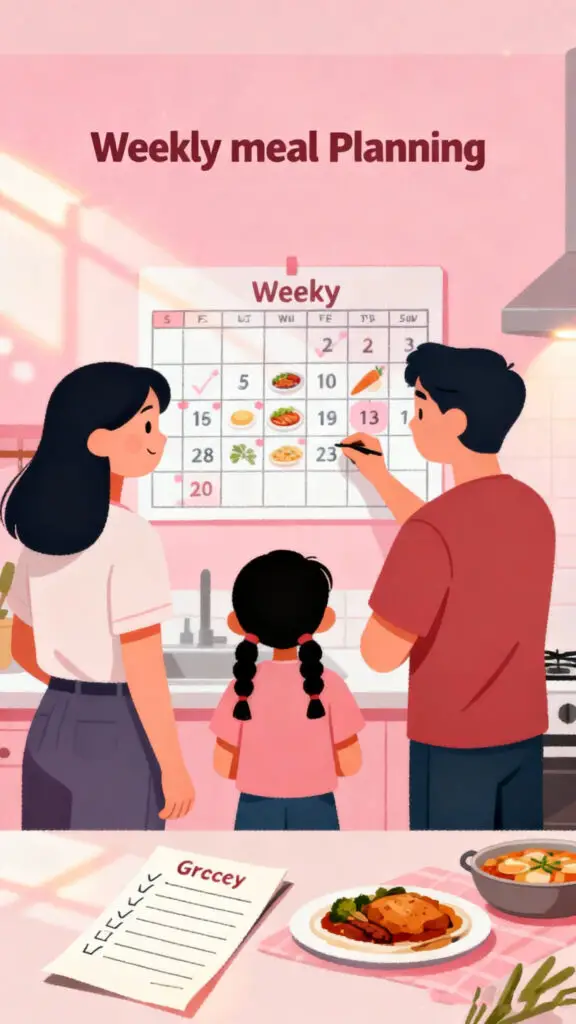
Illustration showing a family planning weekly meals together to save money and reduce food waste, on a pastel pink background.

Weekly meal planning saves money by helping you buy only what your family needs, reduce food waste, and avoid last-minute takeout, while also making daily cooking easier and less stressful because you already know what meals are coming next.

4. Cook at Home More Often

Cooking at home costs much less than eating outside and gives you control over portions and ingredients, and even simple meals prepared at home regularly can save families a large amount of money while also creating more shared family time.

5. Buy Generic and Store Brands

Generic and store-brand products are often just as good as famous brands but cost less, and choosing them for everyday items like flour, oil, soap, and cleaning supplies can quietly lower your monthly expenses without changing your lifestyle or comfort.

6. Shop With a Grocery List

Shopping with a grocery list helps you stay focused and avoid impulse purchases, and when you stick to what you planned, you spend less money, waste less food, and leave the store feeling more confident instead of confused or guilty.

7. Use Cashback and Reward Apps

Cashback and reward apps give you small amounts of money back on purchases you already make, and although the savings feel slow, they add up over time and can help pay for groceries, fuel, or household needs without extra effort.

8. Buy in Bulk for Essentials

Buying essential items in bulk saves money per unit and reduces frequent shopping trips, especially for families, and when you focus on items used daily, bulk buying becomes a smart habit instead of unnecessary spending.

9. Reduce Food Waste

Reducing food waste means using leftovers, storing food properly, and checking the fridge before shopping, and when families stop throwing away food, they also stop throwing away money that could be used for savings or important needs.

10. Cut Back on Eating Out

Eating out feels convenient but quickly becomes expensive for families, and by limiting restaurant visits and choosing special occasions instead, you save money while making those outings feel more meaningful and enjoyable for everyone.

11. Cancel Unused Subscriptions

Unused subscriptions quietly drain money every month, and when you cancel services you rarely use, you free up extra cash without affecting daily comfort, which makes this one of the easiest ways to start living more cheaply.

12. Lower Utility Bills

Lowering utility bills starts with small habits like turning off lights, using fans wisely, and unplugging unused devices, and when the whole family participates, monthly savings grow while children also learn responsibility and awareness.

13. Wash Clothes in Cold Water

Washing clothes in cold water reduces electricity use and protects fabric quality, and this simple change does not affect cleanliness but quietly lowers energy bills while helping clothes last longer, saving replacement costs in the future.

14. Line Dry Clothes When Possible

Line drying clothes saves electricity and reduces wear from dryers, and even drying a few loads naturally each week can lower utility bills while keeping clothes in better condition for a longer time.

15. Buy Secondhand Clothing

Secondhand clothing is especially helpful for families with growing children, because kids outgrow clothes quickly, and buying gently used items allows parents to save money while still providing comfortable and presentable outfits.

16. Accept Hand-Me-Downs

Accepting hand-me-downs from friends or relatives reduces clothing expenses and avoids unnecessary shopping, and when items are still in good condition, they serve the same purpose without adding pressure to the family budget.

17. Shop End-of-Season Sales

Shopping during end-of-season sales allows families to buy clothes, shoes, and essentials at much lower prices, and planning ahead helps avoid last-minute purchases that usually cost more and strain the budget.

18. Limit Impulse Purchases

Impulse purchases often happen due to emotions or boredom, and by waiting a day before buying non-essential items, families avoid regret spending and keep their money for things that truly matter.

19. Use Cash for Discretionary Spending

Using cash for optional spending like snacks or small treats makes money feel more real, and when the cash runs out, spending naturally stops, helping families stay within limits without complicated rules.

20. Teach Kids About Money Early

Teaching children about saving, spending, and patience helps them grow into financially responsible adults, and when kids understand money basics, they also support family goals instead of adding pressure through unnecessary demands.

21. Choose Free Family Entertainment

Illustration representing a family enjoying free entertainment and quality time together without spending money, on a pastel pink background.

Free family entertainment like parks, libraries, and home movie nights provides joy without cost, and these simple activities often create stronger bonds and happier memories than expensive outings.

22. Reduce Screen-Based Paid Entertainment

Reducing paid screen entertainment saves money and encourages healthier habits, and families often discover that children become more creative and engaged when screens are limited and alternatives are offered.

23. DIY Home Maintenance

Doing basic home maintenance yourself saves labor costs and builds useful skills, and many small repairs can be learned easily, helping families avoid expensive service calls for minor issues.

24. Compare Insurance Rates Annually

Comparing insurance rates each year helps families avoid overpaying, and even small reductions in premiums create noticeable yearly savings without changing coverage quality or daily routines.

25. Drive Less When Possible

Driving less by combining errands or walking short distances saves fuel money and reduces car wear, and over time, this habit lowers transportation costs while also benefiting health and the environment.

26. Maintain Your Car Regularly

Regular car maintenance prevents major breakdowns and expensive repairs, and when families take care of their vehicles, they extend their lifespan and avoid sudden financial emergencies.

27. Avoid Lifestyle Inflation

Avoiding lifestyle inflation means not increasing spending just because income increases, and keeping expenses stable allows families to save more, reduce stress, and enjoy financial progress without pressure.

28. Buy Fewer but Better Items

Buying fewer but better-quality items reduces frequent replacements, and although quality costs more upfront, it saves money long-term while reducing clutter and waste inside the home.

29. Plan Affordable Vacations

Affordable vacations like road trips or staycations provide rest and family bonding without heavy spending, and these simpler trips often feel more relaxed and memorable than expensive travel plans.

30. Set Savings Goals

Clear savings goals give purpose to saving money, and when families know what they are working toward, they stay motivated and consistent even when progress feels slow.

31. Build an Emergency Fund

An emergency fund protects families from sudden expenses like medical bills or repairs, and even small monthly contributions slowly build security and peace of mind.

32. Avoid High-Interest Debt

High-interest debt takes away future income through interest payments, and avoiding or paying it down helps families breathe easier and use their money for growth instead of survival.

33. Negotiate Bills When Possible

Negotiating bills with service providers can lower monthly expenses, and many companies offer discounts simply because you asked, making this a powerful but often ignored money-saving habit.

34. Use the Library More

Libraries offer free books, movies, learning programs, and quiet spaces, helping families save money on entertainment and education while encouraging reading and curiosity in children.

35. Plan Purchases Around Sales

Planning purchases around sales prevents rushed buying and full-price spending, and when families wait patiently, they save money without sacrificing quality or necessities.

36. Grow Some of Your Own Food

Growing even a small amount of food at home reduces grocery costs and teaches children patience and responsibility, while also providing fresh, healthy options for family meals.

37. Focus on Gratitude Over Spending

Focusing on gratitude helps families appreciate what they already have, reducing the urge to spend for happiness, and this mindset supports long-term contentment and financial peace.

Conclusion

Living cheaply as a family is not about cutting joy or living with constant restrictions, but about making thoughtful choices that protect your peace and your future. When families spend with intention, reduce waste, and build healthy money habits together, financial pressure slowly decreases. These small daily decisions create stability, confidence, and freedom, allowing families to focus more on love, time, and meaningful moments rather than money worries.

25 Habits Of People Who Are Never Broke

January 4, 2026 By Ana Rose

People who are never broke are not always rich, lucky, or earning six figure salaries, sometimes they are smart, plan everything out, and most importantly, they are consistent. They understand that financial independence is less about abundance and more about building healthy habits that help you manage money in a more effective way. By building smart financial routines, they can avoid constant stress, falling into debt, and can stop living from paycheck to paycheck. Being one of those people doesn’t have to be a distant dream, you just need to be more intentional with your hard-earned money and follow these 25 habits that will make sure that you never have to be broke or live paycheck to paycheck. 

25 Habits Of People Who Are Never Broke

1. They Spend Less Than They Earn

People who never go broke realize that financial responsibility and independence comes with understanding that no amount of budgeting can help if your spending is higher than your income. 

They make sure that basic expenses, lifestyle choices, and the fun spending category stays within what they earn each month. 

2. They Track Their Money

Illustration showing a person tracking their income and expenses to stay financially stable, on a pastel pink background.

They know exactly where their money is going because they track their money. They track their income and expenses and look for any unhealthy spending patterns that might be hurting their budget. 

This simple habit is less about restriction and more about staying aware and making necessary adjustments. 

3. They Pay Themselves First

A healthy habit of people who never go broke is that they prefer to pay themselves first whenever their paycheck hits their bank account. Instead of paying bills or spending on wants and needs, they set a portion of their income aside for savings. 

4. They Avoid Unnecessary Debt

Another healthy habit is that they avoid unnecessary debt and are careful about borrowing money. Instead of using credit for lifestyle upgrades, they wait until they can afford purchases in cash. This simple habit helps them stay away from the unending loop of monthly payments that quietly eats away their income. 

5. They Maintain an Emergency Fund

Life doesn’t always go as expected which is exactly why it is important to have an emergency fund in case life throws a curveball your way. Whether it’s a sudden medical bill, car repair, or job loss, having an emergency fund can help you deal with financially demanding situations with calmness and confidence. 

6. They Plan Before Spending

Before spending their money, people with financial responsibility tend to plan. They pause and reflect on whether the expense fits their budget and priority and then they come to a decision. This simple yet effective habit can help them avoid regret later on, allowing them to become more mindful and intentional with where the money they work so hard for goes. 

7. They Live Below Their Means

People who never go broke tend to live below their means, which allows them to direct their money towards something much more meaningful like savings or investing. They choose comfort and stability over showing off an expensive lifestyle, allowing them to become content with what they have. 

8. They Save Consistently

Another habit of people who never go broke is that they save consistently, no matter the amount they are setting aside. It’s important to realize that it’s less about the amount you’re saving and more about the act of setting money aside. Regular savings makes money management feel natural rather than forced. 

9. They Know the Difference Between Needs and Wants

One of the healthiest habits when it comes to staying financially responsible is knowing the difference between wants and needs. Needs are those basic and essential expenses that are necessary for survival such as rent, groceries, transportations, or housing. 

Wants, on the other hand, are more about those nice-to-have items or those non-essential expenses that are a source of temporary satisfaction, for example, shopping for clothes you don’t really need, takeouts, or subscribing to services you barely use. 

10. They Budget Without Feeling Restricted

Instead of making the budget feel too restricted or like a punishment, they prefer to add space for fun while still staying responsible. This simple habit allows them to stick to their budget while also making room for things and activities they enjoy. 

11. They Plan for Future Expenses

Another healthy habit of people who never run out of money is that they plan for future expenses. Whether it’s for holidays, repairs, or school fees, it’s smart to plan for future expenses so whenever they show up, you don’t have to put your entire budget off track. 

12. They Avoid Lifestyle Inflation

A common mistake most people make is that whenever their income increases, they rush to upgrade their lifestyle, leaving little to no money behind for savings or something more meaningful, which consequently keeps them in the loop of living paycheck to paycheck. 

13. They Educate Themselves About Money

They take time to learn about basic financial concepts through courses, books, videos, or articles that are available online. Not only does this simple step help them understand finances better, it allows them to make smarter decisions and avoid costly mistakes that can damage their finances in future. 

14. They Set Clear Financial Goals

Another healthy habit of people who never go broke is that they set clear financial goals that are specific, have a direction, and a specific time frame. Whether it’s saving for a house, paying off a debt, or something as simple as building an emergency fund, having a specific goal can help you become more motivated and consistent to work towards your goal. 

15. They Build Multiple Income Streams

Relying on a single income stream in today’s economy can be difficult which is exactly why it is considered smart to have multiple income streams. Whether it’s a side hustle, freelancing, or something as simple as selling unused items sitting around the house ,building multiple income streams can help you earn money, adding security and flexibility to your financial life. 

16. They Review Their Finances Regularly

One of the healthiest habits of people who never grow broke is that they keep a check on their finances and review them regularly. This simple habit allows them to analyze what they spend at and make modifications wherever needed. This habit isn’t about restriction, it’s more about making informed decisions when it comes to the money you work so hard for. 

17. They Practice Delayed Gratification

Illustration representing delayed gratification and choosing long-term financial stability over impulse spending, on a pastel pink background.

People who are never broke understand that not everything needs to be bought immediately. They are comfortable waiting before making purchases, even if they can afford them. Instead of chasing instant satisfaction, they focus on long-term benefits and financial stability. 

18. They Avoid Comparing Themselves to Others

People who stay financially stable avoid measuring their success against someone else’s lifestyle. They understand that what others show online or in real life may not reflect their actual financial situation. By focusing on their own journey and goals, they avoid pressure-driven spending and make decisions that truly fit their income and priorities.

19. They Use Credit Wisely

People who are never broke use credit only when necessary and make sure they can pay it back on time. They avoid carrying balances for long periods and stay away from high-interest debt. This habit protects their financial health and prevents stress that often comes with unpaid bills and growing interest.

20. They Save for Big Purchases in Advance

Instead of relying on loans or credit cards, they save for big purchases ahead of time. Whether it’s a phone, furniture, or travel, planning and saving allows them to enjoy purchases without financial guilt. This habit keeps their budget stable and prevents future financial pressure caused by impulsive spending.

21. They Keep Fixed Expenses Low

People who are never broke are careful with fixed expenses like rent, transportation, and monthly bills. They understand that lower fixed costs give them more breathing room each month. By keeping these expenses manageable, they reduce stress and create more flexibility for savings and emergencies.

22. They Prioritize Financial Peace

They prefer knowing their bills are paid, savings are growing, and debts are under control. This sense of security allows them to sleep better and enjoy life without constant money worries. Peace of mind becomes their real definition of success.

23. They Learn From Financial Mistakes

Instead of feeling ashamed about money mistakes, they treat them as learning experiences. Whether it’s overspending or poor planning, they reflect, adjust, and move forward. This mindset helps them grow financially and avoid repeating the same errors again.

24. They Stay Disciplined Even When It’s Boring

They understand that managing money is not always exciting. Budgeting, saving, and planning can feel repetitive, but they stay consistent anyway. Discipline keeps them moving forward even when motivation fades. Over time, these boring habits lead to strong financial results.

25. They Respect and Value Money 

People who are never broke respect money and the effort it takes to earn it. They don’t waste it carelessly or fear it unnecessarily. Instead, they use money intentionally to support their goals and lifestyle. This respectful relationship with money helps them stay balanced and financially secure.

Conclusion

Being someone who is never broke is not about earning the most money or living a perfect life. It is about building small, consistent habits that protect your finances and reduce stress over time. These people are intentional, patient, and disciplined with their money, even when it feels boring or slow. The good news is that these habits can be learned and practiced by anyone, regardless of income level. By adopting even a few of these habits, you can slowly move away from paycheck-to-paycheck living and build a more stable, confident, and financially peaceful life.

Not Saving For These 14 Things? You’re Making Serious Money Mistakes.

January 3, 2026 By Ana Rose

Saving money is not only about putting cash aside for emergencies or big purchases, because real financial stability comes from preparing for expenses before they surprise you. Many people struggle with money not because they earn too little, but because they fail to plan for important life costs that slowly create stress, debt, and financial pressure. When you do not save for the right things, even small problems can turn into major money mistakes. This article will help you explore 14 important areas people often forget to save for, which can seriously damage their finances over time.

Not Saving For These 14 Things? You’re Making Serious Money Mistakes.

1. Emergency Expenses

Illustration showing the importance of saving for emergency expenses to avoid financial stress, on a pastel pink background.

Life rarely gives warnings before something goes wrong, and emergencies tend to demand money immediately rather than patiently waiting for your next paycheck. A sudden bill, an urgent repair, or a problem that cannot be delayed can quickly throw your finances off balance. 

Without savings, people often rely on credit cards or loans, which turn a short problem into long-term stress. Emergency savings give you the ability to act calmly instead of reacting out of fear, helping you protect both your finances and peace of mind.

2. Medical and Health Costs

Health expenses have a way of appearing when money feels tight, and insurance does not always cover everything. Doctor visits, prescriptions, tests, and unexpected treatments often require out-of-pocket payments that add up fast. 

When savings are missing, people delay care, borrow money, or accept financial pressure during an already difficult time. Setting aside money for health costs allows you to focus on recovery instead of worrying about how to pay the next bill.

3. Job Loss or Income Gaps

Even steady income can disappear suddenly due to layoffs, reduced hours, delayed payments, or contract changes. When income stops, expenses do not, and the pressure builds quickly. 

Savings for income gaps give you time to search for work, adjust your plans, and make clear decisions instead of accepting the first option out of desperation. This buffer protects you from falling behind on bills and losing control during uncertain periods.

4. Home Repairs and Maintenance

Homes require constant upkeep, and ignoring small issues often leads to bigger and more expensive problems. A leaking pipe, broken heater, damaged roof, or electrical issue usually needs immediate attention. 

Without savings, repairs are delayed or paid with debt, increasing long-term costs. Planning for maintenance keeps your living space safe and prevents unexpected repairs from disrupting your entire budget.

5. Car Repairs and Replacement

Cars almost never break down when it is convenient, and repair costs often show up suddenly and all at once, making them difficult to handle without preparation. Regular wear like tires, brakes, batteries, and fluids slowly turns into bigger mechanical problems if ignored, and a single breakdown can affect your ability to commute, earn income, or manage daily responsibilities. 

When savings are missing, even minor repairs can turn into emergencies that force people to borrow or delay fixes, which only increases costs later. Setting money aside for car expenses keeps your transportation reliable and prevents one problem from disrupting your entire routine.

6. Rent Increases or Moving Costs

Housing costs rarely stay the same for long, and rent increases often arrive with little warning, leaving people scrambling to adjust their budgets. Moving brings its own financial weight through deposits, transport, cleaning, utility setup, and basic furnishing costs that add up quickly. 

Without savings, people feel trapped in places they can no longer afford or tolerate, simply because leaving feels financially impossible. Preparing for housing changes gives you freedom to respond calmly, choose what suits your needs, and avoid decisions driven by pressure or panic.

7. Debt Payments and Interest

Debt does not pause when life becomes difficult, because interest continues to grow even during financial stress. A single unexpected expense can cause missed payments, late fees, and credit damage that take years to repair. Without savings, people often juggle payments or rely on more borrowing, which deepens the problem instead of solving it. 

Setting aside money specifically for debt obligations helps you stay ahead, protect your credit score, and prevent short-term setbacks from turning into long-lasting financial strain.

8. Retirement and Old Age

Earning years pass quietly, and many people realize too late that time cannot be recovered. Depending solely on future income, family support, or government systems leaves too much to chance. Saving early, even in small and imperfect amounts, allows money to grow steadily and reduces financial pressure later in life. 

Preparing for old age gives you dignity, independence, and the ability to make choices based on comfort rather than necessity when working is no longer possible.

9. Children’s Education

Education costs rise slowly but consistently, making them easy to underestimate until they become overwhelming. From school supplies and extracurricular activities to college fees and living expenses, the financial responsibility grows as children get older. Without preparation, families are forced to make difficult choices that affect both finances and opportunities. 

Gradual saving spreads the cost over time, reduces stress, and helps support a child’s future without sacrificing other important financial goals.

10. Insurance Deductibles

Insurance is supposed to provide financial protection, but deductibles require you to pay a set amount before coverage begins, and these amounts are often higher than people expect. Without having money set aside, paying a deductible can feel overwhelming and may prevent you from filing claims promptly, causing stress or delaying needed care. 

Whether it is health, auto, home, or renter’s insurance, preparing for deductibles ensures that insurance works as intended when emergencies occur, avoiding the situation where protection exists on paper but cannot help in practice. Savings for deductibles act as a buffer that allows insurance to actually serve its purpose effectively.

11. Unexpected Family Responsibilities

Family responsibilities can arise suddenly, whether due to illness, accidents, job loss, or other emergencies. Supporting relatives financially often becomes necessary without warning, and many people are unprepared to handle these unexpected costs. Without savings, helping family members can jeopardize your own financial stability, forcing you to make difficult trade-offs or borrow money under stress. 

By allocating funds for potential family responsibilities, you can provide support without harming your finances or lifestyle, making it easier to respond calmly to emergencies. Being prepared allows you to handle family obligations responsibly, ensuring that helping others does not create long-term problems for yourself.

12. Technology Replacement

Phones, laptops, and other essential devices eventually fail or become outdated, often at the worst possible moment. For most people, technology is not optional, it is required for work, school, communication, and managing daily life. When devices break unexpectedly, the cost of replacing them quickly can strain finances, especially if no money was set aside.

Preparing for technology replacements allows you to purchase items thoughtfully, avoid debt, and continue daily tasks without disruption. This planning ensures that your work, education, and personal responsibilities continue smoothly, while preventing stress and unplanned expenses from turning a minor inconvenience into a major financial burden.

13. Travel and Time Off

Time off from work is essential for mental health, family connections, and overall well-being, but travel and vacations often involve costs beyond simple transportation, including accommodations, food, activities, and missed income. Without dedicated savings, taking breaks can feel stressful, forcing people to skip rest or return from travel with added financial pressure. 

Saving for time off allows you to enjoy experiences fully without worrying about bills or income gaps. Planning ahead also encourages healthier work-life balance, ensures personal rest, and helps maintain productivity and focus when returning to daily responsibilities, making time off a true benefit rather than a burden.

14. Inflation and Rising Living Costs 

Illustration explaining inflation and rising living costs and why saving is important, on a pastel pink background.

Inflation gradually increases the cost of goods and services, quietly reducing the purchasing power of your money even if your income remains steady. Groceries, utilities, transportation, and housing slowly become more expensive, making it easy to feel stretched financially without understanding why. 

Failing to save with inflation in mind allows living standards to decline over time and can force you to make difficult compromises. Allocating funds with rising costs in consideration helps maintain financial stability, protects your lifestyle, and ensures that your money retains its value, giving you the ability to manage daily life comfortably without constant worry about increasing prices.

Conclusion

Failing to save for essential expenses is one of the most common mistakes that slowly undermines financial stability, because life rarely follows a predictable schedule and unexpected costs are always waiting around the corner. Emergencies, medical bills, family responsibilities, and basic living expenses do not pause for convenience, and when money is not set aside, even minor issues can quickly snowball into debt, stress, and long-term financial struggles. Preparing for car repairs, rent increases, education, retirement, and technology replacements gives you control over your life and ensures that important choices are made calmly instead of under pressure. By making saving a habit and prioritizing the things that truly matter, you build a sense of security, independence, and freedom that cannot be bought at the last minute.

35 Legit Ways to Get Free Money with Little or No Effort

January 2, 2026 By Ana Rose

Free money may sound unrealistic, but there are actually many legit ways to earn extra cash with little or no effort if you know where to look. These options will not make you rich overnight, but they can help cover small expenses, boost your savings, or give you some extra breathing room financially. From bonuses and rewards to refunds and assistance programs, these methods are simple, legal, and often overlooked by many people. This article will help you explore 35 legitimate ways you can get free money with minimal effort.

35 Legit Ways to Get Free Money with Little or No Effort

1. Sign-Up Bonuses from Apps and Websites

Illustration showing sign-up bonuses from apps as an easy way to get free money on a pastel pink background.

Many apps and websites offer free money when you sign up and complete a simple task like creating an account or making a small action. This money is given to attract new users and often requires very little effort, making it one of the easiest ways to earn extra cash without doing any real work.

2. Cashback Rewards from Credit Cards

Cashback credit cards give you a small percentage of your spending back as free money when you use them for normal purchases. If used carefully and paid on time, this method lets you earn money on things you already buy, without changing your daily routine or spending habits.

3. Bank Account Opening Bonuses

Banks often give free cash bonuses when you open a new account and meet simple requirements like depositing money or keeping the account active for a short time. This option is easy and safe, especially if you already need a new bank account for personal or savings purposes.

4. Referral Programs

Referral programs reward you with free money when you invite friends or family to join an app or service. Once they sign up using your link, both you and the other person can receive rewards, making this an easy way to earn money just by sharing something useful.

5. Government Assistance Programs

Many government programs offer financial help to people who qualify, but a lot of money goes unclaimed because people never apply. These programs can help with food, housing, healthcare, or bills, and applying usually takes only some paperwork and patience, not physical effort.

6. Tax Refunds and Credits

If you pay taxes, you may be eligible for tax refunds or credits that return money back to you. Filing taxes correctly and claiming all eligible credits can help you receive extra money that already belongs to you, making it a simple and legal way to boost your finances.

7. Unclaimed Money from State Databases

Many people forget about old bank accounts, deposits, or checks, which end up as unclaimed money with the government. You can search official state databases using your name, and if money is found, you can claim it with little effort and receive it directly.

8. Employer Reimbursements

Some employers offer reimbursements for work-related expenses like travel, internet, or education, but employees often forget to submit claims. Checking your company’s policies and submitting simple forms can help you get money back that you may have already spent from your own pocket.

9. Health Insurance Rewards

Many health insurance companies offer rewards for healthy actions like walking, checkups, or filling surveys. These rewards often come as gift cards or cash, and since they involve activities you already do, they feel like free money without extra effort.

10. Class Action Lawsuit Settlements

Companies sometimes settle lawsuits by paying customers who were affected, and you may qualify without knowing it. Filing a claim usually takes a few minutes online, and while the payout is small, it is still free money for something you already experienced.

11. Survey Rewards

Some websites and apps pay users for sharing opinions through surveys, which usually take only a few minutes. While the pay is small, surveys are easy to complete during free time and require no skills, making them a simple way to earn extra money casually.

12. Cashback Shopping Apps

Illustration of using cashback shopping apps to earn free money from everyday purchases on a pastel pink background.

Cashback apps give you money back when you shop online or in stores, which means you earn free cash while buying things you already need. By scanning receipts or clicking links before shopping, you can save money without changing your shopping habits.

13. Loyalty Program Points

Many stores and brands offer loyalty programs that reward repeat customers with points that turn into discounts or cash. Signing up is usually free, and the rewards slowly add up over time, helping you save money with almost no effort.

14. Credit Card Reward Points

Reward points earned from credit card spending can be turned into cash, gift cards, or travel benefits. Since you earn points while making normal purchases, this method feels effortless and helps you get extra value from everyday spending.

15. Utility Company Rebates

Utility companies often offer rebates for energy-saving actions or upgrades, but many people ignore them. Applying for these rebates can bring back money for something you already paid for, making it a simple way to reduce bills and receive extra cash.

16. Insurance Rebates

Some insurance companies offer refunds or rebates when they collect more money than needed. Checking your insurance statements or contacting your provider may help you find money that can be returned to you without any extra work.

17. Free Stock from Investing Apps

Many investing apps give free stocks when you sign up or refer friends, allowing you to own shares without investing your own money. You can keep or sell these stocks later, making it a low-effort way to start earning.

18. Educational Grants and Scholarships

Grants and scholarships are free money for education that does not need to be paid back. Many students miss these opportunities, even though applying can be simple and can help cover fees, books, or living costs.

19. Energy Efficiency Rebates

Governments and companies often reward people for using energy-efficient products. These rebates return money after purchase, helping you save while doing something good for the environment with minimal extra effort.

20. Recycling Refund Programs

Some areas offer cash refunds for recycling bottles or cans, which allows you to earn money from items you would normally throw away. Over time, these small refunds can add up and help you earn money from daily waste.

21. Rent Assistance Programs

Rent assistance programs help eligible people cover housing costs during difficult times. Applying may take paperwork, but once approved, the support can reduce financial stress and provide free money toward rent payments.

22. Childcare Assistance Programs

Parents can receive financial help through childcare assistance programs that support working families. These programs reduce childcare costs and help parents save money, making everyday life more affordable with little effort once approved.

23. Food Assistance Programs

Food assistance programs help families buy groceries and reduce food costs. These programs exist to support people, but many do not apply even when eligible, missing out on helpful free money.

24. Local Community Grants

Some local organizations and communities offer small grants for education, business, or emergencies. These grants often go unused, so applying can help you receive free money meant to support people in your area.

25. Library and Community Center Rewards

Libraries and community centers sometimes offer rewards, free classes, or small incentives for participation. These benefits save money and provide value while requiring little effort and no special skills.

26. Employer Wellness Incentives

Some employers reward employees for wellness activities like health screenings or fitness challenges. These incentives often come as cash or gift cards, making it easy to earn extra money while taking care of your health.

27. Price Adjustment Refunds

Some stores refund the difference if an item goes on sale shortly after you buy it. Checking return policies and requesting price adjustments can help you get money back with minimal effort.

28. Returned Deposits

Security deposits for rentals or services are often forgotten, but you are entitled to them when conditions are met. Following up ensures you receive money that already belongs to you.

29. Gift Card Giveaways

Brands and websites often run giveaways offering gift cards or cash prizes. Entering these contests takes little time and can result in free money if you win.

30. Birthday Rewards from Brands

Many brands give free rewards or money on your birthday. Signing up once allows you to enjoy yearly benefits with almost no effort.

31. Student Loan Forgiveness Programs

Some programs forgive part of student loans if certain conditions are met. Applying can reduce debt and free up money for other needs.

32. Refunds for Cancelled Subscriptions

You may receive refunds for subscriptions you cancel early. Checking account statements helps you recover money you might otherwise forget.

33. Overpayment Refunds

Sometimes companies charge more than needed, and you are eligible for a refund. Reviewing bills can help you claim money owed to you.

34. Product Testing Rewards

Companies pay users to test products and give feedback. These opportunities offer free items or money for sharing honest opinions.

35. Social Media Contests and Giveaways

Brands run giveaways on social media to promote products. Participating takes little effort and can result in winning free money or prizes.

Conclusion

Getting free money with little or no effort is mostly about knowing where to look and taking small steps to claim what is already available. While these methods may seem small on their own, they can add up over time and help reduce financial pressure. Staying informed and organized allows you to make the most of these opportunities and use them wisely.

  • « Go to Previous Page
  • Go to page 1
  • Interim pages omitted …
  • Go to page 29
  • Go to page 30
  • Go to page 31
  • Go to page 32
  • Go to page 33
  • Interim pages omitted …
  • Go to page 170
  • Go to Next Page »

The Latest Blog Posts:

  • 14 Profitable Things To Sell On eBay June 20, 2026
  • Mason Jar Crafts To Make And Sell June 19, 2026
  • 12 Best Jobs for Retired Teachers  June 18, 2026

As Featured In:

Just Start Investing Press Strip 2020 B&W

Follow Us:

  • Facebook
  • Twitter
  • Pinterest

Copyright © 2026 · Just Start Investing LLC

  • Contact Us
  • Blog
  • Privacy Policy / Disclaimers