• Skip to primary navigation
  • Skip to main content

Just Start Investing

We Make Investing Easy

  • Investing
    • Learn About Investing:
    • Investment Accounts
    • Online Brokerage Accounts
    • Investment Vehicles
    • Start Investing:
    • How to Invest in Index Funds
    • Start Investing with Betterment
    • Start Investing with Charles Schwab
  • Banking
    • Best Bank Accounts
    • Types of Bank Accounts:
    • Checking Accounts
    • Savings Accounts
    • CDs and Money Market Accounts
    • Online Banks vs Brick-and-Mortar
  • Credit Cards
    • Best Credit Cards:
    • Best Cash Back Credit Cards
    • Best No Annual Fee Credit Cards of 2021
    • Best Premium Credit Cards of 2021
    • Credit Card Tool: Find the Best Credit Card for Me
    • Learn About Credit Cards:
    • Types of Credit Cards
  • Blog
    • Investing
      • What is Crypto?
        • Crypto
      • What are stocks?
        • Stocks
      • What is a Real Estate Investment?
        • Real Estate Investments
      • What is an IPO?
        • IPO
    • Banking
    • Credit Cards
    • Budget
    • Finances
  • Earn with Crypto
  • Budget
    • How to Build a Budget
    • 24 Tips to Save More Money
  • Resources
  • About
    • Contact
    • Press
    • Learn More
    • Disclaimers
  • Show Search
Hide Search

Blog

How To Teach Financial Literacy To Kids

October 10, 2025 By Ana Rose

Money is something you have to deal with your entire life, yet many children grow up without learning how to manage it. Schools often skip teaching the real-world money skills and by the time kids become adults, they face the stress of budgeting, saving, or paying off debt, leaving them overwhelmed and frustrated. Teaching the kids about financial literacy is not about overwhelming them with complicated or complex financial terms, it’s about showing them how money works in ways they can understand. This article will help you explore how to teach financial literacy to kids, starting with small lessons, everyday examples, fun activities, and building habits that will serve them for life.

How To Teach Financial Literacy To Kids Graphic

Start with the Basics of Money

The first step in teaching kids financial literacy is helping them understand the basics of money without overcomplicating it for them. Show them what it is, like coins, notes, or even digital transactions, and how it works. Explain it to them that people work, and in return, they get paid and then they use that money to buy the things they need. 

You can use simple and understandable examples, like buying candy with money you make, to make it relatable for them. 

Teach the Difference Between Needs and Wants

Illustration of a parent and child shopping together. The child holds two items: an apple (need) and a toy (want). The parent gently explains the difference while smiling. Pastel pink background with glowing highlights, simple and playful design.

One of the most important lessons when it comes to teaching kids financial literacy is teaching them the difference between needs and wants. Needs are essentials like food, school supplies, or clothes, whereas wants are those nice-to-have items like toys, video games, or fancy snacks. 

You can make this step fun for the kids by taking them shopping and asking them to sort items into “needs”and “wants”. This exercise can help them understand that while wants are fun, needs always come first. 

Use Real-Life Examples in Daily Life

Children learn the best when they connect lessons to real-life examples. Let them see you pay bills, buy groceries, or compare two brands based on price. You can also involve them in small decisions such as choosing between two cereals, and then explain why one might be a better option than the other based on cost, quality, or value, helping them understand that every purchase involves thinking carefully rather than picking whatever looks good. 

Give Kids an Allowance to Practice With

An allowance is one of the simplest ways to teach kids hands-on money management. Whether you give it weekly or monthly, it gives them real money to practice saving, spending, and budgeting. 

Allowing them the freedom to make small mistakes, such as buying something they regret teaches valuable lessons. You can also associate allowance with tasks or chores, so children learn that earning comes with effort.

Teach the Habit of Saving Early

Saving is one of those important financial habits that kids should learn as early as possible. Give them a clear jar or piggy bank so they can physically see their money grow, which makes the process more exciting and easier to follow. 

You can also encourage them to save a part of whatever money comes their way, whether it’s from pocket money, a gift, or something they’ve earned, because even the smallest savings can grow into something meaningful, and when they’re older, they’ll be glad they started early.

Introduce Goal Setting for Their Money
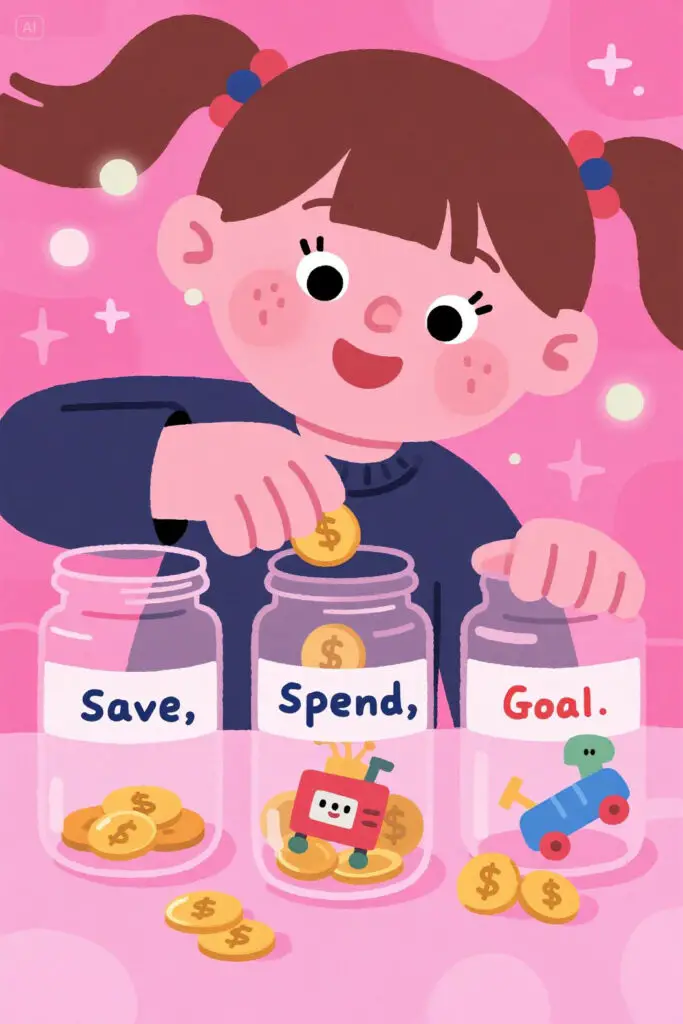
Illustration of a child placing coins into three clear jars labeled “Save,” “Spend,” and “Goal.” The “Goal” jar has a picture of a toy taped to it. Pastel pink background with glowing highlights, cheerful and motivational vibe.

Teaching kids about setting goals helps them understand the purpose of saving and spending with a more mindful and intentional approach. Encourage them to set small and achievable goals like saving for a toy, a book, or even a special outing. 

Break the goal into smaller steps and show them that each time they put money aside with consistency, it brings them closer to the target.

Encourage Smart Spending Choices

Kids often get excited about spending money as soon as they have it, so this is the perfect opportunity to guide them toward making thoughtful choices. Teach them to compare prices, check for quality, and ask themselves whether they really need the item. For example, when they want a toy, you can show them how the same item might cost less in another store or online. This simple habit will help them understand that spending isn’t just about buying something fast, but about getting the best value for their money.

Involve Them in Family Budgeting

Children can learn a lot when they see how their family plans money in real life. You can share simple budgeting discussions with them such as setting aside money for groceries, bills, or even family outings. 

You don’t have to discuss complex numbers or figures with them, just explaining or letting them see how the family makes decisions regarding money and finances is enough. You can also let them help with small tasks like planning a grocery list within a budget, comparing prices, or choosing which items to prioritize, which not only makes them feel included but also gives them a practical understanding of how budgeting works in real life.

Teach About Sharing and Giving Back

Money lessons shouldn’t only be about saving and budgeting, they should also include sharing and donating money to causes your children care about. Encourage kids to set aside a small portion of their money to donate or help someone in need. 

This could be as simple as contributing to a school fundraiser or helping a friend in need. Teaching your children about generosity at an early age helps build empathy and helps them understand that money is also a tool for making a positive difference in other people’s lives. 

Open a Savings Account and Explain Banking

Once kids are a little older, introducing them to banking is a great step forward. Take them to open a savings account and explain how banks keep money safe, how deposits and withdrawals work, and even the concept of earning interest. By involving them in small transactions at the bank, they start to feel confident about handling money in the real world.

Use Games and Activities to Make Learning Fun

Kids learn best when the lessons don’t feel like lessons at all, and that’s why turning money concepts into games can be so powerful. You can try playing board games like Monopoly or The Game of Life to introduce ideas like saving, investing, and making financial decisions. Another helpful strategy would be to create simple at-home activities such as a pretend store where they “buy” and “sell” with play money. 

Teach the Value of Work and Earning

One of the most valuable money lessons for kids is showing them that money doesn’t just appear, it’s earned through effort. Encourage them to do small chores around the house or take on age-appropriate tasks, and connect their efforts with a small reward or allowance.

This not only teaches them responsibility but also helps them appreciate the value of hard work and understand that money has meaning when it is earned.

Explain Debt in Simple Words

As kids grow older, it’s important to gently introduce them to the concept of debt, because one day they’ll face things like credit cards or loans. You can keep it simple by explaining that borrowing money means you have to pay it back, often with extra money added on top, called interest. 

Teach Critical Thinking About Advertising

Children are surrounded by ads everywhere they look, such as on TV, online, or even at the store, and these ads are designed to make them want things instantly. Take the time to explain to your kids that advertisements are not always about what they need but about convincing them to buy. You can make this lesson interactive by watching commercials together and asking questions like, “Do we really need this?” or “What is the ad trying to make us feel?” 

Celebrate Their Progress and Good Habits 

Learning about money can sometimes feel overwhelming, so it’s important to celebrate the small wins along the way. Whether your child has saved up for their first toy, donated to a cause, or stuck to a small budget, recognize their effort and cheer them on. Celebrations don’t have to be expensive, it could be as simple as having a family movie night, cooking their favorite meal, or giving them words of praise that show how proud you are.

Conclusion

Teaching kids about money is not about turning them into financial experts overnight, but about slowly building habits and giving them the confidence to make smart choices as they grow. By starting with small lessons like understanding the basics of money, saving in a piggy bank, or helping with the family budget, you are giving them skills that will stay with them for life. The goal is to make money a topic that feels natural, approachable, and even fun, instead of something scary or confusing. When children learn early that money is a tool that can help them achieve their goals, share with others, and create stability, they are more likely to grow into adults who feel confident and capable with their finances. 

The Top 24 Financial Life Hacks You Need To Know

October 9, 2025 By Ana Rose

Money isn’t everything, but the way you handle it can shape almost every aspect of your life. From paying bills to building your future dream life, the habits and little hacks you use for managing money can make the difference between always being stressed out over finances and finally being in control rather than letting money control you. Whether you are a student, an entrepreneur, or someone simply looking for little money hacks to manage their financial life more effectively, using tips and tricks can transform your financial health in ways you may not realize. This article will explore 24 smart financial hacks, helping you save more and spend smartly, ultimately growing wealth without having to turn your life upside down. 

The Top 24 Financial Life Hacks You Need To Know Graphic

1. Automate Your Savings

To avoid the temptation to use your hard-earned money, automating transfers to your savings account is one of the best options. This way, you don’t have to remember to transfer an amount whenever the saving is due, moreover, this hack also takes away the stress of manually moving an amount to a safe space, allowing your money to grow in silence and peace without any extra effort. 

2. Use the 24-Hour Rule

Impulsive buying is one of the biggest obstacles to managing money in a healthy manner. An effective way to deal with impulse shopping is by waiting 24 hours before purchasing, giving yourself the time to think over your choices and asking yourself whether the purchase is worth your money. In most cases, you’ll come to realize that you don’t actually need the item. 

3. Track Every Dollar

Keeping track of your spendings can show you where the money is actually going, helping you manage it accordingly. You can use apps to track your spending habits, create a spreadsheet, or use something as simple as a notebook. 

4. Embrace the 50/30/20 Rule

To manage your money more effectively, a good strategy would be to use a helpful budgeting method. For a classic option, consider the 50/30/20 rule which involves assigning 50% of your income to essential expenses such as rent, transportation, or groceries, 30% of the paycheck goes to non-essential expenses such as takeouts, shopping, or subscription, and lastly, 20% is used on savings or paying off debt, if there is any. 

5. Cancel Unused Subscriptions

Smartphone screen with multiple app icons and a cancel button, symbolizing removing unused subscriptions, on a pastel pink background with glowing highlights.

Many people pay monthly for apps or memberships they don’t even use. Check your bank statement for hidden charges, figure out subscriptions that silently eat away a chunk of your income every month, cancel them, and direct the same money towards something more meaningful like a savings fund or safety net. 

6. Cook at Home More Often

Takeouts and restaurant bills cost much more than we realize. Cooking at home not only saves money but also gives you healthier meals. A better strategy is to plan your meals ahead of time and make the necessary preparations, so that whenever you feel like eating, you already have a meal ready or prepped. This way, you eat healthy food at home while also avoiding food waste.

7. Negotiate Bills

Phone, internet, or even insurance companies offer lower rates if you simply ask them. Instead of assuming that the prices are fixed, try giving the companies a polite call, you may end up saving thousands of dollars a year!

8. Pay Yourself First

Each time your paycheck hits your bank account, a simple yet highly effective financial hack is to pay yourself. Before you spend your money on rent, groceries, utilities, or other expenses, make it your habit to transfer an amount to your savings account first. If you wait until the month ends, you’ll rarely have anything left, which is exactly why his habit is a must-try, ensuring that your financial goals always come first.

9. Build an Emergency Fund

Life throws unexpected challenges when you least expect them. Whether it’s a sudden medical bill, job loss, or car repair, having a safety net in place can help you deal with these circumstances with confidence. 

Try having 3–6 months of expenses saved in a separate savings account to protect yourself from falling into debt during tough times.

10. Round Up Purchases

An easy yet effective saving trick is rounding up your purchases to the nearest dollar and saving the difference. For example, if you spend $8.60, round it up to $9 and set aside the extra $0.40. 

Many apps can do this automatically, and over time, those small amounts add up into significant savings without you even noticing.

11. Shop with a List

Shopping without a plan often leads to overspending on items you don’t really need. Having a list keeps you focused and prevents impulse purchases. 

This simple habit saves money, reduces waste, and ensures you only buy what you truly need.

12. Buy in Bulk (But Smartly)

Buying essentials in bulk such as items like rice, pasta, cleaning products, or toiletries are perfect bulk purchases that are also cheaper in the long run. 

Just be careful to only buy what you know you’ll use before it expires, otherwise you’re not saving, you’re wasting.

13. Use Cashback and Reward

Cashback offers, rewards points, and loyalty programs can stretch your money further. By using cards or apps that give you rewards on everyday purchases, you get back a portion of what you spend. However, always remember to use these perks wisely, not as an excuse to overspend.

14. Plan Your Meals Around Discounts

Groceries can eat up a large part of your budget. A smart strategy is to plan meals based on weekly store discounts or seasonal sales. This not only lowers your expenses but also pushes you to be more creative with meals while saving money.

15. DIY Where Possible

Hiring professionals for every little task can be costly. Learning to do small repairs, cooking your own meals, or even brewing your own coffee can cut expenses significantly. DIY doesn’t mean doing everything yourself, but for smaller tasks, it’s a big money-saver.

16. Set Sinking Funds

Certain expenses like car maintenance, holiday gifts, or vacations don’t come monthly, but they always show up eventually. A sinking fund is where you save small amounts regularly for these expenses. When the time comes, you’ll already have the money set aside instead of scrambling or going into debt.

17. Invest Early

The sooner you start investing, the more your money benefits from compound growth. Even small investments made early can turn into large sums over time. 

18. Avoid Lifestyle Inflation

Illustration of two paths—one with luxury spending on cars and shopping bags, and the other showing savings and investments growing—on a pastel pink background with soft highlights.

It’s tempting to upgrade your lifestyle when your income increases, such as buying nicer cars, bigger homes, more luxuries, but if your spending rises with your income, you’ll never build wealth. Instead, keep your lifestyle steady and direct extra income toward savings or investments.

19. Unsubscribe From Temptation

Emails and social media ads are designed to push you into spending. By unsubscribing from shopping newsletters and unfollowing pages that constantly tempt you, you can reduce the urge to buy things you don’t need..

20. Use Public Transport

Owning a car can be expensive with fuel, insurance, parking, and maintenance costs. Whenever possible, use public transportation or carpooling to save money. It’s not just budget-friendly but also eco-friendly, helping you cut costs and reduce stress.

21. Buy Secondhand

Many items like furniture, clothes, and even electronics are available in great condition at a fraction of the cost. Thrift stores, online marketplaces, or community sales can help you save money while being sustainable.

22. Learn Basic Financial Literacy

The more you understand money, the better you can manage it. Reading finance books, listening to podcasts, or following reliable finance blogs can build your knowledge. Even basic financial literacy helps you make smarter choices and avoid costly mistakes.

23. Set Clear Money Goals

Money without direction often disappears quickly which is why it is important to set clear goals like buying a home, paying off debt, or saving for retirement. Having a target keeps you motivated and gives you a sense of purpose for every dollar you save.

24. Celebrate Small Wins 

Whenever you reach a financial milestone, it is important to celebrate your success. Whether you’ve paid off a credit card debt, saved your first $500, or stuck to a budget for a month, treat yourself in a budget-friendly way. 

These small celebrations don‘t have to cost you a lot, they can be as simple as watching your comfort movie, having your favorite meal, or going for a fun day out with friends. 

Conclusion

Money is something we all deal with every single day, and while it can sometimes feel overwhelming, the truth is that even small changes in the way we handle it can completely shift our financial lives. These 24 hacks are not about turning your life upside down or making you feel restricted, but about giving you little tools and habits that make things lighter and more manageable.. The best part is that none of these hacks requires perfection, what matters is consistency, patience, and the belief that progress, no matter how small, is worth celebrating. By making money work for you instead of against you, you not only grow your wealth but also create peace of mind and freedom in your everyday life.

How To Budget Your Money

October 8, 2025 By Ana Rose

Budgeting may sound boring, but in reality, it is one of the most powerful tools that lets you control your money rather than letting your money control you. In the absence of an effective plan, money can slip away quickly, leaving you behind wondering where it all went. With a clear budget, you can save more, stay clear of debts, and create peace of mind knowing that your financial future is in secure hands. Whether you’re a student, an entrepreneur, or someone supporting a family, learning how to budget can transform your financial health in ways you may never realize. This article will help you explore ways to budget your money, guiding you towards a secure and stable financial future.

How To Budget Your Money Graphic

Understand Why Budgeting Matters

Budgeting matters because it gives you control over your money instead of leaving things to chance. Without a budget, income slips away quickly on small expenses, and before you know it, you may find yourself short when bills are due. 

A budget ensures that your needs are covered, your goals are prioritized, and you have peace of mind knowing where every bit of your money is going. It’s not about restricting yourself, but about creating balance and making sure you’re spending and saving with purpose.

Calculate Your Total Income

The first step in creating a budget is knowing exactly how much money you have coming in every month. This step includes every source of income such as your salary, freelance earnings, side hustles, allowances, or any other regular source of income. Once you know your true income, you can avoid overspending and try staying within the spending limit so you don’t have to stretch your budget at the end of the month.

Track Your Current Spending

A minimalist flat illustration of a woman writing down daily expenses in a notebook, with coins, dollar bills, and receipt icons floating around her. Soft glowing accents on a pastel pink background with highlights.

Before managing your financial habits, you need to know them and understand them better. For a least one month, track your current spending and write down or record every expense, no matter how big or small. This can include bills, food, transport, subscriptions, or even snacks and coffee. 

Tracking your expenses can help you see where your money is actually going and identify patterns you can alter. 

Separate Needs from Wants

Once you see your spending habits, the next step is to separate needs from wants. Needs are essential or those basic expenses that come first such as rent, groceries, utilities, or transportation. On the other hand, wants are those non-essential expenses that include shopping, entertainment, or takeouts. 

When you know the difference between the two, it’s easy to make better choices whenever money feels tight, helping you prioritize needs over wants. 

Choose a Budgeting Method

Budgeting isn’t one-size-fits-all, so choosing the right method is important for managing your money effectively. One popular budgeting method is the 50/30/20 rule where 50% of the income is spent on basic expenses like rent, groceries, or transportation. 30% of the paycheck goes towards non-essential expenses or wants like takeouts, shopping, or subscriptions. Lastly, 20% of the paycheck goes to savings or paying off debt, if there is any. 

Moreover, another popular budgeting method is the zero-based budget which assigns every dollar a job until nothing is left behind. Another similar method is the envelope method which involves assigning cash to specific spending categories and limiting yourself to only what’s in that envelope, helping prevent overspending. 

Set Clear Financial Goals

To give your budget clear purpose and direction, setting clear financial goals can help you make the process feel more personalized while adding motivation and consistency. Whether it’s a short term goal like paying off a credit card debt or saving for a trip you’ve planned out with friends, or a long term goal like buying a home, or building savings for retirement, having something to work toward can make the process feel like a goal rather than a pointless hustle. 

Create Spending Categories

To stay organized, divide your budget into categories so that it’s easier to track each category. Common ones include housing, food, transportation, healthcare, debt repayment, savings, and leisure. 

Assigning money to each category helps you see how much you can comfortably spend without going overboard. Categories also make it easier to cut back if you need to adjust, since you can see which areas are eating up most of your income.

Build an Emergency Fund

Life has its way of throwing unforeseen circumstances your way when you least expect them. To deal with these unexpected expenses, the best way is to build a safety net. Even if you start small by saving just a little each month, over time you can build enough to cover three to six months of expenses. Having this cushion not only keeps you financially secure but also gives you peace of mind, because you know you are prepared for the unexpected.

Pay Off Debt Strategically

Debt can feel stressful and draining, and if you don’t deal with it properly, it has a way of piling up over time, and that’s exactly where budgeting comes in, helping you face it step by step so it feels more manageable. 

Some people find success with the debt snowball method, where you pay off the smallest debts first to build motivation and others prefer the debt avalanche method, where you focus on the highest interest debts first so you save more money overall. 

The most important part is making debt repayment a real priority, because every payment, no matter how small, brings you closer to financial relief and peace of mind.

Automate Savings and Payments

A digital banking concept showing a smartphone screen with auto-transfer arrows moving money into a savings account, surrounded by icons of a piggy bank, calendar, and bills. Gentle glow effect on a pastel pink background with highlights.

Saving money sounds simple, but in daily life it’s easy to forget or put off, that’s why automating your savings and bill payments can make such a difference. By setting up automatic transfers into your savings account or scheduling bills to be paid on time, you remove the pressure of remembering and reduce the temptation to spend that money elsewhere. 

This way, your money is quietly working for you in the background, going exactly where it should without you needing to think about it. It also saves you from late fees, missed payments, and unnecessary stress, making your financial life smoother and easier.

Review and Adjust Monthly

Your budget doesn’t have to be a fixed or strict schedule that you need to follow, it’s a flexible plan that should change as your life changes, and that is exactly why it is important to review your budget every month. 

Some months you may have extra expenses, like birthdays or unexpected repairs, while other months you might earn a little more than usual. By checking in regularly, you can adjust your categories, move money around, and make sure your plan still matches your lifestyle.

Use Budgeting Tools and Apps

Thanks to technology, budgeting has become much easier than before. There are so many apps and tools that can help you track your income and expenses without the hassle of writing everything down. Apps like Mint, YNAB (You Need a Budget), or even a simple Google Sheet can do wonders for organizing your money. 

They can send reminders, show charts of your spending, and even point out areas where you might be overspending. Using these tools makes budgeting less stressful and helps you stay motivated to reach your financial goals.

Practice Mindful Spending

Mindful spending means being fully aware of how and why you spend your money. Before buying something, pause for a moment and ask yourself, “Do I really need this? Will this make me happy in the long run, or is it just a quick impulse?” 

By asking these simple questions, you learn to spend money on things that truly matter to you instead of wasting it on things you’ll regret later. Mindful spending doesn’t mean you stop enjoying life, it simply means you enjoy your money in a smarter and more meaningful way.

Stay Consistent and Patient 

Budgeting takes time, patience, and consistency. Some months may go off track due to unexpected expenses, and that’s okay. The key is to stick with the habit and keep coming back to your plan. Over time, you’ll see progress in your savings, reduced stress, and more control over your finances. Patience ensures your budget becomes a long-term lifestyle instead of a short-term struggle.

Conclusion

Budgeting your money may feel difficult in the beginning, but once you start, it becomes a powerful tool that helps you take charge of your life. It teaches you how to manage your income, prepare for emergencies, pay off debt, and still enjoy the things you love without guilt. The most important thing to remember is that budgeting is not about being strict or saying “no” to everything, it’s about creating balance, security, and peace of mind. With small, steady steps, you can turn budgeting into a habit that supports your dreams and builds a future where money works for you, not against you.

Top 10 Budgeting Tips For Building A House

October 7, 2025 By Ana Rose

Building a house is one of the most exciting and emotional journeys in a person’s life because it’s not just about putting walls and roof together, it is about creating a safe space for yourself and your family where memories will be created and cherished. However, along with the excitement and fun, comes the responsibility of managing finances. Many people, without a budgeting plan, only come to realize that costs add up quickly, unexpected expenses show up when you least expect them, and soon your dream home can become a financial burden. The good news is that with the right budgeting strategies, you can keep your finances under control, make smarter decisions, and still end up with a home you love. This article will help you explore ten budgeting tips that will help you manage your money wisely while building your house, so the process feels less stressful and more rewarding.

Top 10 Budgeting Tips For Building A House Graphic

1. Set a Realistic Overall Budget

The first and most important budgeting tip when it comes to creating your home is to decide exactly how much you can afford to spend on your house without putting yourself into a financially overwhelming situation. Many people underestimate the total cost of construction, forget to include things like permits, utility hookups, and finishing touches, and while these may seem small, they can eat away a large chunk of your budget. 

By setting a realistic number from the very beginning, including the hidden costs as well, you can give yourself clear boundaries and clarity, helping you make smarter decisions and stay in control of your spendings throughout the building process. 

2. Break Down the Costs into Categories

Illustration of a pastel pink checklist with labeled sections like land, structure, plumbing, interiors, and permits, with small icons beside each, set against a soft pastel pink background with glowing highlights, symbolizing organized budgeting for house construction.

After setting your overall budget, the next step is to divide your budget into sections such as land, foundation, structure, plumbing, electrical work, interiors, and finishing touches, and don’t forget small but important things like permits or landscaping. 

When you see each category separately, it becomes easier to decide where to spend more and where to cut back if needed. For example, you might want to invest more in the kitchen or bathroom, which add long-term value, and save a little on flooring or decorative features that can be updated later. 

3. Choose the Right Location Within Your Means

It is often said that location is everything in real estate, and while that is true to some extent, it is also one of the biggest factors in your budget. Land in popular areas can cost far more than you may realize, eating up a huge portion of your budget before you even begin building your dream home. 

Instead of stretching your finances too thin, try looking for locations that balance affordability with long-term value. You can look for a slightly less expensive neighborhood that allows you to build a bigger or better-quality house within the same budget. What matters the most in the end is the fact that you create a comfortable space for your loved ones, a home you can afford to maintain as well. 

4. Plan for Hidden and Unexpected Costs

Illustration of a pastel pink piggy bank under an umbrella with coins dropping in and surprise bills around it, set on a pastel pink background with glowing highlights, representing saving for unexpected expenses while building a home.

No matter how carefully you plan for all the expenses, some expenses will catch you by surprise, whether it’s soil that needs extra preparation, sudden price increases in materials, or small design changes that cost more than expected. To deal with these surprises, you can keep at least ten to fifteen percent of your budget aside as a safety net, so that whenever these expenses show up you can pay for them without having to stretch your budget. 

Not only does this safety net save you from last-minute spendings, it also allows you to handle unforeseen situations without panicking or stressing over them.

5. Be Smart About Design Choices

When building a home, it is easy to get carried away with luxurious designs or big ideas, but it is crucial to understand that every extra feature increases the cost. Being smart about designs is less about giving up on beauty and more about making choices that bring value to your hard earned money. 

For example, a simple and minimalist floor plan is often cheaper to build and easier to maintain as compared to a complex layout with unnecessary spaces that costs a lot. The key is to focus on the functionality of your choices and then align the cost of the design with your wallet, striking the perfect balance between aesthetics and being mindful with your spendings.

6. Get Multiple Quotes from Contractors

When it comes to construction, one of the most common mistakes people make is that they choose the very first contractor they meet without exploring other options. Prices can vary more than you may realize, for instance, a contractor may offer a higher estimate, and another contractor may offer you the same service but at a much more reasonable price. 

This is why it’s always important to get at least three different estimates from different contractors before making the final decision, so you can compare not only the prices but also what is included in the services. 

Moreover, sometimes a cheaper option may not cover everything, while another contractor who seems slightly more expensive might include additional work or better materials and  actually save you money in the long run. 

7. Track Expenses Closely Throughout the Project

Setting a budget in the beginning is only half the work, because what really matters is how well you stick to it once the construction starts. Building a house moves fast, and if you’re not keeping track, small costs can pile up quickly without you realizing it, and this is why it helps to note down every expense as it happens, whether you use a simple notebook, a spreadsheet, or even a budgeting app on your phone. 

By comparing what you planned to spend with what you are actually spending, you can immediately spot areas where you’re going over budget and make small adjustments before the situation gets out of hand. 

8. Avoid Constant Changes Once Work Has Begun

It’s all too tempting to come up with new ideas or design changes while your house is being built, but each time you change something once work has begun, it often comes at additional cost and delays. Small deviations like moving a wall just a bit or opting for a new style of flooring at the last minute can set off a series of additional labor and waste that will push your budget past its breaking point.

This doesn’t mean you can’t make changes at all, only that you should try to nail down your decisions before construction begins because the more closely you stick to the original plan, the easier and cheaper everything will be overall.

9. Balance Quality and Affordability

When building a house, it can be tempting to save money by picking the cheapest materials everywhere, but the truth is that extremely low-quality choices often don’t last long and end up costing you even more later because of repairs or replacements. 

On the other hand, going for the most expensive option in every corner of the house can easily eat away most of your budget. The best way to deal with this is to strike a balance between quality and affordability by spending more on the important parts of the house that affect safety and durability, like the foundation, roofing, or plumbing, while being more budget-friendly in areas that can be updated more easily in the future, such as wall paint or decorative items. 

10. Keep Lifestyle Costs in Mind After Moving In

A lot of people only think about the cost of building the house and forget about how much it will cost to actually live in it once it’s finished. If your home is too large, or has features that require high maintenance, you may find yourself paying more in electricity, water, cleaning, and repairs than you expected, that’s why it’s important to plan ahead and think about your lifestyle when budgeting. 

A beautiful home that constantly drains your income can quickly become stressful, while a well-planned home that matches your lifestyle will bring you comfort and peace for years to come.

Conclusion

Building your dream house is a journey filled with excitement, hope, and vision for the future, but it is also a process that tests your ability to manage money wisely. Without a clear plan, costs can go out of control, turning what should be a joyful experience into a stressful one. However, by following simple budgeting strategies you can stay ahead and avoid unnecessary struggles. From setting a realistic budget to making smart design choices, each tip plays a part in keeping your finances steady. The goal is not just to build a house, but to create a home that feels right for you and your loved ones, and a place you can enjoy without worrying about overwhelming debt. With patience, planning, and mindful decisions, your dream home can be built in a way that is not only beautiful but also financially sustainable, giving you true peace of mind.

Tony Robbins 7 Steps To Financial Freedom

October 6, 2025 By Ana Rose

Financial freedom is a term that we hear quite often, yet most people are not really sure what it actually means or how they can ever get there. For some people, financial freedom simply means being able to pay their bills on time without the constant stress of running out of money, for others it is about being able to retire early and spend their days doing the things they love without worrying about a paycheck. In his well-known book, “Money: Master the Game”, Tony Robbins takes this idea and makes it real by offering not just vague dreams of independence but a clear and practical roadmap that anyone can follow, no matter whether they are just starting their journey or already on the path to building wealth. This article will help you explore the 7 steps to financial freedom by Tony Robbins, helping you become financially free and stable in the long run. 

Tony Robbins 7 Steps To Financial Freedom Graphic

Step 1: Make the Most Important Financial Decision of Your Life

The very first step that Tony Robbins talks about is not about learning complicated investment formulas or chasing big opportunities, it is simply about making a personal choice that changes the direction of your life forever, and that choice is deciding to become an investor instead of being only a spender. Most of us are used to earning money and spending it almost as quickly as it comes in, and while that might cover today’s needs, it does nothing for tomorrow. 

Robbins explains that financial freedom begins when you decide that no matter what, you will always put aside a small part of what you earn and make it work for you instead of letting it slip away. Even if the amount feels small at first, the power lies in the habit, because once you commit to paying yourself first, your future self benefits from the money that grows quietly in the background. 

Step 2: Become the Insider and Know the Rules Before You Get in the Game

Illustration of a person reading a large open book filled with financial icons like coins, stocks, and tax symbols, with a magnifying glass highlighting the pages, on a pastel pink background with glowing highlights.

Once you have made the decision to invest, the next step is to learn how the money game actually works. Robbins says that the financial industry often takes advantage of people who do not educate themselves, charging hidden fees, offering confusing products, and giving advice that is not always in the client’s best interest. 

To protect yourself and grow with confidence, you need to take responsibility for learning the basics, for instance, how investments grow, what risks exist, how fees and taxes affect your returns, and how different financial tools work. You do not have to become an expert overnight, but by becoming an insider, you remove the fear and confusion that holds most people back. 

Step 3: What’s the Price of Your Dreams? Make the Game Winnable

A lot of people believe financial freedom is only for millionaires, but Robbins encourages us to stop thinking in overwhelming terms and instead, get clear on exactly what it would cost to live the life we truly want. He asks you to sit down and calculate how much money you really need each month or each year to cover your essentials, your comforts, and even your dreams. 

Many people are surprised when they do this exercise, because the number is usually smaller and more achievable than they first imagined. This is what he means by making the game winnable, because once you know your number, you can create a plan that feels realistic rather than chasing some endless and uncertain goal. With a clear target in front of you, every saving and investing step becomes more meaningful, because you can see how it moves you closer to the life you want. 

Step 4: Make the Most Important Investment Decision of Your Life

In this step, Robbins reminds us that the success of your investments does not depend on picking the perfect stock or trying to time the market, but on how you divide your money across different types of assets. This process is called asset allocation, and it is one of the biggest factors that determines whether your wealth grows steadily or gets lost to sudden risks. 

By spreading your money between things like stocks, bonds, real estate, and cash, you protect yourself from losing everything if one part of the market goes down, while still allowing your money to grow over time. Robbins explains that even the wealthiest investors in the world rely on this principle, because it balances growth with safety. Making this decision wisely is the difference between financial stress and financial confidence, because it ensures that your future is not left to chance but supported by a structure designed to last.

Step 5: Upside Without the Downside and Create a Lifetime Income Plan

Minimalist vector of a balanced scale with coins sprouting like a plant on one side and a shield symbolizing protection on the other, set against a pastel pink background with soft glowing highlights.

One of the biggest fears people carry is the thought of running out of money when they get older, and Robbins addresses this by showing how you can build a plan that gives you steady income for life while still allowing your wealth to grow. The idea is to combine investments that have potential for growth with strategies that also protect you from big losses, so you can enjoy the upside without being crushed by the downside. 

This might include using tools like annuities for guaranteed income, dividend-paying investments, or other options that make sure your basic needs will always be covered. When you know that no matter what happens in the economy you will still have money coming in, a huge weight is lifted off your shoulders, because you are no longer depending only on your job or on hope. This step is really about peace of mind, knowing that your future is secured allows you to enjoy the present without the constant fear of financial collapse.

Step 6: Invest Like the .001% — The Billionaire’s Playbook

In this step, Robbins takes us inside the minds of some of the world’s most successful investors, people who have built incredible wealth not by luck but by using strategies that anyone can learn from. He interviewed financial giants like Warren Buffett and Ray Dalio, and what he discovered is that their success is not about chasing trends or gambling on risky moves, but about patience, discipline, and intelligent planning. For example, Dalio’s approach focuses on building a portfolio that can withstand different economic conditions, while Buffett’s philosophy is about long-term value and ignoring short-term noise. 

Robbins explains that while we may not have billions to invest, we can still follow the same principles on a smaller scale such as balancing our portfolios wisely, focusing on long-term growth, and avoiding emotional decisions that sabotage our progress. Learning from the very best gives us a shortcut to avoid mistakes and build wealth with confidence, because their playbook is already tested and proven.

Step 7: Just Do It, Enjoy It, and Share It 

The final step is about taking action and remembering why you started this journey in the first place. All the knowledge and strategies in the world mean nothing if you do not apply them, so Robbins encourages us to begin wherever we are, even if it feels small at first, because the real progress comes from starting and staying consistent. 

As your financial situation improves, it is also important to celebrate the small wins along the way instead of waiting until the end, because enjoying the journey makes the process more meaningful. Most importantly, Robbins highlights that true financial freedom is not just about having enough for yourself but also about sharing your blessings with others. 

Whether it is helping your family, supporting your community, or contributing to causes you care about, giving back creates a sense of purpose that money alone cannot provide. In the end, wealth is not just about security or luxury, it is about freedom, joy, and the ability to make a difference.

Conclusion

When you look at Tony Robbins’ seven steps to financial freedom as a whole, you realize that this journey is not about chasing some impossible dream of endless wealth, it is about creating a life where money stops being your biggest worry and instead becomes a tool that gives you choices and peace of mind. What makes these steps so powerful is that they are not just about numbers and investments but about shifting your mindset, because financial freedom is not only about how much you have in the bank but also about how you feel when you think about money. The truth is that freedom comes when you no longer live in fear of running out, when you know you have created a plan that will take care of you and your loved ones, and when you are in a position to share your success with others. 

  • « Go to Previous Page
  • Go to page 1
  • Interim pages omitted …
  • Go to page 45
  • Go to page 46
  • Go to page 47
  • Go to page 48
  • Go to page 49
  • Interim pages omitted …
  • Go to page 170
  • Go to Next Page »

The Latest Blog Posts:

  • 14 Profitable Things To Sell On eBay June 20, 2026
  • Mason Jar Crafts To Make And Sell June 19, 2026
  • 12 Best Jobs for Retired Teachers  June 18, 2026

As Featured In:

Just Start Investing Press Strip 2020 B&W

Follow Us:

  • Facebook
  • Twitter
  • Pinterest

Copyright © 2026 · Just Start Investing LLC

  • Contact Us
  • Blog
  • Privacy Policy / Disclaimers
